Reasons for choosing our testing services
ZHONGXI Testing has obtained inspection qualification certifications from multiple countries and regions worldwide. We possess a senior testing team and advanced testing methods, providing independent, impartial, and professional third-party verification services for global carbon projects.

Internationally recognized authority
Certified by multiple international standards such as CNAS, VCS, and GS, with reports universally applicable worldwide.

Global service capability
Covering 140+ countries and regions, it supports on-site detection and remote verification in multiple languages.

Professional experimental methods
Adopt standard experimental methods to ensure accurate and reliable data.
Specialized Guaiacol Testing Services – Trace Analysis, Impurity Profiling, and Regulatory Compliance
If you are searching for guaiacol testing, you likely need to quantify its purity, detect process-related impurities, verify its concentration in pharmaceutical formulations, or assess its stability in food, flavor, or industrial applications. Guaiacol (2-methoxyphenol) is a critical compound used as an expectorant, a flavoring agent, a chemical intermediate, and a biomarker in certain diagnostic assays. Accurate measurement of guaiacol and its related substances (e.g., catechol, o-cresol, vanillin, methylguaiacol) requires advanced analytical techniques. Our laboratory offers comprehensive guaiacol analysis – from routine assay to ultra-trace impurity detection and forced degradation studies – using state-of-the-art instrumentation and validated methods.
What We Detect – Analytical Scope for Guaiacol and Related Compounds
We go beyond simple content determination. Our platform includes High-Performance Liquid Chromatography (HPLC) with UV, PDA, and FLD detectors for precise quantification of guaiacol in complex matrices (syrups, solutions, solid dosage forms, essential oils). For volatile matrices, we use Gas Chromatography (GC-FID and GC-MS) with headspace or direct injection, achieving detection limits as low as 0.1 ppm. To identify unknown impurities or degradation products, we employ LC-QTOF-MS and GC-HRMS for accurate mass determination down to sub-ppm levels. We also perform residual solvent analysis by GC-HS, water content (Karl Fischer), and related substances profiling per ICH Q3A/Q3B.
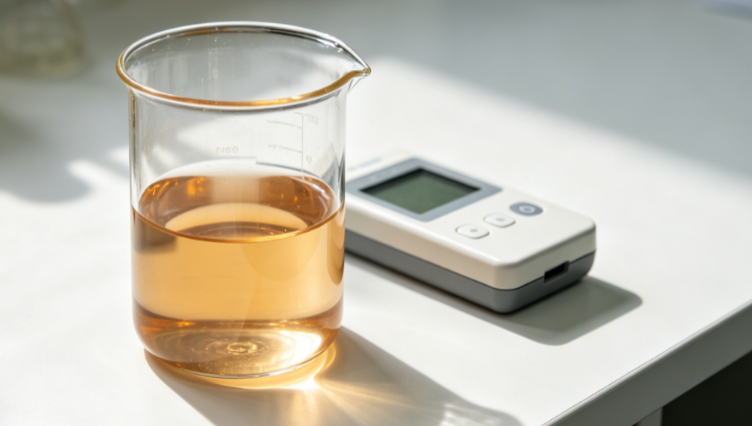
Specific parameters we routinely measure:
- Assay of guaiacol (anhydrous or in solution) – accuracy ±0.2% by area normalization or external standard.
- Individual impurity quantification – catechol, hydroquinone, o-cresol, m-cresol, p-cresol, vanillyl alcohol, and methylguaiacol isomers.
- Elemental impurities (ICP-MS) – Pb, As, Cd, Hg, Ni, Co, V as required by ICH Q3D.
- Stability-indicating methods – separation of degradation products under oxidative, thermal, photolytic, and hydrolytic stress.
- Matrix-specific extraction – from biological fluids, food matrices, or polymer composites using SPE or QuEChERS.
How Deep We Go – High‑Resolution, Ultra‑Trace, and Structural Elucidation
Most routine labs only report total guaiacol content by UV spectrophotometry, which cannot distinguish isomers or degradation products. We provide full impurity fingerprinting with quantification at 0.01% area relative to main peak (or 10 ppm absolute). With our HRMS capabilities, we can identify unknown impurities based on accurate mass, isotopic pattern, and fragmentation – essential for pharmaceutical DMF filings or root cause analysis of off-spec batches. For chiral applications (guaiacol itself is not chiral, but its derivatives may be), we offer chiral HPLC with polysaccharide columns.
We routinely achieve:
- LOQ of 0.05 µg/mL for guaiacol by HPLC-UV (0.5 ppm in solid samples).
- LOQ of 0.01 µg/mL by GC-MS (SIM mode) – suitable for environmental or residue testing.
- Linearity R² > 0.9995 over three orders of magnitude.
- Recovery rates from spiked matrices of 95–102% with proper sample preparation.
We also perform forced degradation studies to identify potential degradation products (e.g., quinone derivatives, dimers) and determine the mass balance under ICH conditions. Our reports include full chromatograms, mass spectra, and detailed impurity structures where confidently identified.
Why Choose Our Guaiacol Testing Services – Key Advantages
1. ISO/IEC 17025:2017 accredited methods – fully compliant with USP, EP, JP, and FCC monographs for guaiacol and related phenolics.
2. Broad matrix expertise – we have successfully analyzed guaiacol in oral syrups, lozenges, suppositories, food flavors (liquid and powder), industrial solvents, cosmetic ingredients, and environmental water samples.
3. Method development and validation – if no standard method exists for your matrix, we can develop and validate a specific, robust HPLC or GC method within 10–15 business days, including ICH validation parameters.
4. Ultra-trace capability – for impurity control at 0.1 ppm (e.g., potential genotoxic impurities), we offer GC-MS/MS or LC-MS/MS with enhanced selectivity.
5. Fast turnaround and data transparency – routine assay results in 3–5 business days; comprehensive impurity profiling in 7–10 days. You receive raw data files (chromatograms, spectra, calibration curves) plus a certified report.
6. Root cause analysis for out-of-spec results – we help identify whether failure comes from raw material, synthesis by-product, storage degradation, or cross-contamination.
7. Competitive pricing with volume discounts – single parameter testing starts at a low cost; full characterization packages (assay + 10 impurities + water + residual solvents) are offered at 30–40% less than ordering separately.
With over 300 completed guaiacol projects for pharmaceutical, food, and chemical industries, our team of PhD analytical chemists ensures that every result is accurate, defensible, and actionable. We have supported clients in ANDAs, NDAs, and food additive petitions with complete analytical packages.
Ready to Submit Your Guaiacol Sample?
Tell us about your sample matrix, expected concentration range, and any applicable monograph (USP, EP, FCC, etc.). We will provide a free technical consultation and a firm quote. Whether you need a single purity check or a full impurity structure elucidation, we deliver deep, precise, and compliant guaiacol testing tailored to your needs.