Reasons for choosing our testing services
ZHONGXI Testing has obtained inspection qualification certifications from multiple countries and regions worldwide. We possess a senior testing team and advanced testing methods, providing independent, impartial, and professional third-party verification services for global carbon projects.

Internationally recognized authority
Certified by multiple international standards such as CNAS, VCS, and GS, with reports universally applicable worldwide.

Global service capability
Covering 140+ countries and regions, it supports on-site detection and remote verification in multiple languages.

Professional experimental methods
Adopt standard experimental methods to ensure accurate and reliable data.
Ultra‑Trace to High‑Purity Testing for Electronic‑Grade Nickel Carbonate – From Sub‑ppm Impurities to Particle Integrity
If you are searching for electronic‑grade nickel carbonate testing, you need far more than standard chemical analysis. Electronic‑grade NiCO₃ (often basic nickel carbonate or a precisely defined precursor) is critical for MLCC (multi‑layer ceramic capacitors), nickel battery cathodes (NMC precursors), electroplating solutions, and catalyst manufacturing. Even trace contaminants (sodium, iron, copper, lead, chloride, sulfate) or particle size deviations can destroy electronic performance. Our laboratory delivers full‑depth characterization – from trace metal impurity quantification at sub‑ppm levels to particle size distribution, surface area, and anion analysis – using ISO 17025 accredited methods specifically tailored for electronic material specifications (SEMI, ASTM, JIS).
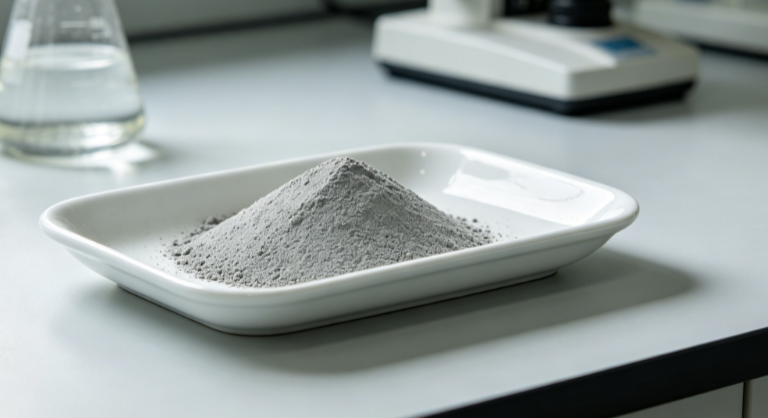
What We Analyze – Complete Parameter Coverage for Electronic‑Grade Nickel Carbonate
We do not simply report “nickel content”. Our platform includes Inductively Coupled Plasma Mass Spectrometry (ICP‑MS) with collision/reaction cell technology to quantify up to 40 trace elements (Na, Mg, Al, K, Ca, Cr, Mn, Fe, Co, Cu, Zn, Ag, Cd, Sn, Pb, etc.) down to 0.01 ppm (10 ppb) in the solid material. For anionic contaminants, we use ion chromatography (IC) after combustion or aqueous leaching to measure chloride, nitrate, sulfate, and phosphate at sub‑ppm levels. We determine nickel assay (as Ni or NiCO₃ equivalent) by complexometric titration or ICP‑OES with accuracy ±0.1%. To control powder processing, we provide particle size distribution (PSD) by laser diffraction (range 0.1–1000 µm) with D10, D50, D90, and specific surface area (BET) down to 0.01 m²/g. We also measure loss on ignition (LOI) to confirm carbonate/hydroxide stoichiometry, moisture (Karl Fischer), and tap/bulk density.
Key parameters we routinely measure:
- Trace metal impurities (≤0.01 ppm for critical elements like Pb, Cd, As) – ICP‑MS with matrix‑matched calibration.
- Anions (Cl⁻, NO₃⁻, SO₄²⁻, PO₄³⁻) – IC detection limits <0.5 ppm.
- Nickel assay (as Ni) – titrimetric or gravimetric, accuracy ±0.1%.
- Particle size distribution (D10, D50, D90) – laser diffraction, wet or dry dispersion.
- BET surface area – 5‑point or multi‑point N₂ adsorption.
- Loss on ignition (LOI at 800°C) – conversion to NiO.
- Residual moisture (KF oven) – for hygroscopic batches.
- Bulk and tapped density – Hall flowmeter or equivalent.
- Phase identification (XRD) – confirm NiCO₃·2Ni(OH)₂·4H₂O vs. other nickel hydroxides/carbonates.
How Deep We Go – Sub‑PPT Detection, Cleanroom Handling, and Particle Integrity
Most commercial labs cannot achieve the ultra‑low background required for genuine electronic‑grade qualification. We operate dedicated class 10,000 (ISO 7) cleanroom areas for sample preparation, using acid‑leached Teflon vessels and ultrapure reagents (resistivity >18.2 MΩ·cm). Our ICP‑MS instrumentation achieves background equivalent concentrations (BEC) below 0.001 ppm for most metals. We routinely report Co, Fe, Cu, Pb, Cr at 0.01 ppm or lower, and can go to sub‑ppb detection limits for critical elements like U and Th when required for nuclear‑grade electronic applications. For particle size, we provide ISO 13320‑compliant measurements with dispersion validation (sonication power, surfactant screening) to ensure primary particle sizing without agglomerate artifacts.
Our advanced capabilities include:
- Single‑particle ICP‑MS – detect insoluble metallic or oxide particles >0.5 µm (e.g., metallic Ni, Fe, Cr particles) that can cause shorts in MLCCs.
- Acid digestibility and residue analysis – quantify non‑dissolvable residues (e.g., silicates, carbides) after strong acid digestion.
- Carbonate/hydroxide ratio by TGA‑MS – precisely distinguish CO₂ release vs. water, ensuring correct stoichiometry for precursor synthesis.
- Surface contamination analysis (SEM/EDS or XPS) – detect surface‑adsorbed Na, K, Ca or organic residues that affect sintering.
- Ionic extractables in ultrapure water – simulate leaching of Cl⁻ and SO₄²⁻ when the carbonate is used in aqueous slurries.
- Stability monitoring under controlled humidity – test for deliquescence or conversion to nickel hydroxide.
We routinely achieve measurement uncertainties: Ni assay ±0.07% absolute; trace metals at ±10% relative near 0.1 ppm; PSD precision ±3% for D50. Our methods align with SEMI C3.37, ASTM E2479, and JIS K 8625 standards for high‑purity nickel compounds.
Why Choose Our Electronic‑Grade Nickel Carbonate Testing – Key Advantages
1. ISO/IEC 17025:2017 accredited – all trace metal and anion methods audited for electronic material testing, including SEMI and IPC guidelines.
2. True low‑background cleanroom protocols – we minimize contamination from labware, air, and reagents, delivering genuine single‑digit ppb detection limits instead of “less than” results.
3. Simultaneous trace metal + anion + particle + surface area profiling – a single sample submission gives you a complete electronic‑grade certificate.
4. Expertise in nickel carbonate matrices – we understand how to dissolve basic nickel carbonate without losing volatile trace elements (e.g., As, Hg) and without matrix interference.
5. Root cause analysis for out‑of‑spec lots – we identify whether high iron comes from raw materials, milling equipment, or packaging; we can map contaminants to process steps.
6. Fast turnaround and full data transparency – routine trace metals + anions + PSD completed in 5–7 business days. You receive raw ICP‑MS counts, chromatograms, particle size curves, and QA/QC logs.
7. Custom method development for novel nickel carbonate grades – if your material has organic coatings, specific crystal water content, or is blended with dopants, we validate methods within 2–3 weeks.
8. Competitive pricing for full electronic‑grade panels – bundling 20 trace metals, 4 anions, PSD, BET, LOI, and Ni assay costs 35–40% less than ordering each separately.
We have successfully completed over 250 electronic‑grade nickel carbonate projects for leading MLCC manufacturers, battery cathode material producers, and semiconductor chemical suppliers. Our analytical team includes PhD chemists with decades of experience in high‑purity inorganic analysis.
Ready to Submit Your Electronic‑Grade Nickel Carbonate Sample?
Tell us about your target specification (e.g., “max 10 ppm each of Fe, Cu, Pb, Zn; Cl < 50 ppm; D50 = 0.3–0.7 µm”), or send us your internal quality standard. We will provide a free technical consultation and a fixed‑price quote. Whether you need one‑batch validation or ongoing incoming inspection, we deliver deep, accurate, and semiconductor‑grade ready nickel carbonate testing tailored to your process.