Reasons for choosing our testing services
ZHONGXI Testing has obtained inspection qualification certifications from multiple countries and regions worldwide. We possess a senior testing team and advanced testing methods, providing independent, impartial, and professional third-party verification services for global carbon projects.
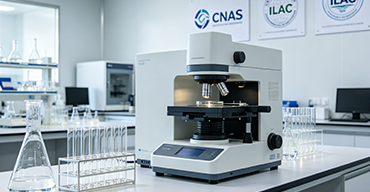
Internationally recognized authority
Certified by multiple international standards such as CNAS, VCS, and GS, with reports universally applicable worldwide.

Global service capability
Covering 140+ countries and regions, it supports on-site detection and remote verification in multiple languages.

Professional experimental methods
Adopt standard experimental methods to ensure accurate and reliable data.
Industrial Manganese Sulfate Testing – Assay, Trace Metal Profiling, and Process Control
If you are searching for industrial manganese sulfate (MnSO₄) testing, you likely need to verify its suitability for battery cathode materials (Mn‑based NMC, LiMn₂O₄), micronutrient fertilizers, animal feed supplements, or electrolytic manganese production. Even slight deviations in manganese content, heavy metal impurities (Pb, As, Cd, Hg, Fe), chloride, or water insolubles can cause batch rejection, regulatory non‑compliance, or downstream process failures. Our laboratory offers complete industrial‑grade MnSO₄ analysis – from routine wet chemistry to ultra‑trace element detection, crystalline phase identification, and particle characterization – using ISO/IEC 17025 accredited methods tailored to industrial specifications (HG/T 4821, GB 34468, ASTM D7908).

What We Analyze – Full Parameter Coverage for Manganese Sulfate
We do not simply report “Mn as MnSO₄·H₂O”. Our platform includes Inductively Coupled Plasma Optical Emission Spectrometry (ICP‑OES) and ICP‑Mass Spectrometry (ICP‑MS) for precise quantification of Mn, Fe, Zn, Cu, Ni, Co, Pb, As, Cd, Hg, and other metals with detection limits down to 0.01 ppm. For anionic impurities, we use ion chromatography (IC) to measure chloride (Cl⁻), sulfate (excess), and nitrate at sub‑ppm levels. We determine manganese assay (as Mn or MnSO₄·H₂O) by complexometric EDTA titration or ICP‑OES with accuracy ±0.2%. Water‑insoluble matter is determined gravimetrically after hot water dissolution. Loss on drying (LOD) at 105°C quantifies free moisture, while thermogravimetric analysis (TGA) distinguishes hydrate forms (monohydrate vs. tetrahydrate vs. anhydrous). We also provide pH of 5% solution, specific gravity (for solutions), particle size distribution (laser diffraction), and X‑ray diffraction (XRD) to confirm the correct crystal phase (e.g., MnSO₄·H₂O, orthorhombic vs. monoclinic). For battery‑grade applications, we perform magnetic particle count (by extraction and ICP‑MS) to detect ferromagnetic impurities.
Key parameters we routinely measure:
- Manganese (Mn) assay – titrimetric or ICP‑OES, absolute error <0.2%.
- Heavy metals (Pb, As, Cd, Hg, Cr, Ni, Co, Cu, Zn) – ICP‑MS, LOQ 0.01–0.05 ppm.
- Iron (Fe) – ICP‑OES or phenanthroline spectrophotometry, LOQ 0.1 ppm.
- Chloride (Cl⁻), sulfate (SO₄²⁻), nitrate (NO₃⁻) – ion chromatography, LOQ 0.5 ppm.
- Water‑insoluble matter – gravimetric, detection limit 0.01%.
- Loss on drying (LOD at 105°C) and water of hydration – TGA with mass loss steps.
- pH of 5% aqueous solution – direct measurement (±0.02 pH).
- Particle size distribution (D10, D50, D90) – laser diffraction, dry or wet dispersion.
- Crystalline phase (MnSO₄·H₂O vs. MnSO₄·4H₂O vs. anhydrous) – XRD with reference pattern matching.
- Ferromagnetic impurities (Fe⁰ particles) – magnetic extraction + ICP‑MS, detection limit 0.1 ppm.
- Reducing substances (e.g., sulfite, thiosulfate) – iodometric titration.
How Deep We Go – Ultra‑Trace Element Speciation, Hydration Mapping, and Impurity Source Tracing
Most routine labs only measure total manganese and a few heavy metals by outdated colorimetric methods, missing many critical elements and producing high measurement uncertainty. We provide full elemental coverage (up to 30 elements) at sub‑ppm levels using ICP‑MS with reaction/collision cell technology to eliminate polyatomic interferences (e.g., ⁴⁰Ar¹⁶O⁺ on ⁵⁶Fe⁺, or ³⁵Cl¹⁶O⁺ on ⁵¹V⁺). For battery‑grade MnSO₄, we routinely achieve Fe <1 ppm, Cu <0.5 ppm, Ni <0.5 ppm, Pb <0.1 ppm, As <0.05 ppm. Using alkaline fusion digestion for refractory particles, we ensure complete recovery of all metals. Our XRD with Rietveld refinement can quantify second phases (e.g., MnO₂, Mn₃O₄, or CaSO₄) down to 0.2 wt% – essential for detecting undesired oxide impurities. For water‑soluble chloride, we distinguish between surface‑adsorbed vs. lattice‑incorporated Cl by sequential leaching and IC analysis, helping identify synthesis‑related contamination.
We also perform simulated storage stability (40°C/75% RH for 4 weeks) with weekly measurement of color, free acid, and metal leachability – critical for long‑term supply contracts. Using single‑particle ICP‑MS (spICP‑MS), we can detect and size individual metallic particles (e.g., Fe, Cr, Ni) in MnSO₄ powder, important for battery cathode homogeneity. For feed‑grade MnSO₄, we additionally screen for dioxins, PCBs, and other organic contaminants by GC‑HRMS (upon request).
Our advanced capabilities include:
- Manganese valence state (Mn²⁺ vs. Mn³⁺/Mn⁴⁺) – by redox titration and X‑ray photoelectron spectroscopy (XPS).
- Residual ammonium (NH₄⁺) from synthesis – by distillation‑titration or ion chromatography.
- Trace calcium and magnesium (down to 0.1 ppm) – ICP‑MS, critical for battery and fertilizer applications.
- Surface morphology and foreign particle identification (SEM‑EDS) – for particles >1 µm.
- Dissolution rate in simulated process conditions (e.g., 0.1 M H₂SO₄ at 60°C).
- Total organic carbon (TOC) or total carbon (TC) by combustion IR – for purity audits.
We routinely achieve measurement uncertainties: Mn assay ±0.1% absolute; trace metals ±10% relative at 0.5 ppm; water‑insolubles ±0.005%; pH ±0.02. All methods follow HG/T 4821 (Industrial manganese sulfate), GB 34468 (Feed grade MnSO₄), and ASTM D7908 (Battery grade transition metal sulfates).
Why Choose Our Industrial Manganese Sulfate Testing – Key Advantages
1. ISO/IEC 17025:2017 accredited methods – fully compliant with Chinese, European, and ASTM standards for industrial, feed, and battery‑grade MnSO₄.
2. Ultra‑trace detection of 20+ toxic and critical metals – we deliver sub‑ppm LOQs for Pb, As, Cd, Hg, Fe, Cu, Ni, Co, Cr using matrix‑matched calibration and interference‑free ICP‑MS, essential for high‑purity applications.
3. Complete hydration and phase analysis – TGA and XRD distinguish between monohydrate, tetrahydrate, and anhydrous forms, preventing mis‑labeling and process mismatches.
4. Magnetic and metallic particle identification – spICP‑MS detects and sizes ferrous particles that could damage battery coating or slurry homogeneity.
5. Root cause analysis for off‑spec batches – we can trace high iron to raw ore, equipment corrosion, or packaging; high chloride to incomplete washing or water source.
6. Fast turnaround with complete transparency – routine panel (Mn assay, 6 heavy metals, Fe, Cl, water‑insolubles, LOD, pH) completed in 3–5 business days. You receive raw ICP‑MS chromatograms, titration records, TGA curves, and XRD diffractograms alongside a signed certificate.
7. Custom method development for unique specifications – if you require analysis of “antimony”, “thallium”, “beryllium”, or specific organic impurities, we develop validated methods within 2–3 weeks.
8. Competitive pricing for full industrial panels – bundling Mn assay, 10 trace metals, Cl, SO₄, insolubles, LOD, pH, and XRD phase confirmation costs 30–40% less than a la carte testing.
We have successfully completed over 600 industrial manganese sulfate projects for battery material producers, fertilizer manufacturers, animal feed companies, and mining operations worldwide. Our team includes PhD inorganic chemists and materials scientists with direct experience in manganese sulfate production and quality control.
Ready to Test Your Industrial Manganese Sulfate Sample?
Provide your intended grade (e.g., “battery grade”, “feed grade”, “industrial grade”), target specification limits, and any relevant standard (HG/T, GB, ASTM, or internal). We will provide a free technical consultation and a fixed‑price quote. Whether you need single‑lot validation or multi‑batch quality agreement, we deliver deep, accurate, and industry‑ready manganese sulfate testing tailored to your needs.