Reasons for choosing our testing services
ZHONGXI Testing has obtained inspection qualification certifications from multiple countries and regions worldwide. We possess a senior testing team and advanced testing methods, providing independent, impartial, and professional third-party verification services for global carbon projects.
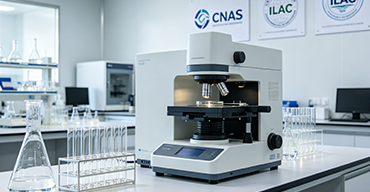
Internationally recognized authority
Certified by multiple international standards such as CNAS, VCS, and GS, with reports universally applicable worldwide.

Global service capability
Covering 140+ countries and regions, it supports on-site detection and remote verification in multiple languages.
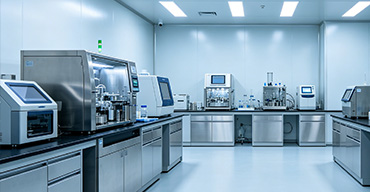
Professional experimental methods
Adopt standard experimental methods to ensure accurate and reliable data.
salmonella detection Testing Services: Reliable Pathogen Identification for Food, Feed & Environmental Safety
As an independent third-party testing service provider, we offer comprehensive salmonella detection and identification services for food products, animal feed, environmental samples, clinical specimens, and production surfaces. Salmonella is one of the most common causes of bacterial foodborne illness worldwide, leading to salmonellosis – characterised by diarrhoea, fever, abdominal cramps, and in severe cases, hospitalisation or death. Regulatory bodies (FDA, USDA, EFSA, CFIA, China National Food Safety Standards) mandate rigorous testing for Salmonella in many food categories (poultry, meat, eggs, dairy, seafood, produce, pet food). Our accredited laboratory follows international standards (ISO 6579, FDA BAM, USDA FSIS, GB 4789.4) using culture‑based, immunological, and molecular methods to deliver accurate, sensitive, and timely results. This article outlines our Salmonella testing capabilities – including scope, key test items, and standard test methods – to help food manufacturers, importers, regulators, and quality assurance teams detect and control this dangerous pathogen.
1. Our Testing Scope for salmonella detection
We cover a wide range of matrices, serovars, and testing objectives:
By sample matrix: Food (raw poultry, meat, seafood, eggs, dairy products, ready‑to‑eat meals, fruits, vegetables, spices, chocolate, infant formula); Animal feed & pet food; Environmental samples (food contact surfaces – swabs, sponges; floor drains; air dust; water); Agricultural samples (irrigation water, soil, compost); Clinical / veterinary (faecal, tissue, carcass rinses – by arrangement); Pharmaceutical raw materials.
By Salmonella serovar (common targets): Salmonella enterica subsp. enterica serovars: Typhimurium, Enteritidis, Newport, Heidelberg, Infantis, Thompson, Kentucky, Javiana, etc. (We detect the genus Salmonella – not all serovars individually unless requested for typing).
By detection methodology: Traditional culture (ISO 6579‑1, FDA BAM, GB 4789.4 – gold standard); Enzyme‑linked immunosorbent assay (ELISA – screening); Real‑time PCR (rapid screening/confirmation); Lateral flow immunochromatography (rapid on‑site test, laboratory‑verified).
By industry regulation: Food safety standards (FSMA, HACCP, Codex Alimentarius); Export certificates (China GB, EU 2073/2005, US USDA‑FSIS).
2. Key Test Items & Measurements We Perform
Our Salmonella testing services follow a logical flow from screening to confirmation. Each test step yields a qualitative (positive/negative) result per defined sample unit.
2.1 Culture‑Based Detection (Gold Standard / Confirmatory)
Pre‑enrichment (non‑selective) – sample homogenised in Buffered Peptone Water (BPW) and incubated at 37°C for 18‑24 hours to resuscitate injured cells.
Selective enrichment – transfer to Rappaport‑Vassiliadis (RV) broth (42°C) and/or Tetrathionate (TT) broth (37°C) for 24 hours to suppress competing flora.
Plating on selective/differential agars – Xylose Lysine Deoxycholate (XLD) agar, Hektoen Enteric (HE) agar, Brilliant Green (BG) agar, and/or Chromogenic Salmonella agar (CSA). Incubation at 37°C for 24‑48 hours.
Presumptive colony identification – typical colonies (e.g., black centre (H₂S) on XLD, transparent pink or purple on CSA).
Biochemical confirmation – Triple Sugar Iron (TSI) agar, Lysine Iron Agar (LIA), urease test, VITEK 2 or API 20E.
Serological confirmation (serogrouping) – polyvalent O (somatic) and H (flagellar) antisera (optional).
Result interpretation – positive/negative per 25 g or 25 mL sample (or other sample weight).
2.2 Rapid Screening & Confirmation Methods
Real‑time PCR (qPCR) – targets invA, ttr, or hilA genes; results in <6 hours after enrichment; high sensitivity and specificity.
Conventional PCR – end‑point PCR with gel electrophoresis (for research or low‑volume screening).
Loop‑mediated isothermal amplification (LAMP) – rapid field‑capable method (by arrangement).
ELISA (sandwich immunoassay) – detects Salmonella antigens after enrichment; semi‑quantitative screening.
Lateral flow immunochromatographic (strip) test – quick (15‑20 min) presumptive positive screen.
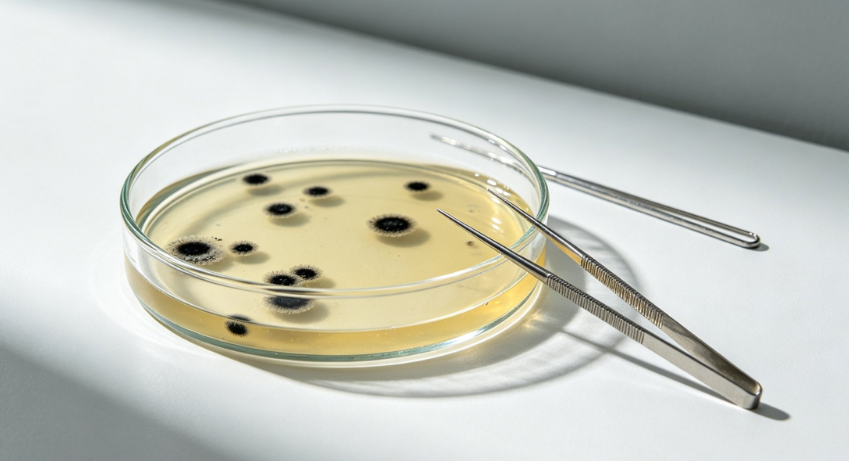
2.3 Serotyping (Subspecies & Serovar Identification)
Slide agglutination (O and H antisera) – Kauffmann‑White scheme – identifies serovar (e.g., S. Enteritidis, S. Typhimurium).
Molecular serotyping (PCR‑based or whole genome sequencing – WGS) – more precise for outbreak investigations (by arrangement).
2.4 Antimicrobial Susceptibility Testing (AST – optional)
Disk diffusion (Kirby‑Bauer) – for clinically relevant antibiotics.
Minimum inhibitory concentration (MIC) – using broth microdilution (custom order).
3. Standard Test Methods We Apply
All tests are performed according to internationally recognised standards. Our laboratory is ISO/IEC 17025 accredited and equipped with biosafety cabinets, incubators, PCR thermocyclers, automated ID systems, and serotyping reagents.
3.1 Culture‑Based Reference Standards
ISO 6579‑1 (Horizontal method for detection of Salmonella spp. – general guidance).
FDA BAM (Bacteriological Analytical Manual) Chapter 5 – Salmonella.
USDA FSIS Microbiology Laboratory Guidebook (MLG) Chapter 4 – Isolation and Identification of Salmonella from Meat, Poultry, and Egg Products.
GB 4789.4 (China – National Food Safety Standard – Microbiological examination of food – Salmonella).
ISO 19250 (Water quality – detection of Salmonella spp.).
3.2 Rapid & Molecular Standards
ISO 6579‑1 (Annex D) – detection using molecular methods (PCR).
AOAC Official Methods for salmonella detection (several PCR and ELISA kits – e.g., VIDAS, BAX, Assurance GDS).
NF EN ISO 20838 (amplification by real‑time PCR – general).
3.3 Serotyping & Antimicrobial Susceptibility Standards
ISO/TR 6579‑2 (serotyping – White‑Kauffmann scheme).
CLSI M100 (antimicrobial susceptibility testing for Enterobacteriaceae).
4. Why Choose Our Third‑Party salmonella detection Testing Services?
As an independent laboratory with food safety expertise, we provide accurate, legally defensible, and fast results. Our advantages include:
ISO/IEC 17025 accreditation – CNAS/CMA certified, regularly participating in proficiency testing (e.g., QCMD, FAPAS, NIL).
Low detection limit – qualitative (presence/absence in 25 g or 25 mL), satisfying most regulatory standards.
Rapid turnaround – screening by PCR: 1‑2 business days; full culture confirmation: 3‑5 business days.
Comprehensive reporting – includes method details, colony morphology, biochemical results, and clear positive/negative conclusion.
Confidentiality – full protection of your product lot, supplier, and internal data.
Consultative support – our microbiologists help interpret environmental monitoring results, advise on corrective actions, and assist with regulatory submissions.
Whether you need to release a batch of frozen poultry, verify the cleanliness of production surfaces, test imported spices, or investigate a foodborne outbreak, our salmonella detection experts are ready to deliver reliable results.
Get Started with Your Salmonella Testing Project
Contact our team with your sample type (food, swab, water, feed), required standard (ISO, FDA, GB), and any special testing needs (serotyping, AST). We will provide a detailed quotation, sample submission guidelines (including container type and cold chain requirements), and a testing schedule. Let us help you detect Salmonella and protect public health.
This article provides an overview of our salmonella detection testing capabilities. For specific test methods, sample quantity, and pricing, please request a tailored service proposal.