Reasons for choosing our testing services
ZHONGXI Testing has obtained inspection qualification certifications from multiple countries and regions worldwide. We possess a senior testing team and advanced testing methods, providing independent, impartial, and professional third-party verification services for global carbon projects.

Internationally recognized authority
Certified by multiple international standards such as CNAS, VCS, and GS, with reports universally applicable worldwide.

Global service capability
Covering 140+ countries and regions, it supports on-site detection and remote verification in multiple languages.

Professional experimental methods
Adopt standard experimental methods to ensure accurate and reliable data.
microbial limit Testing Services: Ensuring Non‑Sterile Product Safety & Regulatory Compliance
As an independent third-party testing service provider, we offer comprehensive microbial limit testing (MLT) for non‑sterile pharmaceutical products, raw materials, cosmetics, personal care items, food supplements, and medical devices. microbial limit testing quantifies specific groups of indicator organisms – such as total aerobic microbial count (TAMC), total yeast and mould count (TYMC), and the absence or limited presence of specified objectionable microorganisms (e.g., Staphylococcus aureus, Pseudomonas aeruginosa, Escherichia coli, Salmonella spp., Candida albicans, Bile‑tolerant Gram‑negative bacteria). This testing is mandatory for product release, stability studies, and quality control under pharmacopoeias (USP <61>, <62>, EP 2.6.12/2.6.13, JP 4.05/4.06, Chinese Pharmacopoeia 1105/1106) and ISO / cosmetic regulations (ISO 21149, ISO 16212, ISO 18415, ISO 22717, etc.). Our accredited laboratory follows these compendial methods to deliver accurate, reproducible, and legally defensible results. This article outlines our microbial limit testing capabilities – including scope, key test items, and standard test methods – to help manufacturers, quality assurance teams, and regulatory bodies ensure product safety and compliance.
1. Our Testing Scope for microbial limit Testing
We cover a wide variety of sample matrices, product types, and test parameters:
By sample matrix: Pharmaceutical raw materials (excipients, active pharmaceutical ingredients – APIs); Non‑sterile finished dosage forms (tablets, capsules, oral liquids, creams, ointments, suppositories); Cosmetics (lotions, shampoos, makeup, toothpaste, sunscreens); Personal care products (wipes, soaps, deodorants); Food supplements (powders, capsules, liquids); Medical devices (non‑sterile, irrigating solutions, contact lens care products); Herbal and traditional medicines; Veterinary non‑sterile products.
By pharmacopoeial / regulatory reference: USP <61> (microbial enumeration tests); USP <62> (tests for specified microorganisms); EP 2.6.12 (non‑sterile products – microbial enumeration); EP 2.6.13 (specified microorganisms); JP 4.05 (general tests – microbial limit); JP 4.06 (specified microorganisms); Chinese Pharmacopoeia (ChP) 1105 (microbial limit test for non‑sterile products); ChP 1106 (control of specified microorganisms); ISO 21149 (cosmetics – enumeration of aerobic mesophilic bacteria); ISO 16212 (cosmetics – enumeration of yeast and mould); ISO 18415 (cosmetics – detection of specified microorganisms).
By test parameter / organism group: Total aerobic microbial count (TAMC); Total yeast and mould count (TYMC); Bile‑tolerant Gram‑negative bacteria (e.g., E. coli – quantitative); Specified pathogens (qualitative – presence/absence in a specified sample quantity, typically 1 g, 1 mL, or 10 g): Escherichia coli, Salmonella spp., Staphylococcus aureus, Pseudomonas aeruginosa, Candida albicans, Clostridia (by arrangement).
By product category / risk level: Low risk (e.g., oral tablets with low water activity); Medium risk (e.g., topical creams, oral liquids); High risk (e.g., products for mucous membranes, ophthalmic, inhalation).
2. Key Test Items & Measurements We Perform
Our microbial limit testing services follow the harmonised pharmacopoeial framework. All tests are performed under validated conditions with appropriate neutralisation of product preservatives.
2.1 Microbial Enumeration Tests (TAMC & TYMC)
Total aerobic microbial count (TAMC) – enumeration of viable aerobic bacteria using plate count agar (PCA) or soybean‑casein digest agar (SCDA). Incubation at 30‑35°C for 3‑5 days. Result in colony‑forming units per gram or per millilitre (CFU/g, CFU/mL).
Total yeast and mould count (TYMC) – enumeration of yeasts and moulds using Sabouraud dextrose agar (SDA) or rose‑bengal chloramphenicol agar. Incubation at 20‑25°C for 5‑7 days.
Method suitability (bacteriostasis / fungistasis) – validation of the test method for each product to ensure that any antimicrobial activity is neutralised, typically using Staphylococcus aureus, Pseudomonas aeruginosa, Bacillus subtilis (bacteria), and Candida albicans, Aspergillus brasiliensis (yeast/mould).
2.2 Tests for Specified Microorganisms (Qualitative – Presence/Absence)
Escherichia coli (oral products) – enrichment in MacConkey broth, subculture on MacConkey agar; identification by colony morphology, oxidase, indole test.
Salmonella spp. (oral products, especially those with animal or herbal origin) – pre‑enrichment in buffered peptone water (BPW), selective enrichment in Rappaport‑Vassiliadis (RV) broth and tetrathionate (TT) broth; plating on xylose lysine deoxycholate (XLD) agar and Hektoen enteric (HE) agar; biochemical & serological confirmation.
Staphylococcus aureus (topical products, cosmetics) – enrichment in tryptic soy broth (TSB), subculture on Baird‑Parker agar or mannitol salt agar; coagulase test (positive).
Pseudomonas aeruginosa (topical, ophthalmic, water‑based products) – enrichment in TSB, subculture on cetrimide agar; oxidase test (positive), pigment production (blue‑green).
Candida albicans (oral and vaginal products) – enrichment in SCDB, subculture on Sabouraud agar; germ tube test in serum.
Bile‑tolerant Gram‑negative bacteria (quantitative, for certain products) – enumeration using violet red bile glucose agar (VRBGA) after enrichment in enterobacteria enrichment broth (EEB).
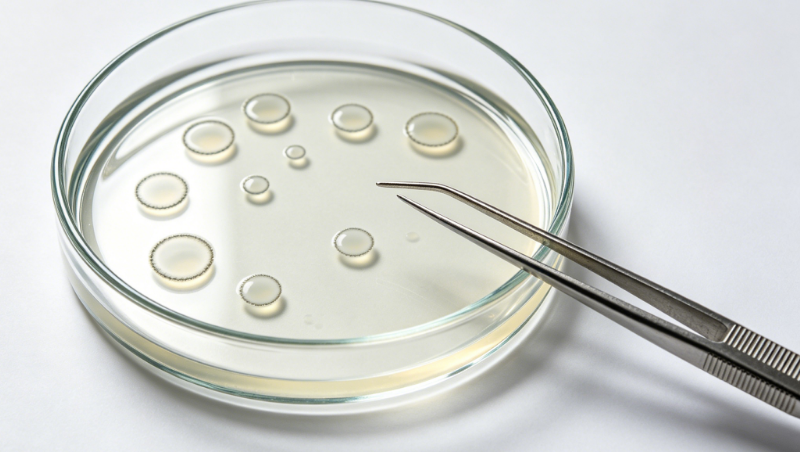
2.3 Sample Preparation & Neutralisation
Diluent selection – buffered sodium chloride‑peptone solution (pH 7.0), phosphate buffer (pH 7.2), or Letheen broth / D/E neutralising broth for products containing preservatives.
Homogenisation – stomacher or blender for solids; serial dilutions (1:10, 1:100, etc.) for plating.
Neutralisers added – lecithin, polysorbate 80 (Tween 80), histidine, sodium thiosulfate (for halogens), or product‑specific validation.
3. Standard Test Methods We Apply
All tests are performed according to the current harmonised pharmacopoeial methods and ISO standards. Our laboratory is ISO/IEC 17025 accredited and equipped with Class II biosafety cabinets, incubators, colony counters, and appropriate reference cultures.
3.1 Pharmacopoeia Standards
USP <61> (Microbiological examination of non‑sterile products – microbial enumeration tests).
USP <62> (Microbiological examination of non‑sterile products – tests for specified microorganisms).
EP 2.6.12 (non‑sterile products – microbial enumeration).
EP 2.6.13 (specified microorganisms).
JP 4.05 (general tests – microbial limit).
JP 4.06 (specified microorganisms).
Chinese Pharmacopoeia 1105 (microbial limit test).
Chinese Pharmacopoeia 1106 (specified microorganisms).
3.2 Cosmetic & ISO Standards
ISO 21149 (cosmetics – enumeration of aerobic mesophilic bacteria).
ISO 16212 (cosmetics – enumeration of yeast and mould).
ISO 18415 (cosmetics – detection of specified microorganisms).
ISO 22717 (cosmetics – detection of Pseudomonas aeruginosa).
ISO 22718 (cosmetics – detection of Staphylococcus aureus).
ISO 18416 (cosmetics – detection of Candida albicans).
3.3 Validation & Suitability Standards
USP <1227> (validation of microbial recovery from pharmacopoeial articles).
ISO 11133 (quality assurance of culture media).
4. Why Choose Our Third‑Party microbial limit Testing Services?
As an independent laboratory, we provide unbiased, accurate, and regulation‑ready data. Our advantages include:
ISO/IEC 17025 accreditation – CNAS/CMA certified, regularly participating in proficiency testing (e.g., USP, PHSS, NIL).
Pharmacopoeial expertise – we strictly follow USP/EP/JP/ChP methods and accept customer‑specified acceptance criteria.
Neutralisation validation – each product undergoes method suitability testing to ensure reliable recovery.
Low detection limits – enumeration down to 1 CFU/g (for total counts) and qualitative presence/absence in 1 g, 1 mL, or 10 g.
Fast turnaround – typical TAMC/TYMC results in 3‑5 business days; specified microorganism results in 5‑7 business days.
Comprehensive reporting – includes method suitability results, colony counts (if any), identification details (for positive cultures), and clear pass/fail statement against customer or compendial limits.
Confidentiality – full protection of your product formulation and proprietary data.
Consultative support – our microbiologists help interpret high counts, advise on preservation efficacy, and assist with corrective actions and regulatory submissions.
Whether you need to release a batch of non‑sterile ointment, verify the microbial quality of a herbal supplement, or test a cosmetic cream for objectionable organisms, our microbial limit testing experts are ready to deliver reliable results that meet global regulatory expectations.
Get Started with Your microbial limit Testing Project
Contact our team with your product type, formulation details (preservatives, solvents, water activity), applicable pharmacopoeia (USP, EP, JP, ChP), and any specific microorganism list. We will provide a detailed quotation, sample submission guidelines (including quantity and preservation recommendations), and a testing schedule. Let us help you ensure that your non‑sterile products are safe, compliant, and ready for market.
This article provides an overview of our microbial limit testing capabilities. For specific test parameters, sample quantity, and pricing, please request a tailored service proposal.