Reasons for choosing our testing services
ZHONGXI Testing has obtained inspection qualification certifications from multiple countries and regions worldwide. We possess a senior testing team and advanced testing methods, providing independent, impartial, and professional third-party verification services for global carbon projects.
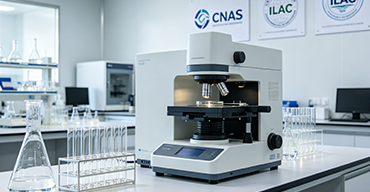
Internationally recognized authority
Certified by multiple international standards such as CNAS, VCS, and GS, with reports universally applicable worldwide.

Global service capability
Covering 140+ countries and regions, it supports on-site detection and remote verification in multiple languages.
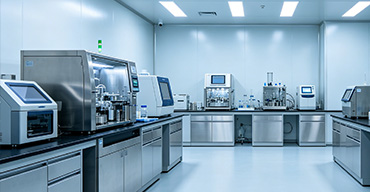
Professional experimental methods
Adopt standard experimental methods to ensure accurate and reliable data.
protein detection & Quantification Services: Accurate Analysis for Food, Pharma, Biotech & Clinical Research
As an independent third-party testing service provider, we offer comprehensive protein detection, quantification, and characterisation services for a wide range of sample matrices – including food ingredients, pharmaceutical formulations, biotechnology products, raw materials, clinical samples, and environmental specimens. Proteins are fundamental macromolecules that serve as nutrients, therapeutic agents, enzymes, allergens, and biomarkers. Reliable protein analysis is essential for nutritional labelling, quality control, purity assessment, stability studies, regulatory compliance, and research applications. Our accredited laboratory follows international standards (AOAC, ISO, USP, Ph. Eur., FDA, CODEX) using validated methods such as the Kjeldahl method, Dumas combustion, Bradford assay, BCA assay, Lowry method, UV‑Vis spectroscopy, electrophoresis (SDS‑PAGE), and immunoassays (ELISA). This article outlines our protein detection capabilities – including scope, key test items, and standard test methods – to help manufacturers, quality assurance teams, and research institutions obtain accurate, reproducible, and legally defensible protein data.
1. Our Testing Scope for protein detection
We cover a diverse range of sample types, protein concentrations, and analytical objectives:
By sample matrix: Food & feed (meat, dairy, cereals, infant formula, pet food, plant‑based proteins); Pharmaceutical proteins (recombinant proteins, monoclonal antibodies, vaccines, hormone preparations); Biotechnology products (fermentation broths, cell lysates, purified enzymes); Dietary supplements (whey protein, collagen, protein powders); Cosmetics & personal care (hair and skin proteins, hydrolysed proteins); Clinical & biological fluids (serum, plasma, urine, cerebrospinal fluid); Raw agricultural materials (soybean, wheat, corn, rice).
By protein concentration range: Macro (grams per 100 g – for food labelling); Micro (μg/mL to mg/mL – for bioprocessing); Trace (ng/mL to pg/mL – for allergen detection, biomarkers).
By detection method category: Total protein (Kjeldahl, Dumas, Bradford, BCA, Lowry, UV A280); Protein separation & purity (SDS‑PAGE, size exclusion HPLC, capillary electrophoresis); Protein identification (LC‑MS/MS, Western blot, ELISA); Specific protein quantification (ELISA, immunoturbidimetry, RID).
By industry application: Food labelling (nutrition facts – protein content); Food authenticity (meat speciation, adulteration detection); Allergen control (e.g., gluten, milk, egg, soy, peanut); Pharmaceutical protein drug purity; Bioprocess monitoring (fermentation yield); Clinical diagnostics (albumin, total protein).
2. Key Test Items & Measurements We Perform
Our protein testing services are organised by analytical technique and information delivered.
2.1 Total Protein Content (Macro & Micro)
Kjeldahl method (total nitrogen × nitrogen‑to‑protein conversion factor) – reference method for food, feed, and fertilizer. Digestion, distillation, titration – reports % protein (w/w). Custom conversion factors available (e.g., 6.25 for general, 5.70 for wheat, 6.38 for dairy).
Dumas combustion method – rapid, fully automated, no hazardous chemicals. Suitable for solid and liquid samples.
Bradford assay (Coomassie brilliant blue) – colorimetric at 595 nm, sensitive for micro‑protein determination (1‑50 μg).
BCA (bicinchoninic acid) assay – higher sensitivity and compatibility with detergents; absorbance at 562 nm.
Lowry method – classical colorimetric (Folin‑Ciocalteu reagent), sensitive but affected by interfering substances.
UV absorption at 280 nm (A280) – for purified proteins containing aromatic residues (tyrosine, tryptophan). Non‑destructive, requires known extinction coefficient.
2.2 Protein Purity & Molecular Weight Determination
SDS‑PAGE (sodium dodecyl sulfate‑polyacrylamide gel electrophoresis) – separates proteins by molecular weight; visualised by Coomassie or silver staining. Provides purity estimation (% major band) and apparent molecular weight.
Native PAGE – preserves protein conformation and activity.
Size exclusion chromatography (SEC‑HPLC) – quantifies aggregates, fragments, and monomers; molecular weight estimation using column calibration.
Capillary electrophoresis (CE‑SDS) – high‑resolution purity analysis, reduced and non‑reduced conditions.
Western blot – specific protein identification using antibodies.
2.3 Specific Protein & Allergen Quantification
ELISA (enzyme‑linked immunosorbent assay) – quantitative detection of specific proteins (e.g., gluten, beta‑lactoglobulin, ovalbumin, soy protein). Detection limits down to ppm (μg/g) or ppb (ng/g).
Immunoturbidimetry – for high‑abundance specific proteins (e.g., albumin, transferrin).
Radial immunodiffusion (RID) – classical method for specific protein quantification.
2.4 Protein Identification & Characterisation
LC‑MS/MS (liquid chromatography‑tandem mass spectrometry) – peptide mapping, post‑translational modification identification, and protein identification in complex mixtures.
MALDI‑TOF (matrix‑assisted laser desorption/ionisation time‑of‑flight) – intact molecular weight and purity assessment.
Amino acid analysis (AAA) – composition and total protein content via hydrolysis and HPLC‑UV/FL detection.
3. Standard Test Methods We Apply
All tests are performed according to internationally recognised standards. Our laboratory is ISO/IEC 17025 accredited and equipped with Kjeldahl digestion units, Dumas analysers, plate readers, HPLC systems, electrophoresis units, and LC‑MS/MS instruments.
3.1 Total Protein – Food & Feed
Kjeldahl method: AOAC 981.10 (protein in meat), 991.20 (milk), 976.05 (wheat flour), 954.01 (cereal grains), ISO 5983 (animal feed).
Dumas combustion: AOAC 992.23 (cereal grains), ISO 16634 (food products), AOAC 990.03 (protein in animal feed).
Bradford / BCA: no single regulatory standard but widely used for QC; we follow published protocols with in‑house validation.
3.2 Total Protein – Pharmaceuticals & Biologics
USP <1057> (biotechnology‑derived articles – protein determination).
Bradford (USP general chapter <1057> alternative).
UV A280 (Ph. Eur. 2.2.25, USP <851>).
BCA (USP <1057>).
SDS‑PAGE: Ph. Eur. 2.2.31, USP <1057> (appearance of gels).
SEC‑HPLC: USP <621>, Ph. Eur. 2.2.30 (chromatography).
CE‑SDS: USP <1057> (capillary electrophoresis).
LC‑MS/MS (peptide mapping): USP <1057> (mass spectrometry).
ELISA for gluten: AOAC 2012.01 (R5 Mendez method), Codex Alimentarius.
Milk allergen (beta‑lactoglobulin): AOAC 2015.06 (ELISA).
ELISA for soy, egg, peanut: various AOAC Official Methods (e.g., 2011.01 for egg).
4. Why Choose Our Third‑Party protein detection Services?
As an independent laboratory with broad protein analysis expertise, we provide unbiased, accurate, and regulatory‑ready data. Our advantages include:
ISO/IEC 17025 accreditation – CNAS/CMA certified, regularly participating in proficiency testing (FAPAS, AOCS, USP).
Wide method portfolio – from Kjeldahl to LC‑MS/MS – we select the most appropriate method for your matrix and detection limit.
Low detection limits – ELISA down to 0.1 ppm (0.01% for some allergens); Bradford/BCA down to 1 μg/mL.
Fast turnaround – total protein (Kjeldahl/Dumas) in 3‑5 business days; Bradford/BCA in 2‑3 business days; ELISA in 3‑5 business days.
Comprehensive reporting – includes raw data (titration volumes, absorbance, calibration curves), calculated protein content (%), purity estimates, and clear pass/fail conclusions against specifications.
Confidentiality – full protection of your product formulation and proprietary data.
Consultative support – our chemists and biochemists help select the correct nitrogen‑to‑protein conversion factor, validate allergen methods, and troubleshoot matrix interference.
Whether you need to declare protein content on a food label, measure purity of a therapeutic protein, detect hidden allergens in raw materials, or quantify protein in a bioprocess sample, our protein detection experts are ready to deliver precise, actionable results.
Get Started with Your protein detection Project
Contact our team with your sample matrix, expected protein concentration, required method (e.g., Kjeldahl, Bradford, ELISA), and any special considerations (allergen, dissolution difficulties, preservatives). We will provide a detailed quotation, sample submission guidelines (including recommended storage and minimum quantity), and a testing schedule. Let us help you accurately quantify and characterise proteins for quality, safety, and regulatory compliance.
This article provides an overview of our protein detection and quantification capabilities. For specific test methods, sample quantity, and pricing, please request a tailored service proposal.