Reasons for choosing our testing services
ZHONGXI Testing has obtained inspection qualification certifications from multiple countries and regions worldwide. We possess a senior testing team and advanced testing methods, providing independent, impartial, and professional third-party verification services for global carbon projects.

Internationally recognized authority
Certified by multiple international standards such as CNAS, VCS, and GS, with reports universally applicable worldwide.

Global service capability
Covering 140+ countries and regions, it supports on-site detection and remote verification in multiple languages.

Professional experimental methods
Adopt standard experimental methods to ensure accurate and reliable data.
PTFE Pellet Testing Services: Comprehensive Quality Assurance for High‑Performance Fluoropolymer Resins
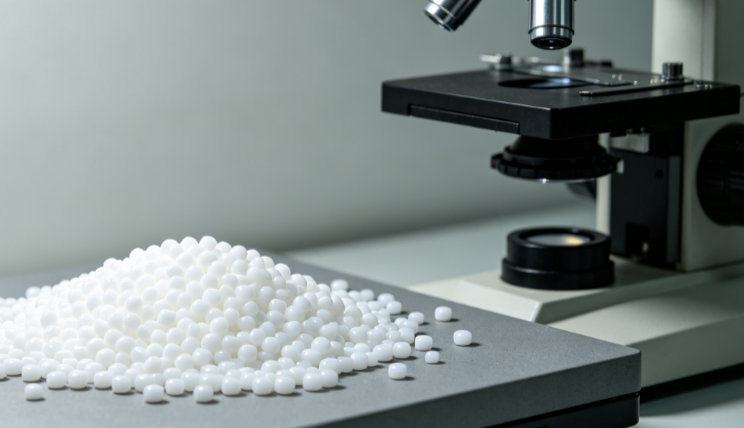
As an independent third-party testing service provider, we offer comprehensive testing for poly‑tetrafluoroethylene (PTFE) pellets, granules, powders, and molding compounds. PTFE is a high‑performance engineering fluoropolymer renowned for its exceptional chemical resistance, thermal stability (continuous service temperature up to 260°C), extremely low coefficient of friction (<0.05), excellent electrical insulation properties, and non‑stick characteristics[reference:0]. PTFE pellets are the primary raw material for manufacturing seals, gaskets, bearings, linings, insulators, gaskets, valve components, anti‑stick coatings, high‑frequency circuit boards, and chemical processing equipment. The quality and consistency of PTFE pellets directly impact the mechanical strength, dimensional stability, processing behavior, and end‑use performance of fabricated parts. Our accredited laboratory follows internationally recognized standards (ASTM D4894, ASTM D4895, ASTM D4745, ISO 12086, GB/T 1345, GB/T 1040) to deliver accurate, reproducible, and legally defensible test data across physical, mechanical, thermal, electrical, and chemical performance domains. This article outlines our PTFE pellet testing capabilities – including scope, key test items, and standard test methods – to help manufacturers, compounders, fabricators, and quality assurance teams verify material compliance and fitness‑for‑purpose.
1. Our Testing Scope for PTFE Pellets
We cover all common PTFE pellet grades, product forms, and testing categories:
By PTFE type / grade: Virgin PTFE granular molding & ram extrusion resins (ASTM D4894 Type I and Type II)[reference:1]; PTFE fine powders for paste extrusion (ASTM D4895 Type I and Type II) – used for skived tape, wire insulation, and expanded PTFE (ePTFE)[reference:2]; Filled PTFE compounds – with glass fiber (GF), carbon, graphite, bronze, MoS₂, or other fillers (ASTM D4745)[reference:3]; PTFE coagulated dispersion powders; Reprocessed and customized PTFE compounds; PTFE aqueous dispersions (ASTM D4441)[reference:4].
By product form: Virgin PTFE pellets – free‑flowing granular resins for automatic molding and ram extrusion; PTFE powders – fine and coarse particle size grades for various processing methods; Filled PTFE molding compounds – pelletized or free‑flowing materials; PTFE micropowders and lubricated powders for additive manufacturing and coating applications.
By test category: Physical properties (standard specific gravity – SSG, extended specific gravity – ESG, bulk density, particle size distribution, water/moisture content, ash/filler content, pigment/carbon black content, viscosity / extrusion pressure); Thermal properties (melting point by DSC, thermal stability by TGA, thermal instability index – TII, heat aging resistance, thermal conductivity); Mechanical properties (tensile strength, elongation at break, yield strength, tensile modulus, stretch void index – SVI, compressive strength, hardness – Shore D); Electrical properties (dielectric strength, dielectric constant, dissipation factor, volume/surface resistivity); Chemical properties (solvent extraction, chemical resistance, fluoropolymer identification by FTIR, elemental analysis (F, C, trace contaminants by ICP‑MS)); Processing characteristics (extrusion pressure, molding parameters, sintering behavior).
By regulatory framework / end‑use standard: ASTM D4894 (Standard specification for PTFE granular molding and ram extrusion materials)[reference:5]; ASTM D4895 (Standard specification for PTFE resin produced from dispersion)[reference:6]; ASTM D4745 (Standard classification system and basis for specification for filled PTFE molding and extrusion materials)[reference:7]; ISO 12086 (Plastics – Fluoropolymer dispersions and molding and extrusion materials); GB/T 1040 (Determination of tensile properties of plastics); GB/T 1345 (Test methods for apparent density – powder bulk density); GB/T 1033 (Determination of density of plastics).
2. Key Test Items & Measurements We Perform
Our PTFE pellet testing services are organized into six performance domains. Each domain addresses critical properties required by ASTM and ISO specifications for material qualification and quality control.
2.1 Physical Properties
Standard specific gravity (SSG) – measured by displacement method per ASTM D4895, ASTM D792, or ISO 12086. The sample is prepared by compression molding a plaque (preform) followed by free sintering (not constrained). The density is calculated as weight in air / (weight in air – weight in water). Typical SSG for virgin PTFE ranges from 2.14 to 2.20 g/cm³[reference:8]. SSG correlates with molecular weight and crystallinity – a lower SSG indicates higher molecular weight and better mechanical properties, while a higher SSG suggests potential degradation or lower molecular weight. This is the critical quality indicator for PTFE materials.
Extended specific gravity (ESG) – measured similarly to SSG, but the sample is sintered under extended or more severe conditions (longer time or higher temperature). ESG provides additional insight into thermal stability and molecular weight retention after prolonged heat exposure; a significant increase in ESG relative to SSG indicates inadequate thermal stability.
Bulk density (apparent density) – measured by pouring a known volume of PTFE pellets or powder into a calibrated cylinder and weighing, per ASTM D4894, ASTM D4895, ISO 60, or GB/T 1345. Typical values range from 0.4 to 0.8 g/cm³ for granular resins[reference:9]. Bulk density affects hopper flow, mold filling, and automated molding processes. Variations in bulk density can indicate changes in particle shape, size distribution, or moisture content.
Particle size distribution – determined by sieve analysis (ASTM D1921), laser diffraction (ISO 13320), or optical microscopy. Critical parameters: median particle size (D50, typically 30‑600 µm depending on grade), particle size distribution breadth, and percentage of fines (< 100 µm). Narrow distribution with controlled fines ensures uniform mold filling, consistent extrusion pressure, and reduced reject rates in automatic molding. For paste extrusion fine powders (ASTM D4895), particle size directly affects extrusion pressure and surface finish of skived tape.
Moisture / water content – measured by Karl Fischer titration or loss on drying (vacuum oven at 105°C) per ASTM D4019 or ISO 15512. PTFE has extremely low moisture absorption (<0.01% after 24 hours immersion)[reference:10]. Elevated water content may lead to voids, blistering, or surface defects in molded parts, as well as cause corrosion of the processing equipment.
Ash content (for filled PTFE – ASTM D4745) – determined by calcination (muffle furnace at 600‑800°C) or TGA. The filler content (e.g., glass fiber, carbon, graphite, bronze) is calculated from the residual mass after burning off the PTFE matrix. For carbon‑black filled PTFE, the pigment content is determined by the calcination method under controlled atmosphere[reference:11]. Typical filler loadings range from 5 to 40% by weight. Variations in filler content directly affect mechanical strength, wear resistance, and thermal expansion.
Standard color and appearance – visual inspection (natural PTFE is white to off‑white). Color differences may indicate contamination, thermal degradation, or improper filler dispersion. For colored or pigmented PTFE, colorimetry (CIELAB ∆E*) is performed to ensure batch‑to‑batch consistency.
2.2 Thermal Properties
Melting point (peak melting temperature – Tm) – measured by differential scanning calorimetry (DSC) per ASTM D3418, ASTM D4895, or ISO 11357‑3[reference:12]. PTFE exhibits a first‑order melting transition at approximately 327°C, accompanied by a crystalline‑to‑amorphous phase change. Typical Tm ranges from 320°C to 335°C[reference:13]. Deviations from the expected melting range can indicate molecular weight degradation, copolymer contamination, or incomplete sintering. The melting enthalpy (∆H) provides a measure of crystallinity (typically 40‑70%).
Thermal stability / thermal instability index (TII – ASTM D4895) – measured by isothermal TGA or pressure DSC at elevated temperature (360‑400°C). TII quantifies the mass loss rate due to thermal decomposition of unstable end‑groups and low‑molecular‑weight species. A low TII indicates excellent thermal stability and high molecular weight, essential for long‑service‑life applications. For PTFE used in high‑temperature environments (>250°C), TII values below 0.5 %/min are typically required.
Thermogravimetric Analysis (TGA – ASTM E1131) – measures mass change as a function of temperature. PTFE is thermally stable up to 400°C; above 450‑500°C, decomposition occurs with release of tetrafluoroethylene (TFE) monomer and other toxic fluorinated gases[reference:14]. TGA provides decomposition onset temperature, maximum decomposition rate temperature, and char yield (residue after 600°C). It also quantifies filler content, carbon black content, and volatiles.
Heat aging resistance – accelerated aging test where PTFE specimens are exposed to elevated temperatures (e.g., 250‑300°C) for extended periods (up to 500 hours). After aging, tensile strength, elongation, and color are re‑evaluated to determine the thermal endurance. PTFE can typically withstand 260°C continuously for over 10,000 hours with less than 5% mechanical property degradation, making it the material of choice for chemical and high‑temperature sealing.
Thermal conductivity – measured by heat flow meter (ASTM C518) or laser flash analysis (ASTM E1461). PTFE has relatively low thermal conductivity (≈0.25 W/(m·K) at 23°C), making it suitable for thermal insulation gaskets and electrical applications where heat dissipation must be managed.
Specific heat capacity (Cp) – determined by modulated DSC (ASTM E1269), required for thermal simulation of PTFE components (e.g., valve seats, cryogenic seals, electrical insulation in thermal cycling environments).
2.3 Mechanical Properties
tensile strength at break – measured per ASTM D4894, ASTM D4895, ASTM D638, ISO 12086‑2, or GB/T 1040. Specimens are machined from compression‑molded and sintered plaques (typical thickness 3‑6 mm)[reference:15]. Virgin PTFE tensile strength: minimum ≥ 25‑27 MPa[reference:16]. For filled PTFE compounds, tensile strength may be lower (10‑20 MPa), depending on filler type and loading level.
Elongation at break – measured simultaneously with tensile strength. Virgin PTFE exhibits high ductility, typically ≥ 300‑350% elongation[reference:17]. High elongation indicates high molecular weight and good quality; reduced elongation (<250%) suggests molecular degradation, contamination, or incomplete sintering. For filled PTFE, elongation decreases significantly, often to 50‑200% depending on filler type and filler loading.
yield strength (at 10‑20% strain) – PTFE exhibits a distinct yield point due to its semi‑crystalline structure, typically occurring at 10‑20% elongation. yield strength provides an indication of resistance to permanent deformation under load.
Tensile modulus / modulus of elasticity – slope of the initial linear elastic portion of the stress‑strain curve. For PTFE, E ≈ 400‑700 MPa at 23°C. The modulus is temperature‑dependent and decreases significantly above the glass transition temperature (approximately ‑115°C for amorphous phase, but PTFE remains ductile even down to cryogenic temperatures).
Stretch void index (SVI – ASTM D4895) – measured on a stretched and sintered specimen. SVI assesses the void content and neck formation during stretching of PTFE. A low SVI indicates dense, uniform material suitable for high‑strength applications such as skived tape and expanded PTFE (ePTFE). High SVI may lead to poor mechanical performance and reduced dielectric strength.
compressive strength and compressive modulus – measured per ASTM D695. Typical compressive strength of PTFE is 10‑30 MPa at 1‑10% deformation. For gaskets, seals, and bearing pads, compressive creep (per ASTM D621) is also measured to assess long‑term deformation under sustained load.
Hardness – Shore D durometer per ASTM D2240. Virgin PTFE Shore D hardness typically ranges from 50‑65 D. Filled PTFE compounds may be harder (60‑75 D). Shore D correlates with wear resistance and resistance to indentation under load.
Flexural strength and modulus – measured per ASTM D790. PTFE is flexible and does not typically fail in flexure, but flexural modulus (stress at 3.5% strain) provides useful design data for bearings and load‑bearing applications.
Wear resistance / friction coefficient – measured by thrust washer test (ASTM D3702), pin‑on‑disk (ASTM G99), or block‑on‑ring. PTFE is known for its exceptionally low coefficient of friction (μ ≈ 0.05‑0.10 against polished steel). For filled PTFE, wear rate is measured in mm³/N·m or mass loss after a specified number of cycles.
2.4 Electrical Properties
Dielectric strength (Breakdown Voltage) – measured per ASTM D149 or IEC 60243‑1. PTFE exhibits high dielectric strength (> 60 kV/mm for thin sections), making it an ideal insulator for high‑frequency cables, connectors, and printed circuit boards.
Dielectric constant (permittivity – εr) – measured per ASTM D150 or IEC 60250. For PTFE, εr ≈ 2.1, exceptionally low and stable across a wide frequency range (1 kHz to 1 GHz) and temperature range (‑40°C to +150°C). This property is critical for coaxial cable insulation, high‑frequency RF connectors, and radar components.
Dissipation factor (tan δ) – measured per ASTM D150. For PTFE, tan δ ≈ 1‑5 × 10⁻⁴, contributing to minimal signal loss in high‑speed data transmission applications.
Volume resistivity & surface resistivity – measured per ASTM D257 or IEC 60093. PTFE is an excellent electrical insulator with volume resistivity ≥ 10¹⁶ Ω·cm, and surface resistivity ≥ 10¹⁴ Ω/sq. Even under high humidity conditions, surface resistivity remains high due to PTFE’s hydrophobic nature, making it suitable for connectors and insulators operating in wet environments.
Tracking resistance / comparative tracking index (CTI) – measured per IEC 60112. PTFE typically exhibits CTI ≥ 600 V (higher than many other engineering polymers), indicating excellent resistance to surface breakdown under wet, contaminated conditions.
2.5 Processing Characteristics
Extrusion pressure (for PTFE fine powders – ASTM D4895) – measured on a capillary rheometer or paste extrusion apparatus using a reduction ratio (RR) of 100:1 to 1600:1. Extrusion pressure (MPa) is a critical quality control parameter for paste extrusion fine powders used to produce skived tape, tubing, wire insulation, and expanded PTFE (ePTFE).
Molding characteristics (for granular molding resins – ASTM D4894) – preforming pressure (typical 14‑35 MPa) and sintering cycle (ramp rate, hold time at 370‑380°C, cooling rate) are established for each resin grade. Poor molding characteristics lead to cracking, warping, blistering, porosity, or dimensional inaccuracy in finished parts.
Melt flow rate (MFR) and melt volume rate (MVR) – measured per ASTM D1238 or ISO 1133. While PTFE does not melt‑flow easily (extremely high melt viscosity, >10¹⁰ Pa·s even above its melting point), MFR/MVR is more relevant for melt‑processible fluoropolymers such as FEP (fluorinated ethylene propylene), PFA (perfluoroalkoxy), and ETFE. For PTFE pellets, MFR is not a standard QC test, but it may be performed for certain modified or low‑molecular‑weight PTFE grades to assess flowability during specialized processing (e.g., injection molding of PTFE compounds).
2.6 Chemical & Purity Analysis
FTIR identification – Fourier transform infrared spectroscopy (ASTM E1252, ISO 14571) identifies the polymer type (PTFE exhibits characteristic C‑F stretching absorption bands in the 1100‑1200 cm⁻¹ range). FTIR also detects contamination (e.g., hydrocarbon oils, other fluoropolymer residues), oxidation (carbonyl peak at ~1720 cm⁻¹), and functional groups.
Elemental analysis (fluorine content) – determined by combustion ion chromatography or Eschka method. Theoretical fluorine content of PTFE is 76 wt%. Deviations indicate contamination, incomplete polymerization, or presence of other fluoropolymers (e.g., PFA, FEP).
Trace contaminants / heavy metals – measured by ICP‑MS (ASTM E3061). Typical limits: Pb < 0.1 ppm, Cd < 0.01 ppm, Hg < 0.01 ppm for high‑purity grades (electronic, medical). Elevated metals may originate from polymerization catalysts (e.g., persulfate, iron) or from fillers.
Extractable organic compounds – Soxhlet extraction with solvents (e.g., acetone, hexane, isopropanol) followed by GC‑MS analysis of the extract. Critical for medical device and pharmaceutical applications where leachable residues must be minimized. Acceptable limits: total extractables < 0.5 wt%.
Solution viscosity / molecular weight characterization – PTFE is insoluble in all known solvents below its melting point, so molecular weight (Mw) is determined indirectly by DSC crystallinity, SSG value, or ASTM D4895 thermal instability index (TII). Lower SSG and lower TII correspond to higher molecular weight (> 10⁶ g/mol) and improved mechanical properties.
Gel content / insoluble fraction – for cross‑linked PTFE or modified PTFE, the insoluble fraction after extraction in perfluorinated solvents is measured.
Fluorine‑19 NMR (solid‑state) – advanced characterization of end‑groups, branch points, and chain structure (by arrangement).
3. Standard Test Methods We Apply
All tests are performed according to internationally recognized standards. Our laboratory is ISO/IEC 17025 accredited and equipped with analytical balances, sintering ovens, DSC/TGA, universal testing machines, extrusion rheometers, particle size analyzers, FTIR, ICP‑MS, GC‑MS, and electrical test benches.
3.1 Physical Property Standards
Standard specific gravity (SSG): ASTM D4895, ASTM D792, ISO 1183, GB/T 1033.
Extended specific gravity (ESG): ASTM D4895 (annex).
Bulk density: ASTM D4894, ASTM D4895, ISO 60, GB/T 1345.
Particle size analysis (sieve): ASTM D1921.
Particle size analysis (laser diffraction): ISO 13320.
Moisture content (Karl Fischer): ASTM D4019, ISO 15512.
Ash content (calcination): ASTM D1506, ASTM D4745, GB/T 13021.
3.2 Thermal Property Standards
Melting point (DSC): ASTM D3418, ASTM D4895, ISO 11357‑3, GB/T 19466.
Thermal instability index (TII): ASTM D4895.
Thermogravimetric Analysis (TGA): ASTM E1131, ISO 11358.
Heat aging resistance: ASTM D3045 (plastics), ASTM D573 (for rubber – adapted).
Specific heat capacity (DSC): ASTM E1269, ASTM D3418.
3.3 Mechanical Property Standards
Tensile properties: ASTM D4894 (granular resins), ASTM D4895 (dispersion resins), ASTM D4745 (filled compounds), ASTM D638, ISO 12086‑2, GB/T 1040.
Stretch void index (SVI): ASTM D4895.
Compressive properties: ASTM D695.
Hardness (Shore D): ASTM D2240, ISO 868, GB/T 2411.
Flexural properties: ASTM D790, ISO 178.
Wear / friction (thrust washer): ASTM D3702.
Wear / friction (pin‑on‑disk): ASTM G99.
3.4 Electrical Property Standards
Dielectric strength: ASTM D149, IEC 60243‑1.
Dielectric constant & dissipation factor: ASTM D150, IEC 60250.
Volume & surface resistivity: ASTM D257, IEC 60093.
Comparative tracking index (CTI): IEC 60112.
3.5 Processing Characteristic Standards
Extrusion pressure (paste extrusion): ASTM D4895 (for fine powders).
MFR / MVR: ASTM D1238, ISO 1133.[reference:18]
Molding preforming pressure: ASTM D4894.
3.6 Chemical & Purity Standards
FTIR identification: ASTM E1252, ISO 14571, GB/T 6040.
Elemental analysis (fluorine): ASTM D376 (Eschka), ISO 14680‑3 (ashing method).[reference:19]
Trace metals (ICP‑MS): ASTM E3061, ISO 17294.
Extractable organics (Soxhlet + GC‑MS): USP <661>, EP 2.4.23, ISO 15318.
3.7 Product Specification Standards
ASTM D4894: Standard specification for PTFE granular molding and ram extrusion materials – types I, II, III based on SSG and tensile strength properties. Types: I (lower molecular weight), II (higher molecular weight), III (modified).
ASTM D4895: Standard specification for PTFE resin produced from dispersion – types I (standard fine powder) and II (high‑molecular‑weight fine powder), grades 1‑4, classes A, B, C based on extrusion pressure range and specific properties.[reference:20]
ASTM D4745: Standard classification system and basis for specification for filled PTFE molding and extrusion materials – types II and III (virgin PTFE base resin, pelletized or free‑flowing materials).[reference:21]
ISO 12086‑1,‑2: Plastics – Fluoropolymer dispersions and molding and extrusion materials – part 1: designation system and basis for specifications; part 2: preparation of test specimens and determination of properties.
GB/T 1345 (China): Apparent density testing of powders and granules.
GB/T 1040 (China): Determination of tensile properties of plastics – applicable to PTFE plaques.
4. Why Choose Our Third‑Party PTFE Pellet Testing Services?
As an independent laboratory, we provide unbiased, accurate, and legally defensible PTFE pellet data. Our advantages include:
ISO/IEC 17025 accreditation – CNAS/CMA certified, with regular participation in proficiency testing (e.g., ASTM D4895, D4894, ISO 12086 round‑robins).
Specialized fluoropolymer testing – We operate dedicated equipment for PTFE testing, including sintering ovens (up to 400°C, with programmable heating/cooling rates), paste extrusion rheometers (reduction ratios 100:1 to 1600:1), compression molding presses (for SSG/ESG plaques), particle size analyzers, DSC, TGA, universal testing machines, and electrical test benches.
Complete test portfolio – Physical, thermal, mechanical, electrical, processing, and chemical tests – all under one roof.
Fast turnaround – Routine physical and thermal property tests (SSG, bulk density, particle size, moisture, DSC melting point) typically completed within 3‑5 business days. Full ASTM D4895 or D4894 certification programmes (including tensile, elongation, TGA, TII, extrusion pressure) in 7‑10 business days.
Detailed reporting – Reports include raw data, DSC thermograms, TGA curves, tensile stress‑strain plots, particle size distribution histograms, extrusion pressure vs. RR curves, and clear pass/fail conclusions against ASTM/ISO customer specifications.
Confidentiality – Full protection of your resin formulation, filler composition, and proprietary production data.
Consultative support – Our fluoropolymer specialists assist with grade selection (suspension vs. dispersion resin, filled vs. unfilled), specification compliance, interpretation of borderline properties (SSG, extrusion pressure, TII, tensile strength), and root‑cause investigation of processing issues (e.g., preform cracking during sintering, porosity in molded parts, inconsistent extrusion pressure).
Whether you need to qualify a new batch of virgin PTFE granular resin to ASTM D4894, characterize a filled PTFE molding compound to ASTM D4745, verify the extrusion pressure of a fine powder for skived tape production, or investigate the cause of low elongation in a molded PTFE part, our PTFE pellet testing experts are ready to deliver reliable, actionable results.
Get Started with Your PTFE Pellet Testing Project
Contact our team with your PTFE grade (suspension granular, fine powder, filled compound, dispersion), ASTM/ISO specification (ASTM D4894, D4895, D4745, ISO 12086), and required test items (physical, thermal, mechanical, electrical, processing, chemical). We will provide a detailed quotation, sample submission guidelines (minimum 1‑5 kg for virgin resins, 2‑10 kg for filled compounds), conditioning recommendations (23±2°C, 50±5% RH for ≥ 24 hours, and the required pre‑sintering plaque preparation), and a testing schedule. Let us help you ensure that your PTFE pellets meet all quality and performance requirements for reliable, long‑lasting fluoropolymer applications.
This article provides an overview of our PTFE pellet testing capabilities. For specific test methods, sample quantity, and pricing, please request a tailored service proposal.