Reasons for choosing our testing services
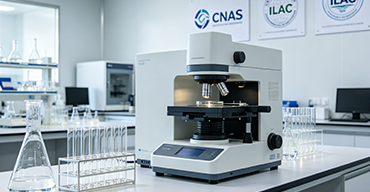
ZHONGXI Testing has obtained inspection qualification certifications from multiple countries and regions worldwide. We possess a senior testing team and advanced testing methods, providing independent, impartial, and professional third-party verification services for global carbon projects.
Internationally recognized authority
Certified by multiple international standards such as CNAS, VCS, and GS, with reports universally applicable worldwide.

Global service capability
Covering 140+ countries and regions, it supports on-site detection and remote verification in multiple languages.

Professional experimental methods
Adopt standard experimental methods to ensure accurate and reliable data.
Antibody Binding Site (Epitope) Mapping Services: Precise Characterisation of Antibody‑Antigen Interactions
As an independent third-party analytical service provider, we offer comprehensive antibody binding site (epitope) mapping services to support therapeutic antibody development, vaccine design, diagnostic reagent validation, and fundamental immunology research. Epitope mapping identifies the precise region(s) on an antigen where an antibody binds – information that is critical for understanding mechanism of action, predicting cross‑reactivity, assessing biosimilarity, optimising antibody affinity, and de‑risking lead candidates. Our accredited laboratory follows established structural and peptide‑based approaches (X‑ray crystallography, cryo‑EM, hydrogen‑deuterium exchange mass spectrometry – HDX‑MS, alanine scanning mutagenesis, peptide scanning, and phage display) to deliver high‑resolution, publication‑ready epitope data. This article outlines our epitope mapping capabilities – including scope, key test items, and standard methods – to help biopharmaceutical companies, research institutions, and diagnostic developers elucidate antibody‑antigen interactions with confidence.
1. Our Testing Scope for Antibody Binding Site Analysis
We cover a broad range of antibody formats, antigen types, and mapping resolutions:
By antibody type: Monoclonal antibodies (mAbs) – murine, chimeric, humanised, fully human; Polyclonal antibodies (pAbs); Recombinant antibodies – single‑chain variable fragments (scFv), Fab fragments, nanobodies (VHH); Bispecific antibodies (by arrangement).
By antigen type / format: Proteins (globular, membrane proteins, recombinant, native); Peptides (linear, cyclised); Nucleic acid antigens; Small molecule haptens; Lipids and carbohydrates (by arrangement); Multi‑protein complexes and viral particles.
By mapping resolution / technique: Low‑resolution conformational epitope mapping (< 15 Å) – hydrogen‑deuterium exchange mass spectrometry (HDX‑MS) to identify which regions of the antigen become protected from deuterium exchange upon antibody binding; Medium‑resolution linear epitope mapping (amino acid‑level) – peptide scanning (PEPscan) using overlapping synthetic peptides spanning the antigen sequence; High‑resolution structural mapping (atomic level) – X‑ray crystallography of antibody‑antigen complex or cryo‑electron microscopy (cryo‑EM); Site‑directed mutagenesis (alanine scanning) – pinpoint individual amino acid residues critical for binding; Computational prediction and molecular docking (for preliminary or supplement).
By epitope type: Linear (continuous) epitopes – amino acid stretch recognised in its primary sequence; Conformational (discontinuous) epitopes – amino acids brought together by protein folding but distant in the primary sequence; Conformational epitopes represent the majority of B‑cell epitopes in native proteins.
By industry / application: Therapeutic antibody development (lead optimisation, candidate selection, biosimilar comparability); Vaccine design (mapping immunodominant epitopes for rational vaccine development); Autoimmunity and allergy research (identification of antibody targets in patient sera); Diagnostic antibody validation (confirmation of specificity, reduction of cross‑reactivity); Antibody engineering (affinity maturation, epitope‑guided design, bispecific construction); Patent and regulatory submission (providing data for biological characterisation and patent protection).
2. Key Test Items & Measurements We Perform
Our antibody binding site analysis services are organised by method, offering different resolutions, throughput, and information content.
2.1 Peptide Scanning (PEPscan – Linear Epitope Mapping)
Principle: A library of overlapping synthetic peptides (typically 15‑20 amino acids in length, offset by 3‑12 residues) covering the entire antigen sequence is synthesised on a solid support (e.g., cellulose membrane or multi‑well plate). The antibody is incubated with the peptide library, and binding is detected by ELISA, chemiluminescence, or fluorescence. Positive peptides identify linear epitope segments.
Output: Linear epitope core sequence (e.g., “Y‑P‑H‑F‑L‑T”) and the minimal binding motif. For antibodies recognising linear epitopes, we can define the epitope down to single‑amino‑acid resolution by synthesising truncated or substituted peptides. For conformational epitopes, PEPscan will generally be negative, indicating the need for structure‑based methods.
Typical throughput: Up to 2,000 peptides per antibody; coverage of a 500 amino acid antigen with 15‑mers offset by 3 = ~162 peptides.
Lead time: 3‑4 weeks.
2.2 Alanine Scanning Mutagenesis (Site‑Directed Mutagenesis)
Principle: Alanine scanning identifies which residues in the antigen contribute most to antibody binding. A series of antigen mutants are generated, each with a single residue changed to alanine (or another neutral amino acid). The binding affinity of the antibody to each mutant (e.g., by surface plasmon resonance – SPR, or ELISA) is compared to wild‑type. A significant loss of binding (e.g., ≥5‑fold increase in KD) indicates that the original side chain is critical for the antibody‑antigen interaction. This method can identify both linear and conformational epitope residues but is lower throughput than peptide scanning.
Output: List of residues essential for binding; for conformational epitopes, residues that are spatially close in the folded antigen even if distant in sequence will be identified. When combined with structural information (crystal structure of antigen), alanine scan data can be mapped onto the 3D structure to define the interaction surface.
Throughput: 50‑100 mutants per antigen (depending on size).
Lead time: 4‑6 weeks.
2.3 Hydrogen‑Deuterium Exchange Mass Spectrometry (HDX‑MS)
Principle: HDX‑MS measures the rate of exchange of amide hydrogens in the protein backbone with deuterium from solution. Regions involved in antibody binding become protected from exchange (slower deuteration) because they are buried in the interface. After incubation with antibody (or without as control), the antigen is digested with pepsin, and peptides are analysed by LC‑MS. The deuterium uptake difference between bound and unbound states reveals which antigen regions are protected – i.e., the epitope.
Advantages: Works for conformational epitopes, does not require protein crystallisation, can map epitopes on large and membrane proteins, gives data on dynamic changes upon binding, and provides residue‑level resolution for large protein antigens (resolution about 5‑10 amino acids per peptide). HDX‑MS typically covers 70‑95% of the protein sequence.
Output: Epitope “footprint” – a set of overlapping peptides that show reduced deuterium uptake; these peptides indicate the conformational epitope region. The raw and subtracted uptake plots (deuterium level vs. time) are provided for each peptide.
Lead time: 3‑5 weeks (includes optimisation of digestion and MS conditions).
2.4 X‑ray Crystallography & Cryo‑Electron Microscopy
X‑ray crystallography: The antibody‑antigen complex is crystallised, diffraction data collected, and the 3D structure solved. This gives atomic‑level (≤ 2.5 Å resolution) information on the binding interface: exact hydrogen bonds, van der Waals contacts, salt bridges, and water‑mediated interactions. All residues involved in binding are identified, including side chain conformations and buried surface area. X‑ray crystallography is the gold standard for high‑resolution epitope mapping.
Cryo‑EM: For large complexes (e.g., antibody bound to viral particle or membrane protein), cryo‑EM with single‑particle analysis can achieve near‑atomic resolution (3‑5 Å) and reveal conformational changes and binding sites without crystallisation.
Output: 3D atomic coordinates (PDB file), contact map, epitope residue list, and interface statistics (buried surface area, hydrogen bonds, electrostatic complementarity).
Lead time: 6‑12 months (depends on complexity, success of crystallisation).
2.5 Phage Display Epitope Mapping
Principle: A random peptide phage display library (e.g., 7‑mer, 12‑mer) is panned against immobilised antibody. Phages that bind are selected, and the displayed peptide sequences are determined by DNA sequencing. Over‑represented sequences are aligned to the antigen sequence to identify mimotopes (peptide mimics of the epitope). This method does not require knowledge of the antigen sequence and can be used to map both linear and conformational epitopes indirectly.
Output: A set of consensus peptide sequences that bind the antibody; these are aligned with the antigen (if known) to infer the epitope. For orphan antibodies (antigen unknown), the consensus peptide may be used to identify the target protein via database searching.
Lead time: 4‑5 weeks.
2.6 Hydrogen‑Deuterium Exchange with Electron Transfer Dissociation (ETD‑HDX)
For ultra‑high resolution (residue‑specific), HDX coupled with electron transfer dissociation mass spectrometry (ETD‑HDX) localises deuterium incorporation to individual residues, rather than peptide segments. This advanced method is offered for targets requiring absolute precision (e.g., mapping of multiple overlapping antibodies).
3. Standard Test Methods We Apply
All methods follow established protocols and guidelines. Our laboratory is ISO/IEC 17025 accredited (where applicable) and equipped with high‑resolution mass spectrometers, X‑ray diffractometers, cryo‑EM (collaboration), and peptide synthesis facilities.
3.1 Peptide Scanning Protocols
SPOT synthesis (standard): Overlapping peptides (15‑20 amino acids) are synthesised on cellulose membranes. Binding is detected by chemiluminescence. Libraries of up to 1,000 peptides per membrane. Positive peptides are confirmed by ELISA in solution.
PEPperPRINT (commercial) or custom multi‑well plate approach – peptide arrays on glass slides with up to 15,000 peptides, enabling high‑throughput mapping of multiple antibodies simultaneously.
3.2 Alanine Scanning Protocols
Mammalian or E. coli expression system (depending on antigen). Single mutants are generated by site‑directed mutagenesis. Binding is measured by surface plasmon resonance (Biacore) or ELISA. For each mutant, the KD is compared to wild‑type. Loss of binding (e.g., >5‑fold increase in KD) indicates critical residue. Double‑alanine and triple‑alanine mutants are used for clustered residues.
3.3 HDX‑MS Workflow
Sample preparation: Antigen (alone and pre‑incubated with antibody) is diluted into deuterated buffer (pD 7.4) at specified times (e.g., 10 s, 30 s, 1 min, 3 min, 10 min, 30 min, 1 h, 4 h). Quenching (acidic, low temperature) and rapid pepsin digestion (online column) followed by LC‑MS (Orbitrap) analysis. Data processed using HDExaminer or DynamX. Uptake difference heatmaps and difference plots are generated.
3.4 X‑ray Crystallography Workflow
Expression and purification of antibody Fab and antigen; complex formation; crystallisation screening (sitting drop, vapour diffusion); optimisation; data collection at synchrotron; structure solution by molecular replacement; model building and refinement (Phenix, CCP4); validation (MolProbity). Resolution target ≤ 2.5 Å.
3.5 Cryo‑EM Workflow (Collaboration)
Complex formation; grid preparation; data collection on Titan Krios; image processing (Relion, cryoSPARC); 3D reconstruction; model building and refinement. Suitable for complexes ≥ 150 kDa.
4. Why Choose Our Third‑Party Antibody Binding Site Analysis Services?
As an independent laboratory, we provide unbiased, confidential, and publication‑ready epitope data. Our advantages include:
ISO/IEC 17025 accreditation for core analytical methods (MS, SPR, ELISA) – Rigorous quality control ensures data integrity.
Multi‑technology platform – We offer six complementary methods: peptide scanning, alanine scanning, HDX‑MS, X‑ray crystallography (via collaboration), cryo‑EM (via collaboration), and phage display. We advise on the most efficient path based on your antibody type, antigen size, and resolution needs.
Integrated structural biology – For complex projects, we combine HDX‑MS (to locate the region) with alanine scanning (to validate key residues) and X‑ray crystallography (to obtain atomic details).
High throughput – peptide scanning of 2,000 peptides in 3‑4 weeks; HDX‑MS mapping for 10 peptides in 3‑5 weeks.
Deep expertise – Our team has >10 years of experience in mapping therapeutic antibodies, including difficult targets such as GPCRs, ion channels, and large viral glycoproteins.
Data delivery – For each project, we provide a comprehensive report with raw data, processed results, epitope coordinates (if structural), and detailed methodology suitable for regulatory filings (IND, BLA) or patent applications.
Confidentiality – Full protection of antibody sequences, antigen constructs, and proprietary data.
Consultative support – We help select the optimal mapping strategy (linear vs. conformational, resolution required, time/cost), interpret results for antibody engineering, and support patent drafting.
Whether you need to map the binding site of a therapeutic monoclonal antibody for biosimilar comparability, identify the epitope of a vaccine‑induced antibody, confirm the specificity of a diagnostic reagent, or characterise a panel of antibodies to overlapping epitopes, our epitope mapping experts are ready to deliver precise, actionable results.
Get Started with Your Antibody Binding Site Analysis Project
Contact our team with your antibody type (mAb, pAb, scFv, nanobody), antigen sequence or protein, target resolution (linear motif, conformational region, atomic structure), and project timeline. We will provide a detailed quotation, sample submission guidelines (antibody ≥ 1 mg, antigen ≥ 0.5 mg for structural methods), and a testing schedule. Let us help you illuminate the molecular interface between your antibody and its target.
This article provides an overview of our antibody binding site (epitope) analysis capabilities. For specific mapping strategies, sample quantity, and pricing, please request a tailored service proposal.