Reasons for choosing our testing services
ZHONGXI Testing has obtained inspection qualification certifications from multiple countries and regions worldwide. We possess a senior testing team and advanced testing methods, providing independent, impartial, and professional third-party verification services for global carbon projects.

Internationally recognized authority
Certified by multiple international standards such as CNAS, VCS, and GS, with reports universally applicable worldwide.

Global service capability
Covering 140+ countries and regions, it supports on-site detection and remote verification in multiple languages.

Professional experimental methods
Adopt standard experimental methods to ensure accurate and reliable data.
Advanced Growth Hormone Testing Services: Precision Quantification for Endocrinology, Sports Integrity, and Clinical Research
Growth hormone (GH), also known as somatotropin, is a polypeptide hormone secreted by the anterior pituitary gland under hypothalamic regulation. It exerts pleiotropic effects on somatic growth, lipid and carbohydrate metabolism, bone mineral density, and cardiovascular function, mediated largely through insulin-like growth factor 1 (IGF-1). Because GH secretion is pulsatile, circadian, and exquisitely sensitive to nutritional, metabolic, and pharmacological stimuli, its accurate measurement presents substantial analytical challenges. Both deficiency and excess states — including growth hormone deficiency (GHD), acromegaly, and GH misuse in sport — carry significant clinical and regulatory consequences. Growth hormone testing therefore serves as an indispensable tool for diagnosis, therapeutic monitoring, anti-doping enforcement, and biomedical research.
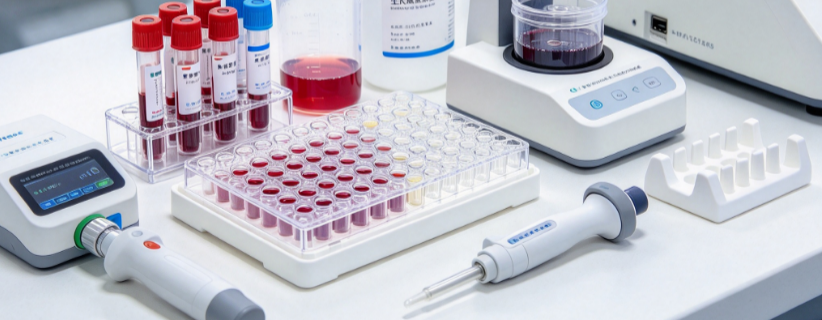
Why Clients Commission Growth Hormone Testing
Clients seek GH testing for several distinct yet interrelated purposes. Diagnostic evaluation of suspected GHD in children with short stature or adults with compatible clinical features requires provocative stimulation testing and IGF-1 assessment to establish the diagnosis and guide replacement therapy. Evaluation of suspected GH excess relies on fasting GH, IGF-1, and oral glucose tolerance testing with GH suppression to confirm acromegaly or gigantism. Therapeutic drug monitoring verifies adherence, dosing adequacy, and biochemical control during recombinant human GH (rhGH) therapy. Anti-doping analysis under World Anti-Doping Agency (WADA) guidelines employs isoform-differentiating assays and biomarker-based approaches to detect exogenous GH administration. Clinical research and pharmaceutical development depend on precise GH and IGF-1 quantification for pharmacokinetic, pharmacodynamic, and efficacy endpoint assessment. Finally, forensic and medico-legal investigations may require GH measurement in cases involving alleged misuse or product tampering.
Our Growth Hormone Testing Capabilities: From Immunoassay to Mass Spectrometry
We provide comprehensive GH testing services spanning baseline measurement, dynamic testing, isoform differentiation, and biomarker profiling. Our analytical portfolio includes, but is not limited to:
GH quantification — including random and fasting serum GH, provocative stimulation test panels (insulin tolerance test, arginine, clonidine, glucagon, GHRH-arginine), and oral glucose suppression testing for GH excess. Assays are calibrated against WHO International Standard 98/574 (recombinant human GH) and, where relevant, 80/505 (pituitary-derived GH), ensuring cross-platform comparability.
IGF-1 and IGFBP-3 quantification — including total and free IGF-1, IGF-1/IGFBP-3 molar ratio, and acid-labile subunit (ALS) measurement. Assays are standardized against WHO International Standard 02/254 for IGF-1 and 93/560 for IGFBP-3, with age- and sex-specific reference intervals.
GH isoform differentiation — including immunofunctional assays and mass spectrometry-based detection of the 22 kDa and 20 kDa GH isoforms, supporting WADA-compliant anti-doping analysis and detection of exogenous rhGH.
GH biomarkers for anti-doping — including the GH-2000 and GH-2004 discriminant scores, incorporating IGF-1 and procollagen type III N-terminal peptide (P-III-NP), as endorsed by WADA for the Athlete Biological Passport.
GH-releasing hormone (GHRH), ghrelin, and somatostatin — supporting comprehensive neuroendocrine assessment of the GH axis.
Our laboratories employ high-sensitivity chemiluminescent immunoassays (CLIA), electrochemiluminescence (ECLIA), and liquid chromatography-tandem mass spectrometry (LC-MS/MS) for GH and IGF-1 quantification. These platforms enable ultra-low detection limits, with serum GH sensitivity extending to 0.01 ng/mL or below, and IGF-1 quantification across the full physiological and pathological range. For isoform-specific analysis, we utilize immunoaffinity enrichment coupled to high-resolution mass spectrometry (HRMS), achieving the specificity required for anti-doping and pharmacokinetic applications.
Methodological Depth and Analytical Rigor
Our testing protocols are anchored in ISO 15189-accredited medical laboratory quality management systems and, for anti-doping applications, align with WADA Technical Document TD2022GH and ISO/IEC 17025 requirements. We perform rigorous method validation evaluating sensitivity, specificity, linearity, precision, recovery, matrix effects, and stability for each analyte and matrix. Pre-analytical standardization is critical for GH testing, and we enforce strict protocols for specimen collection timing, fasting status, physical activity restriction, and cold-chain handling to minimize pre-analytical variability.
Our immunoassay platforms employ two-site sandwich formats with monoclonal antibodies directed against distinct GH epitopes, minimizing cross-reactivity with GH variants and degradation fragments. For LC-MS/MS workflows, we utilize stable isotope-labeled internal standards (SIL-IS) and immunoaffinity enrichment to achieve absolute quantification with recovery rates of 80–120% and relative standard deviations (RSDs) below 10%. Where discordance arises between platforms, we apply orthogonal confirmation and provide interpretive commentary grounded in current Endocrine Society, Pediatric Endocrine Society, and WADA recommendations.
For research applications, we offer custom assay development, pharmacokinetic and pharmacodynamic profiling, 24-hour GH secretory profiling with deconvolution analysis, and longitudinal biomarker monitoring with centralized data management. Our mass spectrometry-based approaches enable endogenous versus exogenous GH discrimination, GH isoform ratio determination, and detection of GH secretagogues and mimetics.
Our Competitive Advantages in Growth Hormone Testing
1. Multi-Platform Analytical Strategy: By integrating high-sensitivity immunoassays with LC-MS/MS and HRMS, we deliver results that are analytically robust, clinically interpretable, and defensible for both diagnostic and anti-doping purposes.
2. WADA-Aligned Anti-Doping Capabilities: Our isoform-differentiating assays and biomarker panels comply with WADA requirements, supporting athlete testing programs, biological passport monitoring, and result management.
3. Ultra-Low Detection Limits: Our platforms achieve serum GH sensitivity at or below 0.01 ng/mL, enabling detection of suppressed endogenous secretion and low-dose exogenous administration.
4. Dynamic Testing Expertise: We provide full support for provocative and suppression testing protocols, including standardized protocols, normative data interpretation, and clinician-facing interpretive reports.
5. Age- and Sex-Specific Reference Intervals: Our IGF-1 and IGFBP-3 reference ranges are stratified by age, sex, and pubertal stage, supporting accurate interpretation across pediatric, adolescent, and adult populations.
6. Expert Interpretive Support: Our team includes endocrinologists, clinical chemists, and anti-doping scientists who provide not only analytical data but also contextual interpretation, diagnostic guidance, and support during audits, hearings, or regulatory review.
7. Rapid Turnaround and Scalability: Standard turnaround is 2–4 business days for routine analytes and 5–7 business days for specialized isoform or biomarker panels, with expedited options available. Automated platforms ensure consistent high-volume capacity without compromising analytical quality.
Applications Across Clinical, Sports, and Research Settings
Our GH testing services support a diverse range of clients, including pediatric and adult endocrinologists, clinical research organizations, pharmaceutical sponsors, anti-doping organizations, sports federations, academic investigators, and medico-legal professionals. Whether for diagnostic evaluation, therapeutic monitoring, anti-doping enforcement, or biomarker-driven research, we deliver data that is analytically rigorous, clinically contextualized, and directly actionable for patient management, athlete adjudication, and scientific inquiry.
Conclusion
Growth hormone testing sits at the intersection of endocrine diagnostics, therapeutic monitoring, and sports integrity. Its clinical and regulatory value depends not only on analytical sensitivity but also on methodological standardization, pre-analytical rigor, and interpretive expertise. With our multi-platform analytical strategy, WADA-aligned capabilities, and deep endocrinological domain knowledge, we empower clinicians, anti-doping authorities, and researchers to reach timely, accurate, and defensible conclusions. For growth hormone testing that meets the highest standards of precision and reliability, our laboratory is your trusted partner.