Reasons for choosing our testing services
ZHONGXI Testing has obtained inspection qualification certifications from multiple countries and regions worldwide. We possess a senior testing team and advanced testing methods, providing independent, impartial, and professional third-party verification services for global carbon projects.

Internationally recognized authority
Certified by multiple international standards such as CNAS, VCS, and GS, with reports universally applicable worldwide.

Global service capability
Covering 140+ countries and regions, it supports on-site detection and remote verification in multiple languages.

Professional experimental methods
Adopt standard experimental methods to ensure accurate and reliable data.
Comprehensive Physicochemical and Structural Characterization of Nickel Disulfide (NiS₂) Powder: Advanced Analytical Services for Quality Assurance and Performance Optimization
Nickel disulfide (NiS₂) is a transition metal dichalcogenide with a pyrite-type crystal structure, increasingly utilized in energy storage (lithium‑ion and sodium‑ion batteries), catalysis (electrocatalysis, hydrogen evolution), and electronic applications. The performance of NiS₂ powder is highly dependent on its phase purity, stoichiometry (S/Ni ratio), crystallinity, particle size and morphology, specific surface area, and trace impurity levels (especially metallic contaminants). Even minor deviations in these parameters can significantly affect the electrochemical activity, cycling stability, and catalytic efficiency. Therefore, a rigorous, multi‑parametric analytical regime is essential for material qualification, process optimization, and troubleshooting of performance issues. Our ISO/IEC 17025‑accredited laboratory offers a dedicated, high‑level testing service specifically tailored for NiS₂ powder, integrating advanced diffraction, spectroscopic, thermal, and physical methods to deliver a complete material fingerprint – far beyond simple elemental analysis or routine XRD.
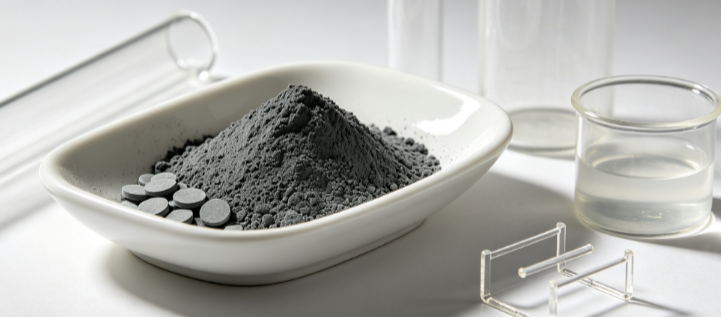
Why Comprehensive Characterization of NiS₂ Powder Is Critical for R&D and Industrial Application
Clients seeking our testing services typically aim to: (i) verify the correct NiS₂ phase and quantify any secondary phases (e.g., NiS, Ni₃S₂, or elemental sulfur), (ii) determine the precise S/Ni molar ratio to confirm stoichiometry, (iii) measure the crystallite size and microstrain, which correlate with electrochemical reactivity and cycling stability, (iv) evaluate the particle size distribution and morphology, which affect slurry processing and electrode coating uniformity, (v) detect and quantify trace metallic impurities (e.g., Fe, Cu, Co, Zn, Pb) that can poison catalytic sites or reduce battery performance, (vi) assess the thermal stability and decomposition behaviour under inert and oxidizing atmospheres, (vii) determine the specific surface area and pore volume, which influence the ion‑accessible active sites, and (viii) generate robust data for quality certifications, supply agreements, and regulatory submissions. Standard tests such as single‑point BET or simple EDX are insufficient because the functional properties of NiS₂ depend on the synergistic interplay of stoichiometry, crystallinity, particle morphology, and surface chemistry. Our integrated platform combines high‑resolution X‑ray diffraction (HR‑XRD) with Rietveld refinement, X‑ray fluorescence (XRF) and inductively coupled plasma optical emission spectrometry (ICP‑OES) for elemental composition, LECO combustion analysis for sulfur and carbon, scanning electron microscopy (SEM) with energy‑dispersive X‑ray spectroscopy (EDS) for morphology and elemental mapping, laser diffraction particle sizing, nitrogen physisorption (BET) for surface area, Thermogravimetric Analysis (TGA) coupled with mass spectrometry (MS) for thermal stability and evolved gas analysis, X‑ray photoelectron spectroscopy (XPS) for surface chemical states, and Raman spectroscopy for phase identification and disorder assessment – providing a complete structural, chemical, and physical profile.
Our Comprehensive Analytical Framework for Nickel Disulfide Powder
1. Phase Identification, Crystal Structure, and Lattice Parameters
We perform high‑resolution powder X‑ray diffraction (HR‑XRD) with Cu Kα radiation over a 2θ range of 10°–120°, and, for detailed structure analysis, we use synchrotron radiation to achieve ultra‑high resolution and detect minor impurity phases (e.g., NiS, elemental S, NiO) down to 0.1 wt%. Rietveld refinement is conducted using TOPAS or GSAS to determine the precise lattice parameter (a, and, for cubic pyrite structure, the cell volume), the atomic positions, and the site occupancy factors. We also report the crystallite size (via the Scherrer equation and Williamson–Hall plot) and the microstrain, which are critical for predicting the electrochemical performance. The refinement provides a phase purity index (percentage of the NiS₂ phase) with an uncertainty of <1%.
2. Stoichiometry and Bulk Elemental Composition
We determine the total nickel and sulfur content by inductively coupled plasma optical emission spectrometry (ICP‑OES) after microwave‑assisted acid digestion (using a mixture of HNO₃, HCl, and H₂O₂) with a precision of ±0.5% relative and detection limits of 0.1 mg/kg for Ni and 1 mg/kg for S. The S/Ni molar ratio is calculated and compared with the theoretical value of 2.0. To confirm the sulfur content and to detect any volatile sulfur species, we use combustion analysis (LECO) with IR detection, which directly measures total sulfur in the solid sample. We also screen for carbon content (to detect any residual carbonaceous contamination) by the same combustion method. The stoichiometric deviation (ΔS/Ni) is reported as a key quality indicator.
3. Trace Metallic and Non‑Metallic Impurity Profiling
We screen for over 50 trace elements (including Fe, Cu, Co, Zn, Pb, Cd, Mn, Cr, Ca, Mg, Na, K, and Si) by inductively coupled plasma mass spectrometry (ICP‑MS) after acid digestion, achieving detection limits in the sub‑ppb range (typically <0.1 mg/kg). For elements that are difficult to digest, we use alkaline fusion followed by ICP‑MS. The impurity profile is compared with the client’s specification (e.g., battery‑grade or catalyst‑grade) and against relevant regulatory limits. We provide a purity certificate with a summary of all detected impurities and their concentration levels.
4. Particle Size, Morphology, and Specific Surface Area
We measure the particle size distribution by laser diffraction (wet dispersion with surfactants to break agglomerates) from 0.1 to 3500 µm, reporting D10, D50, D90, and the span. The morphology and primary crystallite shape are examined by field‑emission scanning electron microscopy (FE‑SEM) at low accelerating voltage, with high‑resolution imaging and EDS mapping to verify the elemental distribution and to detect any surface contamination or segregation. The specific surface area (BET) is determined by N₂ physisorption at 77 K, after degassing at 150 °C (to avoid phase change), with a reproducibility of ±1.5%. We also report the total pore volume and the average pore diameter from the BJH method. These parameters are essential for predicting the electrode wetting behaviour and the ion transport kinetics.
5. Thermal Stability and Oxidation Behaviour
We perform simultaneous Thermogravimetric Analysis (TGA) and differential scanning calorimetry (DSC) from 25 °C to 800 °C under inert (N₂) and oxidizing (air) atmospheres, with a heating rate of 10 °C/min. The TGA curve reveals mass losses due to desorption of adsorbed species (below 200 °C), decomposition of NiS₂ to lower sulfides (e.g., Ni₃S₂ or NiS) with the release of sulfur vapour (around 350–500 °C), and eventual oxidation to NiO (above 500 °C). The evolved gases are monitored by an online mass spectrometer (MS) for m/z 64 (SO₂), 32 (S), and 44 (CO₂), enabling the identification of each degradation step. We report the decomposition onset temperature, the mass loss at each step, and the residual mass (indicating the final oxide content). These data are critical for evaluating the suitability of the powder for high‑temperature processing (e.g., sintering) and for predicting the thermal runaway risks in battery applications.
6. Surface Chemical States and Oxidation States
We use X‑ray photoelectron spectroscopy (XPS) with monochromatic Al Kα radiation to analyse the Ni 2p, S 2p, and O 1s core levels. The Ni 2p spectrum is deconvoluted to distinguish Ni²⁺ (in NiS₂) from any Ni³⁺ or Ni⁰ species, and the S 2p spectrum reveals the presence of sulfide (S²⁻, binding energy ~162 eV) and any sulfate or elemental sulfur (S⁰, ~164 eV). The O 1s peak indicates the presence of surface adsorbed oxygen, hydroxides, or oxides. This surface speciation is crucial for understanding the surface reactivity, the electrocatalytic activity, and the susceptibility to oxidation during storage. We also measure the contact angle with water to assess the powder’s wettability, which affects the dispersion in electrode slurries.
7. Raman Spectroscopy for Phase and Disorder Assessment
We acquire Raman spectra (with 532 nm and 785 nm excitation) in the 100–1200 cm⁻¹ range to identify the characteristic vibrational modes of NiS₂ (typically around 280, 380, and 480 cm⁻¹ for the pyrite structure). The presence of additional bands may indicate the presence of NiS or amorphous sulfur. We also calculate the intensity ratio of the disorder‑related peak to quantify the degree of structural disorder, which can influence the electrochemical performance. The Raman results are correlated with the XRD crystallite size and the XPS surface composition to provide a complete defect analysis.
8. Leaching and Environmental Stability Testing
For environmental or recycling applications, we perform leaching tests according to EPA Method 1311 (TCLP) or customized protocols, by exposing the powder to acidic (pH 2) and basic (pH 10) solutions for 24 hours, and then analysing the leachate for Ni and S by ICP‑MS. This provides a measure of the material’s stability and potential release of toxic species into the environment, which is essential for regulatory compliance and for assessing the safety of the material in end‑of‑life scenarios.
9. Electrochemical Performance Screening (Optional)
For clients developing battery or electrocatalytic applications, we offer electrochemical testing including cyclic voltammetry (CV), galvanostatic charge‑discharge cycling, and electrochemical impedance spectroscopy (EIS) on electrodes fabricated from the powder. The specific capacity, coulombic efficiency, and cycling stability are correlated with the measured physical and chemical parameters to provide a direct validation of the material’s fitness for purpose.
Our Distinctive Advantages in Nickel Disulfide Powder Testing
1. Integrated Multi‑Technique Platform with High Sensitivity: We uniquely combine HR‑XRD with Rietveld refinement, ICP‑MS for trace metals, combustion analysis for S and C, TGA‑MS for thermal stability, XPS for surface chemistry, and Raman for disorder into a single workflow. This integration allows us to correlate the phase purity (XRD) with the stoichiometry (ICP) and the surface oxidation state (XPS), providing a complete material quality map that is essential for diagnosing performance variations. Such comprehensive data is rarely available from conventional testing services.
2. Expertise in Handling Air‑Sensitive and Reactive Powders: Nickel disulfide can undergo surface oxidation or hydrolysis upon exposure to air. We perform all sample preparation and handling in a controlled‑atmosphere glovebox (Argon, <0.1 ppm O₂ and H₂O) and use hermetic transfer vessels for XRD, XPS, and TGA measurements. Our protocols ensure that the measured properties reflect the true as‑produced material, with inter‑laboratory reproducibility within 2% RSD for stoichiometry and phase fractions, validated on over 200 NiS₂ batches.
3. Advanced Data Interpretation and Application‑Specific Insights: Our team of materials chemists and electrochemists provides interpretative reports that not only list the measured values but also correlate them with expected performance in batteries or catalysis. For example, we link the crystallite size with the cycling stability, or the trace Fe impurity with the catalytic overpotential. We offer actionable recommendations for synthesis optimization – such as adjusting the sulfurization temperature to achieve the desired crystallinity or using a purification step to remove metallic contaminants.
4. Regulatory‑Grade Quality and Full Traceability: Our facility is accredited under ISO/IEC 17025:2017 for XRD, ICP‑OES, ICP‑MS, TGA, BET, and particle size analysis. We use NIST‑traceable standards for nickel, sulfur, and trace elements, and we participate in international proficiency testing. All measurement uncertainties are reported with expanded uncertainties (k=2) typically <2% for major elements, <3% for lattice parameters, and <5% for trace impurities, ensuring the data are defensible in quality audits, supply contracts, and regulatory submissions.
5. Fast Turnaround and Collaborative Consultation: We offer standard test packages (composition, phase, particle size, surface area) with a 5‑business‑day turnaround, as well as expedited services for urgent batch release. Each project is overseen by a senior scientist who acts as a single point of contact, providing regular progress updates and a final comprehensive report. We also offer co‑authorship support for academic publications and assist in drafting materials and methods sections for high‑impact journals.
Report Deliverables and Client Empowerment
Our final comprehensive report includes: (a) phase composition from XRD with Rietveld refinement – lattice parameter, crystallite size, phase purity, and microstrain; (b) elemental composition (Ni, S) and S/Ni molar ratio, with C content; (c) trace metal and non‑metal impurity profile (ICP‑MS) with compliance assessment; (d) particle size distribution, SEM images with EDS maps, BET surface area, and pore volume; (e) thermal stability – TGA‑DSC‑MS profiles with decomposition temperatures and residual mass; (f) XPS surface analysis – Ni 2p and S 2p deconvolution, oxidation state fractions; (g) Raman spectra with disorder index; (h) leaching test results (if requested); (i) optional electrochemical performance data; (j) a benchmarking summary comparing your powder with reference standards and competitor materials; and (k) a quality improvement roadmap with specific recommendations. All raw data (diffractograms, spectra, thermograms, chromatograms, and images) are supplied in open, machine‑readable formats (CIF, JCAMP‑DX, .csv, .tiff, .mzML) for independent verification and integration into your quality management system.
We also offer subscription‑based monitoring programs for regular batch quality control, with trend analysis and statistical process control (SPC) charts. Our secure client portal provides 24/7 access to project data and direct communication with our technical experts.
Conclusion: Precision Characterization for High‑Performance Nickel Disulfide Powder
Nickel disulfide is a key material for next‑generation energy and catalytic technologies, and its success depends on a thorough understanding of its structural, chemical, thermal, and physical properties. Our testing service delivers that understanding – integrating state‑of‑the‑art diffraction, spectroscopy, thermal analysis, and physical characterization with expert interpretation and actionable guidance. By choosing our laboratory, you gain a trusted partner that ensures your NiS₂ powder meets the most demanding specifications, accelerates your R&D, and enhances your process reliability. Partner with our expert team today to design a customized testing protocol – we are committed to advancing your material innovation with unmatched analytical depth and scientific rigour.