Reasons for choosing our testing services
ZHONGXI Testing has obtained inspection qualification certifications from multiple countries and regions worldwide. We possess a senior testing team and advanced testing methods, providing independent, impartial, and professional third-party verification services for global carbon projects.

Internationally recognized authority
Certified by multiple international standards such as CNAS, VCS, and GS, with reports universally applicable worldwide.

Global service capability
Covering 140+ countries and regions, it supports on-site detection and remote verification in multiple languages.

Professional experimental methods
Adopt standard experimental methods to ensure accurate and reliable data.
Comprehensive Analytical Characterization of Silicotungstic Acid: Advanced Testing Services for Purity, Structural Integrity, and Functional Performance
Silicotungstic acid (H₄SiW₁₂O₄₀·nH₂O) is a key Keggin-type heteropolyacid widely employed in heterogeneous catalysis, proton-conducting membranes, electrochromic devices, and as a precursor for tungsten-based nanomaterials. Its performance and reliability are critically dependent on precise stoichiometry (W/Si ratio), degree of hydration, crystallinity, phase purity, and the absence of inorganic or organic contaminants. Even minor deviations in water content or trace metal impurities can significantly alter the catalytic activity, thermal stability, and proton conductivity. Our ISO/IEC 17025-accredited laboratory offers a dedicated, multi-technique testing service specifically tailored for silicotungstic acid, integrating advanced elemental analysis, structural characterization, thermal profiling, and purity assessment to deliver a complete chemical and physical fingerprint – far beyond simple thermogravimetric moisture determination.
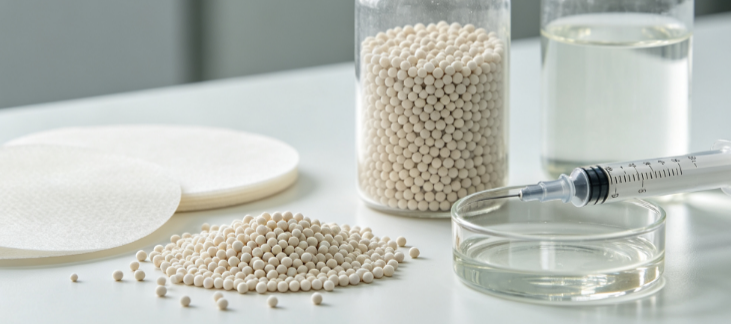
Why Comprehensive Characterization of Silicotungstic Acid Is Essential for Quality Assurance and Application Success
Clients seeking our testing services typically aim to: (i) accurately determine the tungsten and silicon content and verify the molecular stoichiometry, (ii) quantify the water of crystallization and distinguish it from adsorbed moisture, (iii) identify the crystalline phase and detect any degradation products (e.g., paratungstates, tungstic oxide), (iv) screen for trace metallic impurities (e.g., Fe, Na, K, Ca, Mg) that can poison catalytic sites or reduce proton conductivity, (v) evaluate the thermal stability and decomposition pathway under processing or service conditions, (vi) assess the acidity strength and protonic conductivity (where relevant), and (vii) generate reliable data for product release, supplier qualification, and regulatory compliance. Standard methods such as loss on drying or simple gravimetric tungsten determination are insufficient because the functional properties depend on the intact Keggin structure, the hydration state, and the purity at the trace level, which require a combination of chemical, spectroscopic, and thermal techniques. Our integrated platform combines inductively coupled plasma optical emission spectrometry (ICP-OES) and ICP-mass spectrometry (ICP-MS) for elemental quantification, ion chromatography (IC) for anion impurities, powder X-ray diffraction (XRD) for phase identification, Fourier-transform infrared spectroscopy (FTIR) for structural fingerprinting, Thermogravimetric Analysis (TGA) coupled with mass spectrometry (MS) for evolved gas analysis, differential scanning calorimetry (DSC) for thermal transitions, Karl Fischer coulometric titration for precise water determination, and scanning electron microscopy (SEM) with energy-dispersive X-ray spectroscopy (EDS) for morphology and composition – providing a comprehensive quality and stability profile.
Our Advanced Analytical Framework for Silicotungstic Acid
1. Precise Quantification of Tungsten, Silicon, and Stoichiometric Ratio
We determine the total tungsten content by ICP-OES after microwave-assisted acid digestion (HNO₃ + HF), using the W 207.9 nm line with a detection limit of 0.5 μg/g and a precision of ±0.5% relative. Silicon is measured simultaneously (Si 251.6 nm) after correction for any silica contamination. The W/Si molar ratio is calculated and compared with the theoretical value of 12:1. In parallel, we perform classical gravimetric analysis (precipitation as WO₃ and SiO₂) for cross-validation and to verify the ICP-OES results. The combined stoichiometric data provide the sample purity index (percentage of H₄SiW₁₂O₄₀·nH₂O content relative to theoretical composition), with an expanded uncertainty of <2%.
2. Water Content Determination: Bound Water vs. Adsorbed Moisture
We differentiate between water of crystallization and physically adsorbed water using Thermogravimetric Analysis (TGA) coupled with differential scanning calorimetry (DSC) and evolved gas MS. The sample is heated from 25 °C to 600 °C under nitrogen at 5 °C/min, and the mass loss steps are assigned: adsorbed water (≤100 °C), structural water (100–200 °C, corresponding to dehydration of the hydrated heteropolyacid), and decomposition of the Keggin structure (above 300 °C). The water content (n) in H₄SiW₁₂O₄₀·nH₂O is accurately determined from the mass loss in the 100–200 °C region, with a precision of ±0.1 mol H₂O. We also perform Karl Fischer coulometric titration on a separate aliquot to confirm the total water content (free + bound) with a detection limit of 0.01%, providing a direct comparison with the TGA result.
3. Structural Integrity and Phase Analysis
We use powder X-ray diffraction (XRD) with Cu Kα radiation over the 5°–60° 2θ range to identify the crystalline phase (the typical Keggin structure with diffraction peaks at ~10°, ~15°, ~18°, etc.). The diffractogram is compared with a reference pattern, and any shift in peak positions or additional peaks is reported – indicating dehydration, partial decomposition, or contamination. For samples with low crystallinity or amorphous content, we complement XRD with Raman spectroscopy (785 nm excitation) to detect the characteristic W–O–W and W=O stretching vibrations, confirming the integrity of the Keggin anion. We also perform FTIR-ATR spectroscopy (400–4000 cm⁻¹) to identify the vibrational bands of the heteropolyanion (Si–O, W–O–W, W=O) and to detect any organic residues or hydration changes. These spectroscopic methods provide a structural purity index with a qualitative and semi-quantitative assessment.
4. Trace Impurity Profiling: Metals and Anions
We screen for over 40 trace elements (including Na, K, Ca, Mg, Fe, Cu, Zn, Cr, Ni, Pb, As, and rare earths) by ICP-MS after sample dissolution, achieving detection limits in the sub-ppb range (typically <0.1 μg/g). For anions (chloride, nitrate, sulfate, phosphate), we use ion chromatography (IC) after aqueous extraction, with LOQs of 1–5 ppm. Any detected impurities are reported with their estimated contribution to the total non-volatile residue. This trace-level screening is essential for identifying contaminants that might affect catalytic activity or proton conductivity, and we provide a compliance summary against typical customer specifications (e.g., >99.95% purity, total metals <100 ppm).
5. Thermal Stability and Decomposition Behavior
We perform simultaneous TGA-DSC-MS to characterize the thermal decomposition pathway. The TGA curve reveals the loss of hydration water, the loss of structural oxygen (forming WO₃ and SiO₂), and the final residual mass. The DSC curve identifies any endothermic (dehydration) or exothermic (crystallization, decomposition) events. The evolved gases are monitored by MS for m/z 18 (H₂O), 44 (CO₂), 28 (N₂/CO), etc., to detect any oxidative decomposition or carbon contamination. From these data, we determine the decomposition onset temperature and the thermal stability limit (typically around 350–400 °C), which are critical for applications in high-temperature catalysis or membrane fabrication.
6. Acidity and Proton Conductivity (Optional)
For clients using silicotungstic acid as a proton conductor or solid acid catalyst, we provide optional acidity strength determination by potentiometric titration with a base, and proton conductivity measurement by electrochemical impedance spectroscopy (EIS) on compressed pellets, in the frequency range 1 Hz–1 MHz, at controlled humidity (e.g., 25 °C, 95% RH). We report the total acid site density (mmol/g) and the conductivity (S/cm), with the results correlated with the water content and purity.
7. Particle Size and Morphology Assessment
We measure the particle size distribution by laser diffraction (dry dispersion) from 0.1 to 2000 µm, reporting D10, D50, D90. The morphology is examined by field-emission scanning electron microscopy (FE-SEM) at low voltage, providing images of crystallite shape, surface texture, and aggregation state. EDS mapping is used to verify the homogeneous distribution of W and Si and to detect any surface precipitates. These data are essential for assessing the powder flowability and for optimizing the dispersion in coating or membrane formation processes.
8. Solubility and Solution Stability
For aqueous-based applications, we determine the solubility of silicotungstic acid in deionized water and in common organic solvents (e.g., ethanol, isopropanol) at 20 °C and 50 °C, using a gravimetric method after evaporation. We also monitor the solution stability by UV-Vis spectroscopy (200–500 nm) over a 7-day period, checking for any turbidity, precipitation, or shift in the characteristic absorption bands (indicative of hydrolysis or degradation). This is particularly useful for clients formulating inks, coatings, or catalyst solutions.
Our Distinctive Advantages in Silicotungstic Acid Testing
1. Comprehensive Multi-Technique Platform with Specialized Sample Handling: We uniquely combine ICP-OES, ICP-MS, TGA-DSC-MS, Karl Fischer titration, XRD, FTIR, Raman, and SEM-EDS into a single workflow, enabling a complete correlation between the elemental composition, hydration state, structure, and thermal behavior. We have developed proprietary digestion protocols for silicotungstic acid to ensure quantitative recovery of tungsten and silicon without loss or contamination – a step often problematic in routine laboratories. Our inter-laboratory reproducibility for stoichiometry and water content is within 1% RSD, validated on over 150 batches.
2. High Sensitivity for Trace Impurities: Our ICP-MS capability enables detection of metallic impurities at sub-ppb levels, while our IC setup detects anionic contaminants down to 1 ppm. This allows us to certify material as 99.99% or higher purity, meeting the stringent requirements of electronic-grade and catalytic-grade products. We also offer customized impurity screens based on your specific application – for example, focusing on alkali metals that affect proton conductivity.
3. Expert Interpretation of Thermal and Structural Data: Our team includes specialists in heteropolyacid chemistry, allowing us to differentiate between normal dehydration and incipient decomposition, and to identify subtle changes in the XRD pattern that may indicate the formation of W₁₂-silicates or other by-products. We provide diagnostic reports that not only present the data but also explain their implications for your process – for instance, whether a slight deviation in water content could affect catalytic activity or whether the presence of a minor oxide phase may indicate thermal instability.
4. Regulatory-Grade Quality and Full Traceability: Our laboratory is accredited under ISO/IEC 17025:2017 for ICP-OES, ICP-MS, TGA, XRD, and Karl Fischer titration. We use NIST-traceable standards for tungsten and silicon, and we participate in proficiency testing programs (e.g., ASTM, NIST). All uncertainties are reported with expanded uncertainties (k=2) typically <2% for major constituents and <5% for trace impurities, ensuring the data are defensible in quality certifications, supplier audits, and regulatory filings.
5. Fast Turnaround and Flexible Service Options: We offer standard packages covering purity, water content, and structural integrity with a 5‑business‑day turnaround, as well as customized protocols including thermal stability, conductivity, or solubility tests, with project-specific timelines. We provide urgent testing for incoming inspection or batch release, with results available in 48 hours. Our client portal allows you to track progress, download preliminary results, and communicate with our scientists in real time.
Report Deliverables and Client Empowerment
Our final comprehensive report includes: (a) quantitative W and Si content and the derived W/Si stoichiometric ratio; (b) water of crystallization (n) and total moisture content, with distinction between adsorbed and structural water; (c) XRD diffractogram with phase identification, crystallinity assessment, and any impurity peaks; (d) FTIR and Raman spectra with annotated assignments; (e) trace impurity profile (metals and anions) with comparison to specification limits; (f) TGA-DSC-MS thermograms with mass loss steps, thermal events, and evolved gas data; (g) particle size distribution, SEM images, and EDS mapping; (h) optional acidity/conductivity and solubility data; (i) a quality summary that assigns a grade (e.g., reagent‑grade, electronic‑grade) and highlights any out‑of‑spec parameters; and (j) an interpretative section that correlates the analytical results with expected performance in catalysis, membrane, or other applications, and provides recommendations for handling, storage, or pre-treatment. All raw data (spectra, chromatograms, diffractograms, thermograms, and images) are supplied in open, machine‑readable formats (CIF, JCAMP‑DX, .csv, .tiff, .mzML) for independent verification and integration into your quality management system.
We also offer subscription‑based monitoring programs for continuous quality assurance, with trend analysis and statistical alerts for any deviations from established control limits. Our scientific team provides online consultations to help you interpret the data and to design corrective actions if needed.
Conclusion: Precision Characterization for High‑Performance Silicotungstic Acid
Silicotungstic acid is a sophisticated material whose functionality hinges on a precise balance of composition, hydration, structure, and purity. Our testing service delivers the analytical depth required to ensure that your product meets the most demanding specifications – from rigorous stoichiometric verification to trace impurity detection and thermal stability profiling. By integrating advanced elemental analysis, structural spectroscopy, thermal analysis, and morphology assessment with expert interpretation, we empower you to control quality, optimize performance, and accelerate innovation. Partner with our expert team today to design a customized testing protocol – we are committed to advancing your material excellence with unmatched analytical rigor and insightful guidance.