Reasons for choosing our testing services
ZHONGXI Testing has obtained inspection qualification certifications from multiple countries and regions worldwide. We possess a senior testing team and advanced testing methods, providing independent, impartial, and professional third-party verification services for global carbon projects.

Internationally recognized authority
Certified by multiple international standards such as CNAS, VCS, and GS, with reports universally applicable worldwide.

Global service capability
Covering 140+ countries and regions, it supports on-site detection and remote verification in multiple languages.

Professional experimental methods
Adopt standard experimental methods to ensure accurate and reliable data.
Comprehensive Performance and Safety Testing of Ozone Generators: Advanced Analytical Services for Quality Assurance and Process Optimization
Ozone generators are critical equipment in water treatment, air purification, food processing, and industrial oxidation processes. Their performance directly impacts disinfection efficiency, oxidation kinetics, and compliance with health and safety standards. However, reliable operation depends on a multitude of interdependent parameters: ozone output concentration and yield, gas flow rate, power consumption, ambient temperature and humidity effects, dielectric stability, and long-term output consistency. Even minor deviations in these variables can result in underperformance, increased energy costs, or the generation of harmful by-products such as nitrogen oxides (NOx). Our ISO/IEC 17025-accredited laboratory offers a dedicated, multi-parameter testing service tailored specifically for ozone generators, integrating high-precision analytical instrumentation, environmental simulation chambers, and advanced data analytics to deliver a complete performance and safety profile – far beyond simple spot concentration checks.
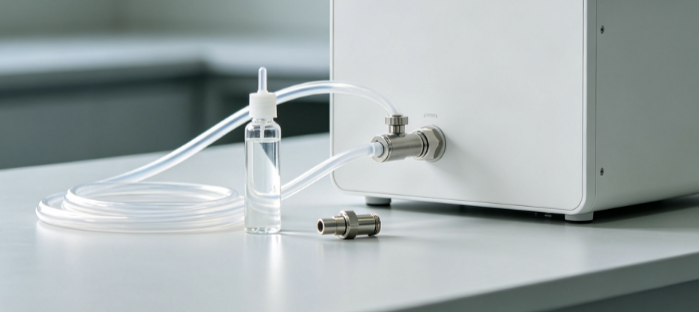
Why Rigorous Testing of Ozone Generators Is Essential for Industrial and Commercial Applications
Clients seeking our testing services typically aim to: (i) verify the rated ozone output and the specific yield (g O₃/kWh) under defined operating conditions, (ii) determine the effect of ambient temperature, humidity, and gas flow on generator performance, (iii) measure the stability and the output decay over extended continuous operation, (iv) detect any leakage of ozone or nitrogen oxides that may pose health risks, (v) assess the electromagnetic compatibility and electrical safety of the generator, (vi) evaluate the materials used in the generator for ozone resistance and aging, and (vii) generate robust data for product certification, regulatory compliance (e.g., UL, CE, CSA, EPA), and customer acceptance. Simple UV photometer readings at a single point are insufficient because the real-world performance is governed by the interplay of corona discharge efficiency, gas residence time, power supply stability, and environmental conditions, all of which require a combination of real-time monitoring, environmental simulation, and long-term stability studies. Our integrated platform combines real-time UV and electrochemical ozone concentration measurements, dynamic gas flow control, environmental chambers for temperature and humidity control, power quality analyzers, advanced leak detection systems, and accelerated aging chambers for component material testing – providing a holistic operational fingerprint.
Our Comprehensive Analytical Framework for Ozone Generator Testing
1. Precision Ozone Output and Yield Measurement
We measure the ozone concentration at the outlet using a UV-absorption photometer (254 nm) with a detection range of 0.1 ppm to 500 ppm and an accuracy of ±1% of reading, calibrated against an NIST-traceable reference ozone analyzer. Simultaneously, we employ an electrochemical sensor for cross-validation and for rapid response during transient conditions. The ozone yield (g O₃/kWh) is calculated by integrating the mass flow (measured by a thermal mass flow meter, ±0.5% accuracy) and the instantaneous concentration over time, while monitoring the input power (active power in watts) using a precision power meter (0.2% accuracy). We report the steady-state output, the average yield over a defined run period, and the maximum deviation from the nominal rating. For corona-discharge generators, we also measure the output as a function of discharge current and frequency to determine the optimal operating point.
2. Environmental Influence and Dynamic Response
We perform tests in a temperature-controlled chamber (10–50 °C ±0.5 °C) and a humidity-controlled chamber (10–90% RH ±2%) to evaluate the effect of inlet gas conditions on ozone generation. We record the concentration decay or enhancement at each setpoint and construct a response surface model that predicts the output under any environmental condition. We also conduct step-change tests (e.g., sudden flow or power changes) and measure the rise time, settling time, and overshoot to characterize the dynamic behavior, which is critical for closed-loop control integration.
3. Long-Term Stability and Aging Assessment
We subject the generator to continuous operation for a duration of 200 to 1000 hours (simulating accelerated aging) while recording the ozone output, power consumption, and discharge voltage at regular intervals. We also perform thermal cycling (e.g., 25 °C to 40 °C and back) and power cycling (on/off sequences) to simulate field use. From these data, we determine the output degradation rate and the mean time before a 10% output drop, and we provide a lifetime prediction based on the Arrhenius model if thermal stress data are available. This is particularly valuable for warranty validation and preventive maintenance scheduling.
4. Leakage, Safety, and Emissions Testing
We perform ozone leakage detection using a highly sensitive UV analyzer with a suction probe, scanning all joints, fittings, and seals to detect any leakage down to 0.1 ppm, in accordance with OSHA and EPA guidelines. In addition, we measure nitrogen oxides (NO, NO₂, NOx) generation using a chemiluminescence NOx analyzer with a detection limit of 0.1 ppm, because ozone generation can produce NOx as a by-product under certain conditions. We also evaluate the material compatibility of internal components (gaskets, tubing, electrodes, dielectric) by subjecting them to accelerated aging in an ozone-rich environment (2× normal concentration) for 500 hours, followed by visual inspection and weight/mechanical property measurements. This ensures that the generator does not introduce secondary contaminants into the process stream.
5. Electrical Performance and Electromagnetic Compatibility (EMC)
We assess the power factor, harmonics, and input current distortion using a power quality analyzer (class A) to ensure compliance with IEEE 519 or IEC 61000-3-2 standards. We also perform electromagnetic interference (EMI) testing for both conducted and radiated emissions, as well as immunity tests (fast transients, surges, ESD) according to IEC 61000-4 series to certify the generator for CE or FCC compliance. This is essential for ensuring that the generator does not disrupt other sensitive equipment in the facility.
6. Gas Flow and Pressure Characterization
We measure the inlet gas flow rate using a laminar flow element with a differential pressure transducer, covering the full range of the generator's operating flow, and we determine the pressure drop across the generator at each flow rate. We also test the effect of inlet gas pressure (if adjustable) on the ozone output to identify the optimal pressure setting for maximum yield. These data are critical for integrating the generator into a larger gas handling system.
7. Material Outgassing and Contamination Assessment
Using a gas chromatograph with a mass spectrometer (GC-MS) coupled to the gas stream, we identify and quantify any volatile organic compounds (VOCs) or other outgassing products that may be released from internal materials in contact with ozone. This is particularly relevant for generators used in food or pharmaceutical applications where product purity is paramount.
8. Customized and On-Site Testing (Optional)
We offer on-site testing at your facility using portable analyzers and data loggers, to evaluate the generator under actual process conditions, including real-time monitoring of output variation, temperature, and pressure. We also provide customized testing protocols tailored to specific standards or internal specifications, such as ASTM D6038, ISO 20466, or EPA Ozone Test Protocol. Our flexible approach ensures that the testing meets your exact requirements.
Our Distinctive Advantages in Ozone Generator Testing
1. Fully Integrated Multi-Parameter Platform: We uniquely combine precision UV/electrochemical measurements, environmental chamber simulations, power quality analysis, long-term aging, and safety screening in a single, coordinated workflow. This enables us to correlate, for example, the effect of temperature on output, the degradation of dielectric over time, and the NOx generation under high humidity – providing a complete operational and safety profile that is rarely available from isolated testing services.
2. Expertise in Ozone Chemical and Electrical Engineering: Our team includes specialists in corona discharge physics, plasma chemistry, and power electronics. We can interpret subtle trends – such as the onset of corona quenching, incipient dielectric breakdown, or the impact of ozone on polymer seals – and we offer actionable recommendations for design improvements, operating setpoints, or replacement intervals. We also provide root-cause analysis for field failures, correlating the observed degradation with the measured parameters.
3. Regulatory-Grade Quality and Full Traceability: Our facility is accredited under ISO/IEC 17025:2017 for key parameters (ozone concentration, flow, power, temperature, humidity). We use NIST-traceable standards and certified reference instruments (e.g., ozone photometer traceable to SRP, certified power meters). All uncertainties are reported with expanded uncertainties (k=2) typically <2% for concentration, <1% for flow, and <0.5% for power, ensuring the data are defensible in product certifications, regulatory audits, and liability cases.
4. Fast Turnaround and Flexible Reporting: We offer standard test packages (performance, stability, safety) with a 5-business-day turnaround, as well as expedited services for urgent qualification. Our reports include graphical summaries, statistical analysis, comparative benchmarking against industry averages, and clear pass/fail indications against the specified standards. We provide interim progress updates and a final comprehensive dossier that is ready for submission to certification bodies.
5. Consultative Engineering Support: We go beyond data delivery by offering design consultation – for example, suggesting dielectric material upgrades, power supply modifications, or gas inlet pre-treatment to enhance yield. We also offer training sessions for your maintenance team on proper diagnostic techniques and preventive maintenance protocols, ensuring long-term performance consistency.
Report Deliverables and Client Empowerment
Our final comprehensive report includes: (a) measured ozone concentration, yield (g/kWh), and mass output (g/h) under standard and worst-case conditions; (b) temperature and humidity response curves with mathematical models; (c) long-term output stability and degradation rate with lifetime prediction; (d) leakage and NOx emissions data, with compliance assessment against OSHA, EPA, and EU limits; (e) electrical performance parameters – power factor, harmonics, EMC test results; (f) flow and pressure drop characteristics; (g) outgassing and contamination screening results; (h) material compatibility assessment; (i) a benchmarking summary comparing your generator with competitor models and literature data; (j) a risk matrix highlighting potential failure modes; and (k) a recommendation roadmap for optimizing operation, maintenance, and safety. All raw data (concentration logs, flow profiles, electrical waveforms, thermograms, etc.) are supplied in open, machine-readable formats (CDF, JCAMP-DX, .csv, .tiff) for independent verification and integration into your quality management system.
We also offer subscription-based monitoring programs for periodic re-testing and trend analysis, along with our secure client portal for 24/7 access to project status and historical data.
Conclusion: Precision Characterization for Reliable and Efficient Ozone Generation
Ozone generators are sophisticated devices whose performance and safety hinge on a multi-faceted understanding of output stability, environmental effects, electrical integrity, and material durability. Our testing service delivers that understanding – integrating high-accuracy metrology, environmental simulation, long-term aging, and safety screening with expert interpretation. By choosing our laboratory, you gain a trusted partner that ensures your generator meets the most demanding specifications, complies with global regulations, and provides consistent, cost-effective performance over its lifetime. Partner with our expert team today to design a customized testing protocol – we are committed to advancing your ozone technology with unmatched analytical depth and scientific rigor.