Reasons for choosing our testing services
ZHONGXI Testing has obtained inspection qualification certifications from multiple countries and regions worldwide. We possess a senior testing team and advanced testing methods, providing independent, impartial, and professional third-party verification services for global carbon projects.

Internationally recognized authority
Certified by multiple international standards such as CNAS, VCS, and GS, with reports universally applicable worldwide.

Global service capability
Covering 140+ countries and regions, it supports on-site detection and remote verification in multiple languages.

Professional experimental methods
Adopt standard experimental methods to ensure accurate and reliable data.
Targeted Proteomics Analysis – Absolute Quantification, Post‑Translational Modification Mapping, and High‑Throughput Biomarker Verification
If you are searching for targeted proteomics analysis, you likely need to quantify specific proteins or peptides with absolute precision across multiple samples, verify candidate biomarkers discovered in discovery proteomics, measure post‑translational modifications (PTMs) such as phosphorylation, ubiquitination, or glycosylation, or monitor protein isoforms in clinical or pharmaceutical studies. Unlike shotgun proteomics, targeted approaches provide unmatched sensitivity, reproducibility, and multiplexing capacity for predefined protein targets. Our laboratory offers complete targeted proteomics services using parallel reaction monitoring (PRM) on Orbitrap high‑resolution mass spectrometers, multiple reaction monitoring (MRM) on triple quadrupoles, and advanced workflows for absolute quantification (AQUA, QconCAT, or stable isotope labeling with SILAC). We deliver sub‑ng/mL sensitivity, wide dynamic ranges (5–6 orders of magnitude), and regulatory‑grade validation for biomedical, pharmaceutical, and agricultural applications.
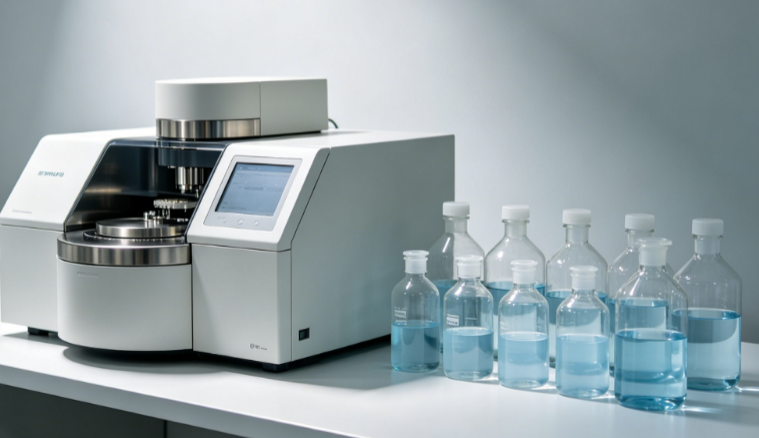
What We Quantify – Full Targeted Proteomics Scope
We do not merely report “protein presence”. Our platform includes Thermo Scientific Orbitrap Exploris 480 and 240 for PRM with sub‑fmol sensitivity and 0.01 Da mass accuracy, as well as Sciex QTRAP 6500+ for high‑sensitivity MRM (limit of quantification down to 0.1 ng/mL in plasma). We design optimized peptide transitions for each target using in‑silico prediction (Skyline, PinPoint) and empirical validation with synthetic heavy peptides. We perform absolute quantification using stable isotope‑labeled (SIL) internal standards (AQUA peptides or full‑length protein standards). We also offer multiplexed absolute quantification (QconCAT or PSAQ) for up to 50 proteins in a single run. Post‑translational modifications are quantified with site‑specific stoichiometry using targeted PRM/MRM after enrichment (e.g., TiO₂ for phosphopeptides, antibody‑based enrichment for ubiquitin remnants). Protein isoform and variant differentiation (e.g., splice variants, single amino acid variants) is achieved by designing unique peptides spanning variant regions. We also provide parallel targeted and discovery analysis (PRM combined with DIA or DDA) for verification in the same run. For pharmacokinetics (PK) of protein therapeutics, we develop and validate signature peptide LC‑MRM assays with GLP compliance, measuring intact or digested protein in serum, CSF, or tissue homogenates.
Key capabilities we routinely offer:
- Absolute protein quantification (fmol/mg tissue, copies/cell, or ng/mL plasma) – coefficient of variation (CV) <10% across replicates.
- Phosphorylation site occupancy (localization probability >0.95) – quantification of phosphorylated vs. unphosphorylated peptide.
- Ubiquitination and acetylation site mapping – di‑Gly remnant (K‑GG) targeting.
- Glycopeptide targeted analysis (specific glycoforms) – by PRM with HCD or ETD.
- Multiplexed biomarker verification (up to 150 targets per run) – scheduled MRM/PRM.
- Protein turnover (dynamic SILAC or heavy water labeling) – calculate synthesis and degradation rates.
- Cross‑linking peptide targeted detection – for structural or interaction validation.
- Host cell protein (HCP) targeted quantification in biotherapeutics – sensitive detection of risk‑related HCPs.
- Protein‑protein interaction validation (Co‑IP + targeted MS) – quantify specific interactors.
- Residual protein A or other process impurities – down to 0.1 ppm.
How Deep We Go – Sub‑Cellular Targeted Proteomics, Single‑Cell Compatibility, and Regulatory Validation
Most targeted proteomics labs stop at simple peptide quantification from bulk lysates. We provide sub‑cellular fractionation (nuclear, mitochondrial, membrane, cytosolic) combined with targeted assays to measure compartment‑specific protein distribution. Using laser capture microdissection (LCM) coupled with nano‑LC‑PRM, we can quantify proteins in 100–500 isolated cells from tissue sections. For single‑cell targeted proteomics (limited to high‑abundance peptides), we use nano‑POTS or CellenONE with PRM to detect ~20–50 targets per cell. Our automated sample preparation (robotic liquid handling, 96‑well format) enables high‑throughput verification of up to 1000 samples per week for biomarker studies. We also develop FDA/CLIA‑ready clinical assays with full method validation parameters: linearity (R² >0.99), LOD/LOQ, intra‑ and inter‑day precision (CV <15%), recovery (80‑120%), and stability (bench‑top, freeze‑thaw, long‑term). For pharmaceutical regulated studies (GxP), we can transfer methods to GLP/GCLP compliant workflows.
Advanced capabilities include:
- Immuno‑enrichment (anti‑peptide antibodies) coupled with PRM (immuno‑PRM) – increases sensitivity by 10‑1000x for low‑abundance targets (e.g., cytokines, phosphorylated kinases).
- Multiplexed isobaric labeling (TMTpro) targeted readout – quantify up to 18 samples simultaneously on Orbitrap with PRM.
- Non‑human primate and rodent cross‑reactive assays – using species‑conserved peptides and isotopologues.
- Degradomics/neo‑epitope targeted analysis – quantify specific protease cleavage products.
- Lipid‑associated protein targeted analysis – for lipoproteins or membrane protein complexes.
- Automated data processing and reporting (Skyline, MSstats, or in‑house R pipelines) – with statistical significance and power analysis.
- Comparison of targeted vs. untargeted data for validation – orthogonal verification using DIA or Western blot.
We routinely achieve measurement uncertainties: peptide concentration ±7% (CV), protein stoichiometry ±10% for PTMs, LOQ as low as 0.1 amol/µL for enriched targets. Our methods comply with CPTAC (Clinical Proteomic Tumor Analysis Consortium) guidelines, FDA bioanalytical method validation guidance (LC‑MS for proteins), and ICH M10.
Why Choose Our Targeted Proteomics Services – Key Advantages
1. ISO/IEC 17025:2017 and GLP/GCP‑compliant workflows – we offer a validated bridge between discovery and clinical/regulatory use.
2. Ultra‑high sensitivity with immuno‑PRM and micro‑flow LC – we routinely achieve attomole (10⁻¹⁸ mol) sensitivity for low‑abundance targets, far exceeding standard MRM/PRM.
3. Absolute quantification with synthetic SIL peptides or QconCAT proteins – we provide molar amounts (copies per cell, ng/mg tissue), not just relative ratios.
4. Site‑specific PTM stoichiometry (phosphorylation, ubiquitination, acetylation, O‑GlcNAc) – we differentiate between total protein and modified fraction.
5. High multiplexing (up to 150+ proteins per hour) – using scheduled PRM/MRM with 5‑ms dwell times, ideal for large biomarker verification studies.
6. Small sample input (10 µg protein lysate, 0.5 µL plasma, or 100 LCM‑captured cells) – minimal destructive analysis for precious samples.
7. Root cause analysis for unexpected quantification results – we check for interference, peptide stability, digestion efficiency, or matrix effects and optimize accordingly.
8. Fast turnaround with complete data transparency – routine targeted panels (20 proteins, 3 replicates per sample) completed in 5–7 business days after sample receipt. You receive raw chromatograms, peak integration tables, transition lists, QC metrics, and final concentration values.
9. Custom assay development for any organism or matrix – from plants, microbes, tissues, plasma, urine, cerebrospinal fluid, to formalin‑fixed paraffin‑embedded (FFPE) samples – we develop and validate within 3–4 weeks.
10. Competitive pricing for large verification studies – bundling method development, sample analysis (up to 100 samples), and data reporting costs 30% less than per‑sample pricing.
We have successfully completed over 1,000 targeted proteomics projects for academic research, biopharma, diagnostic development, and clinical trial support. Our team includes PhD proteomics scientists with decades of experience in MRM/PRM method development, statistics, and regulatory submissions.
Ready to Target Your Proteins of Interest?
Provide your protein list (UniProt IDs or sequences), sample matrix (plasma, tissue, cells, etc.), expected abundance range, and quantification type (absolute or relative). We will provide a free technical consultation, pilot data proposal, and a fixed‑price quote. Whether you need a rapid verification of two candidates or a 100‑protein clinical assay, we deliver deep, precise, and regulatory‑ready targeted proteomics tailored to your biological question.