Reasons for choosing our testing services
ZHONGXI Testing has obtained inspection qualification certifications from multiple countries and regions worldwide. We possess a senior testing team and advanced testing methods, providing independent, impartial, and professional third-party verification services for global carbon projects.

Internationally recognized authority
Certified by multiple international standards such as CNAS, VCS, and GS, with reports universally applicable worldwide.

Global service capability
Covering 140+ countries and regions, it supports on-site detection and remote verification in multiple languages.

Professional experimental methods
Adopt standard experimental methods to ensure accurate and reliable data.
Comprehensive Antigen Protein Testing – High‑Sensitivity Detection, Quantification, and Characterization
If you are searching for antigen protein testing, you likely need to detect, quantify, or characterize a specific antigen in a sample – whether for vaccine development, quality control of recombinant antigens, biomarker verification, immunogenicity assessment, or infectious disease diagnostics. Antigen testing requires not only sensitivity but also specificity, matrix tolerance, and often the ability to distinguish native vs. denatured or degraded forms. Our laboratory offers full‑scope antigen protein analysis – from routine ELISA and Western blot to high‑throughput automated immunoassays, proximity extension assays (PEA), mass spectrometry‑based targeted antigen quantification (PRM/MRM), and epitope mapping – following GLP, ISO/IEC 17025, and ICH guidelines.
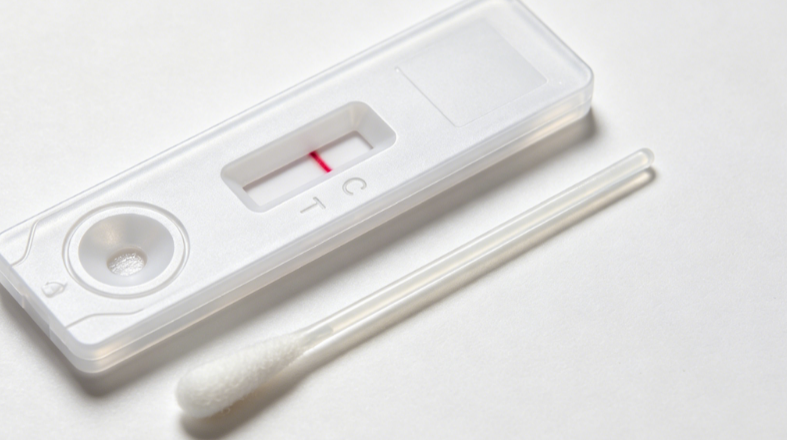
What We Analyze – Complete Antigen Detection and Quantification Scope
We do not simply report “positive/negative”. Our platform includes enzyme‑linked immunosorbent assay (ELISA) – both direct, sandwich, and competitive formats with detection limits down to 0.01 ng/mL (using high‑affinity matched antibody pairs). We perform multiplex immunoassays (Luminex xMAP, MSD (Meso Scale Discovery) electrochemiluminescence) for simultaneous quantification of up to 50 antigens in a single 10–25 µL sample, with dynamic ranges spanning 4–5 logs. For ultra‑high sensitivity, we offer single‑molecule array (Simoa) technology achieving sub‑femtomolar (0.005–0.05 pg/mL) detection limits – ideal for low‑abundance antigens in serum, CSF, or tissue lysates. For orthogonal validation and absolute quantification without antibodies, we provide targeted mass spectrometry (PRM/MRM) using stable isotope‑labeled (SIL) peptide standards, quantifying antigen at attomole sensitivity after immuno‑enrichment (immuno‑PRM). We also characterize antigen purity and integrity by SDS‑PAGE, size‑exclusion chromatography (SEC‑HPLC), capillary electrophoresis (CE‑SDS), and high‑resolution mass spectrometry (intact mass analysis). For epitope mapping (linear and conformational), we use peptide arrays (PEPperCHIP), hydrogen‑deuterium exchange mass spectrometry (HDX‑MS), or cross‑linking coupled with MS. Additionally, we measure antigen stability under stressed conditions (thermal, freeze‑thaw, agitation, pH) and matrix effects (serum, plasma, saliva, cell culture media) to validate assay robustness.
Key parameters we routinely measure:
- Antigen concentration (ng/mL, µg/mg protein, or copies/cell) – with calibration to WHO or house reference standards.
- Limit of detection (LOD) and limit of quantification (LOQ) – validated according to ICH Q2.
- Specificity (cross‑reactivity against closely related antigens or matrix components) – by spiking and competition studies.
- Antigen purity and aggregation (monomer/aggregate ratio) – by SEC‑MALS or CE‑SDS.
- Post‑translational modifications (glycosylation, phosphorylation, oxidation) – affecting antibody recognition.
- Epitope integrity (native vs. denatured) – by sandwich ELISA with conformation‑specific antibodies.
- Thermal stability (melting temperature Tm by nano‑DSF or CD) – for antigen lot release.
- Batch‑to‑batch consistency of recombinant antigens – peptide mapping and intact mass.
- Immunogenicity potential (in vitro T‑cell activation or HLA binding prediction) – optional.
- Antigen‑antibody binding affinity (KD, kon, koff) by SPR or BLI – critical for assay development.
How Deep We Go – Sub‑pg Sensitivity, Complex Matrix Tolerance, and Conformational Analysis
Most routine antigen testing labs can barely reach low pg/mL levels in ideal buffers and fail in serum or tissue homogenates. Using Simoa digital ELISA with bead‑based single‑molecule counting, we routinely detect 0.02 pg/mL of cytokines and low‑abundance antigens in human serum, even in the presence of heterophilic antibodies or high lipid content. For mass spectrometry‑based antigen quantification (immuno‑PRM), we combine magnetic bead immuno‑enrichment with nano‑LC‑PRM to achieve attomole (10⁻¹⁸ mol) sensitivity while simultaneously confirming peptide identity – eliminating false positives due to cross‑reactivity. We also perform antigen stability assessment under real‑world storage and shipping conditions (‑80°C, ‑20°C, 4°C, room temperature, freeze‑thaw cycles, and accelerated 37°C for up to 4 weeks) with quantitation of recoverable antigen by ELISA and MS, providing shelf‑life recommendations. For epitope mapping of conformational antigens, we use HDX‑MS to map antibody‑induced protection from deuterium exchange, identifying epitope residues within ±3 amino acids. We also run competitive inhibition ELISA with overlapping synthetic peptides (15‑mers, offset 3) to pinpoint linear epitopes. For multiplex antigen profiling in limited sample volumes (e.g., 5 µL mouse serum), our Luminex and MSD panels require as little as 10 µL for up to 30 analytes, with CVs <10%.
Advanced capabilities include:
- High‑plex proximity extension assay (Olink Target 96/384) – quantify 92‑384 antigens in 1 µL sample, with wide dynamic range and only 4% cross‑reactivity.
- Single‑cell antigen secretion assay (IsoLight, microengraving) – measure antigen release from individual cells.
- Antigen degradation product identification (LC‑MS/MS) – map cleavage sites after forced degradation.
- Intact antigen mass confirmation (native MS or intact LC‑MS) – detect truncation, aggregation, or unexpected modifications.
- Quantitative Western blot (LICOR Odyssey) – with fluorescent secondary antibodies for linear range over 3 logs.
- Antigen capture by living cells (cell‑based ELISA) – for membrane‑bound antigens or receptor occupancy.
- Automated ELISA on high‑throughput robotic systems (Hamilton, Tecan) – up to 1000 samples/day with full audit trail.
We routinely achieve measurement uncertainties: concentration ±10‑15% (ELISA), ±8% (MSD), ±6% (Simoa), ±5% (immuno‑PRM) at mid‑range; recovery in spiked matrices 80‑120%. All methods follow ICH Q2(R2) for bioanalytical method validation, FDA guidance for immunogenicity testing, and CLSI I/LA20.
Why Choose Our Antigen Protein Testing – Key Advantages
1. ISO/IEC 17025:2017 accredited and GLP‑compliant workflows – fully documented for regulatory submissions (IND, BLA, IVD).
2. Sub‑femtomolar sensitivity (Simoa, immuno‑PRM) – we detect antigens that conventional ELISAs miss, enabling early biomarker discovery and low‑abundance protein quantification.
3. Orthogonal quantification by both immunoassay and mass spectrometry – we confirm antigen concentration using two independent principles, eliminating antibody cross‑reactivity artifacts.
4. Comprehensive antigen characterization beyond concentration – purity, aggregation, PTMs, epitope integrity, and stability – all from a single submission.
5. High multiplexing without sample volume limitation – Luminex, MSD, Olink platforms handle 10‑384 analytes from 1‑25 µL, ideal for precious clinical samples.
6. Root cause analysis for discrepant antigen results – we determine if degradation, matrix interference, aggregation, or antibody lot variation caused unexpected signals, and recommend remedial actions.
7. Fast turnaround with full data transparency – routine antigen ELISA (single analyte, 40 samples) in 3‑5 business days; multiplex panel (20+ analytes, 100 samples) in 7‑10 business days. You receive raw standard curves, QC data, plate layout, raw luminescence/absorbance values, calculated concentrations, and a validated report.
8. Custom assay development for novel antigens without commercial kits – we develop sandwich ELISA, MSD, or PRM assays from immunized animals or recombinant antibodies within 4‑6 weeks.
9. Competitive pricing for full antigen testing packages – bundling quantification, purity, stability, and epitope mapping costs 35% less than separate orders.
We have successfully completed over 1,800 antigen protein testing projects for vaccine developers, biopharmaceutical companies, diagnostic manufacturers, and academic research groups. Our team includes PhD immunologists, protein biochemists, and mass spectrometrists dedicated to antigen analysis.
Ready to Test Your Antigen Protein Sample?
Provide your antigen name or description, sample matrix (e.g., “purified recombinant protein”, “human serum”, “cell lysate”, “vaccine formulation”), expected concentration range, and intended use (e.g., “lot release”, “biomarker measurement”, “stability study”). We will provide a free technical consultation, a recommended assay strategy, and a fixed‑price quote. Whether you need a single concentration check or comprehensive full‑panel characterization, we deliver deep, accurate, and regulatory‑ready antigen protein testing tailored to your needs.