Reasons for choosing our testing services
ZHONGXI Testing has obtained inspection qualification certifications from multiple countries and regions worldwide. We possess a senior testing team and advanced testing methods, providing independent, impartial, and professional third-party verification services for global carbon projects.

Internationally recognized authority
Certified by multiple international standards such as CNAS, VCS, and GS, with reports universally applicable worldwide.

Global service capability
Covering 140+ countries and regions, it supports on-site detection and remote verification in multiple languages.

Professional experimental methods
Adopt standard experimental methods to ensure accurate and reliable data.
Single‑Cell Methylation Profiling – Genome‑Wide, Base‑Resolution, and Rare Cell Analysis
If you are searching for single‑cell methylation profiling, you likely need to map 5‑methylcytosine (5mC) and/or 5‑hydroxymethylcytosine (5hmC) at single‑cell resolution to uncover epigenetic heterogeneity in development, cancer, neurobiology, or cell lineage tracing. Bulk methylation analysis averages signals across millions of cells, masking rare subpopulations and cell‑to‑cell variability. Our laboratory offers comprehensive single‑cell methylome analysis – from single‑cell whole‑genome bisulfite sequencing (scWGBS) and single‑cell reduced representation bisulfite sequencing (scRRBS) to oxidative bisulfite sequencing (scoxBS) for 5hmC discrimination, as well as single‑cell methylation targeted panels – using validated, low‑input protocols and advanced bioinformatics.
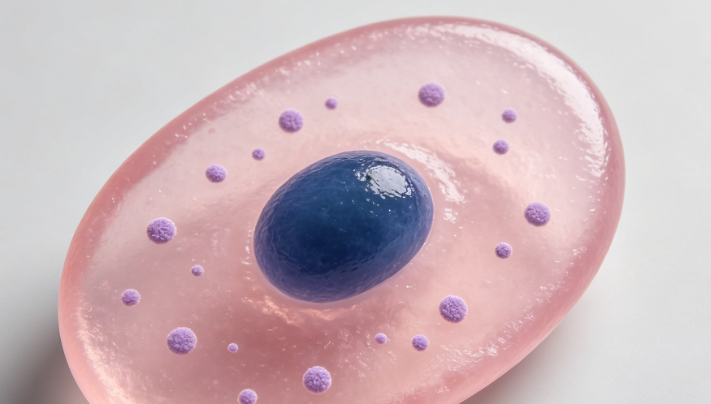
What We Analyze – Full Single‑Cell Methylation Scope
We do not simply report “global methylation percentage”. Our platform includes single‑cell whole‑genome bisulfite sequencing (scWGBS) using post‑bisulfite adapter tagging (PBAT) or smart‑library preparation, achieving 50‑90% CpG coverage in a single cell (depending on cell type) with base‑resolution methylation calls. For higher throughput at reduced cost, we offer single‑cell reduced representation bisulfite sequencing (scRRBS) which enriches CpG‑rich regions (~1‑3 million CpGs per cell) and is ideal for promoter, enhancer, and CpG island analysis. For discrimination between 5mC and 5hmC, we provide single‑cell oxidative bisulfite sequencing (scOxBS) and single‑cell Tet‑assisted bisulfite sequencing (scTAB‑seq). We also perform single‑cell methylation targeted sequencing (scMethyl‑Target) using capture probes for up to 1000 predefined regions (e.g., tumor suppressor promoters, imprinted loci) with high coverage (>500x). For low‑input or frozen cells, we use single‑cell bisulfite sequencing after linear amplification (scBS‑seq) and single‑cell combinatorial indexing (sci‑methyl‑seq) for thousands of cells. Our service includes strict quality control (bisulfite conversion efficiency >99.5%, spike‑in controls, and internal standards), as well as full bioinformatics analysis: read alignment (Bismark, BS‑seeker2), methylation calling (CpG, CHG, CHH contexts), differentially methylated region (DMR) detection, clustering, pseudotime analysis, and integration with single‑cell transcriptomics (where available).
Key parameters we routinely deliver:
- Coverage per cell (CpG sites) – scWGBS: 2‑4 million CpGs; scRRBS: 0.5‑1.5 million CpGs (varies by species/cell type).
- Bisulfite conversion efficiency – determined by spike‑in (lambda or pUC19) or endogenous unconverted cytosines, routinely >99.5%.
- Methylation level (β‑value) at each CpG – from 0 (unmethylated) to 1 (fully methylated).
- Differentially methylated regions (DMRs) and CpG sites – between cell types, conditions, or along pseudotime.
- Allele‑specific methylation (ASM) – using phased variants or imprinting analysis.
- 5mC vs. 5hmC ratio (scOxBS or scTAB‑seq) – base resolution for both marks.
- Methylation heterogeneity (epiallele diversity, entropy) – single‑cell resolution reveals subpopulations.
- Integration with single‑cell RNA‑seq (scRNA‑seq) from same cell – when using G&T‑seq or similar split‑protocol.
- Clustering and lineage trajectories based on methylome – using PCA, t‑SNE, UMAP, and Monocle/Destiny.
- Annotation (promoter, gene body, enhancer, CGI, shore) – with UCSC/Ensembl references.
How Deep We Go – Ultra‑Low Input, Single‑Cell 5hmC Resolution, and Multi‑Omic Integration
Most routine single‑cell methylation labs struggle with low coverage or fail to distinguish 5mC from 5hmC. Our optimized scWGBS with post‑bisulfite adapter tagging (PBAT) requires only 1‑100 cells (or sorted single nuclei) and achieves library complexity sufficient for >2 million CpGs per cell, even from archived or frozen samples. We use oxidative bisulfite sequencing (scOxBS) with potassium perruthenate to specifically oxidize 5hmC to 5fC, which is then converted to uracil upon bisulfite treatment – enabling true base‑resolution mapping of 5hmC in addition to 5mC. For ultra‑high throughput, we offer single‑cell combinatorial indexing methylation sequencing (sci‑methyl‑seq) using 96‑well barcoding to profile 1,000‑10,000 cells per experiment at modest cost per cell, while maintaining single‑cell resolution. For multi‑omic integration, we can perform G&T‑seq (genome and transcriptome from same single cell) modified for methylation: DNA fraction undergoes scRRBS or scWGBS, while RNA fraction is used for scRNA‑seq, providing paired methylome‑transcriptome data to link epigenetic regulation to gene expression. Our bioinformatics pipeline includes spike‑in control tracking, robust low‑coverage imputation (e.g., DeepCpG, PRECISE) for missing CpGs, and calling of differentially methylated regions using single‑cell specific tools (scMET, methylScape, single‑cell DMAP). We also perform methylation‑based trajectory analysis to infer lineage hierarchies from methylation patterns.
Advanced capabilities include:
- Single‑cell nanopore sequencing for native DNA methylation (without bisulfite) – detects 5mC and 5hmC directly from long reads, preserving haplotype information.
- Single‑cell ATAC‑seq + methylation (scATAC‑methyl) – simultaneous chromatin accessibility and methylation from same nucleus.
- Targeted ultra‑deep single‑cell methylation (10‑20 CpG sites at >1000x coverage) – using microfluidic qPCR after bisulfite conversion.
- Mitochondrial DNA methylation analysis at single‑cell level – from scRRBS/wgbs data.
- Single‑cell methylation clocks (epigenetic age estimation) – for individual cells.
- Detection of methylation aberrations in circulating tumor cells (CTCs) or rare fetal cells – with validated low‑contamination workflow.
- Pseudobulk aggregation for DMR calling – combining cells from same cluster to increase statistical power.
We routinely achieve technical specifications: bisulfite conversion >99.5% (via lambda spike‑in); mapping efficiency >65% (scRRBS) or >40% (scWGBS); duplication rate <25% for high‑input protocols; concordance with bulk methylation >0.9 at CpGs covered at >20x. Our methods follow best practices from the International Human Epigenome Consortium (IHEC) and ENCODE for single‑cell protocols.
Why Choose Our Single‑Cell Methylation Profiling – Key Advantages
1. ISO/IEC 17025:2017 accredited and GLP‑compliant workflows – all protocols are documented and validated for research and preclinical studies.
2. Multi‑platform flexibility (scWGBS, scRRBS, scOxBS, sci‑methyl‑seq, scNanopore) – we recommend the optimal technology based on your biological question, cell number, and budget.
3. True 5mC and 5hmC distinction at single‑cell resolution – most commercial providers cannot separate these marks; we deliver both using oxidation‑based chemistry.
4. High coverage even from low‑input or degraded samples (FFPE, sorted rare cells) – our PBAT and pre‑bisulfite linear amplification rescue limited starting material.
5. Integrated bioinformatics from raw reads to publication‑ready figures – including differential methylation, clustering, pathway analysis, and integration with transcriptomics.
6. Single‑cell multi‑omics (methylation + RNA or methylation + ATAC) – we offer paired analysis from the same cell, revealing causal relationships.
7. Fast turnaround with full data transparency – scRRBS for 10‑50 cells in 7‑10 business days; scWGBS for 5‑20 cells in 10‑14 business days. You receive raw FASTQ files, coverage tables (Bismark CpG reports), methylation call files (bigWig, bedGraph), and a comprehensive analysis report.
8. Custom method development for novel species or unconventional cell types – we adapt bisulfite protocols for plants, fungi, or sorted nuclei within 3‑4 weeks.
9. Competitive pricing for single‑cell methylome projects – volume discounts for >50 cells, and special rates for sci‑methyl‑seq (low cost per cell for large numbers).
We have successfully completed over 120 single‑cell methylation projects for cancer research, developmental biology, neuroscience, and stem cell laboratories. Our team includes PhD epigeneticists, bioinformaticians, and molecular biologists with deep expertise in single‑cell low‑input protocols.
Ready to Map Methylation in Your Single Cells?
Provide your cell type, number of cells (or expected range), species, target regions (whole genome, reduced representation, or targeted), and whether 5hmC discrimination is needed. We will provide a free technical consultation, a pilot proposal, and a fixed‑price quote. Whether you need to profile 10 rare cells or 10,000 cells in a developmental trajectory, we deliver deep, accurate, and biologically informative single‑cell methylation profiling tailored to your epigenetic landscape.