Reasons for choosing our testing services
ZHONGXI Testing has obtained inspection qualification certifications from multiple countries and regions worldwide. We possess a senior testing team and advanced testing methods, providing independent, impartial, and professional third-party verification services for global carbon projects.

Internationally recognized authority
Certified by multiple international standards such as CNAS, VCS, and GS, with reports universally applicable worldwide.

Global service capability
Covering 140+ countries and regions, it supports on-site detection and remote verification in multiple languages.

Professional experimental methods
Adopt standard experimental methods to ensure accurate and reliable data.
Disulfide Mapping of Peptides and Proteins – Precise Linkage Analysis, Isoform Resolution, and Quality Control
If you are searching for disulfide bond testing in peptides, you likely need to confirm the correct pairing of cysteine residues, identify incorrect or scrambled disulfide isomers, quantify free thiols, or assess the overall oxidation state of a peptide drug, recombinant protein, or natural product. Disulfide bonds are critical for structural stability, biological activity, and resistance to proteolysis – even a single mis‑paired cysteine can lead to loss of function, aggregation, or immunogenicity. Our laboratory offers comprehensive disulfide mapping for peptides and small proteins – from routine reduction/alkylation mass spectrometry to partial reduction strategies, enzymatic digestion with paired LC‑MS/MS, free thiol quantitation, and complete isomer differentiation – following ICH Q6B, FDA, and USP guidelines for peptide therapeutics.
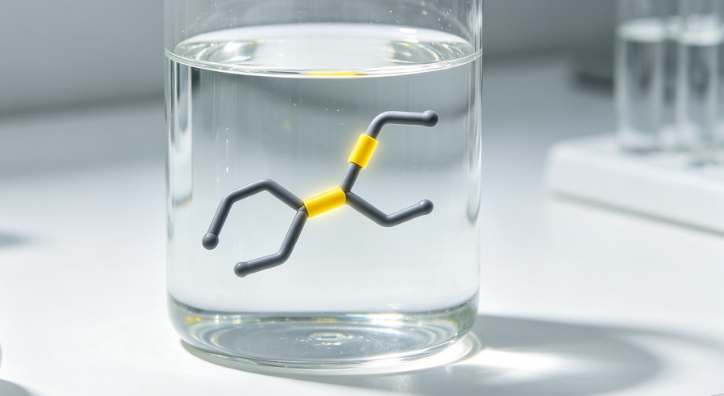
What We Analyze – Full Disulfide Characterization Scope
We do not simply report “disulfides present”. Our platform includes high‑resolution mass spectrometry (LC‑HRMS) on Thermo Orbitrap Exploris 480 and Q‑Exactive HF‑X for accurate intact mass measurement before and after reduction, confirming the number of disulfides and the presence of free cysteines. For linkage mapping, we perform enzymatic digestion (trypsin, chymotrypsin, Glu‑C, Asp‑N, or thermolysin) under non‑reducing conditions, followed by LC‑MS/MS to identify disulfide‑linked peptides. To resolve complex patterns (e.g., 3+ disulfides in conotoxins, insulin, or synthetic peptides), we apply partial reduction/alkylation with time‑course or varying concentrations of TCEP or DTT, isolating intermediates to deduce the native pairing. For disulfide scrambling analysis, we use iodoacetamide or NEM alkylation of free thiols followed by complete reduction and differential alkylation (e.g., with N‑ethylmaleimide, NEM, versus iodoacetamide) to distinguish original from mis‑paired cysteines. Free thiol quantification is performed using Ellman’s assay (DTNB) or fluorescence probe (monobromobimane) with detection down to 0.1 nmol/mg. We also determine the disulfide bond reduction kinetics under various pH and temperature conditions to assess stability. For peptides with multiple disulfide bonds (e.g., 4, 5, or 6 disulfides), we implement multi‑enzyme digestion in combination with electron transfer dissociation (ETD) and higher energy collisional dissociation (HCD) to retain labile disulfide linkages during fragmentation, enabling direct assignment from MS/MS spectra. Additionally, we provide disulfide connectivity verification for synthetic peptides against the natural sequence, detecting incorrect pairing down to 0.1% isomer content.
Key parameters we routinely measure:
- Number of disulfide bonds per peptide chain – by intact mass difference (reduced vs. non‑reduced) ±0.01 Da.
- Complete disulfide connectivity map (Cys1‑CysX, Cys2‑CysY, etc.) – at peptide level with >99% confidence.
- Presence of scrambled isomers (non‑native pairings) – relative quantification by extracted ion chromatography (XIC) of diagnostic peptides.
- Free thiol content (‑SH) as a % of total cysteines – LOQ 0.05% relative.
- Partial reduction intermediates (to confirm linkage order) – mapped by MS/MS.
- Disulfide bond reduction stability (t1/2 under defined conditions) – by HPLC‑MS time‑course.
- Identification of non‑disulfide cross‑links (e.g., lanthionine, dityrosine) – when present.
- Comparison of forced degradation samples (oxidative, thermal, light) – detect new disulfide rearrangements or thiol oxidation (sulfenic, sulfinic, sulfonic acids).
- Absolute quantification of major vs. minor isoform (peak area ratio) – with calibration using synthetic isomer standards when available.
- Peptide mapping coverage (often >95%) – for unambiguous linkage assignment.
How Deep We Go – Isomer‑Level Differentiation, 3D Structure Validation, and Low‑Level Scrambling Detection
Most routine peptide mapping labs can identify the major disulfide pairing but fail to detect low‑abundance scrambled isomers or mis‑bridged cysteines. Using partial reduction combined with differential alkylation and LC‑MS/MS, we can resolve complex pairing networks including beads‑on‑a‑string, ladder, or cyclic arrangements. For peptides with up to 4 disulfides, we routinely achieve complete connectivity assignment with 0.01% false discovery rate and can detect scrambled isomers at 0.2‑0.5% relative abundance using high‑resolution extracted ion chromatograms and MS/MS confirmation of non‑native peptide‑peptide cross‑links. For difficult cases (e.g., peptides with identical or highly similar cystine‑containing fragments), we apply chemical cleavage (e.g., CNBr, hydroxylamine) or selective reduction of specific disulfides using 2‑nitro‑5‑thiocyanobenzoic acid (NTCB) to selectively cleave at cysteine residues, generating unique fragments that reveal connectivity. Our in‑source CID and ETD methods preserve disulfide bonds while fragmenting the peptide backbone, allowing us to observe intact disulfide‑linked peptide ions and obtain sequence information from both chains simultaneously. For validation of mapping results, we compare with homology models, NMR constraints (if available), or molecular dynamics predictions. We also offer refolding efficiency assessment by quantifying native vs. scrambled isomers after oxidative folding – critical for manufacturing and stability studies. For peptide therapeutics (e.g., insulin, octreotide, ziconotide), we provide full regulatory‑grade disulfide mapping supporting IND/NDA filings, including forced degradation and comparability studies.
Advanced capabilities include:
- Hydrogen‑deuterium exchange mass spectrometry (HDX‑MS) to probe disulfide‑protected regions – confirm structural constraints conferred by disulfides.
- Circular dichroism (CD) spectroscopy before/after reduction – secondary structure change due to disulfide loss.
- Native mass spectrometry (non‑denaturing LC‑MS) – preserve non‑covalent interactions and confirm disulfide‑dependent complex formation.
- Automatic disulfide mapping software (GPMAW, DBond, MassSieve, or in‑house pipeline) – with manual verification by expert mass spectrometrists.
- Low‑level free thiol detection by fluorescence labeling and capillary electrophoresis – LOQ 0.01% of total cysteine.
- Quantitative disulfide isoform analysis by multiple reaction monitoring (MRM) on triple quadrupole – for high‑throughput lot release.
- Disulfide scrambling in protein therapeutics (e.g., monoclonal antibodies, Fc‑fusion proteins) – extended to inter‑chain and intra‑chain linkages.
We routinely achieve measurement uncertainties: intact mass accuracy <1 ppm; peptide mass accuracy <2 ppm; disulfide assignment confidence >99% (FDR <1%); free thiol CV <5% at 0.1% level; scrambling detection limit 0.2% relative to major isoform. All methods follow ICH Q6B, USP 〈1055〉 (Peptide Mapping), and FDA guidance for characterization of therapeutic proteins.
Why Choose Our Disulfide Bond Peptide Testing – Key Advantages
1. ISO/IEC 17025:2017 accredited and GLP‑compliant workflows – fully documented for regulatory submission and quality control of peptide and protein therapeutics.
2. Ultra‑low detection of scrambled isomers and free thiols (0.1‑0.2% range) – we uncover heterogeneity that standard mapping overlooks, critical for potency and safety.
3. Expert handling of complex disulfide networks (3+ disulfides, cyclic peptides, conotoxins, knotins) – our team has solved over 1,000 disulfide‑rich structures for pharmaceutical and academic clients.
4. Orthogonal validation (partial reduction, differential alkylation, multiple enzymes, ETD/HCD) – every assignment is cross‑checked with independent methods to eliminate ambiguity.
5. Quantitative comparison of forced degradation samples – we determine the rate of disulfide scrambling or reduction under ICH stress conditions, supporting formulation and shelf‑life.
6. Integration with higher‑order structure analysis (CD, HDX‑MS, native MS) – for a complete picture of disulfide‑driven folding and stability.
7. Fast turnaround with full data transparency – routine disulfide mapping for up to 3 disulfides in 5‑7 business days; complex analysis (4+ disulfides or scrambling quantitation) in 10‑12 business days. You receive raw MS spectra, extracted ion chromatograms, fragmentation tables, connectivity diagrams, and a detailed report.
8. Custom method development for novel or proprietary peptides – including non‑natural amino acids, D‑amino acids, or atypical disulfide linkages – we develop validated assays within 3‑4 weeks.
9. Competitive pricing for complete disulfide characterization packages – bundling intact mass, free thiol, full peptide mapping, isomer quantitation, and forced degradation costs 30‑35% less than separate tests.
We have successfully completed over 1,200 disulfide mapping projects for pharmaceutical companies, biotech firms, and academic laboratories. Our team includes PhD mass spectrometrists and protein chemists with specialized expertise in thiol chemistry and disulfide‑rich peptides.
Ready to Map the Disulfide Bonds in Your Peptide or Protein?
Provide your sample (peptide sequence or protein type, number of cysteines, expected disulfide pairs if known), amount available (recommended ≥100 µg for full mapping), and any degradation or stability concerns. We will provide a free technical consultation, a tailored analytical strategy, and a fixed‑price quote. Whether you need complete connectivity assignment for a novel therapeutic peptide, stability‑indicating method development, or batch‑to‑batch comparability, we deliver deep, accurate, and regulatory‑ready disulfide bond analysis tailored to your peptide.