Reasons for choosing our testing services
ZHONGXI Testing has obtained inspection qualification certifications from multiple countries and regions worldwide. We possess a senior testing team and advanced testing methods, providing independent, impartial, and professional third-party verification services for global carbon projects.
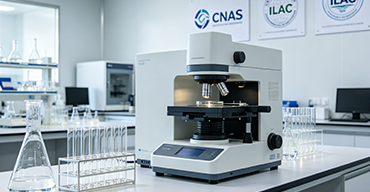
Internationally recognized authority
Certified by multiple international standards such as CNAS, VCS, and GS, with reports universally applicable worldwide.

Global service capability
Covering 140+ countries and regions, it supports on-site detection and remote verification in multiple languages.
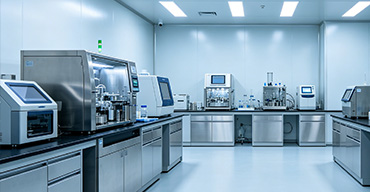
Professional experimental methods
Adopt standard experimental methods to ensure accurate and reliable data.
Metabolite Identification and Quantification – High‑Resolution Mass Spectrometry, Accurate Quantitation, and Pathway Integration
If you are searching for metabolite qualitative and quantitative analysis, you likely need to identify unknown metabolites, confirm putative biomarkers, or precisely measure the concentration of targeted metabolites in biological, clinical, or environmental samples. Whether you are conducting untargeted metabolomics for biomarker discovery, targeted quantitation of drugs or endogenous metabolites for pharmacokinetics, or industrial metabolic engineering, you require high resolution, sub‑ppm mass accuracy, wide dynamic range, and rigorous validation. Our laboratory provides comprehensive metabolomics services – from full‑scan untargeted screening to absolute quantitation using stable isotope‑labeled internal standards (SIL‑IS) – on ultra‑high‑performance liquid chromatography (UHPLC) coupled to Orbitrap, Q‑TOF, or triple quadrupole mass spectrometers, following ISO 17025 and metabolomics standard initiative (MSI) guidelines.
What We Detect and Quantify – Analytical Scope for Metabolites
We do not simply report “tentative identifications”. Our platform includes UHPLC‑Orbitrap (Thermo Q‑Exactive HF‑X, Orbitrap Exploris 480) for untargeted metabolomics with resolution up to 480,000 (FWHM) and mass accuracy <1 ppm, enabling confident molecular formula assignment. For targeted quantitation, we use UHPLC‑MS/MS (triple quadrupole, Sciex QTRAP 6500+) with multiple reaction monitoring (MRM) achieving sub‑nM sensitivities and linear dynamic range over 5 orders of magnitude. We perform absolute quantification using stable isotope‑labeled internal standards (SIL‑IS) for each compound whenever possible, or commercial standards with matrix‑matched calibration. For broad coverage, we run untargeted data‑dependent (DDA) and data‑independent (DIA) acquisition to capture both expected and unexpected metabolites. We also offer chiral metabolite separation using polysaccharide or cyclodextrin columns, and volatile metabolomics by GC‑MS (LECO Pegasus 4D) with EI/MS and high‑resolution TOF. Sample preparation includes protein precipitation, liquid‑liquid extraction (LLE), solid‑phase extraction (SPE), or customized derivatization (methoximation, silylation, acylation) for non‑targeted or targeted workflows.
Key parameters we routinely report:
- Metabolite identities (tentative by accurate mass, isotopic pattern, retention time, and MS/MS library matching; confirmed by authentic standard) – MSI level 1 or 2 confidence.
- Absolute concentration (ng/mL, µM, or µg/mg tissue) – with calibration range, linearity (R² >0.99), LOD, LOQ.
- Relative quantitation (fold change between groups) – with statistical significance (t‑test, ANOVA, FDR correction).
- Quality control (QC) pooled samples and internal standard consistency – to monitor instrument drift and batch effects.
- Compound identification using in‑house spectral libraries (≥5000 metabolites), public libraries (HMDB, METLIN, NIST, MassBank), and MS/MS fragmentation interpretation.
- Pathway enrichment analysis (KEGG, Reactome, MetaboAnalyst integration) – biological context for metabolomic changes.
- Untargeted feature detection (XCMS, Compound Discoverer, or Progenesis QI) – with peak integration and alignment.
- Stable isotope labeling experiments (e.g., ¹³C flux) for metabolic turnover – optional.
How Deep We Go – Sub‑pmol Sensitivity, Structural Elucidation, and Large‑Cohort Validated Quantitation
Most routine metabolomics labs can measure 100‑200 known metabolites but lack the depth for unknown identification or low‑abundance signaling molecules. We routinely detect over 2,000‑5,000 distinct molecular features (positive + negative ion modes) from serum, plasma, urine, tissues, or cell lysates. Using complementary separation (HILIC for polar metabolites, C18 for non‑polar, and ion‑pairing or PFP for specific classes), we cover a wide chemical space: amino acids, acylcarnitines, bile acids, short‑chain fatty acids, TCA cycle intermediates, nucleotides, hormones, eicosanoids, oxidized lipids, and many more. For unknown metabolite identification, we perform targeted MS/MS (via DDA or t‑MS²) and accurate mass precursor ion filtering, followed by in silico fragmentation (MetFrag, SIRIUS, or CSI:FingerID) to propose chemical structures, confirmed by synthesis or purchase of authentic standards where possible. Our absolute quantitation panels for up to 500 validated metabolites (e.g., Biocrates MxP Quant 500, in‑house developed panels) provide high‑throughput, reproducible results with intra‑ and inter‑day CVs typically <15%. For ultra‑sensitive detection (e.g., steroid hormones, eicosanoids), we use online SPE‑UHPLC‑MS/MS achieving LOQ as low as 0.01 ng/mL in plasma. For large cohort studies (hundreds to thousands of samples), we implement batch randomization, QC pooling, and signal correction (e.g., LOESS normalization) to eliminate instrument drift. We also provide multi‑omics integration with transcriptomic and proteomic data upon request.
Advanced capabilities include:
- Single‑cell metabolomics (nano‑LC‑MS, capillary electrophoresis‑MS) – for limited cell populations or isolated single cells.
- Spatial metabolomics (MALDI imaging, DESI) – mapping metabolite distributions on tissue sections.
- Fluxomics (¹³C or ¹⁵N isotope labeling time‑course) – measure metabolic pathway activity.
- Lipidomics (deep coverage of >1500 lipid species by RP‑LC‑MS/MS and ion mobility) – including regioisomer and double bond positional analysis.
- Non‑targeted GC‑MS for volatile and derivatized metabolites – with Fiehn and Golm library matching.
- Analyte stability studies (freeze‑thaw, bench‑top, long‑term storage) – tailored to your matrix.
- Reference range and cut‑off determination for clinical biomarkers – in collaboration with clinical statisticians.
We routinely achieve measurement uncertainties: concentration ±10‑15% (targeted), fold change ±20% (untargeted); identification confidence MSI Level 1 (standard) for targets; Level 2 for unknowns with supporting fragmentation. All methods follow Metabolomics Standards Initiative (MSI) guidelines, ICH Q2(R1) for bioanalysis, and ISO 20391 for metabolomics quality control.
Why Choose Our Metabolite Analysis Services – Key Advantages
1. ISO/IEC 17025:2017 accredited and GLP‑compliant workflows – suitable for regulated bioanalysis, clinical research, and industrial QA/QC.
2. Broad chemical coverage (polar to non‑polar, volatile to non‑volatile, chiral to achiral) – we use complementary separation and ionization modes to capture the metabolome comprehensively.
3. High mass accuracy (<1 ppm) and high resolution (480,000) for confident structural assignment – we reduce false positives and identify unknowns down to 0.1 ng/mL.
4. Absolute quantitation for hundreds of validated metabolites with stable isotope internal standards – providing regulatory‑ready concentration data, not just relative ratios.
5. Robust large‑cohort capabilities (over 1,000 samples) with rigorous batch correction – we maintain data consistency and statistical power for population studies.
6. Integrated pathway and statistical analysis (PCA, PLS‑DA, heatmaps, volcano plots, enrichment) – we deliver biological insight, not just a list of metabolites.
7. Fast turnaround with full data transparency – targeted panel (50‑100 metabolites, 40 samples) in 5‑7 business days; untargeted profiling (serum/plasma, 80 samples) in 10‑14 business days. You receive raw chromatograms, peak integration files, quantification tables, QC metrics, and a detailed statistical report.
8. Custom assay development for novel or proprietary metabolites – we develop and validate UHPLC‑MS/MS assays within 3‑4 weeks, including synthesis or purchase of internal standards.
9. Competitive pricing for comprehensive metabolomics packages – bundling untargeted discovery, targeted quantitation, pathway analysis, and statistical support costs 30‑35% less than piecemeal services.
We have successfully completed over 1,500 metabolomics projects for pharmaceutical R&D, academic research, agricultural biotechnology, and clinical diagnostic development. Our team includes PhD bioanalytical chemists, bioinformaticians, and metabolic biologists with deep expertise across diverse matrices and disease areas.
Ready to Identify and Quantify Metabolites in Your Samples?
Describe your sample matrix (plasma, urine, tissue, cell culture, food, environmental), the biological question (e.g., “find biomarkers of diabetes”, “measure 10 specific amino acids”, “pharmacokinetics of a drug metabolite”), and desired level of quantification (relative or absolute). We will provide a free technical consultation, a recommended analytical strategy, and a fixed‑price quote. Whether you need a rapid targeted panel or a full untargeted discovery study, we deliver deep, accurate, and biologically meaningful metabolite analysis tailored to your research or regulatory needs.