Reasons for choosing our testing services
ZHONGXI Testing has obtained inspection qualification certifications from multiple countries and regions worldwide. We possess a senior testing team and advanced testing methods, providing independent, impartial, and professional third-party verification services for global carbon projects.

Internationally recognized authority
Certified by multiple international standards such as CNAS, VCS, and GS, with reports universally applicable worldwide.

Global service capability
Covering 140+ countries and regions, it supports on-site detection and remote verification in multiple languages.

Professional experimental methods
Adopt standard experimental methods to ensure accurate and reliable data.
Comprehensive Phthalate Testing – Trace Analysis, Regulatory Compliance, and Multi‑Matrix Expertise
If you are searching for phthalate testing, you likely need to detect and quantify phthalate esters – such as DEHP, DBP, BBP, DINP, DIDP, DNOP – in consumer products, food contact materials, medical devices, children's toys, cosmetics, or environmental samples (water, soil, air). Phthalates are endocrine disruptors subject to strict global regulations (EU REACH, RoHS, CPSIA, China GB, US CPSC). Our laboratory provides high‑sensitivity phthalate analysis – from routine screening to ultra‑trace quantification, isomer‑specific profiling, and migration testing – using GC‑MS, GC‑MS/MS, and LC‑MS/MS following EPA, ISO, EN, and ASTM methods.
What We Detect – Full Phthalate Coverage and Regulatory Panel
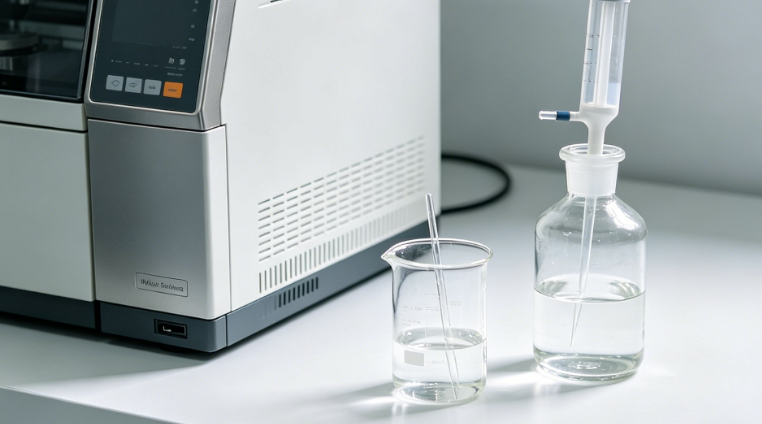
We do not simply report “total phthalates”. Our platform includes gas chromatography‑mass spectrometry (GC‑MS) in SIM and full‑scan modes for identification and quantification of up to 24 phthalate congeners in a single run, with detection limits down to 0.1 ppm (mg/kg) for solids and 0.01 µg/L for water. For enhanced sensitivity and selectivity in complex matrices (e.g., medical devices, fatty foods, cosmetics), we use GC‑MS/MS (triple quadrupole) achieving sub‑ppb detection limits (0.01–0.05 ppm) and <0.5 µg/L in aqueous samples. We also offer LC‑MS/MS for polar or heat‑labile phthalate metabolites (e.g., monoesters in biological fluids). Our standard panels align with major regulatory lists: EU REACH (SVHC) – 7 phthalates; RoHS (Annex II) – 4 phthalates; CPSC children’s products – 8 phthalates; China GB 6675 – 6 phthalates; and FDA food contact – targeted phthalates. We perform migration testing using simulated food contact conditions (aqueous, acidic, fatty, alcoholic simulants) according to EN 1186 or FDA guidelines, measuring phthalate release into food simulants over time and temperature.
Key parameters we routinely measure:
- Concentration of individual phthalates (DEHP, DBP, BBP, DINP, DIDP, DNOP, DIBP, DMP, DEP, DPrP, DHP, etc.) – with calibration curves ranging from 0.01 to 1000 µg/mL.
- Total phthalate sum (if required by regulation) – e.g., total of DEHP+DBP+BBP for RoHS.
- Detection and quantification limits (LOD/LOQ) – matrix‑specific, typically 0.1‑1 ppm for solids; 0.01‑0.1 µg/L for water.
- Identification by retention time matching and qualifier/quantifier ion ratios – meets ISO 17025 identification criteria.
- Migration levels (mg/kg or mg/dm²) in food simulants – per EN 1186‑3, 4, 5, 9.
- Screening for restricted phthalates in toys (EN 71‑9, 10, 11) – compliance with EU Toy Safety Directive.
- Phthalates in medical devices (ISO 10993‑18, USP <661>) – extractables and leachables studies.
- Phthalates in cosmetics (FDA, EU Cosmetics Regulation) – including phthalate‑free verification.
- Phthalates in environmental samples (EPA 8061, 8270, 3546) – water, wastewater, soil, sediment, air sampling (passive or active).
How Deep We Go – Sub‑ppb Sensitivity, Isomer Discrimination, and Background Control
Most routine phthalate testing labs suffer from background contamination (ubiquitous in lab plastics, solvents, air) and cannot reliably detect low ppm levels. We operate a dedicated low‑phthalate laboratory with rigorous contamination control: glassware washing protocols, phthalate‑free solvents, negative controls, and blank subtraction. Using gas chromatography coupled to triple quadrupole MS/MS (GC‑MS/MS) with multiple reaction monitoring (MRM), we achieve limits of quantification (LOQ) of 0.01 ppm in solid matrices and 0.005 µg/L in water – enabling compliance with the most stringent global limits (e.g., 0.1% w/w for DEHP in toys, 0.01% for certain applications). We can distinguish between branched and linear DINP/DIDP isomers using specialized GC columns (e.g., 5% phenyl vs. 50% phenyl) and MS fragmentation patterns, providing accurate quantitation even for complex technical mixtures. For phthalates in fatty or highly colored matrices (e.g., recycled plastics, printing inks), we employ gel permeation chromatography (GPC) cleanup prior to GC‑MS to remove lipids and pigments, reducing matrix interference and prolonging column lifetime.
Our advanced capabilities include:
- Thermal desorption (TD)‑GC‑MS for air and emission testing – measure phthalates in indoor dust, airborne particles, or material off‑gassing.
- Leaching studies under real‑world conditions – contact time, temperature, UV exposure, and mechanical stress.
- Identification of phthalate‑containing additives (e.g., PVC plasticizers) by FTIR pre‑screening – to focus GC‑MS resources on positive samples.
- Quantitative analysis of phthalate metabolites in urine (mEHP, mBP, miNP) – as biomarkers of human exposure, using LC‑MS/MS with isotope‑dilution internal standards.
- High‑throughput automated Soxhlet or microwave‑assisted extraction – for large batches of solid samples (e.g., 50+ samples/day).
- Isotope‑dilution mass spectrometry (ID‑MS) for absolute quantification – using deuterated or ¹³C‑labeled phthalate internal standards, providing highest accuracy.
We routinely achieve measurement uncertainties: concentration ±10‑15% at LOQ, ±5‑10% at higher levels; recovery from spiked matrices 85‑115%; blank levels consistently <0.5 ppm for DEHP and <0.1 ppm for other phthalates. All methods follow ISO 17025 requirements, CPSC‑CH‑C1001.09, EPA 3540/3546/8270, and EN 14372.
Why Choose Our Phthalate Testing Services – Key Advantages
1. ISO/IEC 17025:2017 accredited methods – covering all major phthalate standards for consumer products, food contact, environment, and medical devices.
2. Ultra‑low detection limits (sub‑ppm for solids, sub‑ppb for liquids) with rigorous contamination control – we deliver accurate data even near regulatory action limits.
3. Comprehensive regulatory panel (24+ phthalates) and isomer‑specific DINP/DIDP quantitation – no need to send samples to multiple labs.
4. Migration testing expertise (time, temperature, simulants, contact conditions) – essential for food packaging and medical device compliance.
5. Fast turnaround with full data transparency – routine phthalate screening (8 phthalates, 3 samples) in 3‑5 business days; full migration study in 7‑10 business days. You receive raw chromatograms, calibration curves, qualifier ion ratios, blank control results, and a signed certificate.
6. Custom method development for non‑standard materials (inks, adhesives, foams, recycled plastics) – we optimize extraction and cleanup matrices within 2‑3 weeks.
7. Competitive pricing for full phthalate panels – bundling 10 phthalates, migration test, and duplicate QC costs 30% less than separate tests.
We have successfully completed over 2,000 phthalate testing projects for toy manufacturers, food packaging companies, medical device producers, and environmental monitoring agencies. Our team includes PhD analytical chemists with specialized expertise in phthalate analysis and regulatory compliance.
Ready to Test Your Product or Environmental Sample for Phthalates?
Provide your sample type (plastic, rubber, liquid, air filter, food simulant), target regulation (e.g., “EU RoHS”, “CPSIA”, “EN 71‑9”, “FDA food contact”), and any specific phthalates of concern. We will provide a free technical consultation, a recommended testing plan, and a fixed‑price quote. Whether you need single‑batch QC, supply chain verification, or full regulatory compliance testing, we deliver deep, accurate, and legally defensible phthalate analysis tailored to your needs.