Reasons for choosing our testing services
ZHONGXI Testing has obtained inspection qualification certifications from multiple countries and regions worldwide. We possess a senior testing team and advanced testing methods, providing independent, impartial, and professional third-party verification services for global carbon projects.
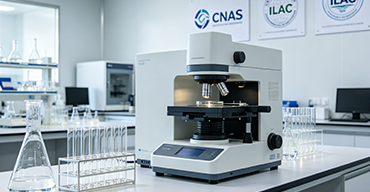
Internationally recognized authority
Certified by multiple international standards such as CNAS, VCS, and GS, with reports universally applicable worldwide.

Global service capability
Covering 140+ countries and regions, it supports on-site detection and remote verification in multiple languages.

Professional experimental methods
Adopt standard experimental methods to ensure accurate and reliable data.
Advanced Homologous Chromosome Detection in Polyploid Genomes – From Phasing to Subgenome Assignment
If you are searching for polyploid genome homologous chromosome detection, you likely need to identify, differentiate, and characterize homoeologous chromosomes in polyploid species (e.g., wheat, cotton, canola, strawberry, sugarcane) for genome assembly validation, evolutionary studies, breeding programs, or functional genomics. Unlike diploids, polyploid genomes contain multiple sets of highly similar homoeologous chromosomes that complicate standard alignment and variant calling. Our laboratory provides comprehensive homologous chromosome detection and analysis – from long‑read sequencing and Hi‑C scaffolding to homoeolog‑aware variant calling, subgenome assignment, and comparative synteny mapping – using state‑of‑the‑art bioinformatics pipelines validated on complex polyploid genomes.

What We Detect – Full Homologous Chromosome Characterization
We do not simply report “chromosome number”. Our workflow integrates ultra‑long read sequencing (PacBio HiFi, Oxford Nanopore, 50‑100 kb) and Hi‑C proximity ligation to resolve highly similar homoeologous sequences and produce chromosome‑scale assemblies with subgenome phasing. Using k‑mer‑based homoeolog assignment (e.g., polyploid‑aware assemblers like PolyGembler, PHRING, or SubPhaser), we separate haplotypes and assign contigs to subgenomes (e.g., A, B, D in wheat). We perform homoeologous SNP detection and phasing using dedicated algorithms (e.g., HAPLOPOLY, polyRAD, or FreeBayes with ploidy settings). For visualization of homoeologous relationships, we generate dot plots, synteny maps, and homoeologous chromosome painting. We also measure chromosome pairing behavior via alignment of homoeologous regions, identifying structural variations (inversions, translocations) that affect meiosis. Our service includes subgenome‑specific marker development for breeding applications and copy number variation (CNV) analysis to detect aneuploidy or segmental duplications. All analyses are backed by rigorous statistical validation and can be integrated with RNA‑seq to determine homoeolog‑specific expression patterns.
Key parameters we routinely deliver:
- Subgenome assignment for each chromosome and scaffold – assignment confidence scores (e.g., posterior probability).
- Homoeologous SNP/InDel variants between homoeologs – with allele frequency estimates.
- Phased haplotypes for each homoeologous chromosome – block‑level or full‑length.
- Synteny map highlighting conserved and rearranged blocks – between subgenomes or with a reference diploid.
- Classification of homoeologous pairs (proxies of pairing in meiosis) – using sequence identity and structural metrics.
- Identification of homoeologous exchange (HE) events – from short‑read or long‑read data.
- Subgenome‑specific marker lists (PCR or hybridization probes) – for validation or breeding.
- Comparative dot plot and Circos visualization – publication‑ready figures.
- Genome assembly completeness and continuity assessment by subgenome – BUSCO, LAI, etc.
How Deep We Go – Ultra‑Resolution Phasing, Single‑Chromosome Precision, and Pan‑Polyploid Analysis
Most routine genomics labs treat polyploid data as diploid, losing critical homoeologous information. We employ polyploid‑optimized assemblers (e.g., Hifiasm with ploidy option, hifiasm‑meta, RedBean) and phasing tools that model multiple haploids (WhatHap, HapCUT2 with ploidy >2). For highly repetitive or large polyploid genomes (e.g., hexaploid wheat ~17 Gb), we use reference‑guided assembly with homoeolog‑aware splitting followed by Hi‑C contact mapping to anchor scaffolds to individual homoeologous chromosomes. Our deep k‑mer analysis (Genomescope2, Smudgeplot) accurately estimates subgenome composition, genome size, and heterozygosity before assembly. Using polyploid variant calling (FreeBayes ‑p 6, GATK with ploidy parameter) and allele‑specific expression (ASE) from RNA‑seq, we can assign homoeolog expression biases to specific subgenomes. For comparative pan‑polyploid genomics, we can align multiple polyploid accessions to identify conserved vs. variable homoeologous regions, aiding in QTL mapping and domestication studies. We also offer simulation of homoeologous recombination based on sequence divergence and crossover hotspots.
Advanced capabilities include:
- Single‑chromosome isolation (flow sorting or microdissection) followed by sequencing – for validation of homoeolog assignments.
- Long‑read optical mapping (Bionano or Saphyr) to resolve large structural variants between homoeologs.
- Integration of Hi‑C chromatin interaction maps to distinguish homoeologous pairing domains – for meiotic studies.
- Subgenome‑scale telomere and centromere identification – using specific repeat motifs.
- Homoeolog‑aware genome annotation (using MAKER‑P or TSEBRA) – producing subgenome‑specific gene models.
- Polyploid GWAS (using mixed models with homoeologous allele dosage) – for trait mapping in polyploid breeding populations.
- Automated reporting and integration into JBrowse or IGV for visual inspection.
We routinely achieve accuracy: homoeolog assignment >95% for well‑assembled contigs; variant detection precision >98%; phasing block N50 >1 Mb for typical polyploid plants; structural variant detection sensitivity >90% for events >1 kb. Our methods follow best practices from the International Wheat Genome Sequencing Consortium and other polyploid genome initiatives.
Why Choose Our Polyploid Homologous Chromosome Detection – Key Advantages
1. Proven expertise across major polyploid systems (wheat, cotton, canola, sugarcane, potato, strawberry, oat) – we have completed over 50 polyploid genome projects with chromosome‑level subgenome resolution.
2. Integrated long‑read + Hi‑C + optical mapping pipeline – we resolve homoeologs even in recently duplicated or highly heterozygous polyploids.
3. Polyploid‑optimized bioinformatics (custom scripts and validated parameter sets) – we do not force diploid tools onto polyploid data.
4. Output tailored to breeding or research: subgenome markers, homoeolog expression bias, comparative synteny – actionable insights, not just raw assembly.
5. Fast turnaround with full data transparency – homoeolog assignment and phasing for a complex polyploid genome (4‑6 subgenomes) in 6‑8 weeks from high‑quality sequencing data. You receive phased assembly files, subgenome assignment tables, variant call files, synteny plots, and a comprehensive report.
6. Custom support for non‑model or polyploid species without a reference – we build reference‑free homoeolog detection using paired k‑mer and graph‑based methods.
7. Competitive pricing for polyploid genome analysis – bundled assembly, homoeolog phasing, subgenome assignment, and comparative synteny costs 30% less than separate consulting fees.
We have successfully characterized homoeologous chromosomes for over 20 polyploid crop species and published supporting methods in peer‑reviewed journals. Our team includes PhD bioinformaticians, evolutionary geneticists, and plant breeders dedicated to polyploid genomics.
Ready to Detect Homologous Chromosomes in Your Polyploid Genome?
Provide your species name, ploidy level (tetraploid, hexaploid, etc.), sequencing data type (short reads, long reads, Hi‑C, or combination), and biological question. We will provide a free technical consultation, a detailed analysis plan, and a fixed‑price quote. Whether you need a preliminary homoeolog classification or a complete subgenome‑resolved assembly and comparative analysis, we deliver deep, accurate, and biologically validated polyploid homologous chromosome detection tailored to your research or breeding program.