Reasons for choosing our testing services
ZHONGXI Testing has obtained inspection qualification certifications from multiple countries and regions worldwide. We possess a senior testing team and advanced testing methods, providing independent, impartial, and professional third-party verification services for global carbon projects.
Internationally recognized authority
Certified by multiple international standards such as CNAS, VCS, and GS, with reports universally applicable worldwide.

Global service capability
Covering 140+ countries and regions, it supports on-site detection and remote verification in multiple languages.

Professional experimental methods
Adopt standard experimental methods to ensure accurate and reliable data.
Comprehensive Myofibrillar Protein Testing – Quantification, Functional Properties, and Quality Assessment
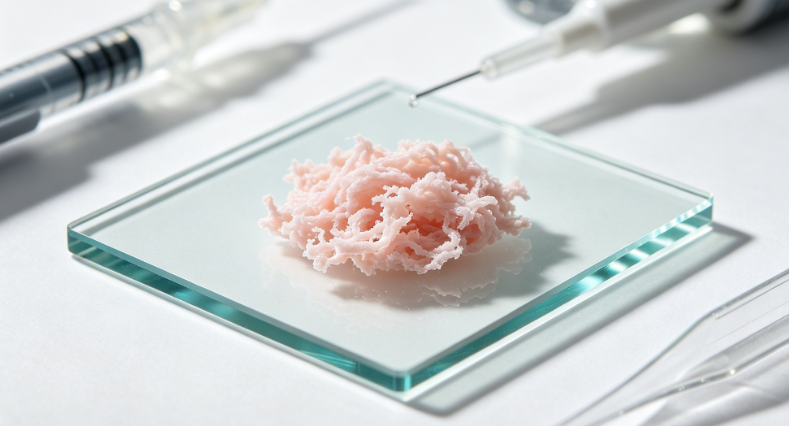
If you are searching for myofibrillar protein (MP) testing, you likely need to quantify extraction yield, evaluate protein functionality (solubility, gelation, emulsification, water‑holding capacity), or assess degradation and oxidation in muscle foods (meat, poultry, fish) for product development, quality control, shelf‑life studies, or ingredient optimization. Myofibrillar proteins, primarily myosin and actin, are critical for texture, water binding, and emulsification in processed meats and surimi. Our laboratory provides advanced myofibrillar protein characterization – from extraction efficiency and total sulfhydryl content to protein solubility profiles, dynamic rheology, gel strength, and oxidative modification markers – using validated biochemical and biophysical methods.
What We Analyze – Full Myofibrillar Protein Testing Scope
We do not simply report “protein concentration”. Our platform includes optimized myofibril extraction protocols (differentiated from sarcoplasmic and stromal proteins) with quantification by Biuret or Bradford assay, or accurate nitrogen analysis (Kjeldahl/Dumas). We measure protein solubility as a function of ionic strength (0.1‑1.0 M NaCl) and pH (5.0‑7.0) to determine isoelectric point and salting‑in behavior. For gelation properties, we perform dynamic oscillatory rheology (temperature ramp from 20 to 80°C, frequency sweep) to record storage modulus (G'), loss modulus (G"), and gelation temperature (Tgel). We measure gel strength (breaking force, deformation) using texture analyzer (TPA, puncture test). Water‑holding capacity (WHC) of heat‑induced gels is determined by centrifugation or compression methods. For emulsifying capacity, we prepare oil‑in‑water emulsions and measure creaming stability, particle size, and emulsion activity index (EAI). We also assess protein oxidation markers: carbonyl content (by DNPH method), total sulfhydryl (Ellman’s assay), and Schiff base formation (fluorescence). Protein cross‑linking and degradation are evaluated by SDS‑PAGE under reducing and non‑reducing conditions (myosin heavy chain, actin, tropomyosin, troponin). Optionally, we perform differential scanning calorimetry (DSC) to measure thermal transition temperatures (Tmax) of myosin and actin.
Key parameters we routinely measure:
- Extraction yield (mg MP/g muscle or % total protein) – CV <5%.
- Protein solubility (%) at defined pH and ionic strength – detection range 0‑100%.
- Gelation properties: gel strength (g·mm), water‑holding capacity (%), G' at 80°C.
- Emulsion activity index (m²/g) and emulsion stability (%) – after 30 min or 24h.
- Carbonyl content (nmol/mg protein) – oxidation marker.
- Total and free sulfhydryl (µmol/g protein) – disulfide bond formation.
- Surface hydrophobicity (ANS fluorescence, relative units) – conformational changes.
- Protein composition by SDS‑PAGE (band densitometry) – myosin/actin ratio, aggregation products.
- Thermal transition temperatures (Tmyosin, Tactin) – by DSC.
- Protein carbonyl and thiol changes after accelerated storage (e.g., 4°C for 7‑14 days) – stability testing.
How Deep We Go – Mechanistic Insight, Oxidation Pathway Analysis, and Formulation Optimization
Most routine food protein labs measure only protein content and simple solubility. We provide mechanistic depth: using reducing and non‑reducing SDS‑PAGE, we distinguish myosin heavy chain polymerization via disulfide bonds vs. non‑disulfide cross‑links (e.g., tyrosine‑tyrosine). We perform site‑specific oxidation analysis by LC‑MS/MS on tryptic peptides to identify oxidized methionine and tryptophan residues in myosin. For protein‑polysaccharide or protein‑phenolic interactions, we measure binding constants using ITC or SPR and effects on gelation. We also simulate freeze‑thaw stability by cycling (−20°C/4°C) and measuring WHC and solubility changes. For surimi grade evaluation, we quantify setting (suwari) and modori (degradation) effects using temperature‑ramp rheology to detect optimal gelation conditions. Our confocal laser scanning microscopy (CLSM) of stained protein gels visualizes protein network structure (pore size, strand thickness) correlated with WHC. We also offer predictive modeling: using response surface methodology (RSM) or neural networks, we can optimize salt, pH, or additive concentrations for desired gel strength and WHC.
Advanced capabilities include:
- Raman spectroscopy for secondary structure estimation (α‑helix, β‑sheet content) of myofibrillar proteins in gels.
- Small‑angle X‑ray scattering (SAXS) to study myosin filament assembly in solution.
- Proteomics (LC‑MS/MS) to identify degradation fragments and modification sites after oxidative stress.
- Correlation of solubility and gelation with molecular weight distribution by size‑exclusion chromatography (SEC).
- Quantification of heat‑induced aggregation kinetics by turbidimetry.
- Stability under high‑pressure processing (HPP) – up to 600 MPa – using external HPP system.
We routinely achieve measurement uncertainties: solubility ±2%, gel strength ±5% (depending on gel homogeneity), carbonyl content ±0.1 nmol/mg, sulfhydryl ±2 µmol/g. All methods follow AOAC, AOCS, or IFT standard protocols where applicable, with in‑house validation for matrix‑specific samples.
Why Choose Our Myofibrillar Protein Testing – Key Advantages
1. ISO/IEC 17025:2017 accredited and GLP‑compliant workflows – suitable for product development, ingredient qualification, and regulatory submissions.
2. Comprehensive functional and oxidative characterization beyond basic protein content – we provide actionable data for texture, stability, and process optimization.
3. Mechanistic insight (cross‑linking type, oxidation sites, conformational changes) – we tell you why functionality changed, not just how much.
4. Ability to work with small sample sizes (5‑10 g muscle or 1‑2 g extracted MP) – ideal for R&D.
5. Customized protocols for different species (beef, pork, chicken, fish, plant‑based analogues) – we adjust extraction and analysis conditions.
6. Fast turnaround with full data transparency – routine panel (solubility, gel strength, WHC, sulfhydryl, SDS‑PAGE) in 5‑7 business days; full oxidation and proteomics in 10‑14 business days. You receive raw rheology curves, gel strength graphs, SDS‑PAGE images, and a detailed interpretation report.
7. Custom method development for novel protein sources (insects, cultured meat, legume‑myofibril blends) – within 2‑3 weeks.
8. Competitive pricing for complete myofibrillar protein characterization packages – bundling extraction, solubility, gelation, WHC, and oxidation markers costs 30‑35% less than separate tests.
We have successfully completed over 300 myofibrillar protein projects for meat processing companies, seafood processors, plant‑based alternative protein producers, and academic research groups. Our team includes PhD food scientists, protein chemists, and rheologists specialized in muscle protein functionality.
Ready to Test Your Myofibrillar Proteins?
Provide your sample type (fresh/frozen muscle, isolated MP, formulated meat product), species, processing history, and specific objectives (e.g., “optimize gelation for sausage”, “evaluate freeze‑thaw damage”, “compare oxidation during storage”). We will provide a free technical consultation, a tailored test plan, and a fixed‑price quote. Whether you need a simple quality check or a deep functional and oxidative characterization, we deliver deep, accurate, and application‑ready myofibrillar protein testing tailored to your meat or seafood product development.