Reasons for choosing our testing services
ZHONGXI Testing has obtained inspection qualification certifications from multiple countries and regions worldwide. We possess a senior testing team and advanced testing methods, providing independent, impartial, and professional third-party verification services for global carbon projects.

Internationally recognized authority
Certified by multiple international standards such as CNAS, VCS, and GS, with reports universally applicable worldwide.

Global service capability
Covering 140+ countries and regions, it supports on-site detection and remote verification in multiple languages.

Professional experimental methods
Adopt standard experimental methods to ensure accurate and reliable data.
Comprehensive Galacto‑Oligosaccharide (GOS) Analysis – Quantification, Degree of Polymerisation Profiling & Structural Elucidation
You are searching for galacto‑oligosaccharide detection because you need to perform this assay—whether to verify GOS content in infant formula or functional foods, monitor enzymatic synthesis efficiency, characterise prebiotic purity, or comply with labelling regulations (e.g., CODEX, EU, FDA). We offer a complete analytical service that delivers accurate quantification, full degree of polymerisation (DP) distribution, and glycosidic linkage analysis for GOS in any matrix.
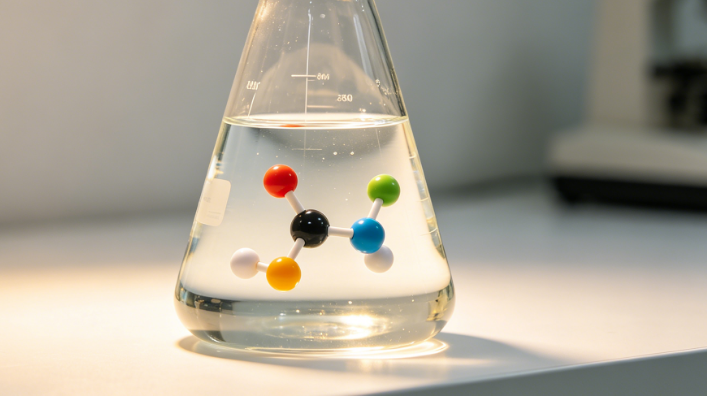
What We Detect – From Total GOS to Individual Oligomer Profiles & Linkage Specificity
Our GOS detection goes far beyond simple total carbohydrate or reducing sugar methods. Using high‑performance anion‑exchange chromatography with pulsed amperometric detection (HPAEC‑PAD), we resolve and quantify individual GOS peaks from DP1 (galactose, glucose) up to DP8 with baseline separation of β(1→3), β(1→4), and β(1→6) linkages. For structural confirmation, we employ ultra‑high performance liquid chromatography coupled with tandem mass spectrometry (UHPLC‑MS/MS) in negative ion mode, identifying each oligomer’s molecular mass, fragmentation pattern, and anomeric configuration. We also measure galactose:glucose ratio and degree of branching via methylation analysis (GC‑MS after permethylation). For total GOS content, we provide enzymatic (AOAC 2001.02) and HPAEC‑PAD methods calibrated against certified GOS reference standards (DP2‑DP8, pure β‑D‑Galp‑(1→6)‑D‑Glc, etc.).
How Deep We Go – From Routine QC to Full Fingerprinting in Complex Matrices
We don't just report “total GOS”. Our service includes DP‑specific quantification with external standard curves for each degree of polymerisation, achieving limits of quantitation (LOQ) of 5 mg/100 g for individual DP peaks. For complex matrices (infant formula, dairy beverages, bakery goods, animal feed, fermentation broths), we deploy sample clean‑up via Carrez clarification, solid‑phase extraction (SPE with graphitised carbon), or enzymatic removal of lactose/maltose to eliminate interference. We also perform simulated gastrointestinal digestion (static or dynamic model) followed by GOS recovery measurement to predict prebiotic availability. Using hydrophilic interaction liquid chromatography (HILIC) with charged aerosol detection (CAD), we provide a universal response method for novel GOS variants where no standards exist. For research samples, we offer matrix‑assisted laser desorption/ionisation time‑of‑flight (MALDI‑TOF) mass spectrometry to map DP distribution up to DP15 with isotopic resolution.
Why Our GOS Detection Stands Out – Precision, Comprehensive Standards & Regulatory Compliance
1. Extensive reference standard library: We maintain >40 purified GOS standards (DP2‑DP8 with specific linkages: β1→3, β1→4, β1→6, and mixed) – including allolactose, lactulose, galactobiose, and transgalactosylated trisaccharides – allowing unambiguous peak assignment.
2. Matrix‑optimised protocols: We have validated workflows for infant formula (proteins removed by isoelectric precipitation), plant‑based milks, protein bars, yoghurts, and even lyophilised prebiotic powders. Recovery rates are consistently 92‑105% with RSD <5%.
3. Distinction from other prebiotics & interferents: Our method clearly separates GOS from FOS (fructo‑oligosaccharides), inulin, lactulose, and maltodextrins – no cross‑quantification. We also report residual lactose, glucose, and galactose as part of the same chromatographic run.
4. High throughput & low sample volume: Using HPAEC‑PAD with 25‑minute run time, we process up to 100 samples per day. Only 1 g of solid or 1 mL of liquid is required.
5. Regulatory acceptance: Our methods align with AOAC 2001.02, ISO 11215, and China National Standard GB 5009.289 for GOS determination. Reports include full chromatograms, peak purity checks, and uncertainty budgets – accepted by EFSA and US FDA for prebiotic labelling claims.
Who Relies on Our GOS Detection – Real‑World Applications
Infant formula manufacturers use our service to verify GOS content and DP profile in every production batch – one client discovered batch‑to‑batch variation in DP3/DP4 ratio that correlated with prebiotic efficacy in clinical trials. Prebiotic ingredient suppliers send us enzymatically synthesised GOS; we helped optimise reaction time by showing that maximum DP3‑DP5 yield occurs at 4 hours (versus 6 hours for total oligosaccharides), saving 30% production cost. A regulatory testing laboratory used our fingerprinting to identify adulteration of “high‑purity GOS” with maltodextrin and residual lactose – a finding that led to product recall. Researchers exploring novel GOS from alternative enzymes rely on our MALDI‑TOF and linkage analysis to confirm novel structures, with data published in three peer‑reviewed studies.
Ready to Run Your Galacto‑Oligosaccharide Detection?
Send us powder (≥2 g), liquid (≥5 mL), finished product (e.g., one infant formula can, protein bar, yogurt cup) or fermentation broth (≥10 mL). We will perform sample preparation, HPAEC‑PAD or UHPLC‑MS/MS analysis, DP‑specific quantitation, and a full report including chromatograms and statistical summaries – typically within 5‑7 business days. Request a free consultation; we will recommend the optimal detection panel (total GOS, DP profile, linkage analysis, or full fingerprinting) for your product type and regulatory need.