Reasons for choosing our testing services
ZHONGXI Testing has obtained inspection qualification certifications from multiple countries and regions worldwide. We possess a senior testing team and advanced testing methods, providing independent, impartial, and professional third-party verification services for global carbon projects.

Internationally recognized authority
Certified by multiple international standards such as CNAS, VCS, and GS, with reports universally applicable worldwide.

Global service capability
Covering 140+ countries and regions, it supports on-site detection and remote verification in multiple languages.

Professional experimental methods
Adopt standard experimental methods to ensure accurate and reliable data.
Bacillus amyloliquefaciens Detection – Species‑Specific Identification, Viability Enumeration & Functional Potency Testing
You are searching for Bacillus amyloliquefaciens detection because you need to perform this assay—whether to verify the identity and viability of a probiotic or biocontrol strain in agricultural formulations, monitor contamination or carry‑over in fermentation facilities, or quantify active spore counts in commercial products. We provide a complete detection service that delivers unambiguous species confirmation, absolute viability enumeration, and metabolic activity profiling using a suite of molecular, culture‑based, and spectroscopic platforms.
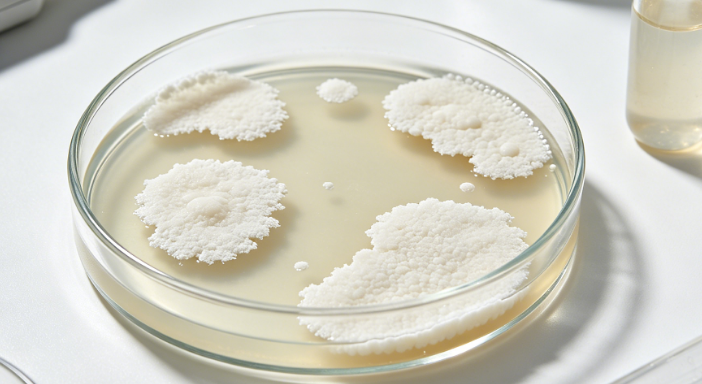
What We Detect – From Genus‑Level Screens to Strain‑Specific Fingerprints & Viability States
Our B. amyloliquefaciens detection goes far beyond simple colony morphology or Gram staining. Using real‑time PCR (qPCR) targeting the gyrB, rpoB, and 16S rRNA genes, we achieve species‑level discrimination from closely related Bacillus (B. subtilis, B. licheniformis, B. pumilus) with 100% specificity. For strain‑level resolution, we employ repetitive element PCR (rep‑PCR) with BOX‑A1R and ERIC primers and MALDI‑TOF mass spectrometry (Biotyper® system, log score ≥2.3) with a reference library of >50 B. amyloliquefaciens strains. To differentiate viable vs. dead cells, we combine propidium monoazide (PMA)‑qPCR with spore staining (malachite green or Syto®9/PI flow cytometry) – enumerating viable vegetative cells, viable spores, and total spores separately. We also quantify antimicrobial activity (iturin, fengycin, surfactin production) via LC‑MS/MS lipopeptide profiling as a functional potency indicator.
How Deep We Go – From Spore Purity to Whole‑Genome Typing & Biofilm Assessment
We don't just report “B. amyloliquefaciens present”. Our advanced pipeline includes quantitative spore recovery after heat shock (80°C, 10 min) or ethanol treatment to distinguish spores from vegetative cells – critical for probiotic powder validation. Using flow cytometry with SYBR Green and propidium iodide, we resolve spore germination kinetics and viability heterogeneity down to 0.1% of the population. For strain identity beyond rep‑PCR, we perform whole‑genome sequencing (Illumina NovaSeq, 300× coverage) with average nucleotide identity (ANI) calculation and core‑genome MLST (cgMLST) – achieving strain‑level distinction even among highly similar commercial isolates. We also characterise biofilm formation capacity using crystal violet staining and confocal microscopy (live/dead staining, biomass thickness), plus cell‑surface hydrophobicity (microbial adhesion to hydrocarbons, MATH assay) for probiotic adhesion predictions. For contamination investigations, our metagenomic shotgun sequencing can detect B. amyloliquefaciens at 0.01% relative abundance in mixed microbial communities.
Why Our B. amyloliquefaciens Detection Stands Out – Specificity, Viability Resolution & Industrial Compliance
1. Unambiguous species discrimination: Our qPCR primers are validated against 30 Bacillus species (including B. velezensis, which was reclassified from B. amyloliquefaciens) – we use the recent taxonomic framework (B. amyloliquefaciens subsp. plantarum vs. B. velezensis) and report accordingly with ANI confirmation.
2. Viability‑specific enumeration: We combine PMA‑qPCR (viable cells + spores) vs. total qPCR (spores only after ethanol wash) to provide true viable spore count – not just total DNA copies. This is critical for regulatory compliance of spore‑based products.
3. Matrix‑optimised recovery: We have validated extraction and plating protocols for dry powders (probiotics, biofertilisers), liquid suspensions, soil, plant rhizosphere samples (roots + adhering soil), compost, fermented foods (natto, soy sauce), and industrial swabs. Recovery of spiked spores is 85‑105% with RSD <6%.
4. Functional potency assessment: Beyond identity, we measure surfactin, iturin A, and fengycin concentrations by LC‑MS/MS – correlating with antifungal activity against Fusarium, Rhizoctonia, and Aspergillus (optional bioassay).
5. Turnaround & regulatory support: Routine qPCR + colony count: 48‑72 hours. rep‑PCR or MALDI‑TOF: 3‑5 days. WGS and ANI: 7‑10 business days. Reports meet ISO 17025, USDA, and CFIA requirements for agricultural inoculant registration.
Who Relies on Our B. amyloliquefaciens Detection – Real‑World Applications
Agricultural biotechnology companies use our service to release batch‑to‑batch consistency of biofungicide products. One client discovered that a commercial “B. amyloliquefaciens” product contained 80% B. velezensis and only 20% true B. amyloliquefaciens – a finding that prompted product reformulation and accurate labelling. Probiotic manufacturers rely on our viable spore enumeration (PMA‑qPCR vs. heat‑shock plating) to resolve a long‑standing discrepancy: plate counts underestimated spores by 2‑log due to clumping, while PMA‑qPCR gave consistent results. A food safety lab sent us environmental swabs from a fermented soybean facility; we identified B. amyloliquefaciens contamination in non‑product zones using rep‑PCR, allowing targeted sanitation. Another client developing a spore‑based oral probiotic used our simulated GI survival assay (sequential pH 2.0, bile salts, pancreatic enzymes) combined with viability detection to select a strain with 90% spore germination resistance.
Ready to Run Your Bacillus amyloliquefaciens Detection?
Send us dry powder (≥1 g), liquid culture (≥1 mL), swab (in transport medium), soil/rhizosphere (≥5 g), or food product (≥10 g). We will perform sample homogenisation, DNA extraction, PMA or heat‑shock treatment (optional), qPCR (species identity), MALDI‑TOF or rep‑PCR (strain fingerprint), viable spore enumeration, and optional lipopeptide profiling – delivering a comprehensive report within 2‑10 business days depending on the depth required. Request a free consultation; we will design the optimal detection panel (identification only, viability quantitation, strain typing, or functional potency) for your product or environmental monitoring need.