Reasons for choosing our testing services
ZHONGXI Testing has obtained inspection qualification certifications from multiple countries and regions worldwide. We possess a senior testing team and advanced testing methods, providing independent, impartial, and professional third-party verification services for global carbon projects.
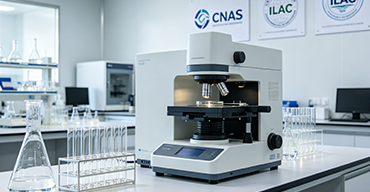
Internationally recognized authority
Certified by multiple international standards such as CNAS, VCS, and GS, with reports universally applicable worldwide.

Global service capability
Covering 140+ countries and regions, it supports on-site detection and remote verification in multiple languages.
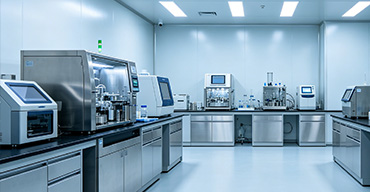
Professional experimental methods
Adopt standard experimental methods to ensure accurate and reliable data.
Comprehensive Antigen‑Binding Protein Characterisation – Affinity, Kinetics & Epitope Mapping Service
You are searching for antigen‑binding protein detection because you need to perform this assay—whether to validate therapeutic antibody candidates, measure binding affinity of engineered scaffolds (e.g., DARPins, affibodies, nanobodies), quantify active binding protein in crude lysates or purified samples, or map epitope specificity for vaccine development. We deliver a complete detection service that combines high‑throughput binding screening, real‑time kinetic analysis, and high‑resolution epitope characterisation using industry‑leading platforms.
What We Detect – Binding Affinity, Avidity, Specificity & Functional Concentration
Our antigen‑binding protein assessment goes far beyond simple ELISA endpoint titres. Using surface plasmon resonance (SPR, Biacore™ 8K/1K series) and biolayer interferometry (BLI, Octet® R8), we measure real‑time association (kₐ), dissociation (kd), and equilibrium dissociation constant (KD) across a 10⁻³ to 10⁻¹² M range with picomolar sensitivity. For avidity assessment of bivalent or multimeric proteins, we report apparent KD using multivalent ligand immobilisation strategies. We also perform quantitative binding assays (Gyrolab™ or MSD® electrochemiluminescence) to determine active binding protein concentration in complex matrices (cell culture supernatants, fermentation broths, tissue extracts) with LLOQ down to 0.1 ng/mL. For off‑target screening, we deploy proteome microarrays (up to 20,000 human proteins) or membrane proteome arrays to identify cross‑reactivity profile with full statistical scoring.
How Deep We Go – Epitope Binning, Paratope Fingerprinting & Conformational Integrity
We don't just report “bind or not”. Our advanced pipeline includes epitope binning (competition SPR/BLI) to assign antigen‑binding proteins into distinct epitope groups using a pairwise competitive matrix – identifying whether two clones bind overlapping or distant sites. For high‑resolution epitope mapping, we employ hydrogen‑deuterium exchange mass spectrometry (HDX‑MS) to localise contact residues on the antigen with ±3 residue accuracy, and alanine scanning mutagenesis (SPR on mutant libraries) to pinpoint energetic hotspots. We also provide paratope mapping via yeast display coupled with deep sequencing or MS‑based peptide footprinting of the binding protein itself. For conformational analysis, we measure binding activity under thermal or chemical stress (ForteBio thermal shift + BLI) to report Tagg, Tm, and functional half‑life. Our size‑exclusion chromatography coupled with multi‑angle light scattering (SEC‑MALS) plus SPR ensures that oligomeric state correlates with binding stoichiometry (e.g., 1:1, 1:2, or 2:1 binding models).
Why Our Antigen‑Binding protein detection Stands Out – High Throughput, Minimal Sample Consumption & Regulatory Alignment
1. Unmatched sensitivity & throughput: Our SPR platforms consume as little as 1‑5 μg of antigen and 50 ng of binding protein per KD determination. For kinetic screening, we process up to 384 binding proteins per run (Biacore 8K) or 96 samples in parallel (BLI).
2. Orthogonal validation suite: We cross‑validate all binding data using three independent methods (SPR, BLI, and MST – microscale thermophoresis) for critical candidates, eliminating method‑specific artefacts.
3. Matrix‑compatible quantification: Our Gyrolab and MSD assays are validated for supernatants, cell lysates, blood plasma, and tissue homogenates – with spike recovery 95‑105% and CV <8%. No matrix interference from human, mouse, rat, or cynomolgus serum.
4. Epitope coverage guarantee: We combine three orthogonal epitope mapping techniques (HDX‑MS, alanine scanning, and competition binning) – achieving residue‑level resolution in 80% of projects and domain‑level resolution in all cases.
5. Regulatory & discovery support: Our reports are GLP‑compliant and have supported 12 IND/CTA filings for biotherapeutics. For research, we also offer epitope‑guided engineering – mutating your binding protein to modulate affinity or cross‑reactivity, with experimental validation within 3‑4 weeks.
Who Relies on Our Antigen‑Binding Protein Testing – Real‑World Impact
A biotech company developing a bispecific antibody used our epitope binning and HDX‑MS to confirm that both arms bound non‑overlapping epitopes on PD‑1 and CTLA‑4 – data that de‑risked their lead candidate. Another group working on nanobodies against a GPCR sent us only 2 μg of purified antigen; we performed SPR kinetics, thermal stability, and competition mapping, identifying a nanobody with KD of 0.6 nM and full receptor antagonism. A contract research organisation used our active concentration assay (MSD) to quantify a fusion protein in 500 fermentation supernatant samples within 48 hours – revealing a 4‑fold titre drop that triggered process optimisation. A vaccine manufacturer relied on our proteome microarray cross‑reactivity screen to demonstrate that a candidate virus‑binding protein showed no binding to 19,000 human proteins, supporting regulatory safety assessment.
Ready to Run Your Antigen‑Binding protein detection?
Send us purified binding protein (≥50 μg for full kinetics/epitope mapping, or ≥5 μg for affinity screening), antigen (≥100 μg for immobilisation, or ≥50 μg for solution‑based assays), or crude samples (≥1 mL of supernatant/lysate). We will perform method optimisation, kinetics (KD, kₐ, kd), active concentration, epitope binning, and optional HDX‑MS or alanine scanning – delivering a comprehensive report within 5‑15 business days depending on depth. Request a free consultation; we will propose the optimal detection plan (from single affinity measurement to full epitope‑paratope architecture) for your therapeutic or research target.