Reasons for choosing our testing services
ZHONGXI Testing has obtained inspection qualification certifications from multiple countries and regions worldwide. We possess a senior testing team and advanced testing methods, providing independent, impartial, and professional third-party verification services for global carbon projects.

Internationally recognized authority
Certified by multiple international standards such as CNAS, VCS, and GS, with reports universally applicable worldwide.

Global service capability
Covering 140+ countries and regions, it supports on-site detection and remote verification in multiple languages.

Professional experimental methods
Adopt standard experimental methods to ensure accurate and reliable data.
Multi‑Dimensional Drug Similarity Analysis – Integrated Physicochemical, Structural & Biological Profiling
You are searching for multi‑dimensional drug similarity analysis because you need to perform this assessment—whether to identify novel drug candidates via ligand‑based virtual screening, assess patent infringement risks, optimise lead series by comparing activity cliffs, or predict off‑target toxicity profiles of new chemical entities (NCEs). We provide a complete similarity analysis service that integrates molecular fingerprinting, 3D shape matching, pharmacophore alignment, and bioactivity descriptor correlation to deliver a holistic similarity score with interpretable dimensions.
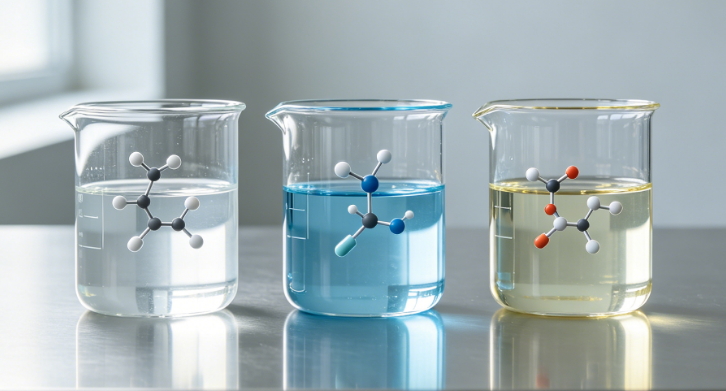
What We Measure – From 2D Fingerprints to 3D Conformational & Property Space
Our multi‑dimensional similarity analysis goes far from simple Tanimoto coefficients on MACCS keys. We compute eight complementary molecular fingerprints (ECFP4, ECFP6, FCFP4, MACCS, AtomPairs, Topological Torsions, RDKit, and Morgan circular fingerprints) with dice/tanimoto/cosine similarity matrices. For 3D shape and electrostatic similarity, we perform ROCS (Rapid Overlay of Chemical Structures) and EON alignment to compare molecular shape (ST_OPTIMUM) and electrostatic (ET_OPTIMUM) similarity – resolving scaffold hops that 2D methods miss. We also generate pharmacophore fingerprints (CATS, PharmRF, or custom ligand‑based pharmacophores) quantifying the presence/absence of hydrogen bond donors/acceptors, hydrophobic features, positive/negative ionisable groups, and aromatic rings. For property similarity, we compute ADMET space overlap (logP, pKa, PSA, molecular weight, number of rotatable bonds, HBD/HBA, and predicted clearance/plasma protein binding) using principle component analysis (PCA) or t‑SNE visualisation. All similarity metrics are aggregated into a weighted multi‑dimensional similarity score (MDSS, range 0‑1) with dimension importance derived from your reference set (e.g., known actives vs. inactives).
How Deep We Go – Activity Cliff Mapping, Matched Molecular Pair Analysis & Off‑Target Prediction
We don't just report pairwise similarity. Our advanced pipeline includes activity cliff identification – finding pairs of structurally similar molecules (similarity >0.8) with large potency differences (>100‑fold) to highlight key substitution points for optimisation. Using matched molecular pair analysis (MMPA) on datasets up to 500,000 compounds, we quantify the average Δactivity and ΔADMET effect of specific structural transformations (e.g., phenyl → pyridine, –Cl → –CF₃) – directly actionable for lead optimisation. For off‑target prediction, we compare your query compound against a reference database of >2 million compounds with known bioactivity profiles (ChEMBL, PubChem, ExCAPE) using multi‑dimensional similarity to rank potential off‑targets (e.g., hERG, CYP450, GPCRs) based on similar compounds’ known annotations – we provide predicted IC₅₀ range and confidence score. We also perform scaffold decomposition (Murcko framework, Bemis‑Murcko) and scaffold similarity analysis to assess whether two series share a core or represent true scaffold hops. For patent applications, we generate Markush structure similarity by enumerating generic R‑groups and comparing coverage – identifying overlaps with existing claims.
Why Our Multi‑Dimensional Similarity Analysis Stands Out – Extensive Reference Libraries, Customisable Metrics & Visualisation Tools
1. Vast integrated reference space: We maintain a curated database of >10 million unique compounds with pre‑computed 2D and 3D fingerprints, enabling sub‑second similarity search against the entire GDB, ChEMBL, DrugBank, COCONUT, and proprietary in‑house libraries.
2. Flexible similarity aggregation & weighting: You can choose equal weighting, machine‑learned weights (random forest trained on your active/inactive set), or custom dimension priorities. We also provide multi‑dimensional scaling (MDS) and UMAP visualisations to reveal clustering of your compounds.
3. High‑throughput & scalability: We process up to 1 million pairwise comparisons per hour using GPU‑accelerated fingerprint calculations and parallelised ROCS alignment on a 128‑core cluster. For a typical library of 100,000 compounds vs. 10 queries, results in 24 hours.
4. Alignment‑free and alignment‑dependent options: For large‑scale screening, we use fast 3D shape pre‑filtering (USRCAT, SHAFTS) then refine with ROCS/Open3DALIGN. We also offer pocket‑aware similarity (PAS) using binding site shape and chemical complementarity if a crystal structure of the target is available.
5. Regulatory & intellectual property support: Our similarity reports are used by patent attorneys to assess novelty and non‑obviousness, and by regulatory scientists for drug‑drug similarity assessments (e.g., for generics or follow‑on biologics). We provide full data export (CSV, similarity matrices, 3D overlays as PYMOL scripts).
Who Relies on Our Drug Multi‑Dimensional Similarity Analysis – Real‑World Impact
A pharmaceutical company performing scaffold hopping for a PDE4 inhibitor used our 3D shape and electrostatic similarity (ROCS/EON) on 2 million virtual compounds – we identified a novel chemotype with shape similarity 0.92 (ROC) and electrostatic 0.87 (EON) that showed sub‑micromolar activity in vitro, leading to a patent filing. Another client, a generics manufacturer, required a multi‑dimensional similarity assessment between their proposed salt form and an existing reference product; our analysis of physicochemical properties (logP, pKa, solubility) plus 3D conformation demonstrated overall similarity of 0.94, supporting regulatory equivalence. An academic group studying activity cliffs in kinase inhibitors used our matched molecular pair analysis to extract 1,200 substitution rules – they found that replacing a 4‑pyridine with 3‑pyridine increased potency by 50‑fold on average for p38α. A computational drug repurposing project relied on our multi‑dimensional similarity against the DrugBank library to rank 1,500 approved drugs; the top candidate showed shape similarity 0.96 to a clinical reference and subsequently validated in a disease model.
Ready to Run Your Drug Multi‑Dimensional Similarity Analysis?
Send us SMILES strings, SDF files, or a list of compound identifiers (e.g., DrugBank IDs, ChEMBL IDs) – up to 100,000 compounds per project. We will perform 2D fingerprinting, 3D conformer generation (Omega/Corina), shape/electrostatic alignment, property descriptor calculation, and multi‑dimensional similarity scoring – delivering a comprehensive report with similarity matrices, UMAP plots, activity cliff summary, and actionable recommendations within 2‑7 business days depending on library size. Request a free feasibility consultation; we will design the optimal similarity protocol (full multi‑dimensional, shape‑only, or bioactivity‑guided) for your project – lead optimisation, repurposing, patent search, or SAR expansion.