Reasons for choosing our testing services
ZHONGXI Testing has obtained inspection qualification certifications from multiple countries and regions worldwide. We possess a senior testing team and advanced testing methods, providing independent, impartial, and professional third-party verification services for global carbon projects.

Internationally recognized authority
Certified by multiple international standards such as CNAS, VCS, and GS, with reports universally applicable worldwide.

Global service capability
Covering 140+ countries and regions, it supports on-site detection and remote verification in multiple languages.

Professional experimental methods
Adopt standard experimental methods to ensure accurate and reliable data.
Microbial Inoculant Research for Garden Waste Degradation – From Strain Isolation to Field‑Scale Composting Efficiency
You are searching for garden waste degrading microbial inoculant research because you need to perform this study—whether to isolate efficient lignocellulose‑degrading microorganisms, formulate a robust consortium for green waste composting, accelerate degradation of woody residues (branches, leaves, grass clippings), or reduce maturation time and phytotoxicity of finished compost. We provide a complete research service that covers strain isolation and identification, enzymatic profiling (cellulase, xylanase, laccase, lignin peroxidase), consortium design, lab‑scale and pilot‑scale composting trials, and molecular community analysis to deliver a ready‑to‑use, high‑efficiency inoculant tailored to your specific garden waste composition.
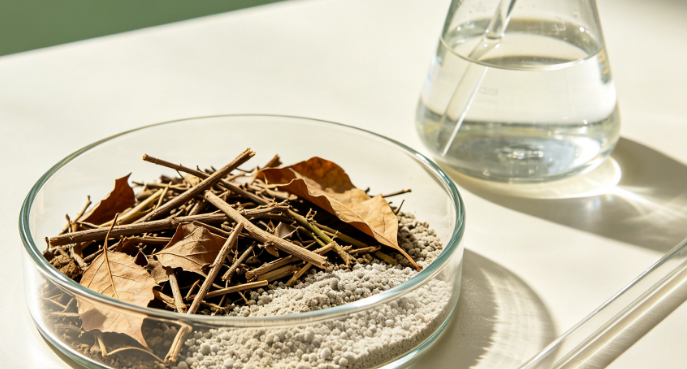
What We Characterise – From Single Strain Activity to Synergistic Consortia & Real Degradation Performance
Our garden waste inoculant research goes far beyond simple colony morphology or filter paper degradation tests. Using high‑throughput screening on chromogenic/fluorogenic substrates (azurine‑crosslinked cellulose, Azure B for laccase, Remazol Brilliant Blue for lignin peroxidase), we measure endoglucanase (CMCase), exoglucanase (Avicelase), β‑glucosidase, xylanase, laccase, manganese peroxidase (MnP), and lignin peroxidase (LiP) activities with detection limits of 0.01 U/mL and high reproducibility (CV <8%). We identify isolated strains by full‑length 16S rRNA (bacteria) or ITS (fungi) Sanger sequencing, and for unculturable or complex communities we perform shotgun metagenomic sequencing to annotate CAZyme (carbohydrate‑active enzyme) gene families (GH, AA, CE, PL families) and predict degradation potential. For consortia design, we quantify synergy coefficients (S value) by comparing individual vs. mixed cultures on model substrates (cellulose, xylan, lignin, and real garden waste – shredded branches, leaves, grass) – calculating weight loss, CO₂ evolution (respirometry), and C/N ratio changes over 7‑28 days. We also assess enzyme synergism via DoE (mixture design) to optimise ratios of up to 5 strains.
How Deep We Go – Pilot‑Scale Composting, Lignocellulose Structural Analysis & Microbiome Tracking
We don't just report “strain degrades cellulose”. Our advanced pipeline includes lab‑scale (1‑5 kg) and pilot‑scale (50‑200 kg) composting trials under controlled conditions (temperature, aeration, moisture) using real garden waste mixtures (leaves, grass, wood chips, pruning residues). We monitor key composting parameters daily: temperature (wireless sensors), O₂/CO₂ (gas analyzers), pH, electrical conductivity, moisture content, C/N ratio, humic/fulvic acid ratio (by UV‑VIS spectroscopy), and germination index (GI) using cress or lettuce seeds to assess phytotoxicity. For structural insights, we perform Fourier‑transform infrared spectroscopy (FTIR) to track lignin/cellulose peak ratio (1510/2920 cm⁻¹) and X‑ray diffraction (XRD) to monitor cellulose crystallinity index (CrI) – quantifying loss of crystallinity as a function of inoculant treatment. To understand microbial community dynamics, we use amplicon sequencing (16S for bacteria, ITS for fungi) on samples taken at 0, 7, 14, 28, 60 days – reporting alpha/beta diversity, succession patterns, and relative abundance of introduced inoculant strains (by specific qPCR or metagenomic tracking). We also measure lignocellulose degradation efficiency by gravimetric analysis after neutral detergent fibre (NDF), acid detergent fibre (ADF), and acid detergent lignin (ADL) fractionation, achieving mass balance closure within 95‑102%.
Why Our Garden Waste Inoculant Research Stands Out – Tailored Consortia, Real‑World Scale & Regulatory Readiness
1. Native strain isolation from your site: We isolate and screen 100‑200 microbial colonies from your own garden waste or compost pile – ensuring the inoculant is adapted to local substrate and climate. We deliver fully preserved strains (lyophilised or cryo‑vials) with activity data.
2. High‑enzyme throughput & synergy optimisation: Using robotic liquid handling (384‑well plates) and multi‑substrate profiling, we screen up to 50 strains per week for 6 different enzyme activities. We then apply Mixture Design of Experiments (DoE) to optimise consortium composition – typically reaching 2‑3x higher degradation rate compared to single best strain.
3. Complete pilot‑scale validation: Our 200 L insulated composting reactors with forced aeration simulate industrial conditions. We provide full mass balance (initial vs. final weight, volatile solids loss), process optimisation (moisture: 55‑65%, C/N: 25‑30, aeration rate: 0.2‑0.5 L/min/kg), and quality parameters of finished compost (EC <4 dS/m, GI >80%, absence of weed seeds).
4. Mechanistic degradation tracking: We combine chemical (NDF/ADF/ADL), spectroscopic (FTIR, XRD), and enzymatic (C/N ratio of specific enzymes) data to pinpoint which components (cellulose, hemicellulose, lignin) are preferentially degraded by your inoculant – guiding further formulation.
5. Regulatory and commercial support: Our reports meet US Composting Council (USCC) Seal of Testing Assurance (STA) criteria and EU Fertilising Products Regulation (2019/1009) for compost additives. We also provide scaling recommendations (production, shelf‑life, application rates). Turnaround: strain isolation & activity: 4‑6 weeks; lab‑scale optimisation: 6‑8 weeks; pilot trial: 8‑12 weeks.
Who Relies on Our Garden Waste Degradation Research – Real‑World Impact
A municipal waste management company approached us to reduce the composting time of mixed garden waste from 6 months to 3 months. We isolated a consortium of three fungi (Trichoderma, Aspergillus, and a white‑rot basidiomycete) and two bacteria (Bacillus, Cellulomonas) – in pilot trials, the treated pile reached 60°C within 48 hours (vs. 5 days for control) and produced mature compost with GI >85% after 10 weeks. A landscaping business wanted to on‑site degrade woody prunings (high lignin, C/N >50); we provided a ligninolytic‑enriched consortium (with laccase activity >1200 U/L) that reduced branch volume by 65% in 8 weeks compared to 15% in untreated. An environmental technology startup developing commercial inoculant products used our metagenomic and CAZyme analysis to identify novel GH10 xylanases and AA3 laccases – two enzyme families now covered in their patent. A research institute studying microbial succession during composting sent us 200 samples from inoculant‑treated and control piles; our amplicon and metatranscriptomic analysis revealed that the inoculant accelerated the transition from mesophilic to thermophilic bacteria and sustained higher Firmicutes/Bacteroidetes ratios.
Ready to Start Your Garden Waste Degrading Inoculant Research?
Send us garden waste samples (leaves, grass, wood chips, or mixed; ≥2 kg), compost samples (≥500 g), or existing microbial isolates (slants or plates). We will perform strain isolation and enzyme screening, consortium optimisation (DoE), lab‑scale degradation kinetics, and optional pilot composting trial with full chemical/microbiological tracking – delivering a custom‑formulated inoculant (liquid or solid carrier) plus a comprehensive report with process recommendations. Request a free consultation; we will design an optimal research plan (from strain discovery to field‑ready product) based on your target waste composition, climate, and desired degradation speed.