Reasons for choosing our testing services
ZHONGXI Testing has obtained inspection qualification certifications from multiple countries and regions worldwide. We possess a senior testing team and advanced testing methods, providing independent, impartial, and professional third-party verification services for global carbon projects.

Internationally recognized authority
Certified by multiple international standards such as CNAS, VCS, and GS, with reports universally applicable worldwide.

Global service capability
Covering 140+ countries and regions, it supports on-site detection and remote verification in multiple languages.

Professional experimental methods
Adopt standard experimental methods to ensure accurate and reliable data.
Multi‑Component Analysis of Straw‑Based Biological Formulations – From Active Ingredients to Functional Integrity
You are searching for straw bio‑preparation composition analysis because you need to perform this testing—whether to verify microbial viability and enzyme activity in crop residue degradation products, quantify key active components (cellulase, xylanase, lignin peroxidases, humic substances), ensure batch‑to‑batch consistency, or meet agricultural input regulatory standards. We provide a complete analytical service that delivers quantitative microbial profiling, high‑resolution enzyme activity mapping, organic compound fingerprinting, and functional stability assessment using an integrated suite of microbiological, biochemical, and spectrometric platforms.
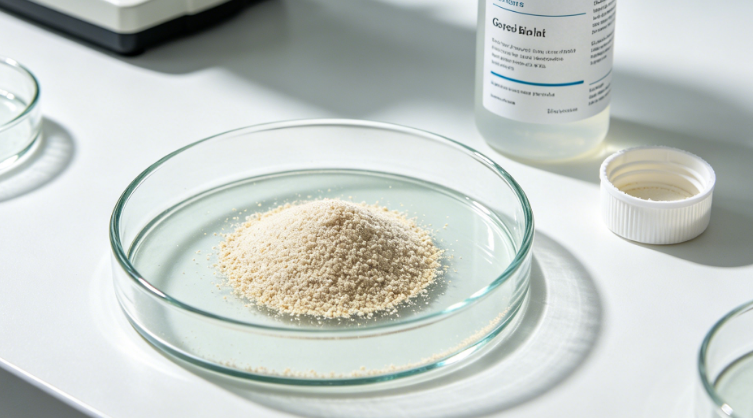
What We Detect – Microbial Viability, Enzyme Activity Spectrum & Bioactive Organic Molecules
Our straw bio‑preparation analysis goes far from simple plate counts or total protein assays. Using flow cytometry with dual staining (SYBR Green / propidium iodide) and fluorescent viability probes (CFDA‑AM), we quantify total viable microbial count (bacteria, fungi, actinomycetes) down to 10² CFU/mL and distinguish active vs. dormant vs. dead cells in solid or liquid formulations. For enzymatic profiling, we measure endoglucanase (CMCase), exoglucanase (Avicelase), β‑glucosidase, xylanase, laccase, manganese peroxidase (MnP), lignin peroxidase (LiP), and aryl alcohol oxidase (AAO) using chromogenic/fluorogenic substrates (azurine‑crosslinked cellulose, Azure B, ABTS, veratryl alcohol) in a 96‑well kinetic plate reader – achieving sensitivity of 0.01 U/mL and CV <5%. For absolute enzyme quantitation, we deploy targeted LC‑MS/MS with stable isotope‑labelled peptide standards (AQUA™) for up to 20 cellulolytic/ligninolytic enzymes, reporting pmol enzyme per g formulation. We also profile low‑molecular‑weight organic components: humic acids, fulvic acids (by alkaline extraction + UV‑VIS and DOC analysis), reducing sugars (DNS assay with HPLC‑RI confirmation), organic acids (lactic, acetic, citric, oxalic by ion‑exclusion HPLC‑UV), and plant growth‑promoting metabolites (indole‑3‑acetic acid (IAA), siderophores, and ammonia) by colorimetric/LC‑MS methods. For solid formulations, we determine moisture content (thermogravimetric), pH, electrical conductivity, and carbon/nitrogen (C/N) ratio (elemental analyser).
How Deep We Go – Metagenomic Community Fingerprinting, Strain‑level Tracking & Formulation Stability
We don't just report “contains Bacillus and Trichoderma”. Using shotgun metagenomic sequencing (Illumina NovaSeq, 20 million reads per sample) on DNA extracted directly from the bio‑preparation, we assemble species‑level and even strain‑level taxonomic profiles and annotate CAZyme (carbohydrate‑active enzyme) gene families (GH, AA, CE, PL) to predict complete degradation potential. For defined consortia, we perform strain‑specific qPCR (targeting unique genomic regions or plasmid markers) with LLOQ of 10³ copies per gram to track each member’s abundance. To assess functional consistency, we apply proteomics (shotgun LC‑MS/MS) to identify >500 expressed proteins and metabolomics (UHPLC‑Q‑TOF MS, positive/negative ion modes) to capture >2,000 feature peaks – generating a chemical and proteomic fingerprint for batch comparison (PCA or hierarchical clustering). For stability studies, we measure accelerated shelf‑life (40°C/75% RH for 1, 2, 3 months) and monitor loss of viable count, residual enzyme activity, and accumulation of degradation products (by HPLC‑MS) – reporting t90 (time for 10% activity loss) for each critical component. We also evaluate formulation matrix effects: interference from humic substances on enzyme assays (by spike‑recovery, 85‑115% acceptable), and DNA extraction efficiency (internal control spike).
Why Our Straw Bio‑Preparation Analysis Stands Out – Multi‑Platform Integration, High Specificity & Regulatory Alignment
1. Complete active ingredient coverage: One report includes viable microbial counts (total and genus‑specific), 8+ enzyme activities, 20+ organic metabolites, and elemental composition – no need for multiple external labs.
2. High specificity & sensitivity for enzyme activities: We use physiologically relevant substrates (e.g., CMC for endoglucanase, wheat arabinoxylan for xylanase) and define activity in international units (U/g or U/mL). For ligninolytic enzymes, we apply ABTS at pH 4.5 for laccase and veratryl alcohol oxidation for LiP – distinguishing true peroxidase activity from false positives.
3. Metagenomic + qPCR for quality control: We provide absolute abundance (CFU equivalent) of target functional microbes (e.g., Bacillus subtilis, Trichoderma reesei, Pseudomonas putida) using species‑specific primers validated in mixed communities – critical for consistency.
4. Formulation stability & compatibility testing: We simulate real‑world storage (ambient, refrigerated, freeze‑thaw) and mixing with carriers (peat, talc, clay) or co‑formulants (surfactants, preservatives) to identify compatibility issues (e.g., 30% loss of xylanase after 2 weeks in certain clay).
5. Regulatory & product registration support: Our methods follow China National Standard for Microbial Fertilizers (GB 20287‑2006), EU Fertilising Products Regulation (2019/1009) Annex II requirements for microbial biostimulants, and Indian FCO (Fertilizer Control Order) specifications. Reports include raw data, chromatograms, sequence alignments, and statistical summaries. Turnaround: viability + enzyme panel: 5‑7 days; full metagenomic + metabolomic: 10‑14 business days; stability study (3 months): 4‑5 weeks.
Who Relies on Our Straw Bio‑Preparation Analysis – Real‑World Impact
A manufacturer of straw‑degrading microbial inoculants used our combined enzyme + viability + qPCR to diagnose batch‑to‑batch variation – we traced the issue to a 40% drop in viable Bacillus licheniformis during fluidised bed drying, corrected by lowering inlet temperature. Another client developing a liquid formulation with Trichoderma and ligninolytic enzymes relied on our accelerated stability study – we found that adding 0.1% potassium sorbate preserved laccase activity for 6 months (from 2‑week half‑life). A regulatory consultancy needed full compositional fingerprint for a novel straw bio‑preparation to support registration in Southeast Asia; we delivered species identification by metagenomics, absolute enzyme units (8 enzymes), humic/fulvic ratio, and heavy metal screen – all accepted by the authority. A research group studying synergistic effects of bacterial‑fungal consortia sent us 30 experimental formulations; our PCA of metabolomics data revealed that IAA production correlated with degradation efficiency (R² = 0.82), guiding their consortium optimisation.
Ready to Run Your Straw Bio‑Preparation Component Analysis?
Send us liquid formulation (≥50 mL), solid powder/granule (≥100 g), or lyophilised product (≥20 g). We will perform viable microbial enumeration (plate count + flow cytometry + species‑specific qPCR), multi‑enzyme activity panel, organic composition (humic substances, sugars, organic acids, IAA), and optional metagenomics/proteomics/stability studies – delivering a comprehensive certificate of analysis (CoA) with pass/fail criteria based on your specifications within 5‑14 business days. Request a free consultation; we will design a tailored analytical panel (QC release, stability monitoring, or full characterisation) for your straw bio‑preparation product.