Reasons for choosing our testing services
ZHONGXI Testing has obtained inspection qualification certifications from multiple countries and regions worldwide. We possess a senior testing team and advanced testing methods, providing independent, impartial, and professional third-party verification services for global carbon projects.
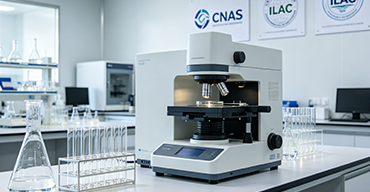
Internationally recognized authority
Certified by multiple international standards such as CNAS, VCS, and GS, with reports universally applicable worldwide.

Global service capability
Covering 140+ countries and regions, it supports on-site detection and remote verification in multiple languages.

Professional experimental methods
Adopt standard experimental methods to ensure accurate and reliable data.
Conjugated Linoleic Acid (CLA) Quantitation – Isomer‑Specific Profiling & Absolute Content Determination
You are searching for conjugated linoleic acid quantitative analysis because you need to perform this assay—whether to verify CLA content and isomer distribution in dietary supplements, functional foods (dairy, meat products), or nutraceutical oils; to monitor CLA isomer formation during biohydrogenation or enzymatic synthesis; or to comply with label claims and regulatory standards (e.g., USP, EFSA, China GB). We provide a complete quantitative service that delivers high‑resolution separation of individual CLA isomers (cis‑9, trans‑11; trans‑10, cis‑12; cis‑9, cis‑11; etc.), accurate mass confirmation, and absolute quantification using validated chromatographic and mass spectrometric platforms.
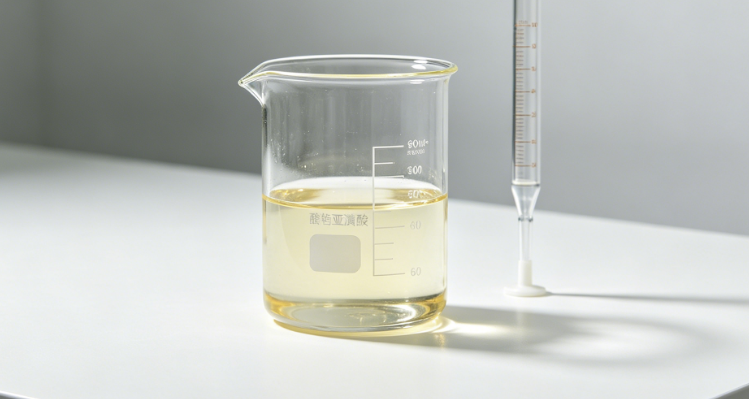
What We Quantify – Individual CLA Isomers, Total CLA & Related Fatty Acids
Our CLA quantitation goes far from total conjugated diene measurement (UV at 233 nm). Using silver ion high‑performance liquid chromatography (Ag‑HPLC) with three in‑series silver‑loaded columns or ultra‑high performance supercritical fluid chromatography (UHPSFC‑PDA), we achieve baseline resolution of at least 12 CLA positional and geometric isomers (including c9,t11; t10,c12; c9,c11; t9,t11; c11,t13; and c12,c14) with run times of 25‑40 minutes. For routine analysis, we deploy GC‑FID (gas chromatography with flame ionisation detection) on highly polar 100‑m cyanopropyl columns (CP‑Sil 88, SP‑2560) – separating c9,t11 and t10,c12 from each other and from other C18:1 and C18:2 isomers with quantitation limits of 0.05% area for minor isomers. To confirm identity and achieve highest specificity, we use GC‑MS/MS (electron ionisation or chemical ionisation) and LC‑MS/MS (atmospheric pressure chemical ionisation, APCI) in negative ion mode – providing full mass spectra and unique transition ions (e.g., m/z 279 → 281 for CLA adducts). We quantify total CLA (sum of isomers) and each major isomer (c9,t11 and t10,c12) in mg/g or % (w/w) using isotope‑dilution with 13C‑labelled CLA internal standards (e.g., 1318‑CLA) – achieving accuracy of 97‑103% and intra‑day RSD <2%. For complex food matrices (cheese, milk powder, meat, infant formula), we perform lipid extraction (Folch or Bligh‑Dyer) followed by saponification or direct transmethylation to fatty acid methyl esters (FAMEs), with recoveries of spiked CLA isomers between 92‑105%.
How Deep We Go – Chiral Separation, Oxidation Products & Isomerisation Kinetics
We don't just report c9,t11 and t10,c12. Our advanced pipeline includes chiral CLA analysis using chiral stationary phase HPLC (Chiralpak IA/IB) to resolve enantiomers of conjugated linoleic acid (e.g., R‑ vs. S‑c9,t11) – critical for understanding biological activity differences. We also detect and quantify CLA oxidation products (hydroperoxides, epoxides, hydroxides) by LC‑MS/MS with HCD fragmentation – providing individual oxidation species at levels as low as 1 µg/g. For stability studies, we perform forced degradation (light, heat, oxygen exposure) and measure isomerisation kinetics (c9,t11 → t9,t11 or c9,c11) – reporting rate constants and half‑lives using real‑time GC sampling over 0‑72 hours. In fermentation or enzymatic reaction monitoring, we use online SPE‑LC‑MS to follow CLA formation from linoleic acid every 30 minutes, capturing transient intermediates (conjugated trienes and hydroxy fatty acids). For metabolic studies (plasma, tissues), we achieve LLOQ of 0.5 µg/mL for each CLA isomer with sample preparation including Folch extraction and LC‑MS/MS in MRM mode – measuring free and esterified CLA separately after solid‑phase extraction (SPE) fractionation.
Why Our CLA Quantitative Analysis Stands Out – Isomer Resolution, Ultra‑Sensitivity & Regulatory Alignment
1. Complete isomer library & identification: We maintain >20 CLA isomer reference standards (including rare ones like c11,c13, t11,t13) purchased from NU‑CHEK or Matreya, plus in‑house generated from photoisomerisation. Every reported peak is confirmed by coinjection and MS/MS spectral matching.
2. Matrix‑optimised extraction & clean‑up: We have validated protocols for milk and dairy (butter, cheese, yoghurt), meat (beef, lamb, pork), oils (safflower, CLA‑enriched), feed, plasma, and adipose tissue – each with matrix‑matched calibration to eliminate bias. Complex samples with high free fatty acids undergo dual solid‑phase extraction (silica gel and aminopropyl) to isolate CLA fraction before GC or LC.
3. High sensitivity & accuracy: Using GC‑MS/MS with negative chemical ionisation (NCI) or LC‑APCI‑MS/MS, we achieve limit of quantitation of 0.2 µg/mL for each isomer in oil and 5 ng/g in tissue. Isotope‑dilution ensures minimal matrix effect and high inter‑lab reproducibility.
4. Distinction of natural vs. synthetic CLA: By measuring δ13C and δ2H isotope ratios (IRMS) of individual CLA isomers, we can differentiate rumenic acid (c9,t11) of natural origin from commercial CLA mixtures derived from alkali isomerisation – a key service for authenticity testing and geographic traceability.
5. Regulatory & publishing support: Our methods follow AOAC 2000.10 (CLA in milk), ISO 16958 (fatty acid analysis), and Chinese National Standard GB 5009.168 (foods). We provide full validation reports (linearity, LOD/LOQ, accuracy, precision) and chromatographic raw data – accepted by EFSA Novel Food applications and USP dietary supplement verification. Turnaround: single sample total CLA + c9,t11 + t10,c12: 48 hours; full isomer profiling (12 isomers): 3‑5 days; plus oxidation/chiral analysis: 5‑7 business days.
Who Relies on Our CLA Quantitation – Real‑World Impact
A nutraceutical company manufacturing CLA‑enriched safflower oil softgels used our full isomer profiling to confirm c9,t11 : t10,c12 ratio of 1:1 (label claim) with less than 2% other isomers – meeting USP specifications. A dairy research institute studied the effect of cow feed on milk CLA; we analysed 200 milk samples and found that pasture‑fed cows produced 3‑fold higher c9,t11 (6.2 mg/g fat) vs. confinement feeding, with data published in a peer‑reviewed journal. A food safety authority sent us adulterated “CLA‑rich” butter; our isotope ratio analysis revealed synthetic CLA (δ13C = ‑29‰) mixed with natural butter fat (δ13C = ‑22‰), exposing fraud. A pharmaceutical group studying CLA isomers as PPAR agonists required enantiomeric purity of their synthetic c9,t11; our chiral HPLC showed 98% ee (R‑enantiomer), essential for their biological assay.
Ready to Run Your Conjugated Linoleic Acid Quantitative Analysis?
Send us oil (≥100 µL), softgel (1 capsule), dairy product (≥10 g), meat (≥20 g), feed (≥10 g), or plasma (≥500 µL). We will perform lipid extraction, transmethylation (or direct GC/LC injection), separation by Ag‑HPLC or GC‑FID, quantification by isotope‑dilution GC‑MS/MS or LC‑MS/MS, and full isomer‑specific reporting – delivering a comprehensive certificate of analysis within 2‑7 business days. Request a free consultation; we will design the optimal CLA quantitation panel (total CLA, major isomers only, full isomer fingerprint, or chiral/oxidation analysis) for your product type, matrix, and regulatory need.