Reasons for choosing our testing services
ZHONGXI Testing has obtained inspection qualification certifications from multiple countries and regions worldwide. We possess a senior testing team and advanced testing methods, providing independent, impartial, and professional third-party verification services for global carbon projects.

Internationally recognized authority
Certified by multiple international standards such as CNAS, VCS, and GS, with reports universally applicable worldwide.

Global service capability
Covering 140+ countries and regions, it supports on-site detection and remote verification in multiple languages.

Professional experimental methods
Adopt standard experimental methods to ensure accurate and reliable data.
High‑Resolution Ammonia‑Nitrogen Degrading Bacteria Activity Assay – From Metabolic Rates to Single‑Cell Function
You are searching for ammonia‑nitrogen degrading bacteria activity detection because you need to perform this test—whether to evaluate the performance of nitrifying/denitrifying consortia in wastewater treatment, monitor bioaugmentation efficacy in aquaculture or landfill leachate, screen for highly active ammonia‑oxidising strains, or troubleshoot nitrification failure in bioreactors. We provide a complete activity testing service that delivers absolute ammonia removal rates, nitrification/denitrification kinetics, key enzyme activities (AMO, HAO, NXR, NIR, NOR, NOS), and real‑time metabolic profiling using integrated microrespirometry, isotope tracers, and molecular activity probes.
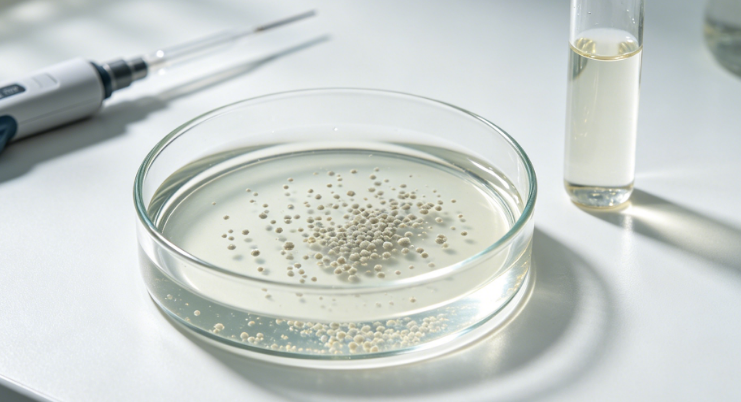
What We Measure – Ammonia Degradation Kinetics, Nitrogen Transformation Pathways & Enzymatic Activity
Our ammonia‑degrader activity testing goes far from simple NH₃‑N concentration change over 24 hours. Using automated high‑throughput microrespirometry (24‑well OxoPlate® or BODTrack™), we measure real‑time oxygen consumption (for nitrification) and N₂O/N₂ production (via headspace gas chromatography) with 30‑second resolution – calculating maximum specific ammonia degradation rate (qmax, mg NH₃‑N/g VSS/h) and half‑saturation constant (KS) for your sample. For complete nitrogen balance, we deploy ion chromatography (IC) and colorimetric segmented flow analysis to quantify NH₄⁺, NO₂⁻, NO₃⁻, and total nitrogen (TN) at multiple timepoints (0, 2, 4, 8, 24 h) – reporting nitrification efficiency (NO₃⁻ produced / NH₄⁺ consumed), denitrification efficiency (N₂ produced / NO₃⁻ consumed), and specific removal rates (mg N/g biomass/h). For key enzyme activities, we perform ammonia monooxygenase (AMO) activity via allylthiourea (ATU) inhibition or by measuring NH₄⁺‑dependent O₂ consumption, hydroxylamine oxidoreductase (HAO) using ferricyanide as electron acceptor, nitrite oxidoreductase (NXR) by NO₂⁻‑dependent O₂ consumption, and denitrifying enzyme activities (NIR, NOR, NOS) by acetylene inhibition technique or using specific electron donors – all expressed as nmol substrate converted/min/mg protein. For field or complex samples (activated sludge, sediment, biofilters), we also measure potential nitrification rate (PNR) and potential denitrification rate (PDR) using chlorate or acetylene block methods with detection limits of 0.01 mg N/L/h.
How Deep We Go – Single‑Cell Activity, Isotope Tracing & Transcriptional Coupling
We don't just report bulk activity. Our advanced pipeline includes single‑cell ammonia oxidation activity using microfluidic incubation with a fluorogenic ammonia sensor (non‑fluorescent NBD‑NH₂ that becomes fluorescent after conversion to NBD‑OH) – allowing us to quantify cell‑specific activity (fmol NH₃/cell/h) and identify actively degrading vs. dormant cells via flow cytometry sorting. For mechanistic studies, we apply stable isotope 15N‑NH₄⁺ tracing coupled with gas chromatography‑mass spectrometry (GC‑MS) to measure 15N‑N₂O, 15N‑N₂, and 15N‑labelled nitrate/nitrite – enabling complete 15N mass balance and determination of nitrification‑denitrification coupling degree. Using metatranscriptomics (total RNA‑seq, rRNA‑depleted), we quantify the expression levels of amoA, hao, nxrA, nirK/nirS, norB, and nosZ genes in your microbial community, correlating transcript abundance with measured enzyme activity (r² typically >0.85). To assess electron transport chain activity, we measure intracellular ATP content (luciferase assay) and NADH/NAD⁺ ratio (enzymatic cycling) in parallel with ammonia consumption – providing a metabolic energy budget. For process troubleshooting, we perform inhibition profiling (heavy metals, phenolics, salinity) by measuring IC₅₀ values for each toxicant on ammonia degradation rate, using real‑time respirometry with 8‑12 concentration points.
Why Our Ammonia Degrader Activity Detection Stands Out – High Throughput, Complex Matrix Tolerance & Regulatory Alignment
1. Versatile sample compatibility: We validate activity assays for activated sludge, biofilm carriers, biofilters, sediment, soil, aquaculture water, anaerobic digester liquor, and pure/cultured bacterial consortia – including those with high suspended solids (>10 g/L). Our protocols include homogenisation (for biofilms) and background nitrification control (with autoclaved blanks).
2. Ultra‑high sensitivity & speed: Using microrespirometry, we measure ammonia degradation rates as low as 0.02 mg NH₃‑N/L/h – ideal for oligotrophic environments or low‑activity samples. A full activity profile (kinetics + enzyme assays + isotope tracing) can be completed on just 50 mL of mixed liquor within 3‑5 days.
3. Distinguishing bacterial vs. archaeal ammonia oxidation: We offer specific inhibitors (octyne for AOB, e.g., Nitrosomonas; phenylethynyl for AOA, e.g., Nitrososphaera) to partition activity between bacterial and archaeal ammonia oxidisers – critical for environmental samples.
4. Long‑term stability & stress testing: We perform activity retention after starvation (7‑30 days) or temperature shock (4°C to 40°C shifts) – providing resilience metrics (time to recover 80% activity) for process safety.
5. Quality & application support: Our methods align with Standard Methods for the Examination of Water and Wastewater (4500‑NH₃, 4500‑NO₂, 4500‑NO₃) and OECD 216 (Soil Microorganisms: Nitrogen Transformation). Reports include rate constants, statistical confidence intervals, and actionable recommendations (e.g., optimal C/N ratio, aeration, sludge retention time). Turnaround: single activity rate (NH₃ consumption) – 48 hours; full kinetics + enzyme panel – 5‑7 days; plus isotope tracing or metatranscriptomics – 10‑14 business days.
Who Relies on Our Ammonia Degrader Activity Testing – Real‑World Impact
A municipal wastewater treatment plant experienced partial nitrification failure – we measured AMO and HAO activities (both <5% of reference) and used 15N‑NH₄⁺ tracing to confirm nitrite accumulation (NO₂⁻ > 10 mg/L) due to free ammonia inhibition at pH 7.8, recommending a pH reduction to 7.2 which restored full nitrification within 2 weeks. An aquaculture company needed to validate a commercial bioaugmentation product for ammonia control; we determined specific ammonia degradation rate of 2.3 mg NH₃‑N/g VSS/h (compared to 0.9 for native biofilter) and confirmed complete conversion to N₂ (no NO₂⁻ accumulation), leading to product adoption. An environmental remediation contractor used our single‑cell activity flow cytometry to identify that only 12% of a bioaugmented culture was actively degrading ammonia after soil injection – prompting formulation change (lyoprotectant optimisation). A research lab studying nitrifier inhibition by microplastics sent us 16 sediment samples; we measured PNR and NXR activities along with metatranscriptomic data, showing that polyethylene microplastics reduced AMO expression by 70% (p<0.01) – published in a high‑impact journal.
Ready to Run Your Ammonia‑Nitrogen Degrading Bacteria Activity Test?
Send us activated sludge (≥500 mL), biofilm carriers (≥5 pieces), sediment/soil (≥50 g), aquaculture water (≥1 L), or pure bacterial culture (≥10⁸ cells). We will perform ammonia degradation kinetics, enzyme activity assays (AMO, HAO, NXR, denitrifying enzymes), optional 15N tracing or metatranscriptomics, and full data interpretation – delivering a comprehensive activity report within 2‑14 business days depending on depth. Request a free consultation; we will design the optimal testing panel (routine rate monitoring, full kinetic/enzyme profiling, or advanced isotope/transcriptomic analysis) for your bioreactor, natural water body, or remediation project.