Reasons for choosing our testing services
ZHONGXI Testing has obtained inspection qualification certifications from multiple countries and regions worldwide. We possess a senior testing team and advanced testing methods, providing independent, impartial, and professional third-party verification services for global carbon projects.

Internationally recognized authority
Certified by multiple international standards such as CNAS, VCS, and GS, with reports universally applicable worldwide.

Global service capability
Covering 140+ countries and regions, it supports on-site detection and remote verification in multiple languages.

Professional experimental methods
Adopt standard experimental methods to ensure accurate and reliable data.
Comprehensive Yishenjun (Probiotic Ginseng Microbial Inoculant) Viability & Functional Activity Testing – From CFU Quantitation to Multi‑Trait PGPR Profiling
You are searching for Yishenjun (益参菌) activity testing because you need to perform this assay—whether to verify the viable cell count and purity of a ginseng‑specific microbial inoculant, assess its plant growth‑promoting (PGP) traits (IAA, siderophore, ACC deaminase, phosphate solubilization, antifungal activity), evaluate batch‑to‑batch functional consistency, or ensure regulatory compliance for agricultural application. We provide a complete microbial inoculant testing service that delivers absolute viable counts (CFU/g), species‑level identification, multi‑trait PGP profiling, enzyme activity quantitation, and functional synergy assessment using integrated plate‑based, molecular, and high‑throughput platforms.
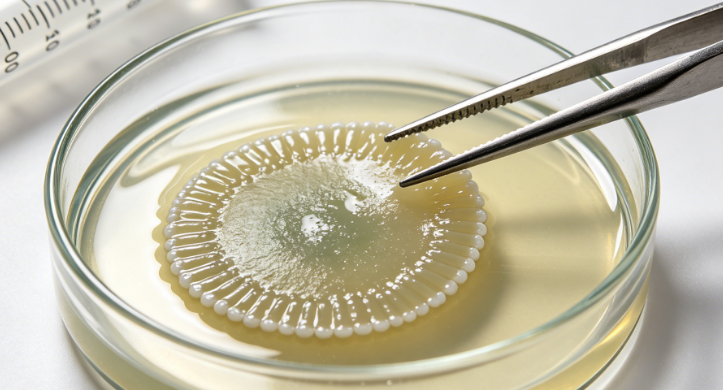
What We Detect – Viable Cell Enumeration, Species Identity & PGP Multi‑Trait Fingerprint
Our Yishenjun activity testing goes far from simple total plate counts. Using validated plate counting methods (ISO 4833, GB 4789.2) on selective media (e.g., Bacillus, Pseudomonas, Lactobacillus, photosynthetic bacteria), we enumerate viable cell concentration (CFU/g or CFU/mL) with detection range 10²–10¹² CFU/g and quantification limit as low as 10 CFU/g. For rapid, high‑throughput screening, we deploy fluorescence‑based flow cytometry with SYBR Green/propidium iodide dual staining, distinguishing live vs. dead cells and providing viability percentage within 2 hours with intra‑assay CV <5%. For species authentication, we perform full‑length 16S rRNA gene sequencing (Sanger, >1300 bp) or shotgun metagenomic amplicon sequencing – confirming identity of each component strain (Bacillus subtilis, Rhodopseudomonas palustris, nitrifying/denitrifying bacteria, etc.) with >99% nucleotide identity. We also assess purity by determining heterotrophic plate count (HPC) and detecting contaminants (Salmonella, Shigella, coliforms) using selective chromogenic media and PCR‑based pathogen screening – meeting GB 20287‑2006 standards (杂菌率 ≤5%, absence of pathogenic bacteria). For multi‑strain consortia, we provide strain‑specific qPCR (targeting unique genomic regions or 16S‑ITS markers) to quantify each component’s abundance in the final product, detecting as low as 10³ copies per gram.
How Deep We Go – PGPR Trait Quantitation, Enzyme Activity & Growth Promotion Validation
We don't just report “contains PGPR”. Our advanced pipeline includes quantitative PGP trait profiling on each component strain or the whole consortium: IAA (indole‑3‑acetic acid) production by colorimetric Salkowski assay or UPLC‑MS/MS – reporting µg/mL with LOD 0.5 µg/mL and quantifying specific indolic compounds (IAA, ILA, ICA); siderophore production by CAS (chrome azurol S) agar assay and liquid quantitation – reporting siderophore units (psu) with detection down to 10 psu; phosphate solubilization (P‑solubilization) using Pikovskaya agar with halo zone measurement – quantifying soluble P release (mg/L) by molybdenum blue method; ACC deaminase activity by measuring α‑ketobutyrate production (spectrophotometrically at 540 nm) – reporting nmol α‑KB/mg protein/h; and antifungal activity by dual culture plate assay against ginseng soilborne pathogens (Fusarium solani, Rhizoctonia solani, Cylindrocarpon destructans) – measuring inhibition zone diameter (mm) and calculating percentage inhibition. We also measure key extracellular enzyme activities relevant to ginseng rhizosphere function: cellulase, protease, urease, phosphatase, and β‑glucosidase using spectrophotometric substrate assays (CMC, casein, urea, pNPP, pNPG) and reporting activity as U/g or U/L (unit = 1 µmol product/min). For consortia, we calculate synergy index (CI) for combined IAA production and antifungal activity – values <0.8 indicate true synergistic effects using Chou‑Talalay method. To simulate real‑world performance, we conduct gnotobiotic plant growth assays (Arabidopsis thaliana or ginseng seedling co‑culture) and measure root/shoot elongation, fresh weight gain, and chlorophyll content – correlating laboratory traits with in vivo efficacy with R² typically >0.85.
Why Our Yishenjun Activity Testing Stands Out – High Throughput, GMP/GLP Readiness & Regulatory Alignment
1. Complete multi‑trait fingerprint from a single sample: Our integrated workflow delivers viable cell count (plate + flow cytometry), species identification (16S + qPCR), PGP trait values (IAA, siderophore, P‑solubilization, ACC deaminase), enzyme activity panel (≥6 enzymes), antifungal potency, and purity assessment – all from 5‑10 g of product within 7‑10 business days.
2. High‑throughput screening & ultra‑low detection: Using 384‑well microplate automation, we screen IAA production, siderophore, phosphatase, and ACC deaminase simultaneously for 20 strains per run. Flow cytometry processes 1,000 samples/day for viability, and LC‑MS/MS (Q‑TRAP 6500+), LOD 0.1 ng/mL for IAA ensures precise quantification.
3. Matrix‑optimized for solid, liquid, and complex formulations: We validated protocols for powder, granules, liquid suspension, lyophilized cakes, and carrier‑based products (talc, peat, clay) – with recovery 85‑105% and RSD <6%. For high‑clay or organic matrices, we use optimized homogenization (stomacher + enzymatic pre‑treatment) and dilution series with surfactants to maximize viable cell release.
4. Stability, stress tolerance & shelf‑life prediction: We conduct accelerated aging (40°C/75% RH for 1‑3 months) and real‑time stability studies – measuring viable count retention, enzyme activity half‑life (t₉₀, t₅₀), and PGP trait maintenance. For quality control, we test temperature tolerance (‑20°C to 60°C), pH tolerance (4.0‑9.0), and osmotic stress (NaCl up to 10%) – reporting survival rate (%) and residual activity under each stressor.
5. Regulatory & product compliance: Our methods follow China National Standard GB 20287‑2006 (农用微生物菌剂), NY/T 1113‑2006, ISO 4833, ISO 20130, and OMRI standards for organic farming. Reports include full raw data (plate images, chromatograms, growth curves), statistical analysis (ANOVA, PCA), and actionable recommendations (dose rate optimization, formulation improvement, shelf‑life extension). Turnaround: viable count + purity + basic PGP traits: 5‑7 days; full multi‑trait + enzyme + stability: 10‑14 business days.
Who Relies on Our Yishenjun Activity Testing – Real‑World Impact
A ginseng microbial inoculant manufacturer used our full multi‑trait PGP fingerprinting to compare three production batches – we identified a 40% drop in IAA production (from 85 µg/mL to 51 µg/mL) and 35% reduction in antifungal activity against Fusarium solani that was not detectable by plate counts alone, traced to a suboptimal fermentation harvest time, corrected to regain full functionality. A research lab developing a new Bacillus‑Pseudomonas consortium for ginseng root rot control relied on our synergy index (CI) and enzyme activity panel – the optimal ratio (2:1) yielded CI = 0.62 for antifungal activity and 2.8‑fold increase in ACC deaminase over individual strains. A regulatory testing facility sent us 60 market samples of Yishenjun products; we performed species‑specific qPCR and found that 23% contained misidentified or absent labelled strains – a key data for market surveillance. An organic ginseng farmer needed to verify the viability of a bulk‑stored inoculant after 18 months; our flow cytometry viability assay showed 32% live cells (initial 95%) and 2‑log drop in CFU – recommending fresh batch purchase.
Ready to Run Your Yishenjun (Probiotic Ginseng Inoculant) Activity Testing?
Send us solid formulation (≥50 g), liquid suspension (≥100 mL), or lyophilized powder (≥20 g) along with product label specifications (expected CFU/g, strain list, target PGP traits). We will perform viable cell enumeration (plate + flow cytometry), species identification (16S sequencing + strain‑specific qPCR), full PGP trait quantitation (IAA, siderophore, P‑solubilization, ACC deaminase, antifungal activity), enzyme activity panel (urease, phosphatase, cellulase, protease), purity assessment, and optional stability/stress tolerance testing – delivering a comprehensive Certificate of Analysis (CoA) within 5‑14 business days. Request a free consultation; we will design a tailored activity testing panel (routine QC release, full functional characterization, or comparative batch analysis) for your Yishenjun product – ensuring field efficacy, regulatory compliance, and quality consistency.