Reasons for choosing our testing services
ZHONGXI Testing has obtained inspection qualification certifications from multiple countries and regions worldwide. We possess a senior testing team and advanced testing methods, providing independent, impartial, and professional third-party verification services for global carbon projects.

Internationally recognized authority
Certified by multiple international standards such as CNAS, VCS, and GS, with reports universally applicable worldwide.

Global service capability
Covering 140+ countries and regions, it supports on-site detection and remote verification in multiple languages.

Professional experimental methods
Adopt standard experimental methods to ensure accurate and reliable data.
High-Resolution Heterologous Alpha-Amylase Activity Assay Service
Alpha-amylases (EC 3.2.1.1) are among the most widely used industrial enzymes, and their heterologous expression—whether in E. coli, yeast, Bacillus, or mammalian cells—demands precise, reproducible activity quantification. If you are searching for a heterologous alpha-amylase activity assay, you need more than a simple starch-iodine test. You need a full-stack analytical platform that resolves interference from host cell proteins, measures true catalytic efficiency (kcat/Km), and works across diverse expression systems. Our laboratory delivers exactly that.
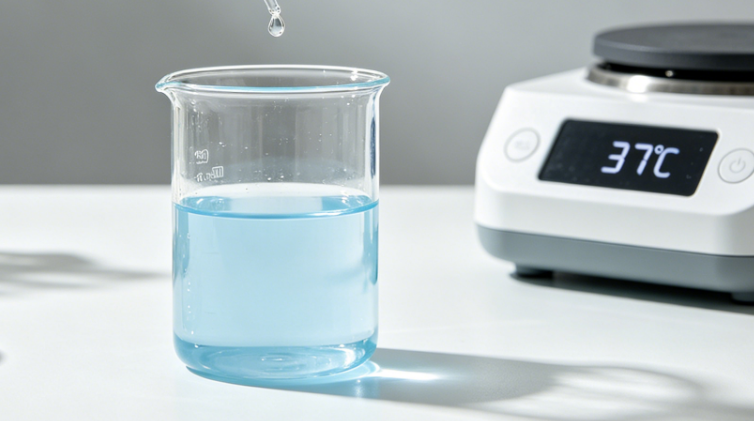
What We Measure – Beyond Routine Endpoint Assays
We offer a suite of orthogonal detection methods tailored to your specific heterologous construct. Standard endpoints like DNS (3,5-dinitrosalicylic acid) reducing sugar assay are only the starting point. For high sensitivity and real-time kinetics, we deploy continuous fluorogenic substrate assays (e.g., 4-MU-α-D-maltoheptaoside, or Ethylidene-4-NP-α-D-maltoheptaoside) that detect as little as 0.01 U/mL of recombinant enzyme. When your alpha-amylase is expressed in a complex crude lysate, we apply interference-eliminating protocols including desalting, affinity pre-capture, and parallel reaction monitoring (PRM) to distinguish true amylase activity from background glycosidases. For insoluble or membrane-tethered variants, we perform amylase activity zymography with in‑gel renaturation, followed by densitometric quantitation – a capability few contract labs maintain.
Deep Technical Capabilities – Kinetic Profiling & Substrate Specificity
We do not simply report “units per mL”. We construct full Michaelis-Menten kinetic profiles using six to eight substrate concentrations (starch, amylose, amylopectin, or defined malto-oligosaccharides) with error-weighted nonlinear regression. For heterologous enzymes that show unusual pH or temperature optima (e.g., from thermophiles or psychrophiles), we map activity across pH 3.0–11.0 and temperature 4–95 °C in 0.5 °C increments. Our high-throughput spectrophotometric platform (384-well format) and microfluidic capillary electrophoresis (MCE) systems enable Z’-factor >0.8 in crude lysate samples, meeting FDA guidance for assay reproducibility. Furthermore, we differentiate exo- vs. endo‑amylolytic modes by iodine-staining kinetics and HPAEC-PAD (high-performance anion-exchange chromatography with pulsed amperometric detection) of reaction products – down to maltoheptaose and maltotriose isomers.
Why Choose Our Heterologous Alpha-Amylase Activity Service
Absolute specificity for heterologous backgrounds. Most commercial kits fail when host cells produce their own amylase-like activities (e.g., yeast maltase or mammalian pancreatic amylase). We have validated immunocapture-coupled activity assays using anti-tag antibodies (His, FLAG, Strep, or custom) to selectively measure only your recombinant enzyme. Turnaround as fast as 48 hours from receipt of samples (cell pellets, conditioned media, or purified protein). Dynamic range spanning six orders of magnitude: from sub‑picomole glucose equivalents per minute to >1000 U/mg purified enzyme. Full documentation for publication or regulatory submission – each run includes positive controls (verified α‑amylase from B. licheniformis), blank matrix corrections, and outlier detection by Grubbs’ test. We also offer high‑throughput screening (HTS) for directed evolution libraries – up to 10,000 samples per week with CV < 5%.
Detailed Deliverables – From Raw Data to Mechanistic Insights
Your final report includes: raw progress curves (absorbance/fluorescence vs. time), calculated specific activity (U/mg protein), kinetic parameters (Km, Vmax, kcat), activation energy (Ea) when temperature‑resolved, and residual activity after thermal or chemical challenge. For heterologous enzymes with industrial relevance, we provide half‑life (t1/2) at defined temperatures and inhibition profiles (e.g., acarbose, EDTA, or wheat germ inhibitors). All measurements are traceable to NIST glucose standards, and we can ship signed data packages with ISO 17025-aligned quality procedures upon request.
Ready to quantify your heterologous alpha‑amylase activity with precision that meets both discovery and industrial QC standards? Contact our enzyme assay core to discuss sample matrices, required sensitivity, and preferred output format. We also provide free pre‑submission consultations to determine the optimal assay design for your unique construct.