Reasons for choosing our testing services
ZHONGXI Testing has obtained inspection qualification certifications from multiple countries and regions worldwide. We possess a senior testing team and advanced testing methods, providing independent, impartial, and professional third-party verification services for global carbon projects.

Internationally recognized authority
Certified by multiple international standards such as CNAS, VCS, and GS, with reports universally applicable worldwide.

Global service capability
Covering 140+ countries and regions, it supports on-site detection and remote verification in multiple languages.

Professional experimental methods
Adopt standard experimental methods to ensure accurate and reliable data.
Chemical Oxygen Demand (COD) Testing Service for Papermaking Waste Liquor
If you are searching for a reliable chemical oxygen demand (COD) assay for papermaking waste liquor, you are likely facing a common but critical challenge: highly variable organic loads, elevated chloride levels, and dark-colored lignin matrices that interfere with standard photometric methods. We provide a dedicated COD testing service specifically designed for pulp and paper effluents – from black liquor to bleachery effluents and recycled paper mill wastewater. Our approach delivers accurate, legally defensible COD values even in the most demanding samples.
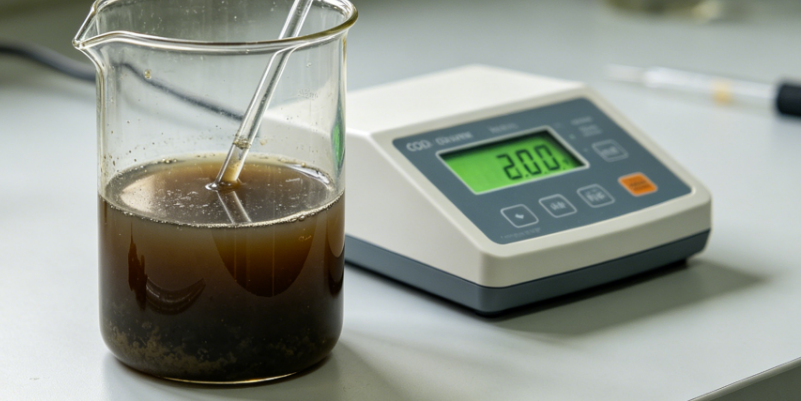
What We Measure – Complete Organic Load Characterisation
We quantify COD using three orthogonal reference methods validated for paper industry waste streams: the USEPA-approved dichromate reflux method (5220 B), the closed reflux colorimetric method (5220 D), and the mercury‑free high‑sensitivity micro‑digestion for low‑COD samples. For raw black liquor with COD exceeding 100,000 mg/L, we apply a controlled dilution cascading protocol (up to 1:2000) with matrix‑matched blank corrections. To eliminate interference from chloride (often >5000 mg/L in some paper waste liquor), we use mercury(II) sulfate masking at a 10:1 Hg:Cl- ratio followed by a confirmatory low‑chloride re‑analysis after silver sulfate precipitation. Suspended fibers and colloidal lignin are homogenized by a high‑shear rotor‑stator treatment and then analysed as total COD – no filtration that would underestimate the true load.
Advanced Analytical Capabilities – Beyond Routine COD Vials
Our laboratory does not simply report “COD in mg/L”. We provide a full fractional COD analysis for paper waste liquor: soluble COD (0.45 µm filtered), colloidal COD (1 kDa ultrafiltration cut‑off), and particulate COD (difference). Using rapid thermometric digestion (165 °C, 12 min) combined with bichromate titration by automated potentiometric endpoint detection (resolution 0.1 mL of 0.01 N FAS), we achieve a relative standard deviation (RSD) < 2% for duplicate runs even at 20,000 mg/L COD. For very low COD polishing effluents (<50 mg/L), we deploy a permanganate-based micro-COD method with UV‑digestion and solid‑phase extraction to remove colour interference from residual lignin chromophores. The detection limit reaches 2 mg/L COD while fully complying with ISO 6060 and APHA standard methods.
Why Choose Our COD Testing Service for Papermaking Waste Liquor
Expertise in high‑interference matrices. We have analysed over 2,000 paper waste liquor samples from kraft, sulfite, thermomechanical, and recycled fiber mills. Our team developed a proprietary chloride interference correction algorithm that cross‑checks dichromate consumption against a chloride‑independent combustion‑based total organic carbon (TOC) measurement – you receive a validated COD value even when chloride varies batch‑to‑batch. Turnaround as fast as 24 hours for emergency compliance monitoring. Dynamic range from 3 mg/L to 250,000 mg/L with automatic sample dilution and pre‑screening by a dedicated NIR‑COD probe. Full chain‑of‑custody and audit‑ready reports including raw titration curves, QC spike recovery (95–105% required), duplicate agreement, and reference standard verification (potassium hydrogen phthalate, 500 mg/L ± 10%).
Detailed Deliverables – From Compliance to Process Optimisation
Your final COD report includes: total COD, soluble COD, particulate COD fraction, chloride concentration (by ion chromatography), and a matrix suitability statement. For customers optimising on‑site treatment, we also provide biodegradability index (BOD5/COD ratio) using our BOD tracking service, and a COD abatement efficiency assessment after your primary, secondary, or tertiary treatment steps. We maintain ISO/IEC 17025:2017 accreditation for COD in wastewater (including paper waste liquor) and participate in annual proficiency testing (AQSIQ, ERA). All data are delivered in searchable PDF with raw instrument logs and method blanks.
Struggling with high‑chloride, dark‑coloured, or highly viscous paper waste liquor? Contact our industrial effluent COD core to discuss sampling protocols, preservation (H2SO4 to pH <2, 4 °C), and express service options. We offer a free preliminary feasibility test for one representative sample.