Reasons for choosing our testing services
ZHONGXI Testing has obtained inspection qualification certifications from multiple countries and regions worldwide. We possess a senior testing team and advanced testing methods, providing independent, impartial, and professional third-party verification services for global carbon projects.
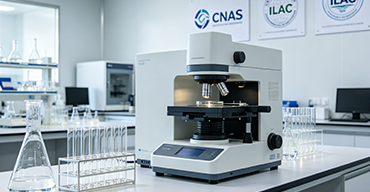
Internationally recognized authority
Certified by multiple international standards such as CNAS, VCS, and GS, with reports universally applicable worldwide.

Global service capability
Covering 140+ countries and regions, it supports on-site detection and remote verification in multiple languages.
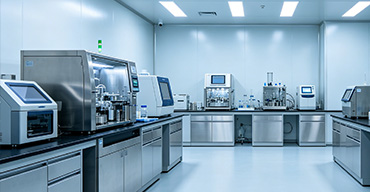
Professional experimental methods
Adopt standard experimental methods to ensure accurate and reliable data.
High‑Resolution Activity Assay for Cold‑Active Alkaline Proteases – Tailored Service for Psychrotrophic & Alkaliphilic Enzymes
If you are searching for a robust cold‑active alkaline protease activity test, you likely need to quantify the catalytic performance of an enzyme that functions at low temperatures (4–25 °C) and high pH (8.5–11.5) – whether for detergent formulation, cold‑water cleaning, food processing (e.g., fish sauce, meat tenderisation at chill temperatures), leather dehairing, or molecular biology applications. Standard protease assays (e.g., Anson at 37 °C, pH 7.5) completely fail to capture true cold‑adapted activity. We provide a dedicated, multi‑parameter activity service that respects the unique kinetic and stability profile of your cold‑active alkaline protease.
What We Measure – Specific Activity Under True Operating Conditions
We quantify proteolytic activity using three orthogonal substrate systems at your exact target temperature (from 2 °C to 30 °C) and pH (8.5–11.5). Primary method: azocasein assay (595 nm) with a 30‑minute reaction, calibrated against a tyrosine standard curve – results expressed as U/mL or U/mg protein (one unit = 1 µmol tyrosine equivalent released per minute). For higher sensitivity and real‑time monitoring, we deploy fluorescent resonance energy transfer (FRET) peptides (e.g., Abz‑AXXX‑Y(NO₂)‑D) specific for alkaline serine proteases, detected in a temperature‑controlled fluorometer (ex/em 320/420 nm). To eliminate autolysis or substrate precipitation at low temperatures, we pre‑equilibrate all reagents and use stabilising buffer systems (20 mM Tris‑HCl or CAPS, with 5 mM CaCl₂ and 0.01% Brij‑35). The method achieves a limit of detection (LOD) as low as 0.005 U/mL and intra‑assay CV < 4%.
Deep Technical Capabilities – Kinetic Cold‑Adaptation Profiling & Stability Mapping
Routine activity assays at a single temperature miss the essence of cold‑adapted enzymes. We construct full activity‑temperature profiles from 0 °C to 40 °C in 2 °C increments using a Peltier‑controlled multi‑well plate reader, generating Arrhenius plots and calculating activation energy (Ea) and Q10 (temperature coefficient). For true psychrophilic enzymes, we also measure catalytic efficiency (kcat/Km) at 10 °C using six substrate concentrations (casein, azocasein, or synthetic peptides). Additionally, we determine pH‑activity optimum (pH 7.0–12.0, 0.5 pH unit resolution) and pH stability (residual activity after 1 h pre‑incubation at various pH). To assess cold‑adapted protease robustness under industrial conditions, we measure thermal inactivation kinetics at 40 °C, 45 °C, 50 °C – calculating half‑life (t1/2) and D‑values. For detergent compatibility, we test activity in the presence of surfactants (SDS, LAS, Triton X‑100, Tween 80), oxidants (H₂O₂, sodium percarbonate), and chelators (EDTA, EGTA) at both low and ambient temperatures.
Why Choose Our Cold‑Active Alkaline Protease Activity Service
True cold‑adapted assay design. Most commercial labs run “protease activity” at 37 °C, which denatures or overestimates psychrophilic enzymes. We maintain a cold room (4 °C) and refrigerated spectrophotometers to perform entire assays without temperature drift. Matrix expertise: we have validated over 500 cold‑active alkaline protease samples – from crude fermentation broths (Bacillus, Pseudomonas, Yarrowia) to purified recombinant proteins. Turnaround as fast as 48 hours for a full activity‑temperature profile. Dynamic range across 5 logs (0.01 U/mL to 1000 U/mL). QC rigor: each run includes a positive control (subtilisin Carlsberg at 10 °C, pH 10.0), a negative control (heat‑inactivated enzyme, 80 °C, 15 min), and duplicate sample analysis. We follow adapted IUBMB and ISO 18738‑2 guidelines for low‑temperature protease measurement.
Detailed Deliverables – From Raw Progress Curves to Industrial Performance Indices
Your final report includes: specific activity (U/mg) at your chosen temperature and pH, temperature‑activity curve (0–40 °C) with optimal temperature (Topt), pH‑activity and pH‑stability profiles, Ea (kJ/mol) and Q10 (0–10 °C and 10–20 °C), and residual activity under laundry/detergent conditions. For enzyme engineering customers, we also provide Michaelis‑Menten kinetics (Km, Vmax) at 10 °C and 20 °C, and a cold‑adaptation index (ratio of kcat/Km at 10 °C vs 30 °C). All data are delivered in an editable Excel workbook plus a signed PDF summary, with raw fluorescence/absorbance curves and integration reports. Our lab is ISO 17025:2017 accredited for low‑temperature enzyme activity measurements.
Need to accurately quantify your cold‑active alkaline protease – but worried about artefactually low results from standard warm assays? Contact our psychrophilic enzyme core for a free consultation on assay buffer, substrate choice, and temperature range. We offer a pilot test on one sample to demonstrate our cold‑chain validated workflow.