Reasons for choosing our testing services
ZHONGXI Testing has obtained inspection qualification certifications from multiple countries and regions worldwide. We possess a senior testing team and advanced testing methods, providing independent, impartial, and professional third-party verification services for global carbon projects.

Internationally recognized authority
Certified by multiple international standards such as CNAS, VCS, and GS, with reports universally applicable worldwide.

Global service capability
Covering 140+ countries and regions, it supports on-site detection and remote verification in multiple languages.

Professional experimental methods
Adopt standard experimental methods to ensure accurate and reliable data.
Precision Viability & Metabolic Activity Assay for Lactobacillus fermentum – Tailored for probiotics, Fermentation & Functional Foods
If you are searching for a reliable Lactobacillus fermentum activity test, you likely need to quantify viable cell counts, metabolic performance, and stress tolerance of this versatile heterofermentative lactobacillus – whether for probiotic formulation (gut health, immunomodulation), dairy or plant‑based fermentation (sourdough, vegetable ferments), silage inoculants, or pharmaceutical quality control. Standard plate counts alone are insufficient. We provide a full‑spectrum L. fermentum activity service that combines classical microbiology, flow cytometry, real‑time acidification kinetics, and strain‑specific molecular enumeration.
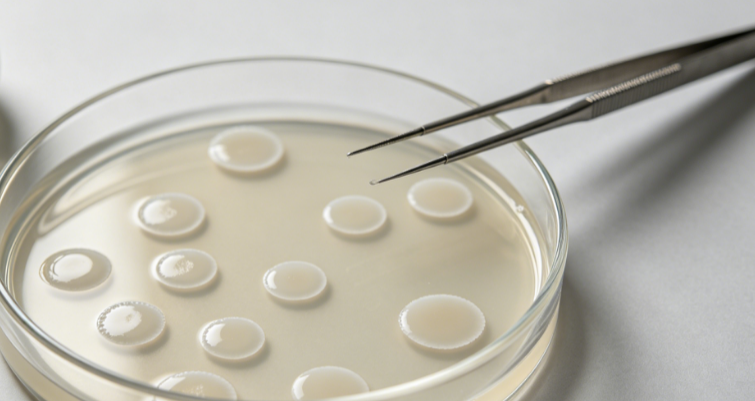
What We Measure – Comprehensive Activity Panel
We deliver a suite of orthogonal activity endpoints tailored to your specific L. fermentum strain (e.g., ATCC 9338, DSM 20052, or proprietary isolates). Core assays include: viable count by species‑semi‑selective plating (de Man‑Rogosa‑Sharpe agar with 0.5% fructose or modified LBS agar) with automated colony counting (CV < 3%); flow cytometric live/dead discrimination (SYTO9/PI or carboxyfluorescein diacetate) returning results in 45 minutes; and real‑time acidification activity (pH drop) using a 16‑channel automated pH logger (INLab® probes, data every 2 minutes) in a standardised MRS broth or a custom food matrix (milk, dough, juice). For probiotic validation, we measure simulated gastric and intestinal juice survival (pH 2.5 with pepsin, 2 h; pH 7.2 with pancreatin, 3 h) with pre‑ and post‑exposure plating – quantitating % survival and log reduction.
Deep Technical Capabilities – Metabolic Kinetics, Stress resilience & Strain Discrimination
Routine activity tests miss strain‑specific performance differences. We determine maximum acidification rate (Vmax, ΔpH/min), lag time (λ, hours) and final pH after 6, 12, 24 h – with software‑fitted Gompertz or logistic models. For heterofermentative metabolism characteristic of L. fermentum, we also measure CO₂ production rate via manometric respirometry (RapidOxy system) and ethanol/acetic acid ratio by headspace GC‑MS, key for flavour and preservation. To assess functionality in dried or frozen formulations, we quantify sublethal injury recovery using a resuscitative pre‑enrichment (0.1% peptone + 0.05% cysteine‑HCl + 0.5% fructose, 37 °C, 1 h) prior to plating. Our lab provides species and strain‑specific qPCR using primers targeting the fructose‑6‑phosphate phosphoketolase (fruK) gene or 16S‑23S rRNA intergenic spacer region – enabling accurate enumeration in mixed cultures (e.g., with yoghurt or kombucha consortia). Using high‑resolution isothermal calorimetry (TAM IV), we measure real‑time metabolic heat flow (µW per 106 CFU) directly from the fermentation medium, down to 104 CFU/mL detection.
Why Choose Our Lactobacillus fermentum Activity Service
Strain‑specific validation and inhibition profiling. We maintain a library of >50 industrial and probiotic L. fermentum strains and can design selective enumeration media to distinguish your strain from background microflora (e.g., using vancomycin or clindamycin resistance markers). Turnaround options: rapid viability screen (next day) or full kinetic profile (3‑5 days). Dynamic range: 102 to 1012 CFU/g or CFU/mL (capsules, powder, frozen pellets, liquid concentrates, fermented foods). Matrix expertise: we have validated assays for dairy products, fermented vegetables, sourdough, infant formula, and pharmaceutical capsules. All runs include: reference strain positive control (L. fermentum ATCC 9338), negative control (heat‑inactivated culture, 80 °C, 15 min), and spike recovery (70–130%). We follow ISO 19344 (fermented milk starters) and IDF 221:2018 where applicable, with additional probiotic‑specific protocols from EFSA and FDA guidance.
Detailed Deliverables – From CFU to Functional Probiotic Indices
Your final report includes: viable count (CFU with 95% confidence interval), live/dead ratio (flow cytometry histogram and statistics), acidification curve with Vmax, λ and pH at 6/12/24 h, gastrointestinal transit survival (%), and CO₂/ethanol production (if applicable). For quality control, we also provide a phage sensitivity test (if phage contamination is a risk) and thermal tolerance profile (e.g., 52 °C for 30 min residual activity). All data are delivered in searchable PDF with raw instrument logs, QC batch records, and optional GMP/GLP‑compliant signature blocks. We are ISO 17025:2017 accredited for probiotic microorganism viability and biochemical activity parameters.
Is your Lactobacillus fermentum product losing potency – slow acidification, poor gastrointestinal survival, or inconsistent fermentation times? Contact our lactic acid bacteria activity core for a customised assay design. We offer a free pre‑submission consultation to select the optimal activity metrics for your specific strain and target application.