Reasons for choosing our testing services
ZHONGXI Testing has obtained inspection qualification certifications from multiple countries and regions worldwide. We possess a senior testing team and advanced testing methods, providing independent, impartial, and professional third-party verification services for global carbon projects.

Internationally recognized authority
Certified by multiple international standards such as CNAS, VCS, and GS, with reports universally applicable worldwide.

Global service capability
Covering 140+ countries and regions, it supports on-site detection and remote verification in multiple languages.

Professional experimental methods
Adopt standard experimental methods to ensure accurate and reliable data.
Simulated Gastrointestinal Fluid Tolerance Test for Enterococcus faecalis – Probiotic Survivability Assessment
If you are searching for a robust gastrointestinal fluid tolerance test for Enterococcus faecalis, you likely need to determine whether your strain – whether intended as a probiotic, a live biotherapeutic product (LBP), or a feed additive – can survive the harsh conditions of the upper digestive tract: low gastric pH, pepsin, and pancreatic enzymes with bile salts. Standard growth media assays are not predictive. We provide a dedicated, multi‑stage dynamic GI tolerance service that mimics human or animal transit, quantifies survival rate, and identifies sublethal injury using advanced viability methods.
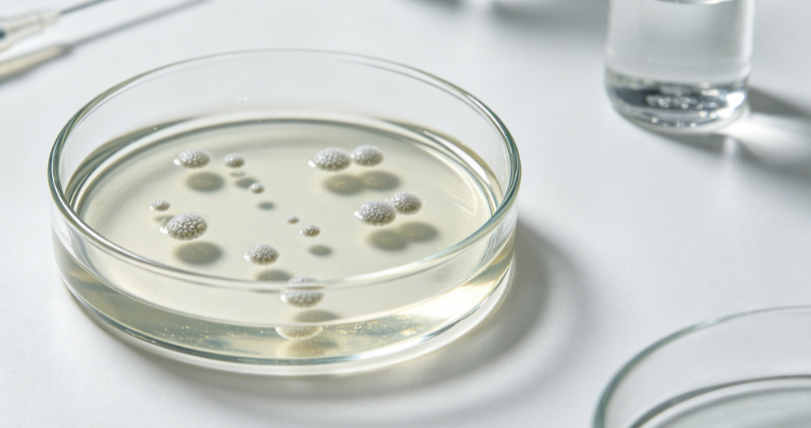
What We Measure – Sequential Gastric & Intestinal Challenge
Our protocol follows internationally recommended models (EFSA, FDA, ISO/TS 17665) with customisation for your target species (human, swine, poultry, aquaculture). We expose E. faecalis cells (fresh culture, frozen, or freeze‑dried formulation) to a simulated gastric fluid (SGF): 0.1% pepsin (pH 2.0–3.5, typically pH 2.5 for humans, pH 2.0 for piglets) at 37 °C for 0, 30, 60, 90, and 120 minutes. After gastric incubation, survivors are transferred to simulated intestinal fluid (SIF): 0.3% bile salts (porcine or bovine, customisable 0.1–1.0% w/v), 0.1% pancreatin (or trypsin), pH 6.8–7.2, for 2–6 hours. At each time point, we enumerate survivors by: plate count on selective media (KF Streptococcus agar or Slanetz‑Bartley agar), flow cytometry live/dead staining (SYTO9/PI, also detecting injured but viable cells), and species‑specific qPCR (targeting E. faecalis specific gene, e.g., ddl) with propidium monoazide (PMA) pre‑treatment to exclude membrane‑compromised cells. Detection limit: 10 CFU/mL for plate counts, 103 CFU/mL for PMA‑qPCR.
Deep Technical Capabilities – Dynamic pH Ramping & Sublethal Injury Quantification
Static pH exposures oversimplify real gastric passage. We offer a dynamic gastric model where pH decreases linearly from pH 5.0 to pH 2.5 over 90 minutes (mimicking a meal), followed by 30 min at pH 2.0. Using our programmable multi‑vessel fermenter (Sartorius ambr® 250), we can also simulate sequential fed and fasted states with enzyme addition. For strains damaged by acid or bile but not killed, we perform resuscitation plating on non‑selective medium (MRS or TSA) after 2 h recovery in 0.1% peptone + 0.05% cysteine – distinguishing “viable but non‑culturable” (VBNC) cells via fluorescent esterase assay (CFDA) combined with plate counts. Additionally, we quantify bile salt hydrolase (BSH) activity by monitoring deconjugation of taurocholic acid via HPLC‑MS – a key survival factor for E. faecalis in the intestine. All survival data are used to calculate log reduction, percentage survival, and gastric/intestinal half‑life (t1/2) with non‑linear regression.
Why Choose Our Enterococcus faecalis GI Tolerance Service
Species‑specific validation & formulation compatibility. We have tested over 100 E. faecalis isolates (including ATCC 19433, Symbioflor® strains, and environmental isolates) in both pure culture and commercial probiotic formulations (capsules, enteric‑coated beads, powders). Our protocol automatically corrects for matrix interference – e.g., microencapsulation excipients that alter pH or enzyme activity. Turnaround: complete survival profile (including SGF/SIF sequence and plate/flow cytometry readouts) within 4 business days. Dynamic range: 102 – 1011 CFU/mL input, with survival down to 100 CFU/mL detection. QC rigor: each run includes a positive control (Bacillus subtilis spore or E. faecalis reference strain pre‑validated for high survival), a negative control (no cells), and a recovery control (cells exposed to PBS pH 7.2 instead of SGF/SIF). We follow the European Pharmacopoeia (EP 5.1.8) and USP <1231> guidelines for simulated gastrointestinal fluid testing.
Detailed Deliverables – From Survival Curves to Probiotic Functionality Scores
Your final report includes: log10 CFU/mL vs time curves for gastric and intestinal phases, percentage survival at each exposure time (including 0, 30, 60, 90, 120 min gastric; 0, 2, 4, 6 h intestinal), calculated log reduction after complete GI transit, flow cytometry scatter plots with live/dead percentages, and a survival rating (Excellent/Moderate/Poor) based on historical data for commercial probiotic strains. Optionally, we provide BSH activity (U/mg protein) and a recommendation for formulation protection (e.g., enteric coating, microencapsulation, or alginate‑carrageenan beads) based on your strain’s weakness. All data are delivered as a signed PDF with raw instrument logs, QC batch records, and GL‑compliant metadata. Our laboratory holds ISO 17025:2017 accreditation for probiotic gastrointestinal survival testing.
Is your Enterococcus faecalis strain failing to reach the target site in vivo? Do you need comparative data for regulatory submission or product label claims? Contact our GI tolerance core for a free pre‑test consultation – we will design a protocol matching your target animal species and product format, including rush service options.