Reasons for choosing our testing services
ZHONGXI Testing has obtained inspection qualification certifications from multiple countries and regions worldwide. We possess a senior testing team and advanced testing methods, providing independent, impartial, and professional third-party verification services for global carbon projects.

Internationally recognized authority
Certified by multiple international standards such as CNAS, VCS, and GS, with reports universally applicable worldwide.

Global service capability
Covering 140+ countries and regions, it supports on-site detection and remote verification in multiple languages.

Professional experimental methods
Adopt standard experimental methods to ensure accurate and reliable data.
Comprehensive Contaminant Detection Service for Wood Ear Fungus (Auricularia auricula-judae) Cultivation
If you are searching for a reliable contaminant detection test for wood ear fungus (Auricularia auricula-judae), you likely need to identify and quantify spoilage microorganisms that threaten spawn, substrate, or fruiting body quality – whether competitive filamentous fungi (Trichoderma, Aspergillus, Penicillium), bacterial rot agents (Bacillus, Pseudomonas, Enterobacter), or yeast contaminants. Standard visual inspection and basic plating miss low‑level or latent infections. We provide a full‑spectrum wood ear contaminant detection service combining culture‑based identification, molecular diagnostics (PCR/qPCR), and metagenomic profiling to safeguard your mushroom production from spawn run to harvest.
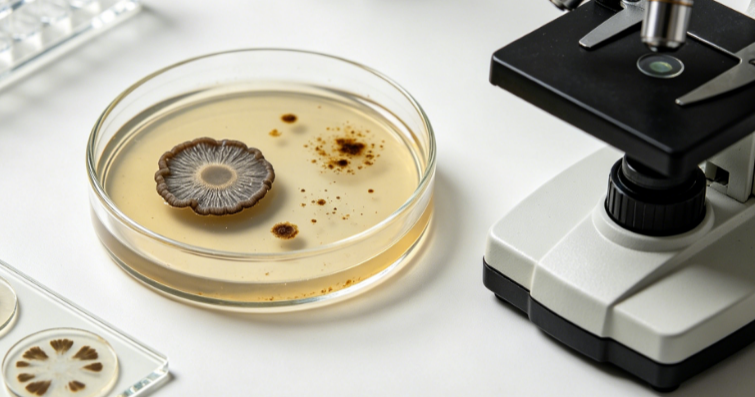
What We Detect – Comprehensive Pathogen & Spoilage Panel
Our assay panel targets the most common and damaging contaminants of Auricularia auricula-judae cultivation: fungal competitors – Trichoderma harzianum (green mould), Aspergillus spp. (black/yellow mould), Penicillium spp., Cladosporium, Mucor, and Rhizopus; bacterial pathogens – Bacillus subtilis, Bacillus cereus, Pseudomonas tolaasii (brown blotch), Enterobacter, Flavobacterium, and Stenotrophomonas maltophilia; and yeasts – Candida, Rhodotorula, and Cryptococcus. We detect these contaminants from spawn (grain or sawdust), supplemented sawdust substrate, fruiting body tissue, or environmental swabs (growing rooms, tools, air). Using a combination of selective/differential media (PDA with antibiotics for fungi, TSA for bacteria, Rose Bengal Chloramphenicol agar for yeasts) and automated colony recognition, we achieve limit of detection as low as 10 CFU/g or per swab for viable contaminants.
Deep Technical Capabilities – Molecular Identification & Metagenomic Profiling
Standard morphological identification is subjective and slow (days to weeks). We deploy species‑specific qPCR assays targeting the ITS region for fungi (Trichoderma, Aspergillus, Penicillium) and 16S rDNA for problematic bacteria (Pseudomonas tolaasii, Bacillus spp.) – with results in 4 hours from extracted DNA. For unknown or mixed contaminants, we perform full‑length 16S and ITS2 amplicon sequencing (Illumina MiSeq), providing a complete microbiome profile of your spawn or substrate: relative abundance of each contaminant, diversity indices, and detection of unculturable or slow‑growing species missed by plating. We also offer metagenomic shotgun sequencing to identify potential mycoviruses or Bacteriophages that may be affecting Auricularia mycelial vigour – a capability rarely offered for mushroom cultivation quality control. For rapid on‑site screening, we provide a LAMP (loop‑mediated isothermal amplification) assay for Trichoderma harzianum and Pseudomonas tolaasii (detection limit 100 fg DNA, result within 1 hour).
Why Choose Our Wood Ear Contaminant Detection Service
Specialised mushroom contaminant library. We have isolated and sequenced over 150 contaminant strains from commercial Auricularia and other mushroom farms (shiitake, oyster, enoki), building a reference database for accurate species‑level identification. Dual‑platform validation: we cross‑confirm culture‑positive isolates by MALDI‑TOF MS (mass spectrometry fingerprinting) or Sanger sequencing of ITS/16S rDNA, eliminating misidentification. Turnaround options: screening culture results in 3–5 days (fastest for bacteria), full identification + antibiogram/Antifungal susceptibility in 7–10 days, and metagenomic profiling in 10–14 days. Dynamic range: 10¹ to 10⁸ CFU/g for viable count, and down to 0.001% relative abundance by sequencing. Matrix expertise: we routinely test sawdust, grain spawn, composted substrates, spent blocks, and tissue homogenates – with validated extraction protocols to remove polysaccharide and lignin PCR inhibitors. QC rigor: each run includes positive controls (reference contaminant strains), negative controls (sterile substrate), and spike recovery (70–130%) for qPCR assays. We follow ISO 21528 (Enterobacteriaceae) and ISO 21527 (yeasts and moulds) where applicable, with custom protocols for mushroom‑specific pathogens.
Detailed Deliverables – From CFU Counts to Actionable Remediation Guidance
Your final report includes: viable count (CFU/g) of total bacteria, total fungi, and target contaminants (Trichoderma, Aspergillus, Pseudomonas, etc.), identification of isolates to species level (with accession numbers if sequenced), Antifungal susceptibility profile (MICs for prochloraz, carbendazim, thiophanate‑methyl) for key fungal contaminants, and bacterial antibiotic resistance profile for common mushroom farm disinfectants (hydrogen peroxide, chlorine dioxide, peracetic acid). For sequencing‑based analyses, you receive relative abundance bar plots, alpha/beta diversity metrics, and contaminant heatmaps comparing multiple samples. We also provide a remediation recommendation based on the contaminants detected – e.g., steam sterilisation adjustment, substrate pH modification, spawn handling improvements, or specific biocontrol agents (Trichoderma‑resistant strains). All data are delivered in searchable PDF with raw instrument logs (qPCR amplification curves, chromatograms, sequencing QC reports) and optional GLP‑compliant signatures. Our laboratory holds ISO 17025:2017 accreditation for microbiological contaminant testing in agricultural and food matrices.
Is your wood ear fungus spawn or substrate showing poor mycelial growth, green patches, bacterial slime, or crop failure? Contact our mushroom contaminant core for a free pre‑submission consultation – we will help you select the right detection panel (rapid qPCR versus full metagenomic survey) and provide sampling instructions to capture the most informative specimens.