Reasons for choosing our testing services
ZHONGXI Testing has obtained inspection qualification certifications from multiple countries and regions worldwide. We possess a senior testing team and advanced testing methods, providing independent, impartial, and professional third-party verification services for global carbon projects.

Internationally recognized authority
Certified by multiple international standards such as CNAS, VCS, and GS, with reports universally applicable worldwide.

Global service capability
Covering 140+ countries and regions, it supports on-site detection and remote verification in multiple languages.

Professional experimental methods
Adopt standard experimental methods to ensure accurate and reliable data.
Comprehensive Antimicrobial Susceptibility Testing for Achromobacter xylosoxidans – MIC Determination, Resistance Phenotyping & Therapeutic Guidance
If you are searching for a reliable Achromobacter xylosoxidans susceptibility test, you are likely facing a clinical isolate from cystic fibrosis (CF) patients, immunocompromised individuals, or hospital-acquired infections (bacteremia, urinary tract, catheter-related). This intrinsically multidrug-resistant, non-fermenting Gram-negative rod is notoriously resistant to many first-line antibiotics and requires specialised testing. Standard disk diffusion often fails or misguides therapy. We provide a dedicated antimicrobial susceptibility testing (AST) service for A. xylosoxidans that delivers quantitative minimum inhibitory concentrations (MICs), detection of metallo-beta-lactamases (MBL) and other resistance mechanisms, and actionable antibiotic recommendations – all according to CLSI or EUCAST guidelines with interpretive criteria specific for non-fermenters.
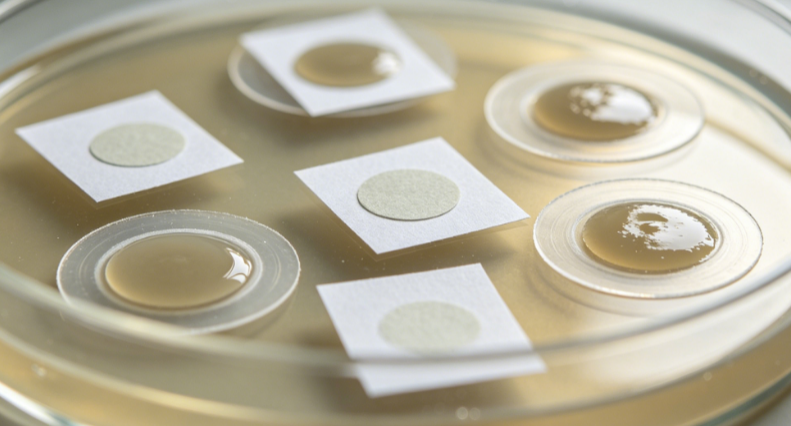
What We Measure – Quantitative MICs & Expanded Antibiotic Panel for A. xylosoxidans
We determine MIC values (µg/mL) using the reference broth microdilution method (ISO 20776‑1) in cation-adjusted Mueller-Hinton broth, with an expanded panel tailored to the known susceptibility profile of Achromobacter xylosoxidans. Our standard panel includes: piperacillin‑tazobactam, ticarcillin‑clavulanate, ceftazidime, cefepime, aztreonam, imipenem, meropenem, doripenem, gentamicin, tobramycin, amikacin, ciprofloxacin, levofloxacin, trimethoprim‑sulfamethoxazole (SXT), minocycline, tigecycline, colistin (polymyxin E), and chloramphenicol. We also test newer agents where appropriate: ceftazidime‑avibactam, ceftolozane‑tazobactam, imipenem‑relebactam, and cefiderocol (especially for difficult-to-treat isolates). The assay covers MICs from 0.008 – 256 µg/mL with an accuracy of ±1 two‑fold dilution. When requested, we perform Etest (gradient diffusion) on solid media for individual antibiotics as a rapid confirmatory method.
Deep Technical Capabilities – Resistance Phenotyping, MBL Detection & Biofilm Susceptibility
A. xylosoxidans commonly carries chromatic metallo-beta-lactamases (MBL) – especially IMP, VIM, or SIM types – rendering most beta-lactams inactive. We perform combined disk test with EDTA (or MBL Etest): a significant increase in zone diameter for meropenem or imipenem in the presence of EDTA confirms MBL production. For isolates showing resistance to carbapenems but negative for MBL, we test for OXA-type carbapenemases (OXA‑114, OXA‑258) using a modified carbapenem inactivation method (mCIM) plus PCR. We also quantify efflux pump activity using a reserpine‑ or PAβN‑containing microdilution assay for fluoroquinolones and tigecycline – a common non‑enzymatic resistance mechanism in Achromobacter. For CF respiratory isolates, we offer biofilm MIC (bMIC) determination using a Calgary Biofilm Device, as A. xylosoxidans forms robust biofilms in the CF lung. The minimum biofilm eradication concentration (MBEC) is typically 8‑ to 256‑fold higher than planktonic MIC – essential information for selecting inhaled or systemic therapy. Additionally, we perform time‑kill kinetics for antibiotic combinations (e.g., ceftazidime + ciprofloxacin, meropenem + tobramycin, SXT + amikacin) using a 24‑hour chequerboard approach, identifying synergistic regimens (FICI ≤0.5) for MDR isolates.
Advanced Molecular Profiling – Resistance Gene Detection & Whole‑Genome Sequencing
Phenotypic methods alone cannot distinguish between different MBL alleles or predict susceptibility to newer beta‑lactam/beta‑lactamase inhibitor combinations. We offer a multiplex real‑time PCR panel targeting the most prevalent acquired resistance genes in Achromobacter xylosoxidans: blaIMP (groups 1, 2, 4, 5), blaVIM (1, 2, 4, 7), blaNDM, blaOXA‑114‑like, blaOXA‑258, and the intrinsic class D beta‑lactamase OXA‑114. For complete strain characterisation, we perform whole‑genome sequencing (WGS) (Illumina NextSeq, >100× coverage) with bioinformatics analysis to identify: all resistance determinants (including point mutations in ampC, gyrA, parC), multilocus sequence type (MLST) using the Achromobacter MLST scheme, and phylogenetic relatedness for outbreak investigations. WGS results are available within 7‑10 business days.
Why Choose Our Achromobacter xylosoxidans Susceptibility Service
Specialised expertise for a difficult‑to‑treat pathogen. We have validated AST protocols for over 300 clinical and environmental A. xylosoxidans isolates, including mucoid and small‑colony variant phenotypes. Our lab maintains quality control (QC) strains – A. xylosoxidans ATCC 27061, Pseudomonas aeruginosa ATCC 27853, and E. coli ATCC 25922 – for weekly validation. Turnaround options: preliminary MICs by microdilution 18‑24 hours, phenotypic MBL confirmation 48 hours, PCR resistance gene panel 72 hours, and full WGS profile 7‑10 days. Dynamic range: 0.5 – 512 µg/mL for most antibiotics; colistin MIC tested up to 64 µg/mL. Matrix expertise: validated for pure culture isolates from sputum, blood, urine, wound swabs, and respiratory specimens (including mucoid CF sputum after homogenisation). QC rigor: each AST run includes at least three QC strains and a growth control. Results are reported with CLSI M45 (methods for non‑Enterobacteriaceae) or EUCAST clinical breakpoints where available; for agents without defined breakpoints, we provide raw MICs with interpretive guidance based on pharmacokinetic/pharmacodynamic (PK/PD) targets or expert opinion.
Detailed Deliverables – From MIC Tables to Clinical Decision Support
Your final report includes: quantitative MIC values for each antibiotic tested, categorical interpretation (S/I/R) with breakpoint reference, phenotypic resistance mechanism (MBL‑positive/negative, efflux contribution), genotypic profile (PCR results or WGS‑identified resistance genes), and, for synergy studies, a chequerboard synergy matrix with FICI values and preferred combination therapy recommendation. For biofilm‑forming isolates, we provide MBEC values and a biofilm susceptibility score (e.g., MBEC/MIC ratio). For CF or chronic infection isolates, we also report mucoid phenotype impact on MIC (tested with and without mucolytic agents like N‑acetylcysteine). All data are delivered in a signed PDF with raw instrument logs (microplate photos, Etest images, PCR gels/qPCR curves), QC records, and optional GLP‑compliant format. Our laboratory is ISO 17025:2017 accredited for antimicrobial susceptibility testing of aerobic bacteria, including non‑fermenters.
Is your Achromobacter xylosoxidans isolate resistant to all standard antibiotics – need MBL confirmation, synergy testing, or WGS-based resistance profiling for a difficult‑to‑treat infection? Contact our specialised AST core for a free consultation. We will design a custom antibiotic panel and resistance investigation tailored to your isolate origin (CF vs. hospital‑acquired) and clinical needs, with expedited processing available for urgent cases.