Reasons for choosing our testing services
ZHONGXI Testing has obtained inspection qualification certifications from multiple countries and regions worldwide. We possess a senior testing team and advanced testing methods, providing independent, impartial, and professional third-party verification services for global carbon projects.

Internationally recognized authority
Certified by multiple international standards such as CNAS, VCS, and GS, with reports universally applicable worldwide.

Global service capability
Covering 140+ countries and regions, it supports on-site detection and remote verification in multiple languages.

Professional experimental methods
Adopt standard experimental methods to ensure accurate and reliable data.
High‑Resolution PAH Degradation Efficiency Assay for Microbial Strains & Consortia
If you are searching for a robust polycyclic aromatic hydrocarbon (PAH) degradation efficiency test, you likely need to quantify how effectively your bacterial or fungal isolate – or a mixed consortium – removes specific PAHs such as naphthalene, phenanthrene, anthracene, pyrene, benzo[a]pyrene, fluorene, or fluoranthene from contaminated soil, water, sediment, or liquid culture. Standard turbidity or gravimetric measurements are insufficient – they cannot differentiate residual parent PAHs from metabolites. We provide a dedicated, multi‑parameter PAH degradation efficiency service combining high‑performance liquid chromatography (HPLC), gas chromatography‑mass spectrometry (GC‑MS), respirometry, and metabolic intermediate profiling to deliver accurate removal rates, half‑lives, and degradation pathway insights.
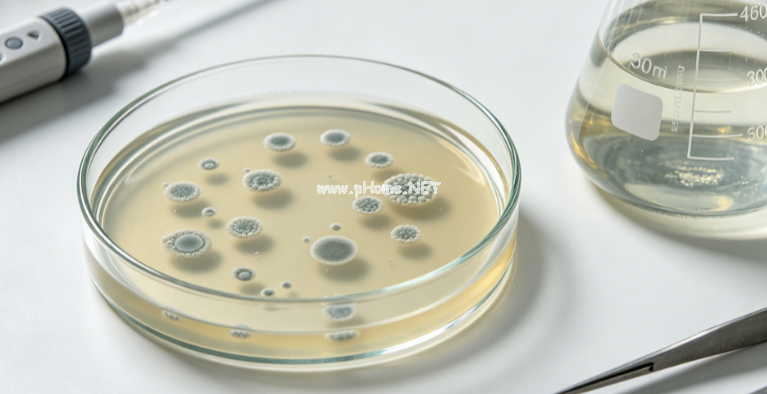
What We Measure – Removal Kinetics, Mineralisation & Metabolite Formation
We quantify degradation efficiency using three complementary approaches. Primary depletion kinetics: residual PAH concentration measured by HPLC‑UV/FLD or GC‑MS (SIM mode) at multiple time points (0, 1, 2, 3, 5, 7, 10, 14, 21, 28 days). Detection limits as low as 0.1 μg/L for water and 0.05 mg/kg for soil/sediment. We calculate degradation percentage (%) and first‑order rate constant (k, day⁻¹) with half‑life (t₁/₂). Mineralisation efficiency: using 14C‑labelled PAH (e.g., 14C‑phenanthrene), we trap evolved 14CO₂ in alkali and quantify by liquid scintillation counting – providing true mineralisation percentage (typically 20‑60% for strong degraders, versus abiotic loss). Metabolite profiling: by GC‑MS or LC‑QTOF, we identify and semi‑quantify major intermediates (e.g., 1‑hydroxy‑2‑naphthoic acid, phthalic acid, catechol, ring‑cleavage products), allowing us to determine whether degradation proceeds via dioxygenase or monooxygenase pathways and whether toxic intermediates accumulate.
Deep Technical Capabilities – High‑Throughput Microplate Assays & Co‑contaminant Effects
Routine flask‑based degradation tests are labour‑intensive and low‑throughput. We offer a 96‑well microplate PAH degradation screening platform using a fluorogenic PAH analogue or a universal dehydrogenase activity indicator (resazurin coupled with PAH consumption) to rank degradation efficiency of dozens of isolates or conditions in a single run. For environmental relevance, we test degradation under variable conditions: temperature (10 °C, 20 °C, 30 °C), pH (5.0‑8.5), salinity (0‑5% NaCl), and presence of co‑contaminants (heavy metals, other PAHs, surfactants). We also determine bioavailability enhancement using cyclodextrins or rhamnolipids and measure the effect of sorption to organic matter using aged contaminated soil microcosms. For consortia, we perform metagenomic analysis (16S or shotgun) before and after incubation to identify which taxa proliferate in response to PAH addition – linking degradation efficiency to community dynamics.
Advanced Metabolic & Enzyme Activity Correlations
To understand the mechanistic basis of high degradation efficiency, we measure key dioxygenase and dehydrogenase enzyme activities in cell‑free extracts: catechol 1,2‑dioxygenase (C12O), catechol 2,3‑dioxygenase (C23O), and naphthalene dioxygenase (NDO) using spectrophotometric assays (λ₂₆₀ for C12O, λ₃₇₅ for C23O). Activity is expressed as nmol/min/mg protein. We further correlate enzyme activity with gene abundance (qPCR of nahAc, phnAc, ndoB, pdoA) before and after PAH exposure. This combined enzymatic‑molecular approach allows us to distinguish constitutive vs. induced degradation potential and predict performance under field conditions.
Why Choose Our PAH Degradation Efficiency Service
Matrix‑specific validation. We have tested >200 PAH‑degrading strains (e.g., Mycobacterium, Sphingomonas, Pseudomonas, Rhodococcus, Cycloclasticus) in water, sediment, artificial soil, and real contaminated field samples. Turnaround: screening assay (7 days), full kinetic + metabolite profile (21‑28 days), mineralisation study (14C, 14‑21 days). Dynamic range: PAH concentration from 0.1 mg/L to 500 mg/L in liquid, and 1 mg/kg to 5000 mg/kg in soil. Detection sensitivity: GC‑MS down to 0.01 μg/L for volatile PAHs; HPLC‑FLD down to 0.05 μg/L for high molecular weight PAHs. QC rigor: each run includes abiotic controls (autoclaved or mercury‑poisoned), matrix blanks, and certified reference materials (e.g., NIST SRM 1947). Recovery of PAHs from soil is validated using surrogate standards (deuterated PAHs) with 70‑120% acceptance. We follow USEPA SW‑846 Methods 3550C, 8270E, and 8310.
Detailed Deliverables – From Degradation Curves to Field Performance Indices
Your final report includes: PAH depletion time‑course graph (residual concentration vs time), degradation efficiency (%) at specified time points, first‑order rate constant (k) and half‑life (t₁/₂) with 95% confidence intervals, mineralisation percentage (14CO₂ recovery), metabolite identification (with chemical structures if required), enzyme activity data (U/mg protein), and gene abundance changes (log fold). For comparative studies, we provide a degrader performance score based on k and mineralisation rate. All data are delivered in a signed PDF with raw chromatograms, MS spectra, and instrument logs. Optional GLP‑compliant reports available. Our laboratory holds ISO 17025:2017 accreditation for organic pollutant analysis in environmental matrices.
Is your PAH‑degrading strain not performing as expected in complex media or field soil? Need to compare degradation efficiency of multiple isolates or optimise conditions for bioremediation? Contact our environmental microbiology core for a free consultation – we will design a custom degradation assay with your target PAH(s), matrix, and endpoint requirements.