Reasons for choosing our testing services
ZHONGXI Testing has obtained inspection qualification certifications from multiple countries and regions worldwide. We possess a senior testing team and advanced testing methods, providing independent, impartial, and professional third-party verification services for global carbon projects.

Internationally recognized authority
Certified by multiple international standards such as CNAS, VCS, and GS, with reports universally applicable worldwide.

Global service capability
Covering 140+ countries and regions, it supports on-site detection and remote verification in multiple languages.

Professional experimental methods
Adopt standard experimental methods to ensure accurate and reliable data.
Direct‑Fired Absorption Chiller / Heating Unit Testing Services: Validating Performance, Safety & Emissions for Gas-Fired HVAC Equipment
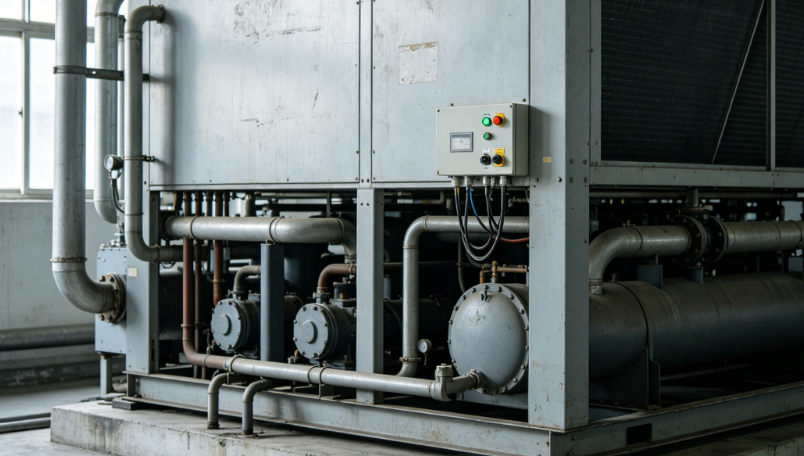
As an independent third-party testing service provider, we offer comprehensive testing and evaluation services for direct‑fired absorption chiller and heating units – commonly known as direct‑fired absorption chillers, gas‑fired lithium bromide absorption water chilling/heating packages, or simply “direct‑fired chillers”. These units use natural gas, liquefied petroleum gas (LPG), or diesel as the primary heat source to drive an absorption refrigeration cycle (lithium bromide + water) to produce chilled water, hot water, or simultaneously both. They are widely used in large‑scale commercial buildings, industrial facilities, hospitals, district energy systems, and cogeneration/trigeneration (CCHP – combined cooling, heating and power) plants. Direct‑fired absorption units combine combustion technology, pressure vessel safety, refrigeration thermodynamics, and electrical control systems, requiring rigorous performance, emission, safety, and reliability validation. Our accredited laboratory follows international standards (GB/T 18362, ANSI Z21.40.4/CSA 2.94, AHRI 560, ASHRAE 182, ISO 23550, ISO 23551, IEC 60730, GB 18361) to evaluate direct‑fired absorption units for type approval, factory inspection, and site acceptance. This article outlines our direct‑fired absorption unit testing capabilities – including scope, key test items, and standard test methods – to help manufacturers, engineering contractors, building owners, and regulatory bodies ensure efficient, safe, and compliant gas‑fired cooling/heating equipment.
1. Our Testing Scope for Direct‑Fired Absorption Chiller / Heating Units
We cover all major configurations, capacities, and test categories for direct‑fired absorption equipment:
By unit type: Double‑effect direct‑fired lithium bromide absorption water chillers (simultaneous or alternating cooling/heating); Single‑effect direct‑fired units; Hot water supply units (heating‑only); Combined cooling & heating (CCHP integrated units); Gas‑engine driven absorption chillers (by arrangement).
By heat source/fuel type: Natural gas fired; LPG (liquefied petroleum gas) fired; Diesel oil fired (light oil); Dual‑fuel capability (gas/oil switching).
By test category / test level: Type testing (whole unit performance qualification); Factory inspection / production line testing; On‑site / field acceptance testing; Routine (stability check) testing; Combustion safety testing; Emission compliance testing; Electrical control system validation.
By capacity range: Small units (net heat input ≤ 70 kW – domestic/commercial packaged); Medium units (70 kW to 2 MW – commercial/industrial); Large units (> 2 MW – industrial / district energy).
By international standard framework: Chinese national standards (GB/T 18362, GB 18361); North American ANSI/CSA (ANSI Z21.40 series, AHRI 560, ASHRAE 182); European standards (EN 15176, EN 12309 – by arrangement); International ISO standards (ISO 23550 for combustion controls).
2. Key Test Items We Perform
Our direct‑fired absorption unit testing services are organised into seven performance domains. Each domain addresses specific technical requirements for combustion, refrigeration, safety, and environmental compliance.
2.1 Performance & Capacity Testing (Cooling / Heating Output)
Cooling capacity (kW / RT) – measured by chilled water flow rate and temperature difference entering/leaving evaporator, under specified nominal operating conditions (per GB/T 18362 or AHRI 560).
Heating capacity (kW) – hot water output, measured by hot water flow and temperature rise across the absorber/condenser section.
Gas / fuel consumption (Nm³/h, L/h) – measured by calibrated gas meter or liquid fuel flow meter.
Primary energy consumption – total thermal input (fuel) and auxiliary electrical power (pumps, fans, controls).
Water system pressure loss (kPa) – chilled water side, cooling water side, hot water side.
Water flow rate (m³/h) – verification against nameplate rating.
Part‑load performance (optional) – performance at 75%, 50%, 25% of nominal load via hot water bypass or fuel modulation.
Simultaneous cooling & heating capacity (for combined units).
2.2 Combustion Performance & Efficiency
Gas / fuel combustion efficiency (%) – based on exhaust gas analysis (oxygen, carbon dioxide, carbon monoxide, nitrogen oxides) and flue gas temperature.
Flame stability assessment – visual monitoring and gas analyser for flame fluctuation (≤5% variation, per ASTM E681).
Excess air coefficient (λ) / air‑fuel ratio – calculated from O₂ and CO₂ concentration in flue gas.
Heat loss (flue gas sensible & latent) – calculated using GB/T 10180 (industrial boiler thermal performance) methodology.
Thermal output (kW) – net calorific value × fuel flow × combustion efficiency.
Ignition reliability – number of successful starts / total attempts (cold start, re‑start).
Flame detection system response – UV / IR flame sensor verification, response time (<2 seconds).
2.3 Exhaust Gas Emission & Environmental Compliance
Nitrogen oxides (NOx) concentration (mg/m³, ppm) – dry, 3% O₂ reference. Typical limits: ≤50‑100 mg/m³ (varies by regulation).
Carbon monoxide (CO) concentration (mg/m³, ppm) – indicative of incomplete combustion, ≤100 mg/m³ typical.
Oxygen (O₂) content (%) – real‑time monitoring in flue gas.
Carbon dioxide (CO₂) content (%) – for combustion completeness verification.
Sulphur dioxide (SO₂) content (mg/m³) – for fuel‑oil fired units.
Particulate matter (PM2.5, PM10) – filter gravimetric method (by arrangement).
Flue gas temperature (°C) – measured at discharge point.
Emission compliance with local regulations – GB 16297 (China), US EPA NSPS (USA), European Union 2015/2193 (medium combustion plants).
2.4 Mechanical & Structural Integrity
Hydrostatic pressure test (water side) – 1.25 × design pressure for evaporator, condenser, absorber, and generator sections (per GB/T 18362).
Leak‑tightness (vacuum integrity) – absorption cycle operates under high vacuum (<1 kPa absolute). Leak test using helium mass spectrometer (sensitivity ≤1×10⁻⁶ mbar·L/s).
Vibration amplitude and velocity – measured on main body and pipe connections during operation (ISO 10816). Typical limit: ≤0.5 mm/s velocity.
Structural integrity (no oil/coolant leaks) – visual, dye penetrant, or pressure drop monitoring.
Thermal expansion compensation verification – no binding, distortion, or stress fracture after thermal cycle.
2.5 Electrical & Control System Safety
Automatic burner control system (ABCS) – integrated control logic validation per IEC 60730‑2‑5 (automatic electrical burner control systems).
Flame safeguard / flame supervision system – flame failure response time (<1 second shut‑off).
Safety shut‑off valves (double block & bleed) – leak‑tightness per ISO 23550 / ISO 23551 series.
high temperature / high pressure protection – sensor trip verification (water temperature, refrigerant pressure).
Interlock testing – chilled water flow switch, cooling water flow switch, combustion air fan, flame detection, and emergency stop.
Over‑temperature protection (cut‑out) – generator temperature sensor, safety thermostat trip at ≤150°C.
Insulation resistance (≥100 MΩ) – per IEC 60664, GB 4706.
Grounding continuity / bonding resistance (≤0.1 Ω) – for lightning and static discharge protection.
Control panel response – signal accuracy (±0.5% of range), fault indication, data logging integrity.
2.6 Acoustic (Noise) & Environmental Comfort
Sound pressure level (dB(A)) – at 1‑3 metres distance, measured per ISO 3744 (free field). Typical limit: ≤75 dB(A) for indoor operation.
Frequency spectrum analysis (20‑20,000 Hz) – to identify dominant noise sources (burner, pumps, refrigerant flow).
Vibration noise (structure‑borne) – measured on support mountings.
Combustion rumble / pulsation – detection of low‑frequency acoustic instabilities.
2.7 Refrigerant & Absorption Solution Integrity
Lithium bromide solution concentration (%) – refractometry or titration.
pH and inhibitor content – lithium chromate or molybdate inhibitor level (corrosion protection).
Water (refrigerant) purity – conductivity and contaminant analysis.
Non‑condensable gas content (nitrogen, air) – purge unit performance and vacuum pressure decay test.
3. Standard Test Methods We Apply
All tests are performed according to internationally recognised standards. Our laboratory is ISO/IEC 17025 accredited and equipped with gas flow meters, calorimeters, emission analysers, acoustic chambers, vacuum test stands, electrical safety testers, and combustion control test rigs.
3.1 Product Performance & Capacity Standards
GB/T 18362‑2008 (China) – Direct‑fired lithium bromide absorption water chiller (heater) – specifies technical requirements, test methods, and acceptance rules (cooling/heating capacity, fuel consumption, pressure loss, electrical power).
AHRI 560 (USA) – Performance rating of water‑cooled lithium bromide absorption water‑chilling and water‑heating packages – includes double‑effect direct‑fired (gas/oil/LPG) units.
ASHRAE 182 (USA) – Method of testing absorption water‑chilling and water‑heating packages – prescribes instrumentation, stability criteria, and capacity/thermal input verification.
CSA/ANSI Z21.40.4‑23 / CSA 2.94‑2023 – Performance testing and rating of gas‑fired air conditioning and heat pump appliances (includes absorption‑cycle heat pumps).
3.2 Combustion & Gas Train Safety Standards
ISO 23550 series – Safety and control devices for gas burners and gas‑burning appliances – general requirements.
ISO 23551 series – Specific control standards (automatic shut‑off valves, pressure regulators, valve‑proving systems).
IEC 60730‑2‑5 (Automatic electrical burner control systems) – flame supervision, ignition timing, safety shut‑off logic.
ISO 10816‑1 (Mechanical vibration) – vibration severity rating on non‑rotating machinery.
ASTM E681 (Flame stability) – standard test method for concentration limits of flammability.
3.3 Emission & Environmental Standards
EPA Method 7E / 20 (USA) – NOx, CO, and O₂ measurement in stationary source flue gas.
GB 16297 (China) – Integrated emission standard for air pollutants.
ISO 6974 (Natural gas analysis) – gas composition and calorific value.
GB/T 10180 (Industrial boiler thermal performance test) – flue gas heat loss calculation methodology (referenced in GB/T 18362).
3.4 Pressure Vessel & Leak‑Tightness Standards
GB/T 18362 Annex / ASME Boiler & Pressure Vessel Code (Section VIII) – hydrostatic pressure test (1.25×design pressure).
ISO 5208 (Industrial valve leak‑tightness) – pressure decay method for gas train valves.
Helium leak detection (vacuum integrity) – sensitivity ≤1×10⁻⁶ mbar·L/s per ASME & GB vacuum vessel standards.
3.5 Electrical Safety & Control System Standards
IEC 60664 (Insulation coordination) – insulation resistance and dielectric withstand.
GB 4706 (Household electrical safety, section for commercial equipment) – grounding continuity (≤0.1 Ω).
IEC/UL 60730‑2‑5 – Automatic electrical burner control systems – sequence validation and fault simulation.
GB/T 17626 (Electromagnetic compatibility) – control precision calibration under EMC environment.
3.6 Acoustic & Vibration Standards
ISO 3744 (Sound pressure level) – engineering method for noise measurement in free field.
ISO 10816‑1 (Mechanical vibration) – velocity (mm/s) and displacement (μm) measurement for rotating and static machinery.
GB/T 6075 (Mechanical vibration measurement) – frequency range 20‑20000 Hz.
3.7 Safety Requirements (Whole Unit)
GB 18361‑2001 – Safety requirements of lithium bromide absorption water chiller (heater) – mandatory safety clauses for pressure vessels, electrical systems, combustion systems, and automatic controls.
4. Why Choose Our Third‑Party Direct‑Fired Absorption Unit Testing Services?
As an independent laboratory with specialist combustion, refrigeration, and pressure vessel engineering expertise, we provide unbiased, accurate, and regulation‑ready data. Our advantages include:
ISO/IEC 17025 accreditation – CNAS/CMA certified, with test reports accepted by GB type approval authorities, CE marking bodies, and North American certification agencies.
One‑stop integrated testing – performance (cooling/heating capacity), combustion efficiency, emissions, electrical safety, noise, and vacuum integrity – all under one roof.
Real‑fuel test capability – natural gas, LPG, diesel oil; instrumented combustion gas analysers (O₂, CO, CO₂, NOx, SO₂, PM).
High‑capacity test rigs – chilled water/cooling water flow loops, heat rejection equipment, electric load banks, and exhaust dilution systems.
Vacuum & leak detection – helium mass spectrometer leak detection down to 1×10⁻⁶ mbar·L/s (vacuum integrity for LiBr cycle).
Fast turnaround – type testing (full performance + emission + safety) in 3‑5 weeks; routine / factory acceptance tests in 1‑2 weeks.
Comprehensive reporting – includes test circuit schematics, instrument calibration certificates, raw data tables, efficiency/emission curves, acoustic spectrograms, and pass/fail conclusions aligned with procurement specifications.
Confidentiality – full protection of your unit design, control software, and supplier information.
Consultative support – our mechanical, electrical, and combustion engineers help interpret test results, diagnose combustion anomalies, and recommend control tuning for NOx reduction / fuel efficiency optimisation.
Whether you are a manufacturer seeking GB/T 18362 type approval, a building owner commissioning a new direct‑fired chiller, an EPC contractor validating combustion emissions for environmental permit, or a maintenance organisation troubleshooting vacuum leaks and burner flame instability, our direct‑fired absorption unit testing experts are ready to deliver reliable, actionable data.
Get Started with Your Direct‑Fired Absorption Unit Testing Project
Contact our team with your unit specification (fuel type, cooling/heating capacity, design operating conditions), target market/regulation (China GB, USA AHRI, EU, etc.), and required test items (performance only, full compliance, emission certification, safety). We will provide a detailed quotation, sample submission / on‑site testing guidelines, and a testing schedule. Let us help you validate that your gas‑fired absorption equipment delivers rated capacity, meets emission limits, and operates safely over its entire service life.
This article provides an overview of our direct‑fired absorption chiller / heating unit testing capabilities. For specific test methods, fuel requirements, and pricing, please request a tailored service proposal.