Reasons for choosing our testing services
ZHONGXI Testing has obtained inspection qualification certifications from multiple countries and regions worldwide. We possess a senior testing team and advanced testing methods, providing independent, impartial, and professional third-party verification services for global carbon projects.

Internationally recognized authority
Certified by multiple international standards such as CNAS, VCS, and GS, with reports universally applicable worldwide.

Global service capability
Covering 140+ countries and regions, it supports on-site detection and remote verification in multiple languages.

Professional experimental methods
Adopt standard experimental methods to ensure accurate and reliable data.
Building Damper Testing Services: Comprehensive Validation for Seismic & Wind Energy Dissipation Devices
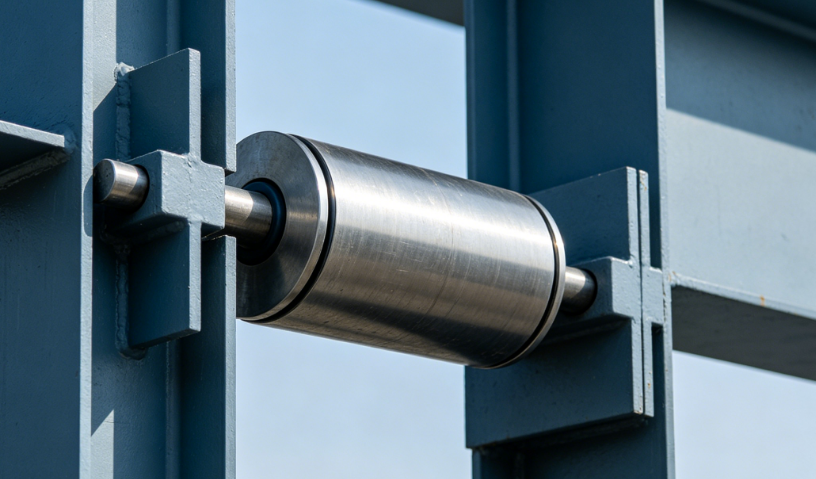
As an independent third-party testing service provider, we offer comprehensive testing for all types of building dampers – including displacement-dependent (metallic yielding) dampers, velocity-dependent (viscoelastic and viscous fluid) dampers, tuned mass dampers (TMD), and buckling-restrained braces (BRB). Building dampers (also known as seismic or energy dissipation devices) are critical structural components installed in buildings, bridges, and industrial facilities to absorb and dissipate kinetic energy from earthquakes, strong winds, moving loads, and machinery vibrations. These devices convert vibrational energy into heat or other forms of energy, thereby protecting the primary structure from damage and ensuring occupant safety. Our accredited laboratory follows international standards (JG/T 209, JGJ 297, ISO 22762, ASTM F2675, EN 15129, GB 50011) to deliver accurate, reproducible, and legally defensible test data across mechanical, durability, environmental, and performance domains. This article outlines our building damper testing capabilities – including scope, key test items, and standard test methods – to help manufacturers, structural engineers, contractors, and regulatory bodies verify product compliance and fitness-for-purpose.
1. Our Testing Scope for Building Dampers
We cover all major damper types, product configurations, and testing categories:
By damper type (energy dissipation devices): Viscoelastic dampers (VED) – composed of viscoelastic polymer layers bonded to steel plates, providing both stiffness and damping through shear deformation, effective for low-to-medium frequency vibrations; Viscous fluid dampers – piston-cylinder devices containing silicone-based fluid, providing velocity-dependent damping without added stiffness, ideal for high-frequency response; Metallic yielding dampers (shear-type, bending-type, lead extrusion dampers, U-shaped flexural plates) – exploiting plastic deformation of low-yield steel or lead to dissipate seismic energy; Buckling-restrained braces (BRB) – axial yielding devices with unbonded steel core restrained by a concrete-filled steel tube; Tuned mass dampers (TMD) – spring-mass-damper systems (pendulum, spring-supported, liquid) that absorb vibration through frequency tuning; Friction dampers (slotted-bolted or rotational) – dissipating energy through sliding friction between contact surfaces; Tuned liquid dampers (TLD) – shallow water tank systems exploiting sloshing wave energy dissipation; Magnetic / current-controlled (MR fluid) dampers – semi‑active devices with controllable damping characteristics (for smart structural control).
By damper configuration (per JG/T 209): Axial dampers (BRB, metallic yielding in tension/compression); Shear-type dampers (shear panels, viscoelastic sandwich); Bending-type dampers (flexural yielding plates); Combined dampers (hybrid systems).
By test category (material, mechanical, durability, environmental): Material property testing (steel strength grades, viscoelastic material shear modulus and damping factor, viscous fluid viscosity index and thermal stability, welding quality, coating integrity); Mechanical performance testing (yield force/capacity, maximum damping force, displacement capacity – yield displacement, ultimate displacement, elastic stiffness, post‑yield (2nd) stiffness, damping coefficient, damping exponent (velocity index), hysteresis loop area (energy dissipation capacity per cycle); Durability testing (high‑cycle fatigue resistance ≥ 10⁶ cycles, low‑cycle fatigue simulation, sealing integrity / leak rate for fluid dampers, corrosion resistance (salt spray, ozone, UV), ageing resistance (thermal/accelerated ageing, humidity), wear resistance of sliding surfaces); Environmental adaptability testing (temperature dependence – damping characteristics from -40°C to +80°C, frequency response (0.1‑5 Hz) / phase lag, humidity resistance (85‑98% RH), chemical exposure (acid fog, industrial atmosphere)); Fire resistance testing (integrity after exposure to standard fire curves per JG/T 209); TMD-specific testing (mass verification, natural frequency determination, damping ratio measurement (free decay), tuning accuracy, stiffness coefficient, long‑term stability, alignment/installation accuracy).
By regulatory framework / end‑use standard: JG/T 209-2012 (Building energy dissipation dampers – comprehensive specification); JGJ 297-2013 (Technical specification for seismic energy dissipation of buildings); GB 50011-2010 (Code for seismic design of buildings – includes provisions for damper‑equipped structures); JT/T 926-2014 (Viscous fluid dampers for bridges – shear‑type linear dampers); ASTM F2675-21 (Standard test method for fluid viscous dampers); ISO 22762 (Elastomeric seismic‑protection isolators – adaptable for viscoelastic dampers); EN 15129:2023 (Anti‑seismic devices – harmonised European standard for dampers and isolators); GB/T 38591 (Rubber isolation bearings for buildings – applicable reference).
2. Key Test Items & Measurements We Perform
Our building damper testing services are organised by damper type (displacement‑dependent versus velocity‑dependent versus TMD) and by test category. All mechanical tests are performed on universal testing machines (servo‑hydraulic, up to 2,000 kN) with dynamic actuators capable of sinusoidal, triangular, ramp, or arbitrary wave forms.
2.1 Displacement‑Dependent Dampers (Metallic Yielding & Friction Type)
Appearance & dimensions inspection – Per JG/T 209-2012, every damper undergoes mandatory visual inspection: surface condition (freedom from cracks, rust, burrs), coating uniformity and adhesion, welding seam inspection (fillet or butt welds – Grade 1/Class A according to structural welding code), dimensional verification (overall length tolerance ±3 mm, cross‑sectional effective dimensions ±2 mm).
Yield force (Fy) – the force at which the damper begins to undergo plastic deformation (for metallic yielding dampers). Test method: displacement‑controlled monotonic or incremental cyclic loading (e.g., 0.1dy, 0.3dy, 0.5dy, 0.8dy, 1.0dy, 1.2dy as per JG/T 209-2012). Yield force tolerance: ±15% of design value per specimen; average measured over all specimens: ±10%.
Yield displacement (dy) – the displacement at yield point (mm).
Maximum force (Fmax) – peak resistance force sustained by the damper before failure (kN).
Ultimate displacement (dult) – displacement at which the damper reaches its maximum allowable deformation, typically defined by physical stroke limit or 20% drop in maximum force.
Elastic stiffness (Ke) – stiffness in the pre‑yield elastic region (kN/mm).
Post‑yield / 2nd stiffness (Kp) – stiffness in the post‑yield hardening region (kN/mm).
Ductility coefficient (μ = dult / dy) – ratio indicating deformation capacity before failure.
Hysteresis loop & dissipated energy per cycle (Ed) – area enclosed by the force‑displacement loop (kN·mm); direct measure of energy dissipation efficiency.
Low‑cycle fatigue resistance – number of stable hysteresis loops sustained before failure under displacement amplitude equal to design displacement (typically ≥ 30 cycles for seismic applications).
High‑cycle fatigue resistance – number of cycles (≥ 500,000 to ≥ 1,000,000) at low strain amplitude for endurance verification (metal endurance limit).
Friction coefficient (for friction dampers) – μ = sliding friction force / normal force (dimensionless).
2.2 Velocity‑Dependent Dampers (Viscoelastic & Viscous Fluid Types)
Appearance & dimensions inspection – per JG/T 209‑2012, mandatory for every damper: steel plate flatness, weld quality (Grade 1), viscoelastic material surface integrity, length tolerance ±3 mm, cross‑section tolerance ±2 mm.
Maximum damping force (Fd,max) – the peak resistive force developed at maximum piston velocity (for viscous dampers) or at maximum shear strain (for viscoelastic dampers) under specified loading conditions. Test method: sinusoidal loading at design displacement amplitude and design frequency (e.g., 0.1‑1 Hz).
Damping coefficient (C) – defined from damping force relationship F = C·|v|α·sign(v) (for viscous dampers). Determined by regression of force‑velocity data.
Damping exponent (α) – velocity exponent (typically between 0.3 and 1.5, per ASTM F2675). α = 1.0 gives linear (Newtonian) fluid behaviour; α < 1.0 gives shear‑thinning behaviour.
Viscoelastic material properties – measured on standard test coupons: apparent shear modulus G' (MPa), loss factor β (dimensionless), maximum apparent shear strain limit εmax (%). Values per JG/T 209‑2012.
Hysteresis loop (force‑displacement) – full‑cycle hysteresis must be smooth, elliptical (viscoelastic) or rectangular‑rounded (viscous fluid).
Limit displacement (dlim) – maximum piston stroke / design displacement (mm).
Sealing performance (for fluid viscous dampers) – leak rate measured at 1.5 times operating pressure (≤ 0.1 mL/h) – per ISO 22762‑3, helium leak detection down to 1×10⁻⁶ mbar·L/s.
Fluid properties – kinematic viscosity (cSt) measured at −20°C, +20°C, +70°C to verify viscosity index (VI ≥ 150); bubble content (≤ 0.1% per ISO 2941); chemical compatibility with seals (O‑ring swelling ≤ 5%).
Compressible volume / spring effect – static stiffness due to fluid compressibility (kN/mm).
2.3 Tuned Mass Damper (TMD) / Tuned Sloshing Damper (TLD)
Mass verification – mass of the movable block (kg) measured by weighing (±2% tolerance).
Natural frequency (f0) – fundamental resonant frequency (Hz) determined by free‑decay or forced‑response methods. Required accuracy: within ±2% of design tuning frequency (critical for structural protection).
Damping ratio (ζ) – dimensionless ratio (typically 2‑15% for passive TMD). Measured via logarithmic decrement from free‑decay record after impact or shaker excitation.
Damping coefficient / frictional resistance – of guides and rolling/sliding interfaces (N·s/m).
Stroke / travel displacement – amplitude of mass motion relative to housing (mm).
Tuning accuracy – percentage deviation of measured frequency from design value (≤ ±2% typical for building TMDs).
Fatigue endurance – of suspension springs, guides, and damper elements under cyclic loading (≥ 500,000 to ≥ 1,000,000 cycles).
Dynamic stiffness (Kd) – of the resilient element (N/mm).
Vibration attenuation efficiency – percentage reduction in primary structure response amplitude (%).
Locking and alignment of motion mechanism – any friction or off‑centre loading quantified.
2.4 Buckling‑Restrained Brace (BRB) – Steel Core Yielding Device
Steel core material – tensile properties (yield strength, tensile strength, elongation per ASTM A36 / GB/T 1591), chemical composition (C, Mn, Si, P, S).
Appearance and weld integrity – full‑penetration weld inspection (UT/MT), coating thickness ≥ 80 μm.
Yield force (Fy) – measured on short coupon from core steel (kN). Tolerance: ±15%.
Maximum compressive force (Fmax,c) – and maximum tensile force (Fmax,t).
Compression strength adjustment factor (β = Fmax,c / Fmax,t) – ≤ 1.5 per JG/T 209.
Fatigue performance – number of fully reversed cycles at 1.0×design displacement (typically ≥ 60 cycles).
2.5 Durability & Environmental Performance (All Damper Types)
Fatigue performance – cyclic loading endurance as per JG/T 209: ≥ 1×10⁶ cycles for viscoelastic and viscous dampers (low‑amplitude service‑level conditions). Alternatively, for metallic yielding dampers: number of stable hysteresis loops under design displacement (≥ 30‑100 cycles).
Thermal ageing – viscoelastic polymer ageing in an oven at 70°C ± 2°C for 100‑1,000 hours, followed by mechanical retest. Maximum allowable property change: ≤ 10‑15%.
Salt spray corrosion resistance – ASTM B117 / ISO 9227: 500‑1,000 hours exposure (5% NaCl at 35°C). Acceptable corrosion area ≤ 1% (no structural deterioration).
Ozone resistance – exposure to 50 pphm ozone at 40°C for 48 hours, visual inspection for cracking (per ISO 1431).
Temperature dependence – dynamic tests at −40°C, +23°C, +80°C. Variation in damping force / modulus (≤ 15%‑20% for properly formulated materials).
Frequency dependence – tests at 0.1 Hz, 0.5 Hz, 1.0 Hz, 2.0 Hz; degree of dependency measured (for velocity‑dependent devices).
Accelerated weathering (UV / xenon arc) – for dampers with exposed elastomeric seals and coatings (simulates outdoor UV radiation).
Humidity / condensation exposure – at 40‑50°C, 95‑98% RH for up to 1,000 hours – validate no delamination of seals or coatings.
Fire resistance – per JG/T 209‑2012, dampers for essential buildings (hospitals, emergency control centres) must be tested to standard fire curve (e.g., ISO 834) for integrity / insulation; rating: R 60, R 90, etc.
2.6 TMD‑Specific & Additional Dynamic Performance Verification
Output force calibration – direct measurement of force from damping element vs. control input (for active/semi‑active systems).
Frequency response – amplitude ratio plotted vs. input frequency (0.1‑10 Hz).
Shaking table simulation – of earthquake record or wind gust sequence on full‑scale damper assembly.
2.7 Additional Structural & Component Tests
Weld inspection (NDT) – visual, magnetic particle (MT) for surface defects, ultrasonic (UT) for internal voids – per AWS D1.1/D1.5 or ISO 17635.
Coating thickness (DFT) – magnetic gauge (ASTM D7091) at multiple points: minimum thickness 80‑120 μm for heavy‑duty anti‑corrosion systems.
Hardness – of steel end plates, pistons, and guides (Brinell HB, Rockwell HRC).
Proof load test (static overload) – 150% of nominal design force, hold for 5 minutes, no permanent deformation > 0.5% dimension.
Ultimate load test (destructive) – ramp until failure to verify safety margin.
3. Standard Test Methods We Apply
All tests are performed according to internationally recognised standards. Our laboratory is ISO/IEC 17025 accredited and equipped with high‑capacity servo‑hydraulic dynamic test systems (up to 2,000 kN, ±500 mm stroke), universal testing machines (50‑2,000 kN), dynamic mechanical analysers (DMA), climate chambers (−60°C to +150°C), salt spray cabinets, helium mass spectrometers, and high‑speed data acquisition (10 kHz).
3.1 Primary Standards (JG/T 209 & JGJ 297)
JG/T 209‑2012 (Building energy dissipation dampers) – primary comprehensive specification covering classification, requirements, test methods, inspection rules, packaging, transportation, and storage for all damper types – mandatory for Chinese market.
JGJ 297‑2013 (Technical specification for seismic energy dissipation of buildings) – engineering design, installation, and acceptance guide for damped structures.
GB 50011‑2010 (Code for seismic design of buildings) – design force reduction and performance factors for damper‑equipped buildings.
3.2 Additional Standards
ASTM F2675‑21 (Fluid viscous damper test method) – covers static performance, dynamic sinusoidal characterisation (damping coefficient, velocity exponent), endurance (fatigue), environmental conditioning, and sealing performance.
EN 15129:2023 (Anti‑seismic devices) – harmonised European standard covering design, testing, and conformity assessment of all anti‑seismic devices including dampers.
ISO 22762‑3 (Elastomeric seismic‑protection isolators – viscosity test for damper materials) – applicable to viscoelastic material shear modulus and damping factor determination.
JT/T 926‑2014 (Viscous fluid dampers for bridges) – China transport industry standard for bridge hydraulic dampers.
ASTM D5453 (Viscosity Index and thermal stability of damper silicone oils) – applicable for viscous damping fluid property verification.
ISO 14692 (Petroleum and natural gas industries – flexible pipe – endurance tests) – adaptable for damper sealing endurance.
3.3 Supplementary Material & Weld Standards
GB/T 700 (Carbon structural steels – damper steel plates).
GB/T 1591 (Low alloy high strength structural steels – for BRB core).
ISO 17635 (Visual inspection of welds).
ISO 17640 (Ultrasonic testing of butt welds).
ASTM E190/ E290 (Guided bend testing of welds).
3.4 Environmental & Durability Standards
ASTM B117 / ISO 9227 (Salt spray).
ISO 1431 / ASTM D1149 (Ozone resistance).
ISO 4892‑2 (Xenon arc UV weathering).
ISO 188 (Rubber / elastomer accelerated ageing).
ISO 23952 (Accelerated life test – fluid dampers).
4. Why Choose Our Third‑Party Building Damper Testing Services?
As an independent laboratory with structural engineering and materials science expertise, we provide unbiased, accurate, and legally defensible data for damper qualification, acceptance, and forensic investigation. Our advantages include:
ISO/IEC 17025 accreditation – CNAS/CMA certified, with active participation in inter‑laboratory proficiency testing (JG/T 209 round robins, ASTM F2675).
High‑capacity dynamic test systems – servo‑hydraulic actuators (up to 2,000 kN force, ±500 mm stroke, 0.1‑10 Hz), capable of testing full‑scale building dampers up to 3 metres length, plus TMD arrays.
Complete test portfolio – displacement‑dependent, velocity‑dependent, TMD, BRB – all under one roof.
Climatic conditioning – large‑capacity environmental chambers (‑60°C to +150°C, 10‑98% RH), salt spray chambers, UV/xenon weathering chambers.
Fast turnaround – mechanical acceptance test (≤ 3 days), full type test programme (≈ 4‑6 weeks).
Comprehensive reporting – includes hysteresis loops (force‑displacement), stress‑strain data, damping coefficient vs. velocity graphs, Weibull fatigue analysis (if required), corrosion micrographs, and clear pass/fail conclusions (per JG/T 209, GB 50011).
Confidentiality – full protection of damper geometry, core material composition, and proprietary fluid formulations.
Consultative support – our structural engineers help interpret fatigue failures, quantify hysteretic energy dissipation, advise on damping coefficient tuning, and support in‑service performance monitoring.
Whether you need type testing for a new metallic yielding damper (per JG/T 209), qualification of a viscous fluid damper to ASTM F2675, acceptance testing for a batch of BRBs, or full TMD characterisation (natural frequency, damping ratio) for a super‑tall building, our building damper testing experts are ready to deliver reliable, actionable results.
Get Started with Your Building Damper Testing Project
Contact our team with your damper type (metallic yielding, viscous fluid, viscoelastic, TMD, BRB), design specifications (Fy, dult, C, α, force capability), required standard (JG/T 209, ASTM F2675, EN 15129, or custom), and any special test conditions (temperature, low‑cycle/high‑cycle fatigue profile). We will provide a detailed quotation, sample submission guidelines (minimum quantity: 3‑6 specimens per JG/T 209 for mechanical repeatability; mandatory 100% visual inspection), and a testing schedule. Let us help you ensure that your energy dissipation devices will protect structures reliably for their intended design life.
This article provides an overview of our building damper testing capabilities. For specific test methods, sample quantity, and pricing, please request a tailored service proposal.