Reasons for choosing our testing services
ZHONGXI Testing has obtained inspection qualification certifications from multiple countries and regions worldwide. We possess a senior testing team and advanced testing methods, providing independent, impartial, and professional third-party verification services for global carbon projects.

Internationally recognized authority
Certified by multiple international standards such as CNAS, VCS, and GS, with reports universally applicable worldwide.

Global service capability
Covering 140+ countries and regions, it supports on-site detection and remote verification in multiple languages.

Professional experimental methods
Adopt standard experimental methods to ensure accurate and reliable data.
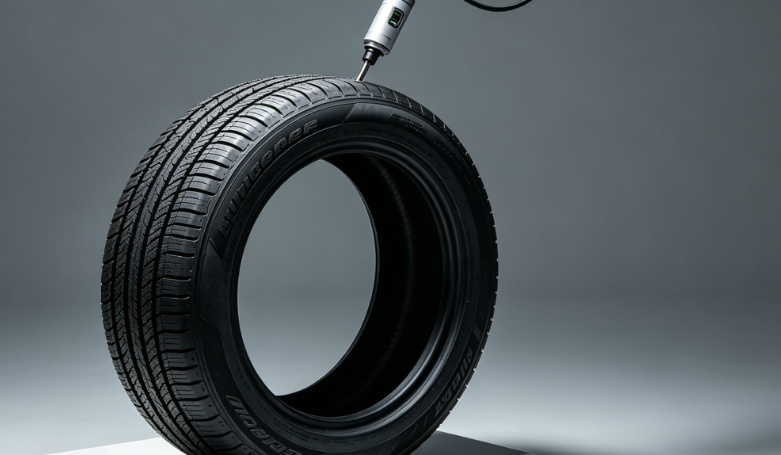
rubber tyre (Tire) Testing Services: Comprehensive Performance & Safety Validation
As an independent third-party testing service provider, we offer a full range of testing services for rubber tyres – including passenger car tyres, truck/bus tyres, motorcycle tyres, agricultural tyres, off‑the‑road (OTR) tyres, aircraft tyres, and industrial tyres. Tyre performance directly affects vehicle safety, fuel efficiency, handling, durability, and environmental impact. Our accredited laboratory follows international standards (ISO, ASTM, ECE, DOT, SAE, GB/T) using state‑of‑the‑art tyre test equipment: dynamic drum testers, road simulators, rolling resistance benches, wet/dry braking test tracks, endurance test rigs, high‑speed machines, and non‑destructive inspection systems (X‑ray, shearography). This article outlines our tyre testing capabilities – including scope, key test items, and standard test methods – to help tyre manufacturers, vehicle OEMs, importers, and regulatory bodies verify product compliance and performance.
1. Our Testing Scope for rubber tyres
We cover all common tyre types and test categories:
By tyre type: Passenger car tyres (summer, winter, all‑season, run‑flat); Light truck tyres; Truck/bus radial tyres; Motorcycle/scooter tyres; Agricultural/implement tyres; Industrial tyres (forklift, skid steer); Off‑the‑road (OTR) tyres (mining, construction); Aircraft tyres; Racing tyres; Retreaded tyres.
By test category: Endurance & durability (step‑load, long‑distance); High‑speed performance (speed index verification); Rolling resistance (fuel efficiency – label grading); Wet grip / braking; Dry handling; Tread wear (abrasion, road wear); Strength (plunger energy, bead unseating); Dynamic balance & uniformity; High‑speed endurance; Heat generation & growth; Tread and sidewall physical properties (tensile, tear, hardness, adhesion); Ageing (oxygen, ozone, thermal); Tyre footprint & pressure distribution; Non‑destructive inspection (X‑ray, shearography, holography).
By regulatory framework: UN ECE Regulations (R30, R54, R75, R117, R108, R109, etc.); DOT (FMVSS 109, 119, 139, 571.110); EU tyre labelling (1222/2009, 2020/740); China CCC (GB/T 2978, GB 9743, 9744); ISO (ISO 10191, 16992, 18164, 28580, 30061).
2. Key Test Items & Measurements We Perform
Our tyre testing services are grouped into seven performance domains. Each domain simulates real‑world operating conditions and assesses safety, durability, efficiency, and handling characteristics.
2.1 Endurance & Durability (Step‑Load & Long‑Distance)
Step‑Load endurance – tyre is run against a 1.7‑2.0 m diameter test drum with increasing load steps per ECE R30, R54, or FMVSS 139. Measures time to failure, temperature rise, and visual condition after each step.
High‑load endurance – fixed load at high speed for extended periods.
Distance / road‑simulated endurance – long‑duration drum or road wheel test (e.g., 34 hours, 72 hours).
Failed criteria – tread separation, belt edge separation, bead failure, shoulder cracking, or pressure loss.
2.2 High‑Speed Performance (Speed Index Verification)
High‑speed step test – tyre runs on drum at increasing speed stages (e.g., from 120 km/h to rated speed + 40 km/h) per ECE R30, FMVSS 139. Temperature measurement at the end of each stage.
Maximum speed capability – verification against tyre speed symbol (S, T, H, V, W, Y, etc.).
Thermal mapping – infrared thermography of tread, shoulder, and sidewall.
2.3 Rolling Resistance (Fuel Efficiency – Tyre Labelling)
Rolling resistance coefficient (RRC) – measured on a calibrated drum or flat‑track machine (single‑or multi‑point method). Expressed in N/kN or kg/t. Used for EU/China tyre label grading (A‑G).
Temperature adjustment – corrected to standard reference temperature (25°C).
Standards: ISO 18164, ISO 28580, ECE R117, SAE J1269, GB/T 29040.
Instrumentation – torque transducer at drum or axle, or coast‑down method (on road).
2.4 Wet Grip / Braking (Safety & Label Grade)
Wet braking distance – on a wetted asphalt or concrete test track with controlled water depth (0.5‑1.5 mm) and tyre pressure. Vehicle or trailer equipped with test tyres, braking from 80 km/h to 20 km/h per ISO 23671, ECE R117.
Peak braking coefficient (PBC) – for passenger car and truck tyres.
Wet grip index – expressed as a grade (A‑G) for EU label.
Alternative drum‑based wet grip correlation (for R&D).
2.5 Tread Wear / Abrasion Resistance
Drum abrasion (laboratory) – ISO 4649 (rotary drum with abrasive sheet) – not directly equivalent to road wear but used for material screening.
Road wear test (on‑vehicle) – controlled route with periodic tread depth measurements (mass loss or depth loss per 1000 km).
Uniformity of wear – rib wear, shoulder wear, centre wear, erratic wear patterns.
Wear rate projection (for labelling).
2.6 Strength & Mechanical Integrity
Plunger energy (tread strength) – steel plunger (19 mm or 38 mm diameter) pressed into tread until break or puncture. Measures force and energy at break per ECE R30, FMVSS 109/119.
Bead unseating resistance – force required to unseat the tyre bead from the rim under lateral load (FMVSS 139, ECE R30).
Bead tensile strength – pull‑out force of bead wires from rubber.
Tyre section integrity – after cut growth and fatigue tests.
2.7 Dynamic Uniformity & Balance
Radial force variation (RFV) – measured on a uniformity machine (rotating tyre against loaded drum). Measures peak‑to‑peak and harmonic content.
Lateral force variation (LFV).
Conicity and plysteer – for vehicle pull diagnosis.
Dynamic balance (static and couple imbalance) – grams or gram‑centimeters at specified speed.
Standards: ISO 28580, SAE J332, ECE R30.
2.8 Non‑Destructive Inspection (NDT)
X‑ray inspection – detects internal belt/splice placement, broken wires, porosity, separation, air inclusions, and foreign objects.
Shearography (laser shear) – detects hidden belt edge separation, sidewall ply separation, and tread‑to‑belt delamination (especially for retreaded tyres).
Holographic inspection – less common, but available.
Automated NDT lines (for production quality control).
2.9 Physical & Chemical Testing of Tyre Components
tensile strength & elongation of tread and sidewall compound – ASTM D412, ISO 37.
Tear strength – ASTM D624.
Hardness (Shore A) – ASTM D2240, ISO 7619.
Rubber‑to‑cord adhesion – H‑pull test ASTM D4776, ISO 2856.
Heat build‑up (Goodrich flexometer) – ASTM D623.
Ozone cracking resistance – ASTM D1149 (dynamic), ISO 1431.
Oxygen / thermal ageing (accelerated) – ASTM D573, ISO 188.
Carbon black dispersion and filler distribution (micrograph).
2.10 Additional Specialised Tests
Cornering stiffness & slip angle measurement – on flat‑belt tyre test rig (MTS, TIRF).
Footprint pressure distribution – pressure pad or Fuji film.
Noise / pass‑by noise (externally generated) – per ECE R117, ISO 13325.
Residual air pressure loss (leak rate) – over 24‑48 hours.
Low pressure performance (run‑flat / extended mobility) – simulated deflated running.
3. Standard Test Methods We Apply
All tests are performed according to international regulations and voluntary standards. Our laboratory is ISO/IEC 17025 accredited and equipped with dynamic drum testers (up to 3.0 m diameter, speed up to 300 km/h), rolling resistance benches, uniformity machines, X‑ray systems, shearography, environmental chambers, and full‑scale vehicle test tracks (for braking and handling).
3.1 Endurance, High‑Speed & Strength Standards
ECE R30 (Uniform provisions for pneumatic tyres for passenger cars).
ECE R54 (Commercial vehicle tyres).
ECE R75 (Motorcycle tyres).
DOT FMVSS 109 (New pneumatic tyres – passenger car).
DOT FMVSS 119 (New pneumatic tyres – other than passenger cars).
DOT FMVSS 139 (New radial tyres for light vehicles).
ISO 10191 (Passenger car tyres – endurance and speed).
ISO 16992 (Truck tyres – endurance).
GB/T 2978 (China – Passenger car tyre specifications).
3.2 Rolling Resistance Standards
ISO 18164 (Rolling resistance – drum method).
ISO 28580 (Rolling resistance – measurement methods).
ECE R117 (Rolling resistance, wet grip, noise).
SAE J1269 (Rolling resistance measurement).
GB/T 29040 (Rolling resistance – laboratory drum).
3.3 Wet Grip & Braking Standards
ISO 23671 (Passenger car tyres – wet grip measurement).
ECE R117 (Annex 5 – wet grip index).
ASTM F408 (Braking traction).
SAE J2521 (Wet braking performance).
3.4 Uniformity & Balance Standards
ISO 28580 (Uniformity measurement).
SAE J332 (Tyre uniformity).
ECE R30 (Annex – uniformity requirements).
3.5 NDT Standards
ASTM E2873 (Shearography for tyres).
ISO 16727 (X‑ray inspection of tyres).
3.6 Tyre Component & Rubber Standards
ASTM D412 (Tensile).
ASTM D624 (Tear).
ASTM D2240 (Hardness).
ASTM D1149 (Ozone).
ISO 37 (Rubber tensile).
ISO 188 (Heat ageing).
ISO 1431 (Ozone cracking).
4. Why Choose Our Third‑Party Tyre Testing Services?
As an independent laboratory, we provide unbiased, accurate, and legally defensible tyre test data. Our advantages include:
ISO/IEC 17025 accreditation – CNAS/CMA certified, with regular proficiency testing (e.g., rolling resistance round robins, ECE R30 interlaboratory comparisons).
Dedicated tyre test centre – multiple drums (1.7 m, 2.0 m, 2.5 m, 3.0 m diameter), flat‑belt tyre test machine, uniformity machine, X‑ray bay, and shearography.
Full‑scale vehicle track – wet braking, handling, noise, and wear testing on real road surfaces (asphalt, concrete).
Climatic chambers – temperature/humidity conditioning for test tyres prior to testing.
Fast turnaround – standard endurance, high‑speed, rolling resistance, and uniformity tests within 1‑2 weeks; full certification programmes in 3‑4 weeks.
Comprehensive reporting – includes test curves (temperature, speed, load), images (X‑ray, shearography, footprint), raw data tables, and clear pass/fail against regulatory limits.
Confidentiality – full protection of your tyre design, tread pattern, and compound formulations.
Consultative support – our tyre engineers help select appropriate test matrix, interpret failures, and advise on design modifications.
Whether you need ECE R30/54 type approval, DOT certification, EU tyre labelling, R&D validation of a new tread compound, or production quality control for uniformity/balance, our rubber tyre testing experts are ready to deliver reliable, globally accepted results.
Get Started with Your rubber tyre Testing Project
Contact our team with your tyre size, category (passenger, truck, motorcycle, etc.), target regulations (ECE, DOT, CCC, etc.), and required test items (endurance, high‑speed, rolling resistance, wet grip, X‑ray, etc.). We will provide a detailed quotation, sample submission guidelines (tyres must be new and properly cured), and a testing schedule. Let us help you ensure that your tyres are safe, durable, efficient, and compliant.
This article provides an overview of our rubber tyre testing capabilities. For specific test methods, sample quantity, and pricing, please request a tailored service proposal.