Reasons for choosing our testing services
ZHONGXI Testing has obtained inspection qualification certifications from multiple countries and regions worldwide. We possess a senior testing team and advanced testing methods, providing independent, impartial, and professional third-party verification services for global carbon projects.
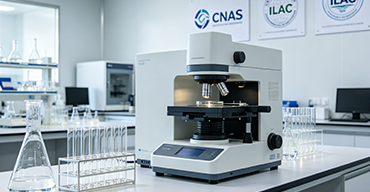
Internationally recognized authority
Certified by multiple international standards such as CNAS, VCS, and GS, with reports universally applicable worldwide.

Global service capability
Covering 140+ countries and regions, it supports on-site detection and remote verification in multiple languages.

Professional experimental methods
Adopt standard experimental methods to ensure accurate and reliable data.
cement Testing Services: Quality Assurance for the World’s Most Essential Construction Material
As an independent third-party testing service provider, we offer comprehensive cement testing for all types of hydraulic cements – including ordinary Portland cement (OPC), Portland pozzolana cement (PPC), Portland blast‑furnace slag cement (PSC), white cement, sulfate‑resisting cement, low‑heat cement, oil‑well cement, and masonry cement. cement is the primary binder in concrete and mortar; its quality directly impacts the strength, durability, and workability of construction projects. Our accredited laboratory follows international standards (ASTM C150, C109, C187, C191; ISO 679; EN 196; GB/T 176, GB/T 1346, GB/T 8074) to deliver accurate, reproducible, and legally defensible test data. This article outlines our cement testing capabilities – including scope, key test items, and standard test methods – to help cement manufacturers, ready‑mix producers, construction companies, and quality assurance teams verify cement compliance and performance.
1. Our Testing Scope for cement
We cover all common cement types and test categories:
By cement type: Ordinary Portland cement (Type I, II, III, IV, V per ASTM); Portland pozzolana cement (fly ash, silica fume); Portland slag cement; White cement; Sulfate‑resisting cement; Low‑heat cement; Oil‑well cement (API classes A‑H); Masonry cement; Blended hydraulic cements (ASTM C595, C1157).
By test category: Chemical composition (major oxides, loss on ignition, insoluble residue); Physical properties (fineness, setting time, soundness); Mechanical properties (compressive strength of mortar cubes, flexural strength); Heat of hydration; False set and normal consistency; Specific gravity; Air content of mortar; Compatibility with admixtures.
By industry standard / regulation: ASTM C150 (specification for Portland cement), C109 (compressive strength), C187 (normal consistency), C191 (setting time), C204 (fineness – air permeability), C151 (autoclave expansion); ISO 679 (cement strength – mortar prism method); EN 196 (European cement test methods); GB/T 176 (chemical analysis), GB/T 1346 (setting time and soundness).
2. Key Test Items & Measurements We Perform
Our cement testing services are grouped into four domains: chemical composition, physical properties, mechanical properties, and specialised tests.
2.1 Chemical Composition Analysis
Major oxides (SiO₂, Al₂O₃, Fe₂O₃, CaO, MgO, SO₃, Na₂O, K₂O) – using X‑ray fluorescence (XRF) or classical wet chemistry. The oxide composition is used to calculate potential phase content (C₃S, C₂S, C₃A, C₄AF) via Bogue equations. Limits per ASTM C150: MgO ≤ 6.0%, SO₃ ≤ 3.0‑4.5% (depends on type), loss on ignition (LOI) ≤ 3.0%.
Loss on ignition (LOI) – measures carbonates, organic matter, and hydration products. High LOI can indicate adulteration or carbonation.
Insoluble residue – fraction of cement not dissolved in acid; indicates adulteration by non‑hydraulic materials (≤ 0.75% for normal Portland).
Chloride content – measured by ion chromatography or titration (ASTM C114). Limit for reinforced concrete: ≤ 0.10% by mass.
Sulfur trioxide (SO₃) – controls false set and durability; range typically 2.0‑4.0%.
Free lime (CaO) – uncombined calcium oxide; can cause unsoundness if excessive (ASTM C114 – ethylene glycol method).
Alkali content (Na₂Oₑq = Na₂O + 0.658 K₂O) – controls alkali‑silica reaction (ASR) risk; low‑alkali cement ≤ 0.60%.
Carbon dioxide (CO₂) – for calcined materials.
Standards: ASTM C114, ISO 29581, GB/T 176.
2.2 Physical Properties of cement
Fineness (specific surface area) – measured by Blaine air permeability apparatus (ASTM C204, ISO 4037). Typical Blaine values: 250‑350 m²/kg for ordinary cement. Finer cement hydrates faster and gives higher early strength but may cause cracking due to increased heat of hydration and water demand.
Particle size distribution (laser diffraction) – optional, for advanced characterisation.
Normal consistency (water required for standard paste) – ASTM C187. The percentage of water required to achieve a specified penetration (10 mm ± 1 mm) using a Vicat plunger. Typical range: 24‑30%.
Setting time (initial and final) – ASTM C191, ISO 9597, EN 196‑3. Using Vicat apparatus. Initial set: time when a 1 mm needle penetrates 25 mm into paste; final set: when a 5 mm needle makes no impression. Typical values: initial set 45‑120 min, final set 120‑240 min.
Soundness (autoclave expansion) – ASTM C151, EN 196‑3 (Le Chatelier). Measures volume stability. For autoclave: expansion ≤ 0.80% (ASTM C150). For Le Chatelier: expansion ≤ 10 mm. Excessive expansion indicates unsoundness due to free lime or magnesia.
False set (initial stiffening without heat generation) – ASTM C451 – measured by consistency and final set after remixing.
Heat of hydration – ASTM C186 (solution calorimeter) or isothermal calorimetry. Important for mass concrete to control thermal cracking. Low‑heat cement has ≤ 70 cal/g at 7 days.
Specific gravity (density) – ASTM C188, Le Chatelier flask method. Typical value: 3.10‑3.15 g/cm³.
Air content of mortar – ASTM C185 – measures entrained air in cement mortar; important for freeze‑thaw durability of concrete.
2.3 Mechanical Properties of cement Mortar
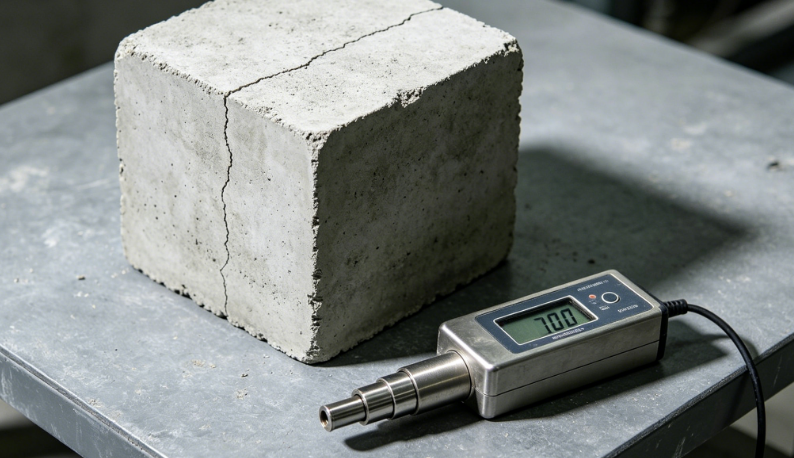
compressive strength of mortar cubes (ASTM C109) – mix proportion: 1 part cement, 2.75 parts graded sand, water adjusted to achieve standard flow (110 ± 5%). 50 mm cubes are cast, cured in moist conditions, and tested at 1, 3, 7, 28 days (and sometimes 3, 6, 12 months). Required strength per ASTM C150 Type I: 28‑day ≥ 28 MPa (4000 psi). Mortar prisms per ISO 679 (40×40×160 mm) are also available.
Flexural strength of mortar prisms (ISO 679, EN 196‑1) – three‑point bending of 40×40×160 mm prisms, then the two halves are used for compressive strength. Flexural strength typical 5‑8 MPa.
Development of strength over time – provides heat of hydration and setting characteristics.
Tensile bond strength (to concrete or masonry units) – by arrangement.
2.4 Specialised cement Tests
Sulfate resistance (ASTM C1012) – expansion of mortar bars immersed in 5% sodium sulfate solution for up to 12 months. Sulfate‑resisting cement (Type V) has expansion ≤ 0.10% at 6 months.
Low‑heat cement – heat of hydration (ASTM C186) and compressive strength development measured.
Oil‑well cement testing (API Specification 10A) – thickening time (pressurized consistometer), fluid loss, free water, rheology, compressive strength at specified temperatures and pressures.
White cement – whiteness index (spectrophotometer), low iron content (Fe₂O₃ ≤ 0.5%).
Masonry cement – water retention (ASTM C91), air content, setting time, and bond strength.
Compatibility with admixtures – Marsh cone test for superplasticizer saturation point; setting time and strength with admixtures.
3. Standard Test Methods We Apply
All tests are performed according to internationally recognised standards. Our laboratory is ISO/IEC 17025 accredited and equipped with XRF spectrometers, Blaine apparatus, Vicat apparatus, autoclave, compression machines, and mortar mixers.
3.1 Chemical Analysis Standards
ASTM C114 (Standard test methods for chemical analysis of hydraulic cement).
ISO 29581 (Chemical analysis of cement).
GB/T 176 (Chemical analysis of cement – China).
3.2 Physical Properties Standards
ASTM C187 (Normal consistency).
ASTM C191 (Setting time).
ASTM C151 (Autoclave expansion).
ASTM C204 (Fineness – Blaine).
ASTM C188 (Specific gravity).
ASTM C185 (Air content of mortar).
ASTM C451 (False set).
ASTM C186 (Heat of hydration – solution calorimeter).
EN 196‑3 (Setting time and soundness – European).
ISO 9597 (Setting time).
3.3 Mechanical Properties Standards
ASTM C109 (compressive strength of mortar cubes).
ISO 679 (cement strength – mortar prisms).
EN 196‑1 (Compressive and flexural strength).
GB/T 17671 (cement strength – Chinese standard).
3.4 Specialised cement Standards
ASTM C1012 (Sulfate resistance).
API 10A (Oil‑well cement).
ASTM C91 (Masonry cement).
4. Why Choose Our Third‑Party cement Testing Services?
As an independent laboratory, we provide unbiased, accurate, and legally defensible data. Our advantages include:
ISO/IEC 17025 accreditation – CNAS/CMA certified, with regular proficiency testing (e.g., ASTM C109, C114, C191).
Complete test portfolio – chemical, physical, mechanical, and specialised cement tests – all under one roof.
Fast turnaround – typical chemical and physical tests within 3‑5 business days; compressive strength up to 28 days (scheduled in advance).
Detailed reporting – includes oxide composition, Bogue potential phase calculation, strength curves, setting time graphs, and clear pass/fail against specification limits (ASTM, EN, GB).
Confidentiality – full protection of your cement formulation, brand, and production data.
Consultative support – our cement technologists help interpret setting time abnormalities, low strength, or unsoundness, and advise on clinker or gypsum adjustments.
Whether you need to certify a new cement source, verify quality of incoming cement for concrete production, or troubleshoot a performance issue (e.g., false set, low strength, unsoundness), our cement testing experts are ready to deliver reliable, actionable results.
Get Started with Your cement Testing Project
Contact our team with your cement type and target specification (ASTM C150, EN 197, GB 175, etc.), and required test items (chemical, physical, strength). We will provide a detailed quotation, sample submission guidelines (minimum quantity 2‑5 kg, sealed container), and a testing schedule. Let us help you ensure that your cement meets all quality requirements for safe, durable concrete.
This article provides an overview of our cement testing capabilities. For specific test methods, sample quantity, and pricing, please request a tailored service proposal.