Reasons for choosing our testing services
ZHONGXI Testing has obtained inspection qualification certifications from multiple countries and regions worldwide. We possess a senior testing team and advanced testing methods, providing independent, impartial, and professional third-party verification services for global carbon projects.

Internationally recognized authority
Certified by multiple international standards such as CNAS, VCS, and GS, with reports universally applicable worldwide.

Global service capability
Covering 140+ countries and regions, it supports on-site detection and remote verification in multiple languages.

Professional experimental methods
Adopt standard experimental methods to ensure accurate and reliable data.
High‑Precision Thermogravimetric Analysis (TGA) – Thermal Stability, Composition, and Decomposition Kinetics
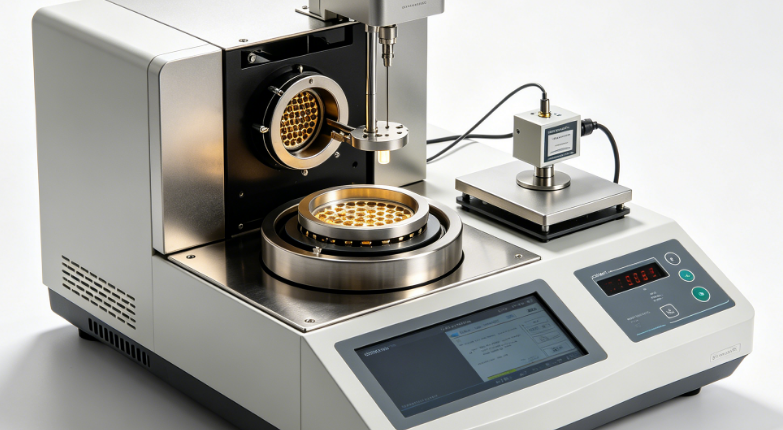
If you are searching for thermogravimetric analysis (TGA) services, you likely need to measure weight changes in a material as a function of temperature or time – whether for determining decomposition temperatures, quantifying moisture/volatiles, assessing filler or ash content, studying oxidation resistance, or analyzing complex multi‑component formulations (polymers, pharmaceuticals, composites, nanomaterials, ceramics, organics). TGA provides critical data for quality control, failure analysis, and material development. Our laboratory offers comprehensive TGA and evolved gas analysis (EGA) services using state‑of‑the‑art instruments capable of ultra‑high sensitivity (0.1 µg), wide temperature range (ambient to 1600°C), and multiple controlled atmospheres (inert, oxidative, reactive, humidity). We also couple TGA with mass spectrometry (TGA‑MS) and Fourier‑transform infrared spectroscopy (TGA‑FTIR) for real‑time identification of evolved decomposition products.
What We Measure – Full Thermogravimetric Parameter Scope
We do not simply report “weight loss at 300°C”. Our platform includes TA Instruments Discovery TGA 5500, Netzsch STA 449 F5 Jupiter, and Mettler Toledo TGA/DSC 3+ systems with balance sensitivity of 0.1 µg and temperature accuracy ±0.5°C. We perform measurements under dry nitrogen, air, oxygen, argon, carbon dioxide, or custom gas mixtures (including humidity control) at heating rates from 0.1 to 200 °C/min. For each sample, we provide:
- Decomposition onset temperature (Tonset) and offset temperature (Tendset) – by tangent method or ASTM E1641.
- Characteristic decomposition temperatures (e.g., T5%, T10%, T50%, Tmax) – weight loss percentages.
- Residual mass at specified end temperature (char, ash, inorganic filler) – with accuracy ±0.05 wt%.
- Moisture and volatile content (typical loss below 150‑200°C) – using stepwise isothermal or dynamic methods.
- Thermal stability ranking and comparison of multiple samples – under identical conditions.
- Decomposition kinetics (activation energy Ea, pre‑exponential factor, reaction order) – using Flynn‑Wall‑Ozawa, Kissinger, or ASTM E698 methods (requires multiple heating rates).
- Compositional analysis of blends (e.g., polymer‑fiber‑filler) via differential TGA in inert vs. air – identifying distinct decomposition steps.
- Oxidation induction temperature (OIT*) – for oxidative stability in polymers or lubricants.
- High‑temperature corrosion or reduction studies (e.g., metal oxides, catalysts) – under H₂, CO, or CH₄ atmospheres.
- Simulated aging (isothermal weight loss at constant temperature) – for lifetime prediction.
How Deep We Go – Evolved Gas Analysis, High‑Temperature Capabilities, and Kinetic Modeling
Most routine TGA services only provide a simple weight loss curve and maybe a single temperature value. We go far deeper. Our coupled TGA‑MS (mass spectrometry) simultaneously identifies volatile decomposition products (H₂O, CO₂, CO, SO₂, NOx, HCl, low molecular weight hydrocarbons, etc.) in real time, correlating specific gas evolution with temperature steps – essential for understanding decomposition mechanisms, detecting hazardous off‑gassing, or verifying material purity. Similarly, TGA‑FTIR provides infrared spectra of evolved gases, ideal for identifying organic functional groups and unknown volatiles. For kinetic analysis, we collect TGA data at 3‑5 heating rates (e.g., 2, 5, 10, 20, 50 °C/min) and apply model‑free (isoconversional) methods (Ozawa, Friedman, Kissinger‑Akahira‑Sunose) to calculate activation energy as a function of conversion (α), revealing complex multi‑step mechanisms. We also perform lifetime prediction (ASTM E1877) by extrapolating TGA data to service temperatures, providing an estimated time to a given weight loss (e.g., 5% weight loss at 100°C after 10 years).
Our instruments reach 1600°C in air or inert atmospheres, and we offer humidity control (5‑95% RH) for moisture sorption/desorption studies (dynamic vapor sorption TGA). For very small or precious samples (e.g., 1‑5 mg), the 0.1 µg sensitivity ensures reliable data. We can analyze solids, powders, films, fibers, gels, and even some liquids. Advanced capabilities include:
- Modulated TGA (MTGA) – separate reversible (evaporation) from irreversible (decomposition) weight loss.
- High‑pressure TGA (up to 30 bar) – for catalytic reactions, gas‑solid interactions, or material stability under pressure.
- Thermogravimetric analysis in corrosive gas environments (e.g., SO₂, H₂S, Cl₂) – with specialized furnace and gas handling.
- Simultaneous TGA‑DSC (STA) – measure heat flow (endothermic/exothermic events) and weight loss on the same sample in one run.
- Automated sequential analysis (carousel for up to 20 samples) – high‑throughput for quality control.
- Reaction modeling using Netzsch Thermokinetics or TA Instruments Kinetics Neo software – predict behavior under arbitrary temperature profiles.
We routinely achieve measurement uncertainties: temperature ±0.3°C (calibrated with Curie point standards), mass change ±0.01%, kinetic Ea ±5% relative (for well‑behaved reactions). All methods follow ASTM E1131 (compositional analysis), E1641 (kinetics), E2550 (decomposition temperature), and ISO 11358 (plastics TGA).
Why Choose Our Thermogravimetric Analysis Services – Key Advantages
1. ISO/IEC 17025:2017 accredited methods – all TGA procedures validated for polymers, pharmaceuticals, chemicals, and materials.
2. Ultra‑high sensitivity (0.1 µg) and wide temperature range (ambient to 1600°C) – we handle micro‑samples and high‑temperature ceramics with ease.
3. Coupled evolved gas analysis (TGA‑MS and TGA‑FTIR) – we identify what is evaporating or decomposing, not just when. This is critical for troubleshooting off‑gassing, contamination, or reaction pathways.
4. Comprehensive kinetic and lifetime modeling – we predict long‑term stability using ASTM/ISO standard methods, saving you months of real‑time aging experiments.
5. Versatile atmospheres (inert, oxidative, reactive, humidity, high pressure) – simulate real service conditions or study reaction mechanisms.
6. Small sample volume (1‑50 mg typical) – ideal for precious research samples or early‑stage formulations.
7. Fast turnaround with full data transparency – standard TGA (single heating rate, one atmosphere) in 2‑3 business days; full kinetic study (5 heating rates + analysis) in 5‑7 business days. You receive raw TGA curves, derivative (DTG) curves, tabulated results, and a detailed interpretation report.
8. Custom method development for unusual materials or specific standards – we develop and validate TGA protocols within 1‑2 weeks.
9. Competitive pricing for complete thermal analysis packages – bundling TGA, kinetics, and EGA (MS or FTIR) costs 30‑35% less than separate tests.
We have successfully completed over 1,000 TGA projects for aerospace, automotive, electronics, pharmaceutical, and chemical industries. Our team includes PhD thermal analysts and material scientists with deep expertise in decomposition chemistry.
Ready to Analyze Your Material with TGA?
Describe your sample (material type, estimated decomposition range, required atmosphere, and objective – e.g., “moisture content”, “ash determination”, “kinetic study”). We will provide a free technical consultation, a recommended experimental plan, and a fixed‑price quote. Whether you need a rapid compositional check or a full kinetic and evolved gas analysis, we deliver deep, accurate, and actionable thermogravimetric data tailored to your material characterization needs.