Reasons for choosing our testing services
ZHONGXI Testing has obtained inspection qualification certifications from multiple countries and regions worldwide. We possess a senior testing team and advanced testing methods, providing independent, impartial, and professional third-party verification services for global carbon projects.

Internationally recognized authority
Certified by multiple international standards such as CNAS, VCS, and GS, with reports universally applicable worldwide.

Global service capability
Covering 140+ countries and regions, it supports on-site detection and remote verification in multiple languages.

Professional experimental methods
Adopt standard experimental methods to ensure accurate and reliable data.
tensile strength Testing Services: Accurate Measurement of Material Strength & Ductility
As an independent third-party testing service provider, we offer comprehensive tensile strength testing for metals, polymers, composites, textiles, elastomers, and advanced materials. Tensile testing is one of the most fundamental mechanical characterisation methods – it determines how a material responds to pulling forces, providing critical data for material selection, quality control, design validation, and failure analysis. Our accredited laboratory follows international standards (ASTM, ISO, EN, GB/T, JIS, BS) and is equipped with universal testing machines (UTMs) from 1 N to 600 kN capacity, environmental chambers, and high‑precision extensometers. This article outlines our tensile testing capabilities – including scope, key test items, and standard test methods – to help manufacturers, engineers, and researchers verify material performance under tension.
1. Our Testing Scope for tensile strength
We cover a wide range of materials, specimen geometries, and test conditions:
By material type: Metallic materials (steel, aluminium, copper, titanium, nickel alloys, cast iron, wire, rebar, sheet, tube); Polymers & plastics (thermoplastics, thermosets, films, sheets, rods); Elastomers & rubber (natural rubber, silicone, EPDM, neoprene); Composites (carbon/glass fibre reinforced polymers – CFRP/GFRP, metal matrix composites – MMC); textiles & fabrics (woven, non‑woven, yarns, cords, webbing); Wood & engineered wood (solid lumber, plywood, LVL); Adhesives & bonded joints (lap shear); Thin films & foils; Additive manufactured parts (3D printed metals and polymers); Micro‑specimens (miniature tensile for small components).
By test condition: Ambient temperature (typical 23°C); Elevated temperature (up to 1200°C with furnace); Sub‑ambient / cryogenic (down to -196°C with liquid nitrogen); Controlled humidity; Immersion in fluids (oil, water, etc.) by arrangement.
By specimen geometry: Standard dog‑bone (ASTM D638 Type I‑IV, ISO 527‑2 Type 1A/1B); Round bar (metals – ASTM E8, ISO 6892‑1); Rectangular (sheet, plate, composite); Wire & fine wire (full section); Tube / pipe (full or strip); Film (ASTM D882); O‑ring / micro‑dumbbell (rubber – ASTM D412 Die C/D); Sub‑size / non‑standard (customer provided).
By industry application: Structural steel and rebar for construction; Automotive body and chassis components; Aerospace alloys (aluminium, titanium, superalloys); Polymer injection moulding parts; Medical device components (implants, instruments); Packaging films and tapes; Geotextiles and ropes; Welded and brazed joint qualification.
2. Key Test Items We Perform
Our tensile testing services measure the following key parameters. All are reported with raw load‑extension data and derived stress‑strain curves.
2.1 Core Tensile Properties
Ultimate tensile strength (UTS) – maximum engineering stress a material withstands before fracture (MPa or psi).
yield strength (YS) – stress at which plastic deformation begins. Reported as offset yield (0.2% offset for metals, 0.1% for some polymers). For materials with a clear yield point, we report upper yield and lower yield.
Young’s modulus (modulus of elasticity) – slope of the linear elastic portion of the stress‑strain curve (MPa or GPa).
Percentage elongation at break – plastic strain at fracture, measured over a specified gauge length (%).
Percentage reduction of area – only for round metallic specimens – decrease in cross‑sectional area at fracture (%).
Strain hardening exponent (n‑value) – for metallic sheet formability.
Plastic strain ratio (r‑value) – anisotropy indicator for deep drawing steels.
2.2 Specialised Tensile Tests
tensile strength of welded joints – transverse or longitudinal weld specimen, with failure location recorded (weld metal, heat affected zone, or base metal).
Bonded joint tensile (lap shear) – for adhesives (ASTM D1002, ISO 4587).
Reinforcing bar (rebar) tensile – including yield strength, tensile strength, and total elongation (ASTM A615, A706).
Wire and cable tensile – breaking strength and elongation.
textile tensile (strip or grab method) – breaking force and elongation (ASTM D5035, D5034).
Rubber tensile (dumbbell) – stress at given elongation (e.g., 100% modulus), tensile strength, and elongation at break (ASTM D412, ISO 37).
high temperature tensile – for metals and composites under thermal stress.
Low temperature tensile – for polymers and elastomers in cold environments.
2.3 Additional Calculations & Analysis
True stress – true strain conversion (from engineering data).
Proof strength (e.g., 0.2% proof stress for non‑linear materials).
Secant modulus (at specified strain, e.g., 1% or 2% for composites).
Elastic energy / toughness (area under stress‑strain curve).
Statistical analysis (mean, standard deviation, Weibull modulus – on request).
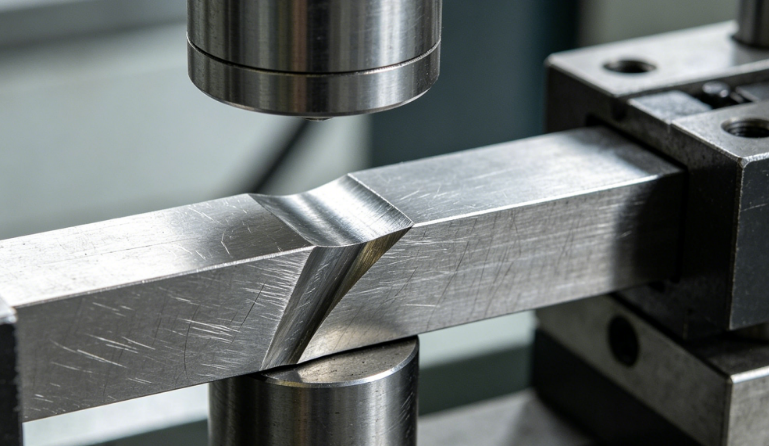
3. Standard Test Methods We Apply
All tests are performed according to internationally recognised standards. Our laboratory is ISO/IEC 17025 accredited and equipped with universal testing machines (electromechanical and servo‑hydraulic) ranging from 1 N to 600 kN, with video or contact extensometers, and thermal chambers.
3.1 Metals & Alloys
Standard test method for tension testing of metallic materials: ASTM E8/E8M, ISO 6892‑1, GB/T 228.1, EN 10002‑1 (historical, replaced by EN ISO 6892‑1).
Elevated temperature tension (metals): ASTM E21, ISO 6892‑2, GB/T 228.2.
Metallic wire (full section): ASTM E8 (annex), ISO 6892‑1.
Steel reinforcing bars (rebar): ASTM A615, A706, A955, ISO 6935‑2, GB/T 1499.2.
Sheet metal (n‑value, r‑value): ASTM E646, ISO 10275.
3.2 Plastics & Polymers
Tensile properties of plastics (dog‑bone): ASTM D638, ISO 527‑1/-2, GB/T 1040.
Thin plastic sheeting (film): ASTM D882, ISO 527‑3.
High modulus composites (CFRP, GFRP): ASTM D3039, ISO 527‑4/-5.
Plastics at elevated temperature: ASTM D638 (with thermal chamber), ISO 527‑1 (annex).
3.3 Rubber & Elastomers
Rubber tensile (dumbbell): ASTM D412, ISO 37, GB/T 528.
Stress at given elongation (modulus): same standards.
Tear strength (separate test): ASTM D624, ISO 34‑1.
3.4 textiles & Geotextiles
Strip method (woven fabrics): ASTM D5035, ISO 13934‑1.
Grab method (non‑woven): ASTM D5034, ISO 13934‑2.
Yarn tensile: ASTM D2256, ISO 2062.
Geotextile tensile (wide width): ASTM D4595, ISO 10319.
3.5 Adhesives & Bonded Joints
tensile strength of adhesive bonds (lap shear): ASTM D1002 (metal‑to‑metal), ISO 4587.
Block shear (for wood adhesives): ASTM D905.
3.6 Composites & Advanced Materials
Polymer matrix composite tensile (flat specimen): ASTM D3039, ISO 527‑4.
High modulus composite (with tabs): ASTM D3039 (annex).
Metal matrix composite (MMC): ASTM E8 (adapted).
3.7 Ceramics (Indirect via Flexure)
Note: Direct tensile testing of ceramics is challenging. We offer flexural strength (MOR) as an alternative: ASTM C1161, ISO 14704.
4. Why Choose Our Third‑Party tensile strength Testing Services?
As an independent laboratory, we provide unbiased, accurate, and legally defensible tensile test data. Our advantages include:
ISO/IEC 17025 accreditation – CNAS/CMA certified, with regular proficiency testing (e.g., ASTM D638, E8 round robins).
Wide force range – 1 N (micro‑tensile) to 600 kN (structural steel). Accuracy: ±0.5% of reading or better.
Multiple temperature options – environmental chambers from -70°C to +1200°C (with furnace).
High‑speed data acquisition – up to 1000 Hz for post‑yield and fracture behaviour.
Fast turnaround – typical tensile testing (3‑5 specimens) within 2‑3 business days.
Comprehensive reporting – includes stress‑strain curves (digital and annotated), raw data tables, calculated properties, and photographs of fractured specimens.
Confidentiality – full protection of your material specifications and product designs.
Consultative support – our engineers help select the appropriate specimen geometry, test speed, and extensometry method (contact, non‑contact video).
Whether you are qualifying a new steel grade, verifying plastic injection moulding consistency, validating composite layup strength, or investigating a field failure, our tensile testing experts are ready to deliver precise and actionable results.
Get Started with Your tensile strength Testing Project
Contact our team with your material type, thickness/diameter, target standard, and any special conditions (temperature, environment). We will provide a detailed quotation, specimen preparation guidelines (machining requirements), and a testing schedule. Let us help you accurately determine the strength and ductility of your materials for safe, reliable, and high‑performing products.
This article provides an overview of our tensile strength testing capabilities. For specific test methods, sample geometry, and pricing, please request a tailored service proposal.