Reasons for choosing our testing services
ZHONGXI Testing has obtained inspection qualification certifications from multiple countries and regions worldwide. We possess a senior testing team and advanced testing methods, providing independent, impartial, and professional third-party verification services for global carbon projects.

Internationally recognized authority
Certified by multiple international standards such as CNAS, VCS, and GS, with reports universally applicable worldwide.

Global service capability
Covering 140+ countries and regions, it supports on-site detection and remote verification in multiple languages.

Professional experimental methods
Adopt standard experimental methods to ensure accurate and reliable data.
compressive strength Testing Services: Measuring Material Resistance to Crushing & Buckling
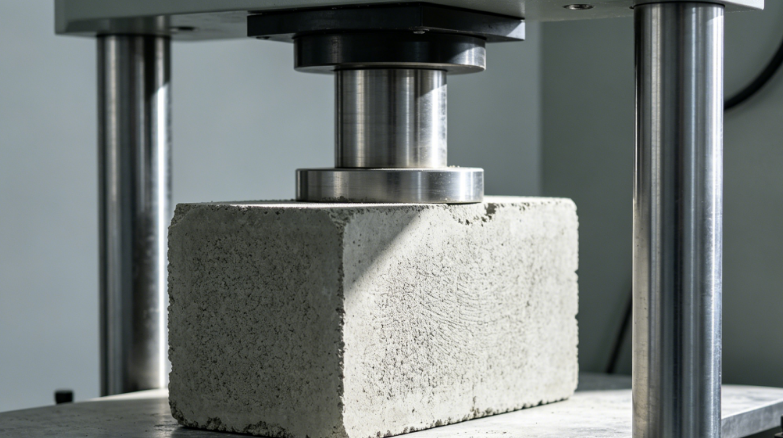
As an independent third-party testing service provider, we offer comprehensive compressive strength testing for a wide range of materials – including concrete, metals, plastics, composites, wood, ceramics, and building materials. compressive strength is a critical mechanical property that indicates how a material behaves under crushing, pressing, or axial loading. It is essential for structural design, quality control, and material selection in industries such as construction, automotive, aerospace, packaging, and manufacturing. Our accredited laboratory follows international standards (ASTM, ISO, EN, GB/T, BS) and is equipped with universal testing machines (UTMs) ranging from 5 kN to 3000 kN capacity, plus specialised compression platens and fixtures. This article outlines our compressive testing capabilities – including scope, key test items, and standard test methods – to help engineers, manufacturers, and researchers validate material performance under compressive loads.
1. Our Testing Scope for compressive strength
We cover a broad spectrum of materials, specimen geometries, and test conditions:
By material type: concrete (cubes, cylinders, cores); cement mortar; Metals (steel, aluminium, cast iron, copper alloys, powder metals); Plastics (thermoplastics, thermosets, foams); Composites (CFRP, GFRP, sandwich panels, honeycomb); Wood (parallel and perpendicular to grain); Ceramics (advanced ceramics, refractory bricks, tiles); Building materials (bricks, blocks, paving stones, masonry units); Geomaterials (rock, soil – unconfined compressive strength); Elastomers (rubber, sealants); Additive manufactured parts; Core samples (drilled from existing structures).
By specimen geometry: Cubes (e.g., 50 mm, 100 mm, 150 mm for concrete); Cylinders (e.g., 100 mm diameter x 200 mm height for concrete, or smaller for plastics); Prisms / blocks (bricks, masonry units); Rectangular bars (plastics, composites, wood); Discs (for indirect tensile – Brazilian test); Rings (for crush testing of pipes or rings); Custom shapes (customer provided).
By test condition: Ambient (typical 23°C); Elevated temperature (up to 300°C for plastics, 1000°C for ceramics – by arrangement); Low temperature (down to -40°C for polymers); Controlled loading rate (stress or strain control).
By industry application: Construction (concrete cylinders/cubes, masonry blocks, rebar, grout); Aerospace (honeycomb sandwich panels, composite cores); Automotive (seats, foams, structural composites); Packaging (corrugated board, foam cushioning); Medical (bone, dental cement, implants).
2. Key Test Items We Perform
Our compressive strength testing services measure the following key parameters, with full force‑displacement data and derived stress‑strain curves.
2.1 Core Compressive Properties
compressive strength (maximum stress) – the maximum engineering stress a material withstands before fracture or permanent deformation (MPa, psi).
Compressive yield strength – stress at which a defined offset (typically 0.2% or 0.1% strain) permanent deformation occurs (for ductile materials such as metals and some plastics).
Compressive modulus (modulus of elasticity in compression) – slope of the linear elastic portion of the stress‑strain curve (MPa or GPa).
Strain at compressive strength – engineering strain at the point of maximum stress.
Crush strength (for foam, honeycomb, brittle materials) – stress at which the material collapses or crushes.
Compressive stress at specified strain (e.g., 10%, 25%, 50%) – used for foams, elastomers, and packaging materials.
Yield point (upper/lower) – for materials with a clear yield phenomenon (some steels, polymers).
2.2 Specialised Compressive Tests
Unconfined compressive strength (UCS) of rock / soil – ASTM D7012, ISRM standards.
concrete cube / cylinder crushing – standardised to ASTM C39, C109, EN 12390‑3, BS 1881.
Masonry prism / block compressive strength – ASTM C1314, EN 772‑1.
Wood compression parallel to grain – ASTM D143, ISO 3787.
Wood compression perpendicular to grain – ASTM D143, ISO 4012.
Plastic foam compression (flexible and rigid) – ASTM D1621, ISO 844.
Honeycomb core compression (flatwise) – ASTM C365, EN 2795.
Sandwich panel compression (edgewise) – ASTM C364.
Pipe crushing (ring crush) – ASTM D2412, ISO 13968 (plastic pipes).
Corrugated board edge crush test (ECT) – ASTM D6438, TAPPI T811.
Rubber compression (stress relaxation, compression set) – ASTM D395, ISO 815.
2.3 Additional Calculations & Analysis
Secant modulus (at 1% or 2% strain) – for non‑linear materials (foams, rubber).
Tangent modulus (at specified point).
Energy absorption (area under stress‑strain curve) – for cushioning materials.
Load‑deflection curves with digital video recording (optional).
Statistical analysis (mean, standard deviation, coefficient of variation).
3. Standard Test Methods We Apply
All tests are performed according to internationally recognised standards. Our laboratory is ISO/IEC 17025 accredited and equipped with compression testing machines (electromechanical and hydraulic) from 5 kN to 3000 kN, with various platens (flat, spherical seated, self‑aligning) and environmental chambers.
3.1 concrete, cement, Mortar & Masonry
compressive strength of concrete cylinders: ASTM C39, AASHTO T22, EN 12390‑3, BS 1881‑116, GB/T 50081.
concrete cubes: EN 12390‑3, BS 1881‑116, AS 1012.9.
cement mortar cubes: ASTM C109, EN 196‑1, ISO 679, GB/T 17671.
Masonry prisms: ASTM C1314, EN 1052‑1, GB/T 2542.
concrete cores (drilled): ASTM C42, EN 12504‑1.
Block compressive strength: EN 772‑1, ASTM C140 (concrete masonry units).
3.2 Metals & Alloys
Compression testing of metallic materials (room temperature): ASTM E9, ISO 6507‑1 (indirect), GB/T 7314.
Metallic powder compacts (green strength): ASTM B312, ISO 3995.
Cast iron compression: ASTM E9.
Aluminium honeycomb core compression: ASTM C365.
3.3 Plastics & Foams
Compressive properties of rigid plastics: ASTM D695, ISO 604, GB/T 1041.
Rigid cellular plastics (foam) – compressive strength & modulus: ASTM D1621, ISO 844.
Flexible cellular materials (foam) – compression set: ASTM D3574 (Test D), ISO 1856.
Compressive stress at specified strain (10%, 25%, 50%): ASTM D1621 Annex.
Plastic pipes (ring crush): ASTM D2412, ISO 13968.
3.4 Composites & Honeycomb
Flatwise compressive strength of core materials (honeycomb): ASTM C365, EN 2795.
Edgewise compressive strength of sandwich panels: ASTM C364.
compressive strength of polymer matrix composites (short block): ASTM D695 (modified), ISO 14126 (for composites).
Hydraulic burst for composites (optional).
3.5 Wood & Engineered Wood
Compression parallel to grain (clear wood): ASTM D143, ISO 3787, GB/T 1935.
Compression perpendicular to grain: ASTM D143, ISO 4012, GB/T 1940.
Structural lumber (full section): ASTM D198, ISO 13910.
3.6 Ceramics & Refractories
compressive strength of advanced ceramics: ASTM C773, ISO 14705, EN 993‑5 (refractories).
Cold crushing strength (refractory bricks): ASTM C133, EN 993‑5, ISO 5017.
3.7 Rocks & Soils
Unconfined compressive strength of intact rock core specimens: ASTM D7012, ISRM.
Unconfined compressive strength of soil (cohesive): ASTM D2166.
3.8 Packaging Materials (Corrugated Board)
Edge crush test (ECT – corrugated board): ASTM D6438, TAPPI T811, ISO 3037.
Ring crush (paperboard): ASTM D4930, TAPPI T822.
Flat crush (corrugated medium): ASTM D2808, TAPPI T809.
3.9 Rubber & Elastomers
Rubber compression set (constant deflection): ASTM D395 Method B, ISO 815‑1.
Rubber stress relaxation in compression: ASTM D6147.
4. Why Choose Our Third‑Party compressive strength Testing Services?
As an independent laboratory, we provide unbiased, accurate, and legally defensible compression test data. Our advantages include:
ISO/IEC 17025 accreditation – CNAS/CMA certified, with regular proficiency testing (e.g., ASTM C39, D695).
High‑capacity machines – up to 3000 kN for concrete cubes and masonry blocks, plus smaller frames (5 kN‑300 kN) for plastics, composites, and foams.
Self‑aligning platens – to ensure uniform load distribution and accurate results.
Temperature control – optional environmental chambers from -40°C to +250°C for plastics and composites.
Fast turnaround – typical compression tests (3‑5 specimens) within 2‑3 business days.
Detailed reporting – includes stress‑strain curves (digital), raw data tables, calculated properties (compressive strength, modulus, yield), and photographs of failed specimens.
Confidentiality – full protection of your material specifications and test objectives.
Consultative support – our engineers assist with specimen geometry, loading rate selection, and acceptance criteria.
Whether you need to qualify concrete for a high‑rise building, verify the crush resistance of a plastic foam, test honeycomb core for aerospace panels, or evaluate masonry block compliance, our compressive strength testing experts are ready to deliver precise and reliable data.
Get Started with Your compressive strength Testing Project
Contact our team with your material type, specimen dimensions (or product description), target standard, and any special conditions (temperature, loading rate). We will provide a detailed quotation, specimen preparation guidelines (if required), and a testing schedule. Let us help you determine the crushing resistance and stability of your materials for safe and durable designs.
This article provides an overview of our compressive strength testing capabilities. For specific test methods, sample size, and pricing, please request a tailored service proposal.