Reasons for choosing our testing services
ZHONGXI Testing has obtained inspection qualification certifications from multiple countries and regions worldwide. We possess a senior testing team and advanced testing methods, providing independent, impartial, and professional third-party verification services for global carbon projects.

Internationally recognized authority
Certified by multiple international standards such as CNAS, VCS, and GS, with reports universally applicable worldwide.

Global service capability
Covering 140+ countries and regions, it supports on-site detection and remote verification in multiple languages.

Professional experimental methods
Adopt standard experimental methods to ensure accurate and reliable data.
fracture strength Testing Services: Determining Material Resistance to Brittle & Ductile Fracture
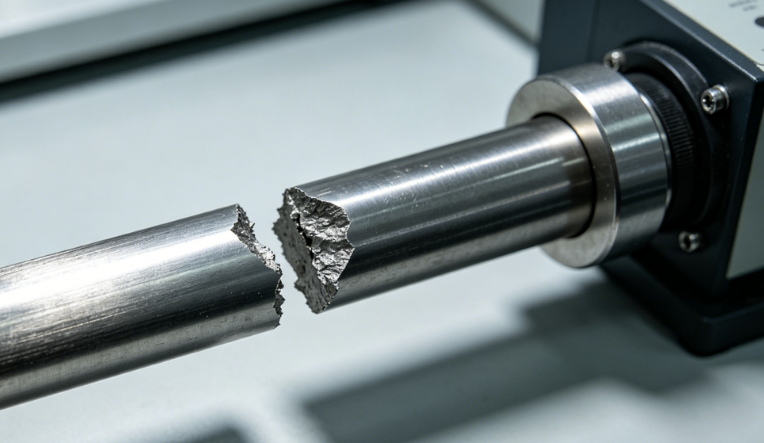
As an independent third-party testing service provider, we offer comprehensive fracture strength testing for a wide range of materials – including metals, ceramics, glass, composites, plastics, and advanced structural materials. fracture strength (also known as breaking strength or rupture strength) is the maximum stress a material can withstand before fracture occurs. Unlike yield strength (which marks the onset of permanent deformation), fracture strength defines the ultimate load‑bearing capacity under tension, bending, compression, or torsion – and is especially critical for brittle materials (e.g., ceramics, glass, cast iron, some composites) that fail with little or no plastic deformation. Our accredited laboratory follows international standards (ASTM, ISO, EN, GB/T) using universal testing machines, flexural test fixtures, and fracture mechanics instrumentation. This article outlines our fracture strength testing capabilities – including scope, key test items, and standard test methods – to help engineers, quality assurance teams, and researchers determine the ultimate fracture behaviour of materials under static loading.
1. Our Testing Scope for fracture strength
We cover diverse material classes, loading modes, and test environments:
By material type: Metals (brittle alloys, cast iron, high‑strength steels, welded joints); Ceramics (advanced ceramics, structural ceramics, refractory materials); Glass (flat glass, tempered glass, glass containers); Composites (CFRP, GFRP, ceramic matrix composites – CMC); Plastics (rigid thermoplastics, thermosets, reinforced plastics); Brittle polymers and epoxies; Wood (perpendicular to grain); Sintered powder metals; Additive manufactured parts (brittle materials).
By loading mode: Tensile fracture strength (most common for brittle materials); Flexural fracture strength (modulus of rupture – MOR, for ceramics, glass, brittle plastics); Compressive fracture strength (for brittle materials that fail in crushing); Torsional fracture strength (shafts, tubes); Shear fracture strength (punch shear, double shear).
By test condition: Ambient temperature; Elevated temperature (up to 1200°C for ceramics); Sub‑ambient (down to -196°C for metals); Controlled humidity (for glass and ceramics).
By specimen geometry: Rectangular bars (for flexure); Round bars (for tension); Discs (Brazilian test for brittle materials); Rings (for pipe or ring crushing); Custom‑shaped specimens (customer supplied).
By industry application: Construction (concrete reinforcing bars – fracture after yield); Aerospace (ceramic matrix composite blades); Automotive (cast iron components, glass windshields); Electronics (ceramic substrates, glass panels); Medical (dental ceramics, implant materials).
2. Key Test Items & Measurements We Perform
Our fracture strength testing services quantify the ultimate stress at failure. Depending on material brittleness, we may also report post‑fracture analysis.
2.1 Tensile fracture strength (Ultimate tensile strength – UTS for Brittle Materials)
Tensile fracture strength (σf) – maximum engineering stress at fracture, measured directly for materials that fail before significant necking (e.g., ceramics, cast iron, rigid composites).
Stress at break – for plastics and brittle polymers (ASTM D638, ISO 527).
Fracture elongation – strain at break (often very small for brittle materials).
Fracture surface analysis (optional) – scanning electron microscopy (SEM) to identify fracture origin (porosity, inclusion, crack).
2.2 Flexural fracture strength (Modulus of Rupture – MOR)
Flexural strength (MOR) – calculated from three‑point or four‑point bending test, using outer fibre stress at fracture. This is the standard fracture strength measurement for ceramics, glass, and brittle plastics.
4‑point vs. 3‑point bending – 4‑point gives a constant moment region, preferred for ceramics (ASTM C1161, ISO 14704).
Weibull modulus (for ceramics) – statistical analysis of fracture strength variability.
Fracture origin identification – mirror, mist, hackle patterns in glass; pores or inclusions in ceramics.
2.3 Compressive fracture strength (Crushing Strength)
Compressive fracture strength – maximum stress before crushing or splitting (for brittle materials such as ceramics, concrete, cast iron).
Brazilian test (indirect tensile strength for brittle materials) – disc compressed diametrically, splitting tensile strength calculated (ASTM D3967, ISRM).
2.4 Shear fracture strength
Punch shear strength – for sheet materials (e.g., composites, plastics).
Double shear strength – for fasteners and pins.
2.5 Fracture Toughness (KIC) – Complementary to fracture strength
While not strictly “fracture strength”, fracture toughness measures a material’s resistance to crack propagation. We offer KIC testing for metals (ASTM E399) and ceramics (ASTM C1421) on request.
2.6 Post‑Fracture Analysis
Fracture surface photography (macro).
SEM fractography – identification of fracture mode (intergranular, transgranular, cleavage, ductile shear).
Fracture origin determination – for root cause analysis.
3. Standard Test Methods We Apply
All tests are performed according to internationally recognised standards. Our laboratory is ISO/IEC 17025 accredited and equipped with universal testing machines (1 N to 600 kN), flexural test fixtures, high‑temperature furnaces, and environmental chambers.
3.1 Ceramics & Glass (Flexural fracture strength – MOR)
ASTM C1161 (Flexural strength of advanced ceramics at ambient temperature) – 4‑point or 3‑point.
ISO 14704 (Fine ceramics – Test method for flexural strength at room temperature).
ASTM C1684 (Flexural strength of advanced ceramics at elevated temperature).
ASTM C158 (Flexural strength of glass).
ISO 1288 (Glass in building – Determination of the bending strength).
3.2 Metals (Tensile fracture strength – UTS for Brittle Metals)
ASTM E8/E8M (Tension testing of metallic materials – ultimate tensile strength).
ISO 6892‑1 (Metallic materials – Tensile testing).
ASTM A48 (Gray iron castings – tensile strength).
3.3 Composites (Flexural & Tensile fracture strength)
ASTM D790 (Flexural properties of unreinforced and reinforced plastics).
ISO 178 (Plastics – Determination of flexural properties).
ASTM D3039 (Tensile properties of polymer matrix composites).
ASTM D7264 (Flexural properties of polymer matrix composites).
3.4 Brittle Plastics (Tensile & Flexural)
ASTM D638 (Tensile properties of plastics – break strength).
ISO 527 (Plastics – Determination of tensile properties).
ASTM D790 (Flexural strength).
3.5 Indirect Tensile (Brazilian Test)
ASTM D3967 (Standard test method for splitting tensile strength of intact rock core specimens).
ISRM (International Society for Rock Mechanics) suggested method.
3.6 Fracture Toughness (Complementary)
ASTM E399 (KIC of metallic materials).
ASTM C1421 (Fracture toughness of advanced ceramics).
4. Why Choose Our Third‑Party fracture strength Testing Services?
As an independent laboratory, we provide unbiased, accurate, and regulation‑ready data. Our advantages include:
ISO/IEC 17025 accreditation – CNAS/CMA certified, with regular proficiency testing (e.g., ASTM C1161, E8).
High‑precision flexure fixtures – self‑aligning to minimise extraneous stresses.
Wide temperature capability – from -196°C to +1200°C (furnace).
Weibull statistical analysis – for ceramics and glass (characteristic strength, Weibull modulus).
Fast turnaround – typical fracture strength tests (5‑10 specimens) within 3‑5 business days.
Detailed reporting – includes force‑deflection curves, calculated fracture strength (MPa), Weibull parameters (for ceramics), and fracture surface images.
Confidentiality – full protection of your material composition and test objectives.
Consultative support – our engineers help select the appropriate fixture, loading rate, and specimen size based on material brittleness.
Whether you need to qualify a new ceramic armour material, verify the flexural strength of a glass panel, characterise a cast iron batch, or assess the fracture behaviour of a rigid composite, our fracture strength testing experts are ready to deliver precise and reliable data.
Get Started with Your fracture strength Testing Project
Contact our team with your material type, specimen dimensions (or description), loading mode (tension, flexure, compression), and any special conditions (temperature, environment). We will provide a detailed quotation, specimen preparation guidelines (including edge finishing for ceramics), and a testing schedule. Let us help you determine the ultimate failure stress of your materials for safe, reliable design.
This article provides an overview of our fracture strength testing capabilities. For specific test methods, sample quantity, and pricing, please request a tailored service proposal.