Reasons for choosing our testing services
ZHONGXI Testing has obtained inspection qualification certifications from multiple countries and regions worldwide. We possess a senior testing team and advanced testing methods, providing independent, impartial, and professional third-party verification services for global carbon projects.

Internationally recognized authority
Certified by multiple international standards such as CNAS, VCS, and GS, with reports universally applicable worldwide.

Global service capability
Covering 140+ countries and regions, it supports on-site detection and remote verification in multiple languages.

Professional experimental methods
Adopt standard experimental methods to ensure accurate and reliable data.
charpy impact toughness Testing Services: Measuring Material Resistance to Brittle Fracture
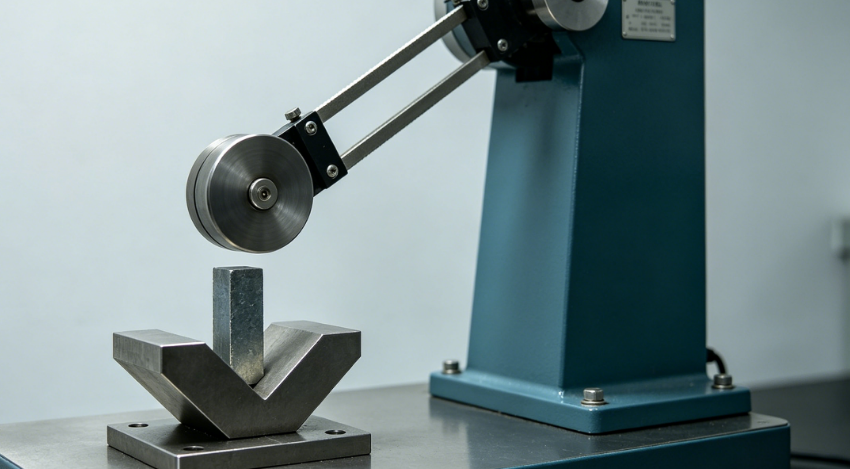
As an independent third-party testing service provider, we offer comprehensive charpy impact toughness testing for metallic materials, welds, and occasionally polymers. The Charpy V‑notch (CVN) impact test is the most widely used method to measure a material’s ability to absorb energy during high‑rate loading, providing critical insight into its ductile‑to‑brittle transition behaviour. This test is essential for quality control, material qualification, and fracture safety assessment in industries such as construction, oil & gas, pipeline, pressure vessel, shipbuilding, automotive, and aerospace. Our accredited laboratory follows international standards (ASTM E23, ISO 148‑1, EN 10045‑1, GB/T 229) using precision pendulum impact testers equipped with temperature control baths (from -196°C to +300°C). This article outlines our Charpy impact testing capabilities – including scope, key test items, and standard test methods – to help engineers, metallurgists, and quality professionals assess material toughness and transition temperature.
1. Our Testing Scope for charpy impact toughness
We cover a wide range of metallic materials, specimen configurations, and test conditions:
By material type: Carbon steel (low, medium, high); Alloy steel (Cr‑Mo, Ni‑Cr‑Mo); stainless steel (austenitic, martensitic, ferritic); Cast iron; Aluminium alloys; Copper alloys; Titanium alloys; Nickel alloys; Welded joints (weld metal, heat‑affected zone – HAZ, fusion line).
By specimen type: Standard Charpy V‑notch (CVN) – 10 mm × 10 mm cross‑section, 55 mm length, 2 mm deep V‑notch (45° angle, 0.25 mm root radius); Sub‑size specimens (7.5 mm × 10 mm, 5 mm × 10 mm, 5 mm × 5 mm, 2.5 mm × 10 mm – for limited material thickness); Charpy U‑notch (keyhole notch – less common).
By test parameter: Absorbed energy (KV – Joules, ft·lbf); Lateral expansion (LE – mm or inch); Fracture appearance (percent shear / percent cleavage); Transition temperature (ductile‑to‑brittle – FATT, T27J, T50% shear).
By test condition: Ambient temperature (23°C); Low temperature (as low as -196°C using liquid nitrogen baths); Elevated temperature (up to +300°C using heating chambers).
By industry standard / application: Pressure vessel steels (ASME, ASTM A20, EN 10028); Pipeline steels (API 5L); Structural steels (ASTM A36, A572, EN 10025); Shipbuilding (LR, DNV, ABS, CCS); Weld procedure qualification (AWS D1.1, ISO 15614).
2. Key Test Items & Measurements We Perform
Our Charpy impact testing services provide quantitative toughness data and fracture characterisation. Each test is performed on a calibrated pendulum impact machine (up to 750 J capacity) with certified reference specimens.
2.1 Absorbed Energy (Impact Energy)
KV (Charpy V‑notch absorbed energy – Joules) – energy absorbed by the specimen during fracture, measured directly by the pendulum’s loss of potential energy. Reported as KV, KV2 (for 2 mm striker), or KV8 for sub‑size specimens.
Energy at specific temperatures – for transition curve determination (e.g., KV at -40°C, -20°C, 0°C, +20°C).
Energy ratio (e.g., 20°C / -40°C) – toughness retention indicator.
Minimum specified energy compliance – pass/fail against material standards (e.g., ASTM A333 Grade 6 requires ≥ 18 J at -45°C).
2.2 Lateral Expansion (LE)
Lateral expansion (mm) – increase in specimen width on the compression side opposite the notch, measured after fracture. Particularly important for pipeline and pressure vessel steels (e.g., API 5L, ASME). A more reliable indicator of ductility than energy for some high‑strength steels.
LE at specified temperature – often alongside absorbed energy.
2.3 Fracture Appearance (Shear / Cleavage)
Percent shear fracture (%) – percentage of ductile (shear) fracture surface area. The remainder is brittle (cleavage). Measured visually (with ruler or comparator) or by image analysis.
Percent cleavage – indicator of brittle fracture tendency.
Fracture appearance rating – reported as “100% shear”, “50% shear/50% cleavage”, “100% cleavage”.
2.4 Ductile‑to‑Brittle Transition Temperature (DBTT)
FATT (Fracture Appearance Transition Temperature) – temperature at which fracture surface exhibits 50% shear / 50% cleavage.
T27J – temperature at which absorbed energy equals 27 J (common for structural steels).
T40J, T68J – for specific energy thresholds.
Transition curve – plot of KV energy vs. temperature, with fitted sigmoidal curve and defined transition temperatures.
2.5 Sub‑Size Specimen Testing
When material thickness is insufficient for standard 10×10 mm specimens, we machine and test sub‑size specimens (e.g., 5×10, 5×5, 2.5×10). Absorbed energy values are reported as KV5, KV2.5, etc., and may be scaled using industry‑recognised correlation methods (e.g., proportional or non‑proportional scaling).
Instrumented Charpy – measures force‑time and force‑deflection curves, providing crack initiation energy, crack propagation energy, dynamic yield strength, and fracture toughness KId (by arrangement).
3. Standard Test Methods We Apply
All tests are performed according to internationally recognised standards. Our laboratory is ISO/IEC 17025 accredited and equipped with pendulum impact testers (50 J, 300 J, 750 J), digital instrumentation, liquid nitrogen cooling baths, and heating chambers.
3.1 Metals & Alloys (Primary Standards)
ASTM E23 (Standard test methods for notched bar impact testing of metallic materials). Covers V‑notch and U‑notch, procedure for absorbed energy and lateral expansion.
ISO 148‑1 (Metallic materials – Charpy pendulum impact test – Part 1: Test method).
EN 10045‑1 (Old European standard, replaced by ISO 148‑1).
GB/T 229 (China – Metallic materials – Charpy pendulum impact test method).
JIS Z 2242 (Japan – Method for impact test of metallic materials).
3.2 Sub‑Size Specimen Standards
ASTM E23 (includes annex for sub‑size specimens).
ISO 148‑1 (Annex for sub‑size specimens).
EN 10045‑2 (Verification of test machines, but also sub‑size guidance).
3.3 Specific Product Standards Referencing Charpy
ASTM A333 / A333M (Seamless and welded steel pipe for low‑temperature service).
API 5L (Line pipe).
ASME Section VIII Div. 1 (Pressure vessels – impact testing requirements).
ASTM A20 / A20M (General requirements for steel plates for pressure vessels).
ISO 15614 (Welding procedure qualification – impact test requirements).
ISO 148‑2 (Verification of pendulum impact test machines).
ASTM E23 (Annex for machine verification using certified reference specimens).
4. Why Choose Our Third‑Party charpy impact toughness Testing Services?
As an independent laboratory, we provide unbiased, accurate, and legally defensible Charpy impact data. Our advantages include:
ISO/IEC 17025 accreditation – CNAS/CMA certified, with regular proficiency testing (e.g., ASTM E23 round robins, NORDTEST).
Wide temperature range – from -196°C (liquid nitrogen bath, ±1°C stability) to +300°C (oil or air heating).
Multiple pendulum capacities – 50 J (low‑toughness materials), 300 J (standard steel), 750 J (high‑strength steels, thick specimens).
Digital data acquisition – absorbed energy displayed and recorded; optional instrumented striker for force‑time curve.
Comprehensive reporting – includes test temperature, individual absorbed energy values (J), average energy, lateral expansion (if measured), fracture appearance (% shear, photo), compliance statement against specification, and transition curve (if multiple temperatures).
Fast turnaround – typical Charpy test series (3‑9 specimens at one temperature) within 2‑3 business days; multi‑temperature transition studies in 5‑7 business days.
Confidentiality – full protection of your material identity and test results.
Consultative support – our metallurgists help select appropriate test temperature, interpret sub‑size scaling, and determine transition temperatures for critical applications.
Whether you need to qualify a pressure vessel steel for low‑temperature service, verify a weld procedure, or determine the ductile‑to‑brittle transition of a new pipeline alloy, our Charpy impact testing experts are ready to deliver reliable, actionable results.
Get Started with Your charpy impact toughness Testing Project
Contact our team with your material type, specimen dimensions (or available material thickness), required test temperature(s), target standard (ASTM E23, ISO 148‑1, GB/T 229, etc.), and any specific acceptance criteria (e.g., minimum 27 J average). We will provide a detailed quotation, specimen preparation guidelines (including notch orientation and machining tolerances), and a testing schedule. Let us help you determine the impact toughness and fracture resistance of your materials for safe, reliable operation.
This article provides an overview of our charpy impact toughness testing capabilities. For specific test methods, sample quantity, and pricing, please request a tailored service proposal.