Reasons for choosing our testing services
ZHONGXI Testing has obtained inspection qualification certifications from multiple countries and regions worldwide. We possess a senior testing team and advanced testing methods, providing independent, impartial, and professional third-party verification services for global carbon projects.

Internationally recognized authority
Certified by multiple international standards such as CNAS, VCS, and GS, with reports universally applicable worldwide.

Global service capability
Covering 140+ countries and regions, it supports on-site detection and remote verification in multiple languages.

Professional experimental methods
Adopt standard experimental methods to ensure accurate and reliable data.
shore hardness Testing Services: Accurate Measurement for Elastomers, Plastics & Soft Materials
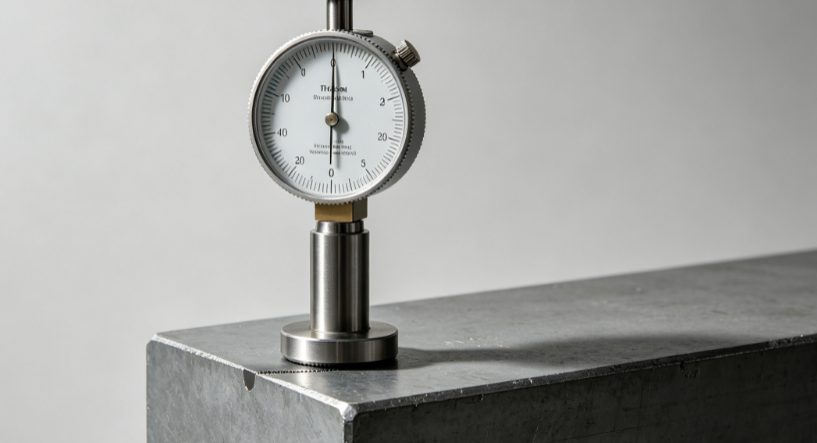
As an independent third‑party testing service provider, we offer comprehensive shore hardness testing for a wide range of non‑metallic materials – including rubber, elastomers, soft plastics, polyurethane, silicone, thermoplastic elastomers (TPE), seals, gaskets, rollers, soles, and foam. shore hardness is the most widely used method for characterising the indentation resistance of soft to semi‑rigid materials. The test uses a spring‑loaded indenter (conical, truncated cone, or spherical) that is pressed into the specimen surface; the hardness value is read directly from a calibrated dial or digital display. Our accredited laboratory follows international standards (ASTM D2240, ISO 868, ISO 7619, GB/T 2411, DIN 53505) to deliver accurate, reproducible, and legally defensible shore hardness data across multiple scales. This article outlines our shore hardness testing capabilities – including scope, key test items, scale selection, test procedures, and standard methods – to help manufacturers, quality assurance teams, and material suppliers verify product compliance and performance.
1. What Is shore hardness?
shore hardness is a measure of the resistance of a material to indentation by a spring‑loaded indenter. The test is primarily used for elastomers, rubbers, and plastics that are too soft for Rockwell or Brinell testing. The indenter is forced into the specimen under a specified spring force, and the depth of penetration is converted into a hardness value ranging from 0 to 100 (theoretical limits, though practical range is 10‑95). Higher numbers indicate harder materials.
The test is named after its inventor, Albert F. Shore, and multiple scales exist to accommodate different hardness ranges. The most common are:
Shore A – for soft rubbers, elastomers, soft plastics, foams, and flexible materials (typical range 20‑95 A).
Shore D – for semi‑rigid plastics, hard rubbers, rigid thermoplastic elastomers, and hard polyurethane (typical range 20‑90 D).
Shore 00 – for very soft materials such as gels, soft foams, sponge rubber, and low‑durometer elastomers (typical range 0‑100 00).
Shore C (sometimes used for medium‑soft materials – intermediate between A and D).
Shore B, O, OO, etc. – less common, available on request.
A typical shore hardness designation includes the scale and, optionally, the dwell time. For example: 60 Shore A / 60 A means a hardness of 60 on the Shore A scale with a 1‑second dwell (default). 85 Shore D / 85 D indicates 85 on the Shore D scale. When a longer dwell time is used (e.g., 15 seconds), the reporting may include the dwell time, as in “65 A/15”.
2. Our Testing Scope for shore hardness
We cover a broad range of materials, product forms, and shore hardness scales:
By material type: Natural rubber (NR), styrene‑butadiene rubber (SBR), butyl rubber (IIR), nitrile rubber (NBR), ethylene‑propylene‑diene monomer (EPDM), silicone rubber (VMQ, LS‑SR); Thermoplastic elastomers (TPE, TPV, TPU); Flexible polyurethane foam and rigid polyurethane; Cellular rubber and sponge rubber; Soft plastics (low‑density polyethylene, plasticised PVC, ethylene‑vinyl acetate – EVA); Polyolefin foams (XLPE, EPP); Gels (silicone gel, hydrogel); Seals, gaskets, O‑rings, diaphragms; Rollers, conveyor belts, shoe soles, floor mats, grommets; Toys, sporting goods, grips, handles; Medical devices (catheters, syringe stoppers, soft implants).
By product form: Sheet and strip; Moulded parts; Tubing and profiles; Coated fabrics; Die‑cut specimens; Finished components (seals, gaskets, rollers); Micro‑samples (minimum size 6 mm thickness, 30 mm diameter per ASTM D2240).
By hardness scale (most common): Shore A (durometer A) – indenter: truncated 35° cone with a tip diameter of 0.79 mm; spring force: 822 gf. Range: 20‑95 A. Used for soft elastomers and plastics.
Shore D – indenter: 30° conical with a 0.1 mm radius tip; spring force: 4536 gf. Range: 20‑90 D. Used for semi‑rigid plastics and hard elastomers.
Shore 00 – indenter: spherical with a radius of 1.19 mm; spring force: 425 gf. Range: 0‑100 00. Used for very soft gels and foams.
Shore C (intermediate) – indenter: 35° truncated cone with a 0.79 mm tip; spring force: 4500 gf. Less common, available on request.
Shore O (soft) – indenter: spherical radius 1.19 mm; spring force: 822 gf. Intermediate between 00 and A.
By test condition / environment: Laboratory testing (precision Shore durometers with calibrated spring and digital readout); On‑site / portable testing (handheld durometers for large components); Temperature‑conditioned testing (at 23±2°C standard; optional at elevated or low temperature for material characterisation).
By specimen preparation: For most rubber and plastic specimens, no special surface preparation is required other than cleaning and ensuring a flat, smooth surface. The specimen thickness must be at least 6 mm (or 4 mm for Shore D) per ASTM D2240; thinner specimens may be stacked to achieve the required thickness. The specimen should be at least 12 mm in diameter (or side length) to accommodate the indentation.
3. International Standards & Compliance
All shore hardness tests are performed in strict accordance with the following international standards:
ASTM D2240 (Standard test method for rubber property – durometer hardness) – the primary US standard covering Shore A, D, 00, and other scales. Defines test apparatus, calibration, specimen preparation, test procedure (including dwell time, spacing, number of readings), and reporting.
ISO 868 (Plastics and ebonite – determination of indentation hardness by means of a durometer – shore hardness) – the international standard for plastics, covering Shore A and D scales.
ISO 7619‑1 (Rubber – determination of indentation hardness by means of pocket hardness meters – shore hardness) – covers Shore A and D for rubber materials.
GB/T 2411 (Plastics and rubber – determination of shore hardness) – Chinese national standard equivalent to ISO 868.
DIN 53505 (Testing of rubber – Shore A and Shore D hardness test) – German standard.
JIS K 6253 (Rubber – shore hardness test methods) – Japanese industrial standard.
4. Key Test Items & Measurement Parameters
Our shore hardness testing services focus on accurate indentation measurement under controlled conditions.
shore hardness value (A, D, 00, etc.) – The primary output. The durometer is pressed against the specimen until the presser foot is flush with the surface. The hardness reading is taken after a specified dwell time (typically 1 second for instantaneous reading, or 15 seconds for “delayed” reading). The result is a dimensionless number between 0 and 100, with the scale noted (e.g., 45 Shore A).
Dwell time – The duration the indenter is in contact with the specimen under full spring force before reading. ASTM D2240 specifies three methods: instantaneous (reading taken at the moment the presser foot contacts the specimen); 1‑second dwell (reading at 1 s); or 15‑second dwell (reading at 15 s). Longer dwell times allow creep to stabilise and are often specified for soft materials. The dwell time is reported alongside the hardness value when it deviates from the default 1 second (e.g., “62 A/15” means 62 Shore A after 15 seconds).
Specimen thickness – The thickness of the test specimen must be sufficient to prevent the indenter from being influenced by the substrate. Minimum thickness per ASTM D2240: 6 mm for Shore A, 4 mm for Shore D, 10 mm for Shore 00. For specimens thinner than the minimum, multiple layers may be stacked, but the result may not be directly comparable to bulk material hardness. We carefully verify specimen thickness before testing.
Indentation spacing – To avoid interference from previous indentations, the distance between indentation centers must be at least 6 mm for Shore A and Shore 00, and at least 12 mm for Shore D (or at least 5 times the depth of indentation, whichever is greater). The distance from any indentation to the specimen edge must be at least 12 mm. We mark a grid on the specimen to ensure proper spacing.
Number of indentations – ASTM D2240 and ISO 868 require at least 5 indentations for a representative hardness measurement. The readings are averaged, and the median or mean is reported. For quality control, 5‑10 indentations are typical, depending on the uniformity of the sample.
Temperature conditioning – Hardness of rubber and plastic is temperature‑sensitive. Standard testing is performed at 23 ± 2°C (73.4 ± 3.6°F) with a relative humidity of 50 ± 5%. Specimens must be conditioned for at least 12 hours at the test temperature before testing. For materials that are highly temperature‑sensitive (e.g., thermoplastic elastomers), temperature recording is mandatory.
Duplicate measurement (stacking) – For specimens thinner than the minimum thickness requirement, stacking is permitted: up to three layers of the same material, placed directly on top of each other without adhesive, to achieve the required total thickness. However, the measured hardness may be slightly higher than that of a bulk sample due to interlayer slip. We note any stacking in the report.
Type of durometer – We use calibrated benchtop durometers (constant pressure rate and perpendicular alignment) for highest accuracy. Portable pocket durometers (Type A, D, 00) may be used for field testing or large components, but results are noted as “portable durometer” and may have higher uncertainty.
5. Test Procedure & Specifications
Our laboratory strictly follows the procedural requirements of ASTM D2240 and ISO 868. The key steps and specifications are summarised below:
Specimen preparation – The test specimen is examined for uniformity, thickness, and surface flatness. The surface should be clean, smooth, and free from dust, oil, or mould release agents. No polishing or special treatment is required unless specified. The specimen is conditioned at 23 ± 2°C and 50 ± 5% RH for at least 12 hours prior to testing. For production quality control, ambient conditioning may be acceptable, but the temperature is recorded.
Mounting the specimen – The specimen is placed on a rigid, flat, and smooth base (glass plate or steel anvil). It must be supported in such a way that it does not slide or tilt during indentation. For stacked thin specimens, the layers must be aligned and free from entrapped air.
Indentation procedure – The durometer is placed vertically above the specimen, and the presser foot is brought into firm contact with the specimen surface. The indenter is applied smoothly without shock. For benchtop testers, the specimen stage is raised at a controlled rate. The full spring force is applied, and the reading is taken after the specified dwell time. The indenter is then withdrawn, and the specimen is allowed to recover before the next indentation. The distance between indentations is maintained according to standard spacing requirements.
Reading the hardness – For analog durometers, the maximum indicator needle (or the instantaneous position) is read. For digital durometers, the display value is recorded at the end of the dwell time. For instantaneous reading, the value is taken at the moment the presser foot contacts the specimen. For delayed reading (1 s or 15 s), the value is recorded at that time. A minimum of five readings are taken at different locations on the specimen. The median or arithmetic mean is reported, along with the range or standard deviation.
Validation of equipment – The durometer is verified daily using certified reference elastomer blocks (or glass plates for zero calibration). For Shore A, a hardness of 0 A is verified on a glass plate (the indenter should not be visible). A certified block of known hardness (e.g., 60 A) is used to check the linearity. For Shore D, the test is verified using a reference block. The durometer is calibrated annually by an accredited metrology laboratory per ASTM D2240 Annex A1.
6. Advantages & Limitations of shore hardness Testing
Understanding the strengths and limitations ensures proper method selection and result interpretation.
Advantages: The test is simple, fast, and non‑destructive – a complete set of 5‑10 readings can be performed in less than 5 minutes. The equipment is portable (handheld durometers) and relatively inexpensive. shore hardness correlates well with other material properties such as modulus, tensile strength, and wear resistance for many elastomers and rubbers. The test can be performed on finished products or large components (e.g., rollers, belts) without cutting specimens – only a flat area of sufficient size is required. The method is standardised globally, making results comparable across laboratories.
Limitations: The test is sensitive to operator technique (alignment, rate of application, dwell time). The hardness value can vary with specimen thickness (thin specimens may give erroneously low hardness). The test is not absolute; it is comparative and requires calibration against reference blocks. The scales (A, D, 00) have overlapping ranges, but results from different scales cannot be directly converted (only approximate conversion charts exist). Very soft materials (below 20 A) are better measured with Shore 00 or Shore O. For very hard materials (above 95 A), use Shore D. The test measures only surface indentation resistance and may not reflect bulk properties of heterogeneous materials.
7. Reporting & Result Presentation
Our test reports are transparent, detailed, and compliant with ISO/IEC 17025 and ASTM D2240/ISO 868 requirements. Each report includes:
Specimen identification – Material type, product name, batch/lot number, and component description.
Test conditions – Standard referenced (ASTM D2240, ISO 868, GB/T 2411, etc.), Shore scale used (A, D, 00, etc.), dwell time (e.g., 1 s, 15 s), temperature and humidity during testing, type of durometer (benchtop or portable, model number).
Individual readings – A table of all measured hardness values (e.g., 62, 63, 61, 62, 62 A).
Statistical summary – Mean, median, standard deviation, range, and number of readings.
Compliance statement – Pass/fail determination against specified limits (e.g., “The material meets the requirement of 60‑70 Shore A per customer specification”).
Equipment calibration status – Durometer model and serial number, date of last calibration, reference block values and verification results, measurement uncertainty.
Remarks – Any deviations from standard (e.g., stacking of thin specimens, temperature deviation, use of portable durometer).
8. Why Choose Our Third‑Party shore hardness Testing Services?
As an independent laboratory, we provide unbiased, accurate, and legally defensible shore hardness data. Our strengths include:
ISO/IEC 17025 accreditation – Our shore hardness testing is CNAS and CMA accredited, with regular participation in proficiency testing (e.g., ASTM D2240 round robins).
Comprehensive test scales – We operate calibrated benchtop durometers for Shore A, D, 00, and C scales, as well as portable durometers for on‑site testing of large components.
Conditioned testing environment – We maintain a controlled laboratory at 23 ± 2°C / 50 ± 5% RH, with data logging of temperature and humidity for each test session.
Fast turnaround – Routine shore hardness testing (5‑10 specimens, 5 readings each) typically completed within 1‑2 business days. On‑site testing available by arrangement.
Detailed reporting – Includes individual readings, statistical summaries, calibration certificates, and clear pass/fail conclusions.
Confidentiality – Full protection of your material composition and product design.
Consultative support – Our materials experts help you select the appropriate scale, interpret borderline results, and advise on specimen preparation (thickness, stacking, conditioning).
Whether you need to qualify a new rubber compound, verify incoming silicone gaskets, monitor production hardness of EVA foam, or investigate a field failure of a urethane roller, our shore hardness testing experts are ready to deliver reliable, actionable results.
Get Started with Your shore hardness Testing Project
Contact our team with your material type, expected hardness range, scale (A, D, 00, etc.), specimen dimensions (thickness, diameter), and applicable standard (ASTM D2240, ISO 868, GB/T 2411, or customer specification). We will provide a detailed quotation, sample submission guidelines (minimum thickness, required quantity), and a testing schedule. Let us help you ensure that your soft materials meet the required hardness specifications for consistent performance and quality.
This article provides an overview of our shore hardness testing capabilities. For specific test methods, sample quantity, and pricing, please request a tailored service proposal.