Reasons for choosing our testing services
ZHONGXI Testing has obtained inspection qualification certifications from multiple countries and regions worldwide. We possess a senior testing team and advanced testing methods, providing independent, impartial, and professional third-party verification services for global carbon projects.

Internationally recognized authority
Certified by multiple international standards such as CNAS, VCS, and GS, with reports universally applicable worldwide.

Global service capability
Covering 140+ countries and regions, it supports on-site detection and remote verification in multiple languages.

Professional experimental methods
Adopt standard experimental methods to ensure accurate and reliable data.
ball Indentation hardness Testing Services: Versatile Hardness Measurement for Metals & Plastics
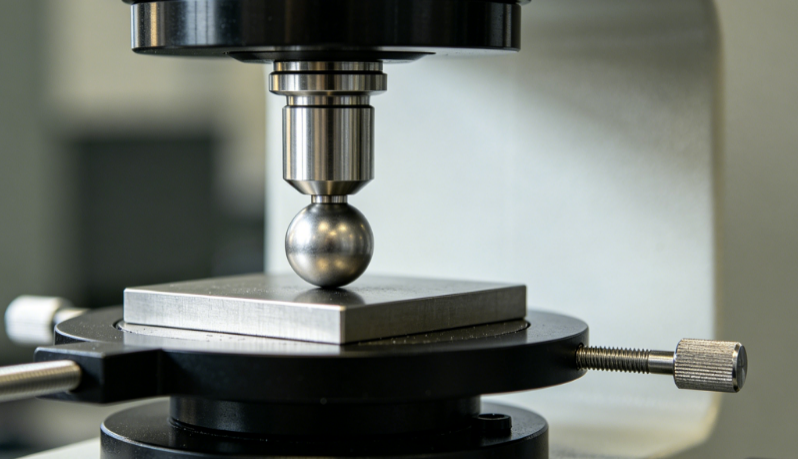
As an independent third-party testing service provider, we offer comprehensive ball Indentation hardness testing for a wide range of metallic and plastic materials. The ball indentation method is one of the oldest and most reliable hardness measurement techniques, encompassing two distinct test families: the brinell hardness test for metals (using optical indentation diameter measurement) and the ISO 2039‑1 ball indentation method for plastics (using depth‑of‑penetration measurement). Both methods share the fundamental principle of pressing a spherical indenter (a hardened steel or tungsten carbide ball) into a material‘s surface under a specified test force, then deriving a hardness value either from the diameter or depth of the resulting impression[reference:0][reference:1]. Because the ball indenter produces a relatively large, smooth indentation, these tests provide representative average hardness values that are less sensitive to local material inhomogeneities, rough surface finishes, and minor contaminants. This makes ball Indentation hardness testing particularly valuable for evaluating coarse‑grained metals, castings, forgings, plastics, ebonite, and large components where other hardness methods (Rockwell, Vickers) may be impractical or insufficiently representative. Our accredited laboratory follows international standards (ISO 6506, ASTM E10, ISO 2039‑1, GB/T 231, GB/T 3398) to deliver accurate, reproducible, and legally defensible hardness data across macro and micro scales[reference:2][reference:3]. This article outlines our ball Indentation hardness testing capabilities – including scope, key test items, test procedures, and standard methods – to help manufacturers, foundries, plastics processors, and quality assurance teams verify material compliance and product performance.
1. What Is ball Indentation hardness Testing?
ball Indentation hardness is a static indentation method in which a spherical indenter (a ball of specified diameter, typically made of tungsten carbide or hardened steel) is pressed into the surface of a test specimen under a defined test force. The hardness value is determined by measuring either the diameter of the resulting indentation (as in Brinell testing for metals) or the depth of penetration under load (as in ISO 2039‑1 testing for plastics), then calculating the ratio of the applied force to the surface area of the indentation[reference:4][reference:5].
The method provides two principal approaches:
brinell hardness test (for metallic materials) – Developed by Swedish engineer Johan August Brinell in 1900, this method uses a tungsten carbide ball (typically 10 mm, 5 mm, 2.5 mm, or 1 mm diameter) pressed into the specimen with a test force ranging from 1 kgf to 3000 kgf. After removal of the force, the diameter of the residual indentation is measured optically, and the brinell hardness number (HBW) is calculated as the quotient of the test force divided by the spherical surface area of the indentation[reference:6][reference:7]. Brinell testing is the preferred method for coarse‑grained metals, castings, forgings, and large components where a representative bulk measurement is required[reference:8]. Hardness values are expressed with the symbol HBW, followed by the ball diameter and test force (e.g., 350 HBW 10/3000 indicates a brinell hardness of 350 determined with a 10 mm ball and a test force of 3000 kgf)[reference:9].
ISO 2039‑1 ball Indentation hardness test (for plastics and ebonite) – This method measures the depth of penetration of a hardened steel ball under a specified load. The test force is applied in two stages: a preload (9.8 N) establishes a reference plane, then the total test force (selected from 49 N, 132 N, 358 N, or 961 N) is applied, and the indentation depth is measured after 30 seconds. The ball Indentation hardness (HB) is calculated from the applied load divided by the surface area of the impression derived from the measured depth, expressed in N/mm²[reference:10][reference:11]. This method is used for research and development, quality control, and acceptance or rejection of plastic materials under specifications[reference:12][reference:13]. For maximum accuracy in the measurement of plastics, which tend to creep, specimens should be conditioned and the test performed at 23 ± 2°C, 50 ± 5% RH, and a longer dwell time is applied to allow for any time‑dependent deformation[reference:14][reference:15].
2. Our Testing Scope for ball Indentation hardness
We cover a broad range of materials, product forms, and ball indentation configurations:
By material type (Brinell – metals): Ferrous metals (carbon steel, alloy steel, stainless steel, tool steel, cast iron – gray, ductile, malleable); Non‑ferrous metals (aluminium and aluminium alloys, copper and copper alloys – brass, bronze, copper‑nickel; titanium alloys, nickel alloys, magnesium alloys, zinc alloys); Large forgings and castings (engine blocks, gear blanks, turbine housings, pump casings); Steel plates, bars, and structural sections; Welded joints (weld metal, heat‑affected zone, base metal – for representative area averaging).
By material type (ISO 2039‑1 – plastics): Thermoplastics (polyethylene – PE, polypropylene – PP, polycarbonate – PC, ABS, polyamide – PA, polymethyl methacrylate – PMMA, PVC, acetal); Thermosetting plastics (epoxy, phenolic, melamine, polyester); Ebonite (hard rubber); Filled and unfilled plastics; Engineering plastics; Plastic sheets, moulded parts, laminates; Electrical insulating materials; Non‑metallic electrical enclosure materials (GB/T 5169.21 evaluation)[reference:16].
By test configuration (Brinell – metals): Macro‑range testing (test force ≥ 5 kgf – typically 500‑3000 kgf) – for bulk materials and large components; Micro‑range testing (test force ≤ 5 kgf, with small ball diameters 1‑2.5 mm) – for thin sections and small parts; Laboratory testing (precision stationary Brinell testers, 250‑3000 kgf); Portable / on‑site testing (portable Brinell testers with hydraulic test heads for large, heavy, or immovable components)[reference:17].
By test configuration (ISO 2039‑1 – plastics): Standard test forces: 49 N, 132 N, 358 N, 961 N (selected to produce indentation depth in the range 0.15‑0.35 mm)[reference:18]; Laboratory testing (precision ball Indentation hardness testers with depth measurement systems); Conditioned atmosphere (23 ± 2°C, 50 ± 5% RH) for plastics testing.[reference:19]
3. International Standards & Compliance
All ball Indentation hardness tests are performed in strict accordance with the following international standards:
3.1 Brinell (Metals) Standards
ISO 6506‑1 (Metallic materials – brinell hardness test – Part 1: Test method) – the international standard defining the test principle, test force‑ball diameter combinations, indentation measurement, and hardness calculation[reference:20].
ASTM E10 (Standard test method for brinell hardness of metallic materials) – the primary US standard for Brinell testing, specifying test procedures, calibration, and reporting[reference:21].
GB/T 231.1 (Metallic materials – brinell hardness test – Part 1: Test method) – Chinese national standard, aligned with ISO 6506‑1[reference:22][reference:23].
ISO 6506‑2 (Verification and calibration of brinell hardness testing machines).
ISO 6506‑3 (Calibration of reference hardness blocks).
ASTM E140 (Hardness conversion tables) – provides conversion between Brinell and other scales (HRC, HRB, HV, tensile strength).
3.2 ISO 2039‑1 (Plastics) Standards
ISO 2039‑1 (Plastics – Determination of hardness – Part 1: Ball indentation method) – specifies the method for determining the hardness of plastics and ebonite by means of a loaded ball indenter; provides data for research, development, quality control, and acceptance/rejection[reference:24].
GB/T 3398.1 (Plastics – Determination of hardness – Part 1: Ball indentation method) – Chinese national standard, aligned with ISO 2039‑1[reference:25].
ISO 291 (Plastics – Standard atmospheres for conditioning and testing) – for specimen conditioning before testing (23 ± 2°C, 50 ± 5% RH).
GB/T 2411 (Plastics and hard rubber – Determination of indentation hardness by means of a durometer – shore hardness) – companion standard for other plastic hardness measurements[reference:26].
GB/T 5169.21 (Fire hazard testing for electric and electronic products – Part 21: Ball pressure test method – Abnormal heat) – for non‑metallic materials of electrical equipment[reference:27].
4. Key Test Items & Measurement Parameters
Our ball Indentation hardness testing services produce detailed, high‑precision data for a variety of applications. Key parameters and deliverables include:
4.1 brinell hardness Value (HBW – Metals)
brinell hardness number (HBW) – computed using the formula HBW = 0.102 × 2F / [πD(D − √(D² − d²))], where F is the test force (N), D is the ball diameter (mm), and d is the mean indentation diameter (mm) from two perpendicular measurements[reference:28][reference:29]. In practice, hardness values are often read directly from conversion tables or hardness testing software after the indentation diameter is measured[reference:30]. The result is expressed with test conditions, e.g., 350 HBW 10/3000 (350 HBW with a 10 mm ball and 3000 kgf test force, dwell time 10‑15 seconds).
Indentation diameter measurement – The residual indentation is measured in two perpendicular directions using a calibrated measuring microscope or automated imaging system; the arithmetic mean of the two diameters is used in the HBW calculation[reference:31]. If the difference between the two diameters exceeds 2% of the smaller measurement, the indentation is considered irregular and the test is repeated.
Indenter ball selection – Standard ball diameters: 10 mm (most common for bulk testing), 5 mm, 2.5 mm, 2 mm, 1 mm[reference:32]. Smaller balls are used for thin sections, small components, or when a smaller indentation is required.
Test force selection (F/D² ratio) – To ensure geometric similarity of indentations, the ratio of test force to the square of ball diameter (F/D²) is kept constant. Common F/D² values: 30 (hard metals, e.g., steel and cast iron: 10 mm ball / 3000 kgf); 15 (medium‑hard materials); 10 (aluminium alloys, copper alloys); 5 (soft non‑ferrous metals); 2.5 (very soft metals)[reference:33].
Dwell time – The test force is maintained for a specified period: for ferrous metals: 10‑15 seconds; for non‑ferrous metals: up to 30 seconds; for very soft materials: up to 60 seconds[reference:34].
4.2 ball Indentation hardness (HB – Plastics per ISO 2039‑1)
ball Indentation hardness (HB) – The hardness value expressed in N/mm², calculated as HB = applied load / impression surface area, where the impression surface area is derived from the measured depth of penetration[reference:35]. For a depth within the allowable 0.15‑0.35 mm range, the surface area can be determined from reference tables[reference:36]. The result is expressed, e.g., 45 HB.
Preload stage – A test preload of 9.8 N is first applied to establish a reference plane (h₀) for subsequent measurement, eliminating the influence of surface roughness and machine play[reference:37].
Test force selection – The total test force is selected from 49 N, 132 N, 358 N, or 961 N, such that the resulting indentation depth falls within the range 0.15‑0.35 mm. If the measured depth falls outside this range, the test force must be increased or decreased accordingly[reference:38].
Indentation depth measurement – The penetration depth is measured under load after the specified dwell time (typically 30 seconds)[reference:39].
Specimen thickness – Recommended specimen thickness is ≥ 4 mm. For specimens less than 4 mm thick, multiple specimens may be stacked, but hardness values may differ from a single specimen of equivalent thickness[reference:40].
4.3 Indentation Spacing & Specimen Preparation
Specimen surface (metals – Brinell) – The test surface must be smooth, flat, and free from scale, oxide, grease, and contamination. Surface roughness (Ra) should be ≤ 2.5 µm for the 10 mm ball[reference:41]. Specimen thickness must be at least 8‑10 times the indentation depth – recommended at least 10× per ASTM E10[reference:42].
Specimen surface (plastics – ISO 2039‑1) – The test specimen should be a flat sheet or block with parallel surfaces. A thickness of 4 mm is recommended. The surfaces shall be smooth and clean[reference:43]. Specimens shall be conditioned at 23 ± 2°C, 50 ± 5% RH before testing.
Indentation spacing (metals) – Distance from indentation centre to specimen edge: ≥ 2.5 × mean indentation diameter. Distance between adjacent indentation centres: ≥ 3 × mean indentation diameter to avoid work‑hardening interference[reference:44].
Indentation spacing (plastics) – Indentation points must be at least 10 mm apart from each other and from the edge of the test specimen to ensure independent measurements[reference:45][reference:46].
4.4 Hardness Conversion & Supplementary Data
Conversion to other hardness scales – For metals, Brinell values can be converted to Rockwell (HRC, HRB), Vickers (HV), or approximate tensile strength for steels (UTS ≈ 3.45 × HBW for carbon and low‑alloy steels) using conversion tables per ASTM E140[reference:47]. For plastics, ball Indentation hardness (HB) provides a direct measure of material stiffness in N/mm², and the hardness correlates with indentation depth[reference:48].
Hardness uniformity mapping – For large components, we perform multiple indentations across the specimen surface to generate hardness distribution maps and identify soft spots or localized variations.
Case depth / surface layer assessment – By performing Brinell indentations at different test forces (with varying ball diameters), we can estimate the effective depth of hardened surface layers on metallic components.
5. Test Procedure & Specifications
Our laboratory strictly follows the procedural requirements of the applicable standards. The key steps and specifications are summarised below:
Specimen preparation (metals – Brinell) – The test surface is cleaned and prepared by grinding or light machining to achieve the required surface finish (Ra ≤ 2.5 µm). The specimen is placed on a rigid anvil and must be sufficiently thick (≥ 8‑10 × expected indentation depth). For large or irregular components, we use portable Brinell testers on‑site[reference:49].
Indentation procedure (Brinell) – The test force is applied smoothly without impact (typically over 1‑8 seconds), then maintained for the specified dwell time (10‑15 seconds for steels, up to 30 seconds for soft metals). After removal of the force, the indentation diameter is measured in two perpendicular directions using an optical microscope or automated imaging system[reference:50]. The arithmetic mean of the two diameters is used to calculate HBW via formula or table lookup.
Specimen preparation (plastics – ISO 2039‑1) – Specimens are conditioned at 23 ± 2°C, 50 ± 5% RH. The test specimen should be a flat sheet or block of sufficient size (e.g., 20 mm × 20 mm minimum) with parallel surfaces[reference:51].
Indentation procedure (ISO 2039‑1) – A preload of 9.8 N is first applied to establish a reference plane. After preload stabilisation, the full test force (49 N, 132 N, 358 N, or 961 N) is applied and maintained for 30 seconds. The indentation depth is measured under load, and the ball Indentation hardness (HB) is calculated from the depth[reference:52]. For specimens with curved surfaces, a circular support plate helps overcome measurement issues.
Number of indentations – For routine quality control, at least 3 valid indentations are performed for each test condition, and the average hardness is reported. For material acceptance testing or high‑precision requirements, 5 indentations are standard. For Brinell testing of large components, a grid of indentations may be performed for hardness mapping.
Verification & calibration – brinell hardness testers are verified daily using certified reference hardness blocks (calibrated per ISO 6506‑3). At least 5 indentations are made on the reference block; the average HBW must be within the certified tolerance (±3% for macro range). The measuring system (microscope) is calibrated using a stage micrometer[reference:53]. ISO 2039‑1 testers are verified using reference specimens and calibrated depth measurement systems. Annual direct verification by an accredited calibration laboratory is performed per ISO 6506‑2 and ISO 2039‑1 requirements.
6. Advantages & Limitations of ball Indentation hardness Testing
Understanding the strengths and limitations of ball indentation methods ensures proper selection for your materials and applications.
Advantages: Suitable for coarse‑grained, cast, forged, and non‑homogeneous materials – the large indentation averages the material response over a wider area, providing a representative bulk measurement[reference:54]. Less sensitive to surface roughness and minor contaminants – the relatively large indentation size (typically 2‑5 mm diameter for Brinell) makes the test resilient to surface imperfections that would affect smaller‑indenter methods such as Rockwell or Vickers[reference:55]. Direct hardness‑tensile correlation for steels – brinell hardness approximates tensile strength (UTS ≈ 3.45 × HBW)[reference:56]. Portable testing capability – robust handheld Brinell testers with hydraulic test heads enable in‑situ testing of large, heavy, and awkwardly shaped components[reference:57]. For plastics, the ISO 2039‑1 method provides a direct measure of material stiffness in MPa, correlating well with mechanical performance, and the two‑stage loading eliminates surface roughness effects[reference:58]. The method is standardised globally, with results comparable across different laboratories.
Limitations: Destructive testing leaves a relatively large indentation (typically 2‑6 mm diameter for Brinell) that may be objectionable on finished components. The test is slower than Rockwell (30‑60 seconds plus measurement time) and is not suitable for high‑volume production screening. Thicker specimens required – at least 8‑10 times indentation depth[reference:59]. For very hard materials (above 650 HBW), the tungsten carbide ball may deform; such materials are better evaluated using the Vickers (HV) or Rockwell (HRC) methods[reference:60]. For plastics, the method is less suitable for very thin specimens (< 4 mm) unless stacked, and hardness values may differ when stacking is used. The test is not suitable for very hard or very soft materials outside the valid measurement ranges (for Brinell: d/D ratio should be between 0.24 and 0.60; for ISO 2039‑1: indentation depth should be 0.15‑0.35 mm).
7. Reporting & Result Presentation
Our test reports are detailed, transparent, and compliant with ISO/IEC 17025 and the relevant standards. Each report includes:
Specimen identification – Material type/grade, component description, heat number, sampling location, and specimen preparation details (e.g., mounted, polished, conditioned at 23±2°C / 50±5% RH for plastics).
Test conditions – Standard referenced (ISO 6506, ASTM E10, ISO 2039‑1, GB/T 231, GB/T 3398), ball indenter material (tungsten carbide for HBW; hardened steel for HB), ball diameter (D), test force (F), dwell time (t), and (for Brinell) the resulting F/D² ratio and the d/D ratio for validity confirmation.
Individual indentation data – For Brinell: measured diameters d₁ and d₂ (mm), average diameter d (mm), calculated individual HBW value, and whether the d/D ratio falls within the acceptable range (0.24‑0.60). For ISO 2039‑1: indentation depth (mm) and calculated HB value (N/mm²).
Statistical summary – Mean hardness (HBW or HB), standard deviation, coefficient of variation (%), range (minimum to maximum), and number of valid indentations.
Calibration records – Brinell tester model and serial number, date of last calibration, certified reference block values, verification results (mean HBW vs. block certified value, repeatability). For ISO 2039‑1 tester: depth measurement system calibration and reference specimen verification.
Hardness conversion (if requested) – Conversions to HRC, HRB, HV, or approximate tensile strength (for steels) using ASTM E140 tables, with any limitations noted.
Compliance statement – Pass/fail determination against specification limits, customer purchase order, or material standard (e.g., “The measured average brinell hardness of 187 HBW meets the ASTM A36 requirement of 160‑220 HBW”).
8. Why Choose Our Third‑Party ball Indentation hardness Testing Services?
As an independent laboratory, we provide unbiased, accurate, and legally defensible hardness data. Our strengths include:
ISO/IEC 17025 accreditation – Our ball Indentation hardness testing (Brinell and ISO 2039‑1) is CNAS and CMA accredited, with regular participation in proficiency testing (e.g., ASTM E10, ISO 6506, ISO 2039‑1 round robins).
Comprehensive Brinell testing equipment – We maintain a fleet of brinell hardness testers covering test forces from 1 kgf to 3000 kgf, including stationary machines (250‑3000 kgf) and portable hydraulic units (up to 3000 kgf) for on‑site testing of large, heavy, or immovable components[reference:61]. All testers are equipped with certified reference hardness blocks covering the hardness range 100‑650 HBW.
Specialised ISO 2039‑1 ball indentation tester – We operate precision plastic ball Indentation hardness testers with automated depth measurement systems, capable of applying the specified test forces (49 N, 132 N, 358 N, 961 N) and measuring indentation depth to ±0.001 mm accuracy. Specimen conditioning and temperature/humidity control are provided.
Wide specimen accommodation – For Brinell: components from small coupons (minimum thickness 1.5 mm, using small‑diameter balls) up to large forgings and castings weighing up to 1500 kg. For ISO 2039‑1: plastic sheets, moulded parts, laminates, and electrical insulating materials down to 4 mm thickness.
On‑site portable Brinell testing – For large forgings, heavy castings, and installed components that cannot be transported to our laboratory, we offer portable Brinell testing with hydraulic test heads, delivering certified results with full traceability.
Fast turnaround – Routine brinell hardness testing (batch of 5 specimens, 3 indentations each) typically completed within 1‑2 business days; ISO 2039‑1 plastic hardness testing within 2‑3 business days. On‑site testing is scheduled based on travel requirements.
Complete supplementary testing – Hardness conversions to other scales (HRC, HRB, HV, tensile strength) and comparative testing of multiple materials on one work order.
Confidentiality – Full protection of your material composition, component design, and quality records.
Consultative support – Our metallurgists and plastics engineers assist with ball diameter and test force selection, interpretation of borderline d/D ratio results, diagnosis of soft spots or hardness variations, and root‑cause analysis of hardness‑related product failures.
Whether you need to qualify a large steel casting for pressure vessel service, verify the heat treatment of a heavy forging, test the ball Indentation hardness of a plastic enclosure material, or perform on‑site hardness mapping of an installed component, our ball Indentation hardness testing experts are ready to deliver reliable, actionable results.
Get Started with Your ball Indentation hardness Testing Project
Contact our team with your material type (metal or plastic), component dimensions, expected hardness range, applicable standard (ISO 6506 / ASTM E10 for metals; ISO 2039‑1 / GB/T 3398 for plastics), and any special requirements (on‑site testing, hardness conversion, large component mapping). We will provide a detailed quotation, sample submission guidelines (minimum specimen thickness, surface preparation requirements, and conditioning needs for plastics), and a testing schedule. Let us help you obtain accurate, representative ball Indentation hardness data for your materials and components.
This article provides an overview of our ball Indentation hardness testing capabilities. For specific test methods, sample quantity, and pricing, please request a tailored service proposal.