Reasons for choosing our testing services
ZHONGXI Testing has obtained inspection qualification certifications from multiple countries and regions worldwide. We possess a senior testing team and advanced testing methods, providing independent, impartial, and professional third-party verification services for global carbon projects.
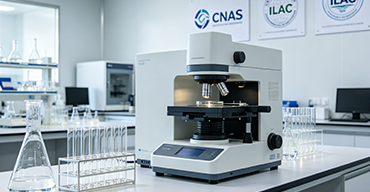
Internationally recognized authority
Certified by multiple international standards such as CNAS, VCS, and GS, with reports universally applicable worldwide.

Global service capability
Covering 140+ countries and regions, it supports on-site detection and remote verification in multiple languages.
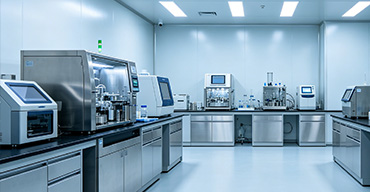
Professional experimental methods
Adopt standard experimental methods to ensure accurate and reliable data.
fatigue limit Testing Services: Determining Material Endurance Under Cyclic Loading
As an independent third-party testing service provider, we offer comprehensive fatigue limit testing for metallic materials, polymers, composites, ceramics, and advanced alloys. Fatigue is the progressive and localized structural damage that occurs when a material is subjected to repeated cyclic loading — stresses that may be well below the material’s static yield strength. Approximately 80–90% of all mechanical failures in service are fatigue-related, making fatigue limit testing one of the most critical mechanical characterisation methods for the aerospace, automotive, structural engineering, and medical device industries. Our accredited laboratory follows international standards (ASTM E466, ISO 1099, ISO 1143, ASTM E606, ASTM E647) to deliver accurate, reproducible, and legally defensible fatigue data. This article outlines our fatigue limit testing capabilities – including scope, key test items, and standard test methods – to help manufacturers, design engineers, quality assurance teams, and certification bodies evaluate material endurance and predict service life.
1. What Is fatigue limit Testing?
fatigue limit (also known as the endurance limit) is the maximum stress amplitude that a material can withstand for an infinitely large number of cycles without failing. For ferrous materials and titanium alloys, the fatigue limit is typically defined as the stress level at which the material survives 10⁷ cycles (or 5×10⁶ for some standards) without fracture, beyond which the S‑N curve becomes horizontal or asymptotically approaches a constant value. For non-ferrous metals (aluminium, copper, magnesium alloys) and polymers, a true fatigue limit does not exist — instead, fatigue strength is reported at a specific number of cycles (e.g., 10⁸ cycles), as the S‑N curve continues to decline gradually with increasing cycles.
The test involves applying a cyclic load (tension‑compression, bending, or torsion) to a prepared specimen at a specified stress amplitude, frequency, and stress ratio (R = σ_min / σ_max). The number of cycles to failure (N) is recorded, and multiple specimens are tested at different stress amplitudes to construct an S‑N curve (Wöhler curve) – a logarithmic plot of stress amplitude (S) versus cycles to failure (N). The fatigue limit is determined as the stress level below which the material does not fail within the defined cycle limit.
2. Our Testing Scope for fatigue limit
We cover a broad range of materials, product forms, and industry applications:
By material type: Ferrous metals (carbon steel, alloy steel, stainless steel, tool steel, cast iron, ductile iron); Non-ferrous metals (aluminium alloys – 6061‑T6, 7075‑T6; titanium alloys – Grade 5/Ti‑6Al‑4V; magnesium alloys – AZ31B; copper alloys, nickel alloys); High‑temperature alloys (nickel‑based superalloys – Inconel 718, Waspaloy; cobalt‑based alloys – Stellite); Polymer matrix composites (carbon fibre reinforced polymer – CFRP; glass fibre reinforced polymer – GFRP); Engineering plastics (polyamide, polycarbonate, acetal, PEEK); Ceramics (advanced ceramics, structural ceramics); Welded joints (weld metal, heat‑affected zone – HAZ, base metal comparison); Surface‑treated materials (carburised, nitrided, induction‑hardened, shot‑peened).
By product form / component: Standard fatigue specimens (hourglass, dog‑bone, round bar, rectangular); Machined coupons from raw material; Extracted specimens from finished components; Small‑scale components (gears, shafts, fasteners, bolts, springs); Full‑scale component testing (by arrangement).
By test type / loading mode: Axial (push‑pull) fatigue (tension‑compression, tension‑tension); Rotating bending fatigue (fully reversed bending – R = –1); Plane bending fatigue (three‑point or four‑point bending); Torsional fatigue; Multi‑axial fatigue (combined axial‑torsion, biaxial loading).
By environmental condition: Ambient temperature (20‑25°C); Elevated temperature (up to 1200°C with furnace); Low temperature (down to –196°C with liquid nitrogen); Corrosive environment (salt spray, acid/alkali immersion, humidified chamber); High‑cycle fatigue (>10⁴ cycles) and low‑cycle fatigue (≤10⁴ cycles, strain‑controlled).
By industry application: Aerospace (turbine disks, blades, landing gear, fuselage panels, engine mounts); Automotive (suspension components, wheels, chassis, drivetrain, powertrain parts); Energy (wind turbine towers, blades, pressure vessels, nuclear reactor components); Construction (bridge girders, steel structures, crane hooks); Medical (orthopaedic implants – hip stems, bone screws, spinal rods).
3. Key Test Items & Measurements We Perform
Our fatigue limit testing services generate critical design data for material qualification, life prediction, and reliability assessment.
3.1 fatigue limit (Endurance Limit – σ_lim)
Definition: The maximum stress amplitude that a material can withstand for an infinite number of cycles (typically defined as 10⁷ cycles for steels and titanium alloys). Determined by the staircase method (up‑and‑down method) or by testing multiple specimens at decreasing stress amplitudes until a run‑out (non‑failure) condition is achieved. For non‑ferrous materials, fatigue strength is reported at a specified cycle count (e.g., 10⁸ cycles).
Typical values: For structural steels, fatigue limit ≈ 0.35‑0.50 × ultimate tensile strength (UTS). For aluminium alloys, no true limit exists; fatigue strength at 10⁸ cycles ≈ 0.20‑0.35 × UTS.
3.2 S‑N Curve (Stress‑Life Curve – Wöhler Curve)
Definition: A graphical representation of the relationship between applied stress amplitude (S) and the number of cycles to failure (N). Plotted on a log‑log scale, the curve typically shows a decreasing trend from low‑cycle fatigue (LCF, N ≤ 10⁴ cycles, high stress, plastic deformation) to high‑cycle fatigue (HCF, N > 10⁴ cycles, elastic deformation), and for steels, plateaus at the fatigue limit. The S‑N curve is the fundamental tool for predicting fatigue life under constant amplitude loading.
Construction method: At least 3‑4 stress levels are selected (high stress levels for finite life). At each stress level, 5‑8 specimens are tested to failure. The median fatigue life is plotted at each stress level. The S‑N curve is fitted using Basquin equation (σ_a = σ_f‘ × (2N)^b) for the high‑cycle region and Coffin‑Manson model for the low‑cycle region.
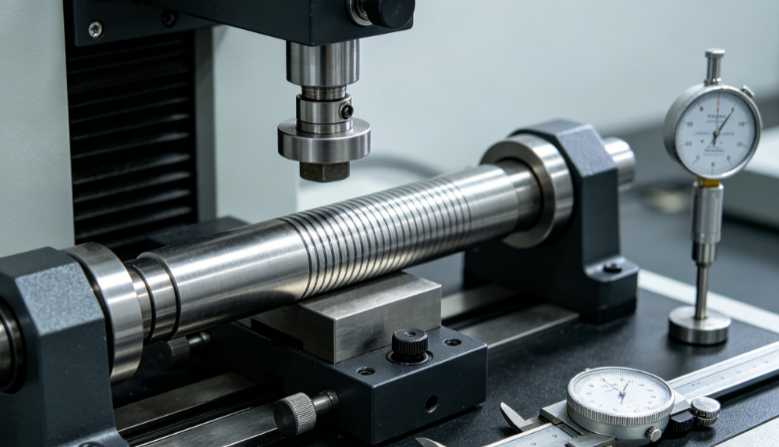
3.3 Staircase (Up‑and‑Down) Method for fatigue limit Determination
Purpose: Efficient statistical determination of the fatigue limit using fewer specimens (typically 15‑20 specimens) compared to traditional S‑N curve construction. The method is specified in ISO 12107 and ASTM E739, and is widely used for qualification testing.
Procedure: Specimens are tested sequentially. The first specimen is tested at an estimated fatigue limit stress amplitude. If it fails, the next specimen is tested at a lower stress amplitude; if it survives (run‑out), the next specimen is tested at a higher stress amplitude. The step size (Δσ) is typically 2‑5% of the estimated fatigue limit. After testing a sufficient number of specimens (typically 15‑20), the fatigue limit is calculated as the average of all test stresses, weighted by the occurrence of paired failure‑survival events. The standard deviation of the fatigue limit is also estimated from the data. The staircase method is particularly valuable when material availability is limited or when testing is expensive.
3.4 Fatigue Crack Growth Rate (da/dN – ASTM E647)
For damage‑tolerant design, we measure the rate of crack propagation under cyclic loading. A compact tension (CT) or middle tension (MT) specimen with a pre‑crack is cyclically loaded while the crack length (a) is monitored. The crack growth rate (da/dN) is plotted against the stress intensity factor range (ΔK). The Paris power law (da/dN = C(ΔK)^m) characterises the crack propagation behaviour. This data enables the calculation of remaining life for components with pre‑existing defects.
3.5 Low‑Cycle Fatigue (LCF – ASTM E606)
For applications involving plastic deformation during each cycle (e.g., thermal cycling of pressure vessels, turbine startup/shutdown, seismic loading), we perform strain‑controlled fatigue testing. The specimen is cycled between fixed strain limits (typically R = –1), and the stress response is recorded. The Coffin‑Manson relationship (Δε/2 = (σ_f‘/E)(2N)^b + ε_f’(2N)^c) separates elastic and plastic strain components. LCF data is essential for components that experience high stresses, extreme temperatures, or thermal transients.
3.6 Residual Stress Analysis
Residual stresses (compressive or tensile) significantly influence fatigue life. We measure residual stresses using X‑ray diffraction (XRD – ASTM E915) or blind hole drilling (ASTM E837). Compressive residual stresses (e.g., from shot peening, carburising, rolling) are beneficial and can increase fatigue limit by 20‑50%; tensile residual stresses accelerate fatigue crack initiation. Surface condition is one of the most critical factors affecting fatigue performance — our residual stress measurement helps manufacturers optimise surface treatment processes and verify that beneficial compressive stresses are present before the component is placed into service.
3.7 Fractography (Failure Analysis)
After fatigue testing, the fracture surface is examined using scanning electron microscopy (SEM) and optical microscopy (ASTM E3). Key features include:
Fatigue striations (beach marks) – concentric bands indicating stable crack propagation under cyclic loading. The spacing between striations correlates with the crack growth rate (da/dN).
Radiant ridges – lines radiating from the crack initiation site, indicating the direction of crack propagation.
Final fracture zone – fast fracture area after the crack reaches the critical size, typically exhibiting dimpled rupture or cleavage, with the final fracture zone size indicating the remaining cross‑sectional area when overload occurred.
Fractography identifies the crack initiation site (e.g., surface inclusion, machining mark, corrosion pit), enabling root cause analysis and design improvement.
4. Standard Test Methods We Apply
All tests are performed according to internationally recognised standards. Our laboratory is ISO/IEC 17025 accredited and equipped with servo‑hydraulic fatigue testers (Instron 8800 series, MTS 810 series), rotating bending machines (Moore‑type), high‑frequency resonance testers (25‑1000 kHz – ultrasonic fatigue), and environmental chambers.
4.1 Axial (Push‑Pull) Fatigue – Metals
ASTM E466 (Standard practice for conducting force‑controlled constant amplitude axial fatigue tests of metallic materials). – Specifies the test conditions for constant‑amplitude, force‑controlled axial fatigue testing. Covers test specimen preparation (smooth or notched, circular or rectangular cross‑section), alignment verification, loading parameters (stress ratio R, frequency, waveform), data recording, and result reporting. Specimens are cycled in tension‑compression, tension‑tension, or compression‑compression. The practice is applicable to metals in air at room temperature but may be extended to elevated or sub‑ambient temperatures.
ISO 1099 (Metallic materials – Fatigue testing – Axial force‑controlled method). – The international equivalent of ASTM E466, specifying conditions for axial, constant‑amplitude, force‑controlled fatigue tests at ambient temperature on metallic specimens without deliberately introduced stress concentrations. The object is to provide fatigue information such as the relation between applied stress and number of cycles to failure for a given material condition at various stress ratios.
SAE J1099 (Fatigue testing of automotive components). – Specifies fatigue test procedures for automotive structural components, including load spectrum application, data analysis, and reporting. Used for suspension components, wheels, chassis, and drivetrain parts.
4.2 Rotating Bending Fatigue
ISO 1143 (Metallic materials – Rotating bar bending fatigue testing). – Specifies the method for conducting rotating bending fatigue tests on metallic specimens. A cylindrical specimen rotates under a constant bending moment, experiencing fully reversed stress (R = –1) at every surface point per revolution. This classical method is efficient for generating S‑N curves for large numbers of specimens and is particularly suitable for determining the fatigue limit of ferrous materials. Typical rotation speeds: 3000‑10,000 rpm. The test is standard for evaluating the effects of surface condition, size, and material processing on fatigue performance.
4.3 Fatigue Crack Growth
ASTM E647 (Standard test method for measurement of fatigue crack growth rates). – Specifies the method for measuring the rate of fatigue crack growth (da/dN) as a function of stress intensity factor range (ΔK). Compact tension (CT) and middle tension (M(T)) specimen geometries are standardised. The method provides Paris law coefficients (C and m), threshold stress intensity factor range (ΔK_th), and is essential for damage‑tolerant design in safety‑critical structures.
4.4 Low‑Cycle Fatigue (Strain‑Controlled)
ASTM E606 (Standard test method for strain‑controlled fatigue testing). – Specifies the method for conducting constant‑amplitude, strain‑controlled fatigue tests, typically under low‑cycle fatigue conditions (<10⁴ cycles). The test material is subjected to alternating strains of constant amplitude under axial loading. The method is used to obtain fatigue life data for materials that undergo plastic deformation during each cycle.
4.5 Statistical Analysis & S‑N Curve Fitting
ISO 12107 (Metallic materials – Fatigue testing – Statistical planning and analysis of data). – Specifies methods for the statistical planning and analysis of fatigue test data. Includes procedures for the staircase method (up‑and‑down method) to determine the fatigue limit, methods for constructing the S‑N curve (including the selection of stress levels, specimen numbers, and data fitting), and methods for estimating the standard deviation of the fatigue limit. The standard also provides guidance on evaluating the effect of mean stress (Goodman, Gerber, Soderberg corrections) and on reporting fatigue data with confidence intervals.
DIN 50100 (Fatigue testing – Basic principles). – German standard covering the fundamentals of fatigue testing, including stress‑controlled, strain‑controlled, and tension‑compression fatigue tests. Widely referenced in European automotive and industrial applications.
4.6 Composites & Polymers
ASTM D3479 (Standard test method for tension‑tension fatigue of polymer matrix composite materials). – Specifies the method for determining the fatigue behaviour of polymer matrix composite materials (continuous‑fibre or discontinuous‑fibre reinforced) subjected to tensile cyclic loading. The test method is limited to unnotched test specimens subjected to constant‑amplitude uniaxial in‑plane loading. Two procedures are presented: Procedure A (load‑controlled) and Procedure B (strain‑controlled).
ISO 13003 (Fibre‑reinforced plastics – Determination of fatigue properties under cyclic loading conditions). – International standard for fatigue testing of fibre‑reinforced plastics.
4.7 Additional Standards
ASTM E739 (Standard practice for statistical analysis of linear or linearised stress‑life (S‑N) and strain‑life (ε‑N) fatigue data). – Provides statistical methods for analysing fatigue data and constructing S‑N curves with confidence bounds.
GB/T 3075 (Metallic materials – Fatigue testing – Axial force‑controlled method). – Chinese national standard equivalent to ISO 1099.
GB/T 4337 (Metallic materials – Fatigue testing – Rotating bar bending method). – Chinese standard for rotating bending fatigue testing.
MPIF Standard 56 (Method for determination of rotating beam fatigue endurance limit of powder metallurgy (PM) materials). – Specifies the rotating beam method for determining the fatigue endurance limit of powder metallurgy materials, using the staircase method to analyse data and determine statistically the mean endurance limit, standard deviation, and stresses for specified survival probabilities.
5. Test Procedure & Specifications (Axial Fatigue – ASTM E466 Example)
Our laboratory strictly follows the procedural requirements of ASTM E466 and ISO 1099. The following step‑by‑step procedure is standardised for axial fatigue limit determination.
Step 1: Specimen preparation – Specimens are machined from the raw material according to standard geometries (smooth hourglass or uniform diameter with fillet radii). Surface roughness is carefully controlled to Ra ≤ 0.4‑0.8 μm (optical finish) to eliminate machining‑induced stress concentrations. Low‑stress grinding and fine polishing are applied to remove residual stresses and surface roughness effects. Any surface defects, inclusions, or scratches exceeding specification cause specimen rejection. Specimen dimensions are verified on a CMM to ensure compliance with the applicable standard.
Step 2: Material characterisation – For material qualification, tensile tests (ASTM E8) and hardness tests are performed on identical heat‑treated material to obtain monotonic properties (UTS, yield strength, elongation, Young’s modulus). The tensile data guides the selection of stress amplitudes for the fatigue test, typically between 30‑70% of UTS.
Step 3: Test setup – The specimen is mounted in servo‑hydraulic fatigue test machine (Instron 8802, MTS 810) equipped with precision alignment fixtures (≤ 2% bending strain per ASTM E1012). A sinusoidal waveform is selected (typical frequency 10‑100 Hz for metals). The stress ratio R is set according to the application (R = –1 for fully reversed, R = 0.1 for tension‑tension). The load cell is calibrated to ±0.5% accuracy, and the test machine is verified for axial alignment before each test series.
Step 4: Run‑out definition – For fatigue limit determination, a run‑out (non‑failure) is typically defined as 10⁷ cycles (for steels and titanium alloys) or 5×10⁶ cycles (per some standards). If the specimen survives the run‑out cycles without fracture, the test is stopped and recorded as a run‑out.
Step 5: Staircase (up‑and‑down) testing – An initial stress amplitude is selected (typically ≈ 0.4 × UTS). A specimen is tested. If it fails, the next specimen is tested at a reduced stress amplitude (Δσ ≈ 2‑5% of estimated fatigue limit). If it survives (run‑out), the next specimen is tested at an increased stress amplitude. This process continues for 15‑20 specimens. The fatigue limit is calculated as the average stress amplitude at which failure and non‑failure events are paired. The standard deviation of the fatigue limit is estimated from the test data.
Step 6: S‑N curve construction – A separate set of specimens (3‑4 stress levels, 5‑8 specimens per level) is tested to failure at higher stress amplitudes where finite life is expected. The Basquin power law (σ_a = σ_f‘ × (2N)^b) is fitted to the failure points to define the S‑N relationship. The fatigue limit from the staircase method represents the horizontal asymptote of the S‑N curve.
Step 7: Data analysis – The number of cycles to failure (N) is recorded for each test. The S‑N curve is constructed by plotting σ_a vs. N on a log‑log scale. For steels, the curve is fitted using a linear regression on log σ_a and log N. The fatigue limit is plotted as a horizontal line at σ_lim. The results may be expressed at various survival probabilities (e.g., 50% survival for mean curve, 99.9% survival for design allowable). For the staircase method, the fatigue limit and its standard deviation are computed according to ISO 12107 or ASTM E739.
6. Why Choose Our Third‑Party fatigue limit Testing Services?
As an independent laboratory, we provide unbiased, accurate, and legally defensible fatigue data. Our strengths include:
ISO/IEC 17025 accreditation – Our fatigue testing (ASTM E466, ISO 1099, ISO 1143, ASTM E606, ASTM E647) is CNAS and CMA accredited, with regular participation in proficiency testing (e.g., ASTM E466 round‑robins).
Comprehensive fatigue test systems – We operate servo‑hydraulic axial fatigue testers (Instron 8800, MTS 810, ±25‑1000 kN force capacity, ±50 mm stroke), rotating‑beam fatigue testers (Moore‑type, ISO 1143 compliant), high‑frequency resonance testers (25‑1000 Hz, ultrasonic fatigue up to 10⁹ cycles), and multi‑axial test systems (combined axial‑torsion). Our instruments feature advanced digital controllers (±0.5% accuracy), full environmental chambers (-196°C to +1200°C), and high‑speed data acquisition (≥ 10 kHz).
Wide material coverage – From soft aluminium alloys (UTS ≈ 200 MPa) to high‑strength nickel superalloys (UTS ≈ 1500 MPa), we cover the full spectrum. Polymers and composites are tested on low‑force (1‑25 kN) systems with hydraulic grips that maintain constant clamping force throughout the test.
Environmental simulation – Corrosive environment capabilities include salt spray chambers (ASTM B117) integrated with fatigue frames, high‑temperature and low‑temperature testing, and humidity‑controlled chambers (10‑95% RH).
Fast turnaround – Routine staircase method fatigue limit tests (15 specimens) typically completed within 2‑3 weeks; full S‑N curve determination (20‑30 specimens) in 3‑4 weeks; long‑term high‑cycle fatigue (10⁷ cycles) scheduled based on specimen count and test frequency.
Detailed reporting – Reports include raw data (each specimen‘s stress amplitude and cycles to failure), S‑N curve plots (log‑log scale with fitted line), staircase method calculation (fatigue limit, standard deviation), fractography images (SEM), and clear pass/fail conclusions against customer specifications.
Confidentiality – Full protection of your material composition, component geometry, and design data.
Consultative support – Our fatigue engineers assist with test method selection (axial vs. bending, force‑controlled vs. strain‑controlled), specimen geometry design (to avoid buckling or bending), interpretation of statistical fatigue data, and root‑cause investigation of fatigue‑related field failures.
Whether you need to determine the fatigue limit of a new steel alloy for an aircraft landing gear, construct an S‑N curve for an automotive suspension component, measure crack growth rates for a pressure vessel, or validate a shot‑peening process effect on fatigue life, our fatigue limit testing experts are ready to deliver reliable, actionable results.
Get Started with Your fatigue limit Testing Project
Contact our team with your material type (metal, composite, polymer), target specification (ASTM E466, ISO 1099, ISO 1143, ASTM E606, customer spec), required output (S‑N curve, staircase fatigue limit, da/dN, etc.), and any special conditions (temperature, corrosive environment, stress ratio). We will provide a detailed quotation, specimen design and machining guidelines, and a testing schedule. Let us help you determine the cyclic endurance of your materials for safe, durable, and reliable products.
This article provides an overview of our fatigue limit testing capabilities. For specific test methods, sample quantity, and pricing, please request a tailored service proposal.