Reasons for choosing our testing services
ZHONGXI Testing has obtained inspection qualification certifications from multiple countries and regions worldwide. We possess a senior testing team and advanced testing methods, providing independent, impartial, and professional third-party verification services for global carbon projects.

Internationally recognized authority
Certified by multiple international standards such as CNAS, VCS, and GS, with reports universally applicable worldwide.

Global service capability
Covering 140+ countries and regions, it supports on-site detection and remote verification in multiple languages.

Professional experimental methods
Adopt standard experimental methods to ensure accurate and reliable data.
Comprehensive Physicochemical and Functional Characterization of Solid Peroxo-Titanium Materials: Advanced Analytical Services for Next-Generation Oxidative and Photocatalytic Applications
Solid peroxo-titanium materials – encompassing peroxo-modified titanium dioxide (TiO₂), peroxo-titanate nanotubes, layered peroxotitanates, and titanium-peroxo complexes supported on various substrates – have attracted substantial interest in the fields of heterogeneous catalysis, environmental remediation (photocatalytic degradation of organics), antimicrobial coatings, and electrochemical energy storage. These materials possess unique surface peroxo (O–O) groups that confer enhanced oxidative reactivity, extended light absorption into the visible range, and superior electron-transfer properties compared to pristine TiO₂. However, the actual performance of solid peroxo-titanium materials is critically dependent on the precise concentration, stability, and accessibility of surface peroxo species, as well as on the underlying titanium coordination environment, crystallinity, surface area, and the propensity for radical generation under irradiation. Reliable, multi-parametric characterization is therefore indispensable for quality control, batch-to-batch reproducibility, degradation mechanism elucidation, and prediction of field-scale efficacy. Our ISO/IEC 17025-accredited laboratory offers a dedicated, mechanistic-driven testing service for solid peroxo-titanium materials, integrating advanced spectroscopic, thermal, electrochemical, and radical-trapping techniques to deliver a complete performance and stability profile – far beyond simple peroxide content titrations.
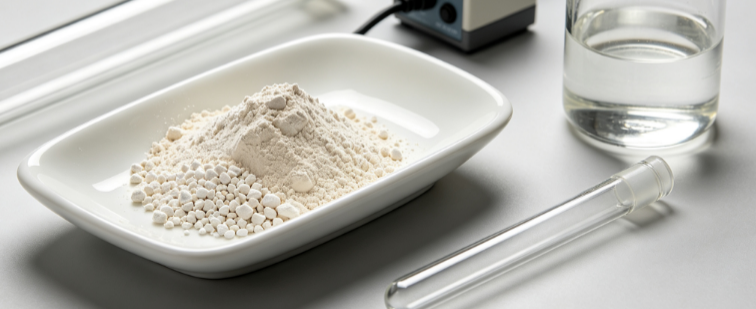
Why Comprehensive Characterization Is Essential for Solid Peroxo-Titanium Materials
Clients seeking our testing services typically aim to: (i) quantify the active peroxo oxygen content and its correlation with photocatalytic or oxidative activity, (ii) determine the thermal and photochemical stability of the peroxo groups under processing or operating conditions, (iii) identify the coordination mode of peroxo ligands (side-on vs. end-on) and their influence on bandgap and charge carrier dynamics, (iv) assess the reactive oxygen species (ROS) generation capacity, (v) optimize synthesis parameters to maximize peroxo loading without compromising structural integrity, or (vi) generate robust data for product registration, patent claims, or environmental performance certifications. Routine methods such as iodometric titration provide only a bulk peroxide value and fail to distinguish surface-active species from entrapped or weakly bound peroxides. Our integrated platform combines titrimetric analysis, FTIR and Raman spectroscopy, XPS, TGA-MS, electrochemical probing, and radical spin-trapping EPR – delivering a holistic understanding that correlates chemical composition with functional performance.
Our Advanced Analytical Suite for Solid Peroxo-Titanium Materials
1. Quantification of Peroxo Oxygen and Active Oxygen Species
We employ a multi-tier approach to quantify peroxo content. First, selective iodometric titration under acidic and neutral conditions differentiates weakly adsorbed H₂O₂ from covalently bound peroxo groups, achieving a detection limit of 0.05 mmol/g and reproducibility within ±2%. For higher precision, we use ceric ammonium sulfate redox titration and UV–Vis spectrophotometric detection of the peroxidase-catalyzed oxidation of chromogenic substrates (e.g., ABTS) – a method that specifically detects labile peroxo species capable of participating in redox cycles. To distinguish surface vs. bulk peroxo, we perform surface-limited titration by adsorbing a redox indicator (e.g., o-tolidine) and measuring the optical density change, providing a surface peroxo density in units of μmol/m². We also quantify the total oxidizable species by reaction with excess iodide and back-titration with thiosulfate, with a precision of ±0.01 mmol/g, and we cross-validate results using thermogravimetry with simultaneous mass spectrometry (TGA-MS) monitoring m/z 32 (O₂) and m/z 34 (H₂O₂) during controlled heating, which yields a distinct peroxo decomposition peak between 150 and 350 °C.
2. Structural and Phase Analysis: Titanium Coordination and Peroxo Binding Mode
We perform high-resolution powder X-ray diffraction (HR-XRD) with Rietveld refinement to identify the titanium oxide phase (anatase, rutile, brookite, or layered titanates) and to detect any phase transitions induced by peroxo incorporation – we can detect secondary phases down to 0.5 wt%. The local coordination of titanium and the peroxo ligand geometry are probed by Raman spectroscopy (using 532 nm and 785 nm lasers) and FTIR with attenuated total reflectance (ATR). The characteristic O–O stretching vibration appears in the 800–900 cm⁻¹ region, and the Ti–O–O bending modes below 600 cm⁻¹ – we perform deconvolution to distinguish side-on (η²) from end-on (η¹) peroxo configurations, which have distinct catalytic implications. For deeper insight, we apply X-ray absorption spectroscopy (XAS) – both Ti K-edge XANES and EXAFS – to determine the Ti–O bond distances (accuracy ±0.02 Å) and the coordination number of Ti (typically 5- or 6-fold), correlating these with peroxo binding. Our in-house data reduction pipeline (Athena/Artemis) ensures rapid and accurate analysis, and we provide comparative spectra against reference materials (pristine TiO₂ and well-characterized peroxotitanium complexes).
3. Surface Chemical Speciation and Oxidation States
We use X-ray photoelectron spectroscopy (XPS) with monochromatic Al Kα radiation to examine the Ti 2p, O 1s, and C 1s core levels. The Ti 2p spectrum is deconvoluted into Ti⁴⁺ (459.0 eV) and any Ti³⁺ (457.5 eV) contributions – the presence of Ti³⁺ indicates oxygen vacancies and can be correlated with peroxo stability. The O 1s peak is fitted to lattice oxygen (529.8 eV), surface hydroxyl (531.5 eV), and peroxo oxygen (532.8–533.5 eV), allowing a quantitative estimate of the surface peroxo fraction with a resolution of ±0.1 at%. We also perform UV–Vis diffuse reflectance spectroscopy (DRS) to determine the bandgap energy via Kubelka-Munk transformation; the peroxo-induced mid-gap states often cause a red-shift, and we quantify this shift with an accuracy of ±0.02 eV. Together, XPS and DRS provide a direct link between surface chemistry and optical properties.
4. Textural Properties and Pore Architecture
While peroxo functionalization can alter porosity, we measure N₂ physisorption at 77 K over a broad relative pressure range (10⁻⁷–0.995) to obtain BET surface area, total pore volume, and pore size distribution using NLDFT and QSDFT models. For mesoporous samples, we use small-angle X-ray scattering (SAXS) to evaluate the ordering and any possible pore blockage due to peroxo deposition. We also determine particle size distribution by dynamic light scattering (DLS) and true density by helium pycnometry. Our reproducibility for BET area is within ±1.5% and pore volume within ±2%, ensuring reliable comparison of batches.
5. Thermal Stability and Decomposition Kinetics
Understanding the thermal stability of peroxo groups is crucial for processing (e.g., calcination, drying) and service life. We perform Thermogravimetric Analysis (TGA) coupled with differential scanning calorimetry (DSC) under inert and oxidizing atmospheres, from 30 °C to 800 °C at controlled heating rates (1–20 °C/min). The mass loss associated with peroxo decomposition is quantified, and the activation energy of decomposition is derived using the Kissinger and Flynn-Wall-Ozawa methods. We also conduct isothermal aging at selected temperatures (100, 150, 200 °C) for up to 48 hours, with periodic sampling for residual peroxo analysis – providing a lifetime prediction under typical operating conditions. Our TGA-MS system simultaneously monitors O₂, H₂O, and CO₂ evolution, which helps to distinguish peroxo breakdown from dehydroxylation or carbonate decomposition.
6. Reactive Oxygen Species (ROS) Generation and Radical Scavenging Assays
The primary function of peroxo-titanium materials often relies on ROS production (hydroxyl radical •OH, superoxide •O₂⁻, and singlet oxygen ¹O₂) under UV or visible light. We quantify ROS using electron paramagnetic resonance (EPR) with spin traps – 5,5-dimethyl-1-pyrroline N-oxide (DMPO) for •OH and •O₂⁻, and 2,2,6,6-tetramethylpiperidine (TEMP) for ¹O₂. We perform time-resolved EPR under controlled illumination (LED sources at 365, 405, 450, and 520 nm) to measure the initial ROS generation rate and the total radical yield (in μmol/g) after a defined irradiation period. Complementary, we run colorimetric assays using nitroblue tetrazolium (NBT) for superoxide and terephthalic acid for hydroxyl radicals, which serve as quick-screening tools. Our EPR quantification is calibrated against standard radical sources (e.g., TEMPO) and provides absolute radical concentrations with an accuracy of ±5% – a critical parameter for comparing photocatalytic efficiency.
7. Electrochemical Characterization of Redox Activity
The peroxo groups contribute to electron transfer and charge storage. We perform cyclic voltammetry (CV) and electrochemical impedance spectroscopy (EIS) on film-cast electrodes in aqueous and non-aqueous electrolytes. The characteristic reduction peak of peroxo species (near -0.5 V vs. Ag/AgCl) is used to quantify electrochemically accessible peroxo density, and the charge transfer resistance (Rct) is correlated with the material’s conductivity. We also measure linear sweep voltammetry to determine the overpotential for oxygen evolution or reduction, providing insight into the catalytic behavior. These electrochemical data are particularly useful for applications in sensors, batteries, or electrocatalytic oxidation.
8. Photocatalytic Activity and Stability Under Simulated Irradiation
For practical assessment, we conduct photocatalytic degradation tests using model pollutants (methyl orange, rhodamine B, or phenol) under standard solar simulator (AM 1.5G, 100 mW/cm²) and under monochromatic LED lights. We monitor the reaction progress via UV–Vis spectroscopy and HPLC, determining the apparent rate constant (k_app) and the quantum yield (in μmol·J⁻¹). We also perform cycling experiments to evaluate the reusability and the loss of peroxo groups after multiple reaction cycles, using post-reaction XPS and FTIR to identify structural changes. Our test conditions are designed to mimic real wastewater or air purification scenarios, including pH variation and the presence of competing ions, ensuring the data are relevant for engineering scale-up.
Our Distinctive Advantages in Solid Peroxo-Titanium Testing
1. Integrated Analytical Platform with Synchrotron Access: We uniquely combine routine titrimetric, spectroscopic, and thermal methods with advanced synchrotron-based XAS and high-resolution EPR in a coordinated workflow. This allows us to correlate the peroxo content (titration) with the Ti–O bond length (EXAFS) and the radical generation rate (EPR), providing a mechanistic triad that links chemistry, structure, and function. Our access to multiple synchrotron beamlines (ESRF, APS, Diamond) ensures rapid turnaround for XAS measurements.
2. Handling of Reactive and Moisture-Sensitive Materials: Solid peroxo-titanium compounds can decompose upon exposure to heat, light, or humidity. We operate argon-filled gloveboxes for sample preparation and loading, and we use controlled environment cells for in situ FTIR and TGA to minimize artifacts. Our protocols have been validated on over 100 different peroxo-titanium variants, achieving batch-to-batch reproducibility within 2% RSD for all key parameters.
3. Advanced Data Modeling and Predictive Tools: Beyond reporting measured values, we employ kinetic deconvolution of TGA curves to separate overlapping decomposition events, and multivariate analysis (PCA) to correlate multiple descriptors (peroxo density, Ti³⁺ fraction, bandgap) with photocatalytic activity, generating a performance prediction model that can guide synthesis optimization. Our models have successfully predicted the activity of novel formulations with R² > 0.92 against validation sets.
4. Regulatory-Ready Quality and Full Traceability: Our facility is accredited under ISO/IEC 17025:2017 for key parameters (peroxide content by titration, BET surface area, and XPS quantification). We use NIST-traceable standards for iodometry and EPR calibration, and we participate in international proficiency testing (e.g., NIST Interlaboratory Program). All uncertainties are reported with expanded uncertainties (k=2) typically <5% for key metrics, making our data defensible in technical data sheets, patent applications, and peer-reviewed journals.
5. Consultative Scientific Partnership: Each project is led by a senior inorganic materials chemist with specialized knowledge in peroxo and photocatalytic systems. We provide interpretative reports that include mechanistic diagrams, comparative benchmarking against reference TiO₂ and commercial peroxotitanate samples, and actionable recommendations for synthesis optimization (e.g., post-synthesis washing, drying temperature, or doping strategies). We also offer co-authorship support and draft experimental methods in compliance with journals like ACS Catalysis, Applied Catalysis B, and Chemistry of Materials, accelerating your publication and commercialization efforts.
Deliverables That Empower Innovation and Quality Control
Our final comprehensive report includes: (a) quantitative peroxo oxygen content (total and surface-specific); (b) detailed structural data from XRD, Raman, FTIR, and XAS (with fitted parameters); (c) XPS surface composition and Ti³⁺ fraction; (d) N₂ physisorption isotherms and pore characteristics; (e) TGA/DSC curves with decomposition kinetics; (f) EPR radical generation profiles and total ROS yields; (g) electrochemical CV/EIS data and calculated charge transfer parameters; (h) photocatalytic degradation rate constants and quantum yields; (i) stability assessment under thermal and photochemical stress; (j) a performance benchmark against our internal database (including pristine TiO₂, commercial Degussa P25, and other peroxo-titanium materials); and (k) a synthesis–property–performance correlation summary with recommended process adjustments. All raw data (spectra, chromatograms, thermal logs, EPR spectra, electrochemical scans) are provided in open, machine-readable formats (CIF, JCAMP-DX, .csv, .msw) for independent validation.
For ongoing development, we offer subscription-based quality assurance packages that include periodic re-characterization of new production batches, rapid troubleshooting of off-spec materials, and dedicated scientific consultations to interpret complex data. Our secure client portal allows you to track sample progress, download interim results, and communicate directly with our experts.
Conclusion: Precision Characterization for Advanced Peroxo-Titanium Materials
Solid peroxo-titanium materials represent a versatile platform for oxidative catalysis, photocatalysis, and beyond, but their successful application hinges on a rigorous, multi-faceted understanding of their chemical, structural, and functional properties. Our testing service delivers exactly that – a comprehensive, mechanistic, and actionable characterization that bridges the gap between synthesis and performance. By integrating state-of-the-art spectroscopy, electrochemistry, radical detection, and thermal analysis with expert interpretation, we empower clients to develop robust, high-performing materials with confidence. Partner with our scientific team today to design a customized testing protocol – we are committed to transforming your peroxo-titanium innovations into validated, market-ready solutions with uncompromised quality and reliability.